

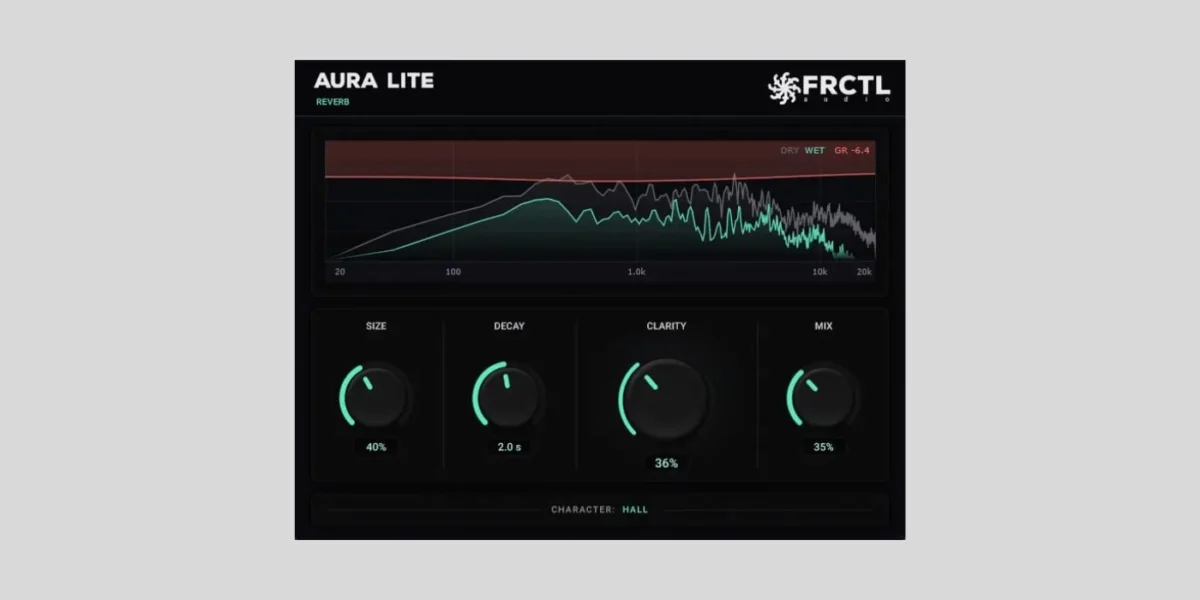
FRCTL Audio has officially announced the release of AURA Lite, a sophisticated ducking reverb plugin now available for free across Windows, macOS, and Linux platforms. This latest offering marks another significant expansion in the company’s rapidly growing portfolio of complimentary audio production tools, following a series of successful "Lite" version releases designed to democratize advanced sound design capabilities for music producers and audio engineers worldwide. AURA Lite leverages a core engine shared with its forthcoming paid counterpart, AURA, offering users a high-quality, zero-latency solution for achieving professional-grade spatial effects without the common issue of signal washout.
The release of AURA Lite is not an isolated event but rather a continuation of a clear strategic trajectory for FRCTL Audio throughout the current year. The developer has steadily built a reputation for delivering robust, feature-rich plugins at no cost, establishing a foundation of trust and utility within the audio production community. This methodical approach began earlier in the year, with the introduction of GRN Lite on January 21, 2026, a granular synthesis tool that offered experimental sound design capabilities to a broad user base. This was quickly followed by SWRL Lite on February 12, 2026, a distinctive modulation effect. Most recently, on July 2, 2026, FRCTL Audio launched DLAY Lite, a versatile delay plugin that quickly gained traction for its intuitive interface and sound quality. The consistent rollout of these "Lite" versions, each addressing a fundamental aspect of audio processing—from time-based effects to unique sound generators—culminates with AURA Lite, positioning it as a cornerstone in a comprehensive suite of accessible production assets.
AURA Lite distinguishes itself through its integrated ducking mechanism, a feature traditionally achieved through more complex sidechain routing setups. At its core, the plugin is designed to create expansive reverb tails that intelligently recede in volume when the dry input signal is active, only to resurface prominently in the gaps and pauses of the source material. This behavior is controlled primarily by the "Clarity" parameter, one of AURA Lite’s four intuitive controls, alongside "Size," "Decay," and "Mix." While the term "Clarity" might initially suggest an equalization function to some experienced producers, within AURA Lite, it directly refers to this dynamic unmasking system, ensuring the primary audio source remains articulate and present, even when enveloped by a lush reverb. This innovative approach streamlines workflow, eliminating the need for external compressors and intricate routing on auxiliary tracks, thereby allowing producers to achieve a cleaner, more professional mix with greater ease and efficiency.
The technical foundation of AURA Lite is robust, sharing the identical processing engine with the premium AURA plugin. This ensures that the free version benefits from the same high-fidelity algorithms and efficient performance. Specifically, AURA Lite is voiced on the "Hall" character from the full version, providing a classic, spacious reverb sound. The "Clarity" control itself employs the same advanced ducking and band-by-band unmasking system found in its paid counterpart. This sophisticated process dynamically carves out space for the dry signal across the frequency spectrum, preventing muddiness and preserving transient detail. Visual feedback is also incorporated, with the plugin’s display dynamically illustrating how the reverb tail is being sculpted around the incoming source as the "Clarity" knob is adjusted, offering producers immediate insight into the processing.
The utility of a ducking reverb cannot be overstated in modern music production. For vocal tracks, where intelligibility is paramount, a ducking reverb allows for rich, ambient spaces to support the singing without obscuring lyrics. Similarly, for lead instruments such as guitars or synthesizers, it enables the creation of epic, sustained effects that do not compete with the attack and body of the melody. Before integrated solutions like AURA Lite, achieving this effect typically involved routing the dry signal to a sidechain input on a compressor placed on the reverb’s return track. This method, while effective, adds layers of complexity, increases setup time, and can sometimes be less musically responsive than a purpose-built system. AURA Lite’s direct integration of this functionality within the reverb itself represents a significant workflow enhancement, particularly for producers working under tight deadlines or those seeking a more intuitive approach to spatial sound design.
FRCTL Audio’s strategy of releasing high-quality "Lite" versions before or alongside their full-featured paid counterparts aligns with a growing trend in the audio software industry. This "freemium" model serves multiple purposes. For the developer, it acts as a powerful marketing tool, allowing potential customers to experience the quality and innovation of their core technology without upfront investment. This builds brand awareness, fosters community engagement, and creates a clear upgrade path for users who desire more advanced features. For users, it provides invaluable access to professional-grade tools, lowering the barrier to entry for aspiring producers and offering cost-effective solutions for established artists. The commercial license included with AURA Lite, along with lifetime updates and zero latency performance, further underscores FRCTL Audio’s commitment to providing genuinely useful and sustainable free resources.
The full version of AURA, priced at $34.99 with an introductory offer of $24.99 until August 12, 2026, significantly expands upon the capabilities of AURA Lite. While AURA Lite offers the "Hall" character, the paid AURA provides seven distinct and morphable reverb characters: Room, Plate, Hall, Chamber, Bloom, Shimmer, and Space. This versatility allows producers to sculpt a vast array of spatial environments, from intimate settings to ethereal soundscapes. Beyond additional character types, the full AURA introduces a comprehensive suite of advanced controls and features. These include "Tune" for pitch modulation, "Absorb" for damping high frequencies, and "Swell" for controlling the attack of the reverb. Advanced mixing and monitoring tools such as "Delta listen mode" and external sidechain input provide greater flexibility and precision. Further sound shaping is enabled by early reflections controls, an integrated gate, tail EQs, and editable decay shaping, allowing for granular control over the reverb’s characteristics. User experience enhancements include A/B compare functionality, undo and redo capabilities, mix lock, user presets, and an extensive library of 71 factory presets. The activation model is straightforward, requiring one activation without the need for a subscription or iLok hardware, with a 14-day free trial available for those wishing to explore its full potential before purchase.
From a broader industry perspective, the proliferation of high-quality free plugins like AURA Lite signifies a maturation of the audio software market. Developers are increasingly recognizing the value of providing accessible entry points to their ecosystems. This trend benefits the entire community, pushing the boundaries of what is expected from free software and simultaneously raising the competitive bar for all plugin manufacturers. Companies that historically relied solely on paid offerings are now often compelled to consider similar freemium strategies or risk being outmaneuvered by agile developers like FRCTL Audio. The ease of access, combined with robust performance and comprehensive compatibility, makes AURA Lite a compelling addition to any producer’s toolkit. It runs seamlessly on Windows 10/11, macOS (both Intel and Apple Silicon architectures), and Linux, supporting VST3, AU, CLAP, and standalone formats, ensuring maximum compatibility across diverse digital audio workstations (DAWs).
While FRCTL Audio has not issued a formal statement explicitly detailing their overarching strategic philosophy, the consistent release of high-quality, free "Lite" plugins strongly suggests a multi-pronged approach. This includes building a loyal user base by offering immediate value, demonstrating technological prowess, and creating a natural upgrade path to their paid products. Industry observers often point to such strategies as effective methods for sustainable growth in a highly competitive market. The positive reception of FRCTL Audio’s previous free offerings indicates that this approach resonates well with the production community, who are always seeking effective tools that enhance creativity and streamline workflow. The "vibe-coded" aesthetic of the FRCTL website, as noted by some, can be seen as a deliberate design choice that contributes to a distinct brand identity, setting it apart in a crowded marketplace. Ultimately, the quality and utility of the plugins themselves are the primary determinants of their success.
In conclusion, AURA Lite represents a significant addition to the landscape of free audio production software. Its integrated ducking reverb functionality addresses a common mixing challenge with an elegant and efficient solution. By offering a free, professional-grade tool that enhances clarity and spatial depth, FRCTL Audio continues to solidify its position as a forward-thinking developer committed to empowering producers. As part of a systematic release schedule of "Lite" plugins, AURA Lite not only provides immediate value but also serves as an inviting gateway to FRCTL Audio’s more extensive and feature-rich paid offerings. Its universal compatibility, zero-latency performance, and user-friendly licensing model ensure that this powerful reverb tool is accessible to virtually any producer, making it an indispensable asset for achieving polished, professional mixes in the modern digital audio environment.
