

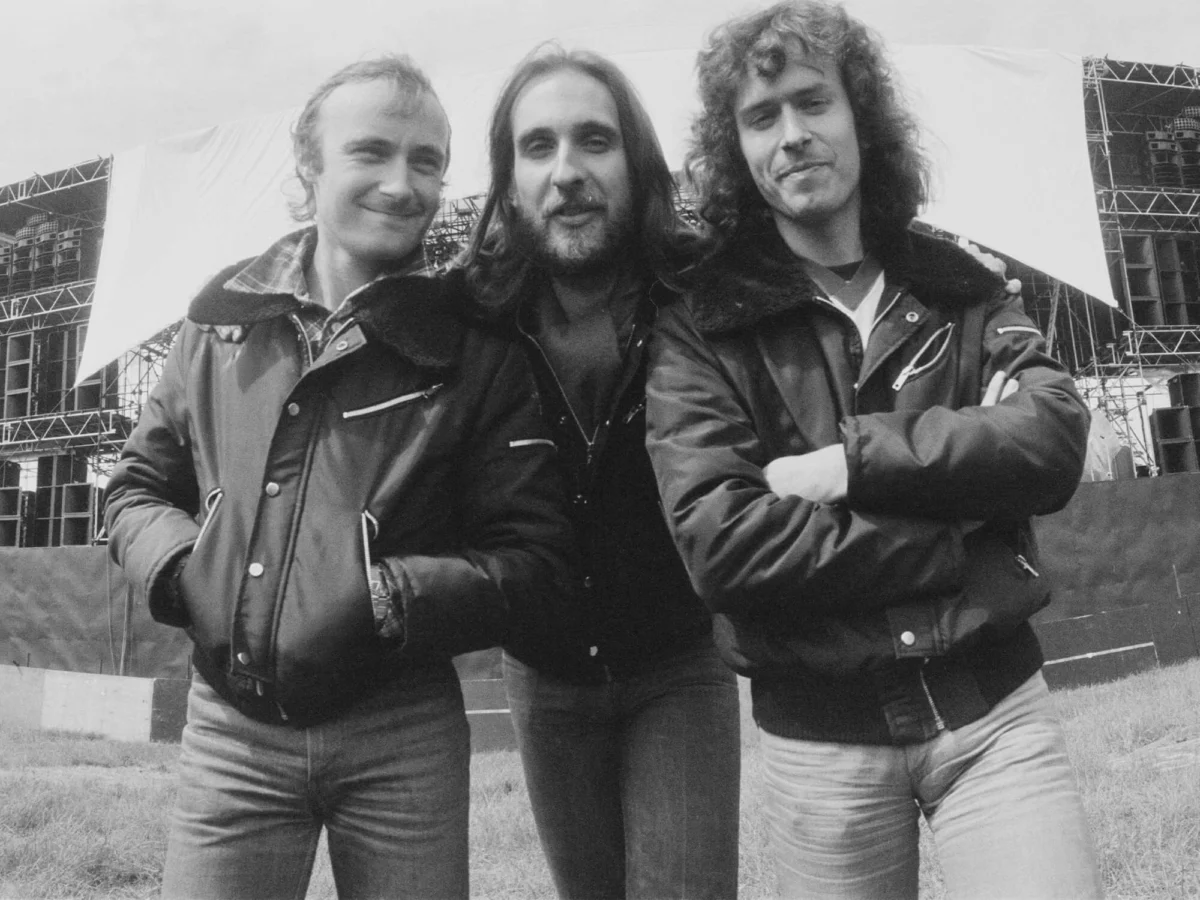
Phil Collins, the iconic drummer and vocalist who became synonymous with progressive rock giants Genesis, has recently shed light on the profound cultural and educational disparities that marked his early days with the band in 1970. His reflections underscore a fascinating contrast between his own upbringing and that of his new bandmates, a dynamic that arguably shaped the very essence and evolution of one of music history’s most enduring acts. Collins’s journey into Genesis was not merely a change of drummers; it represented a convergence of distinct social strata and formative experiences, proving that artistic synergy can transcend traditional divides.
The Genesis Origin and the Charterhouse Connection
The origins of Genesis are deeply intertwined with the venerable halls of Charterhouse School, an independent boarding school for boys in Godalming, Surrey, UK. Founded in 1611, Charterhouse is one of the nine great English public schools, renowned for its academic rigor, classical education, and fostering of traditional values. It was within this environment in the mid-1960s that the foundational members of Genesis – Peter Gabriel, Tony Banks, and Mike Rutherford – first met and began to explore their musical inclinations. This shared institutional background cultivated a certain intellectual approach to music, characterized by complex compositions, narrative lyrical themes, and a sophisticated, often classical, sensibility. Their early sound, as heard on albums like From Genesis to Revelation (1969) and Trespass (1970), reflected these roots, leaning heavily into atmospheric, often melancholic, progressive rock with intricate arrangements. The school’s environment, while academically enriching, was not necessarily a hotbed for contemporary rock and roll, with stricter rules regarding personal expression, including the ownership of instruments like guitars, as Collins would later observe.
Phil Collins: A Different School of Thought
In stark contrast to the Charterhouse alumni, Phil Collins’s formative years unfolded within the vibrant, less restrictive world of drama school. From the age of 14, Collins attended the Barbara Speake Stage School in East Acton, London, a vocational institution focused on performing arts. This environment, as Collins himself recounted, offered a distinct freedom, a place where one "could get away with murder" – a stark departure from the disciplined strictures of a public school. The curriculum at such a school prioritized creativity, expression, and exposure to contemporary culture. Collins recalled bringing in records by The Beatles (Sgt. Pepper’s Lonely Hearts Club Band), Motown artists, and The Byrds (Younger Than Yesterday), playing them openly, fostering an environment where modern music was not just tolerated but actively encouraged and integrated into the learning experience. This background steeped Collins in a diverse palette of musical genres, from pop and soul to rhythm and blues, instilling in him a rhythmic versatility and a natural inclination towards contemporary sounds that would prove invaluable to Genesis.
The Search for a Drummer: A Pivotal Audition
The opportunity for Collins to join Genesis arose amidst a period of internal flux for the band. Following the release of their second album, Trespass, Genesis faced a critical juncture. Anthony Phillips, one of the founding guitarists and a key songwriter, departed due to severe stage fright and the pressures of touring. His departure led to a re-evaluation of the band’s lineup. Simultaneously, the band sought a new drummer, believing they could find a more technically proficient and stylistically compatible replacement for John Mayhew, who had played on Trespass.
Collins, who was already a working musician with a keen awareness of the London music scene, had seen Genesis’s name frequently mentioned in Melody Maker. Crucially, he had a connection to their manager, Tony Stratton-Smith, whom he had known since the age of 16 through Stratton-Smith’s management of another band, The Creation. Sensing an opportunity, Collins approached Stratton-Smith at the Marquee Club bar. Stratton-Smith, while acknowledging the band’s exacting standards – "they’re very fussy, these guys" – arranged an audition.
The audition itself has become part of Genesis lore. Held at Peter Gabriel’s parents’ house in Chobham, Surrey, Collins famously arrived early, having ample time to listen to Trespass by the swimming pool, internalizing the band’s intricate compositions. His natural talent, honed by years of diverse musical exposure and professional discipline, quickly impressed the Charterhouse trio. Despite the cultural gulf, Collins’s drumming prowess was undeniable, and he secured the position, joining the band in August 1970.
Timeline of Genesis’s Early Years and Collins’s Integration:
- 1967: Peter Gabriel, Tony Banks, Mike Rutherford, Anthony Phillips, and Chris Stewart (later replaced by John Silver and then John Mayhew) form Genesis while attending Charterhouse School.
- 1969: Release of their debut album, From Genesis to Revelation, which achieves limited commercial success.
- 1970 (July): Anthony Phillips departs Genesis due to stage fright and creative differences. John Mayhew also departs.
- 1970 (August): Phil Collins successfully auditions and officially joins Genesis as their new drummer. Mike Rutherford’s former bandmate, Mick Barnard, briefly auditions for guitar before Steve Hackett joins later in the year.
- 1970 (October): Release of Trespass, featuring John Mayhew on drums. The album’s critical reception strengthens their cult following.
- 1971 (November): Release of Nursery Cryme, the first album to feature both Phil Collins and Steve Hackett. Collins’s distinctive drumming and occasional backing vocals begin to define the band’s new sound. The album introduces iconic tracks like "The Musical Box."
- 1972 (October): Foxtrot is released, featuring the epic "Supper’s Ready." The album solidifies Genesis’s reputation as a leading progressive rock act.
- 1973 (October): Selling England by the Pound is released, reaching commercial success and critical acclaim, featuring tracks like "Firth of Fifth" and "I Know What I Like (In Your Wardrobe)."
- 1974 (November): The Lamb Lies Down on Broadway, a sprawling double concept album, is released. This highly ambitious work further showcases the band’s complexity and Collins’s integral role.
- 1975 (May): Peter Gabriel announces his departure from Genesis, creating a leadership vacuum and a pivotal moment for Collins to step into the frontman role.
The Cultural Chasm and Its Creative Synthesis
The dichotomy between Collins’s drama school background and the Charterhouse education of Gabriel, Banks, and Rutherford was more than just a biographical detail; it represented a fundamental difference in cultural exposure and artistic approach.

-
Charterhouse Influence: For Gabriel, Banks, and Rutherford, the Charterhouse environment instilled a certain intellectualism and a penchant for elaborate, often theatrical, storytelling. Their compositions frequently drew from classical structures and literary inspirations, leading to the highly conceptual and narratively rich songs that defined early Genesis. The discipline of their schooling likely contributed to their meticulous approach to songwriting and arrangement. However, it might also have insulated them somewhat from the raw, visceral energy of contemporary popular music.
-
Drama School Influence: Collins, by contrast, brought a grounded, street-level sensibility. His exposure to Motown, soul, and pop meant he understood groove, rhythm, and melodic hooks in a way that complemented the more cerebral approach of his bandmates. This wasn’t merely about technical drumming; it was about an intuitive feel for what made music connect on a more immediate, emotional level. His performing arts training also gave him a natural stage presence and a versatility that would become crucial when he eventually stepped into the vocalist role.
The initial differences, as Collins highlights, were stark. "In their school they weren’t allowed to own a guitar. At mine, I’d bring my records in and we’d play Sgt. Pepper… or Motown or The Byrds’ Younger Than Yesterday." This anecdote perfectly encapsulates the varying degrees of artistic freedom and musical immersion each environment fostered. The Charterhouse members were creating sophisticated, often abstract soundscapes, while Collins was steeped in the tangible, danceable rhythms of popular music.
Implications and Broader Impact: Forging a Unique Sound
Far from being a hindrance, this blend of disparate backgrounds proved to be a powerful catalyst for Genesis. Collins’s arrival brought a new rhythmic precision and a more contemporary pulse to the band’s sound. His drumming was not just technically brilliant; it was infused with a jazz-rock sensibility and a deep understanding of groove that provided a powerful anchor to the band’s often complex and shifting meters. This allowed Genesis to evolve beyond purely classical-influenced progressive rock, incorporating elements that broadened their appeal without sacrificing their artistic integrity.
The integration of Collins’s varied musical influences subtly began to reshape Genesis’s sonic identity. While Peter Gabriel remained the charismatic frontman, driving the band’s theatrical vision, Collins’s drumming provided a more muscular, dynamic foundation. This fusion allowed Genesis to craft a sound that was simultaneously intricate and accessible, intellectually stimulating yet rhythmically engaging. Albums like Nursery Cryme, Foxtrot, and Selling England by the Pound showcase this synthesis, where the classical grandeur of Banks and Rutherford’s compositions met the driving force of Collins’s drums and Steve Hackett’s innovative guitar work.
When Peter Gabriel departed in 1975, the "public school boys" faced another existential crisis. It was Collins, the "drama school boy," who stepped up, initially out of necessity, to take on lead vocals. This transition was perhaps the ultimate manifestation of how his diverse background prepared him for challenges that the more academically inclined members might not have been equipped for. His natural stage presence, vocal range, and ability to connect with an audience, honed by his drama school training, allowed Genesis not only to survive but to thrive, ultimately leading to their most commercially successful era.
Official Responses and Mutual Respect
While direct new statements from Peter Gabriel, Tony Banks, or Mike Rutherford on Collins’s specific observations about their educational differences are not immediately available for this report, their long-standing collaboration and numerous interviews over the decades indicate a profound mutual respect and acknowledgment of each member’s unique contributions. Banks and Rutherford have consistently praised Collins’s musical talent, particularly his drumming, as a crucial element in Genesis’s evolution. Gabriel, too, has spoken warmly of Collins’s integral role, especially during their early years together. The band’s enduring legacy is a testament to their ability to synthesize diverse creative energies, overcoming any initial social or cultural divides through shared artistic vision and undeniable talent. The fact that they successfully navigated multiple lineup changes and stylistic shifts speaks to a deep-seated understanding and appreciation of each other’s strengths.
Legacy and Enduring Influence
Phil Collins’s candid reflections on his early differences with his Genesis bandmates provide a valuable insight into the alchemy of creative collaboration. The convergence of a traditional public school ethos with a free-spirited drama school background created a unique dynamic that ultimately propelled Genesis to global superstardom. It illustrates how diverse experiences, rather than being barriers, can become powerful engines for innovation and artistic growth.
The re-release of The Lamb Lies Down on Broadway in standalone 1-BR Blu-ray Audio on August 28 serves as a timely reminder of this pivotal era in Genesis’s history. This ambitious 1974 concept album, featuring the classic lineup of Gabriel, Banks, Rutherford, Hackett, and Collins, stands as a monument to their collective genius. It is a work where the intellectual grandeur of their Charterhouse roots is intricately woven with the rhythmic precision and dynamic energy that Collins, the "drama school boy," brought to the fold. Their story remains a compelling narrative of how contrasting origins can unite to form something far greater than the sum of its parts, leaving an indelible mark on the landscape of progressive rock and popular music alike.
