

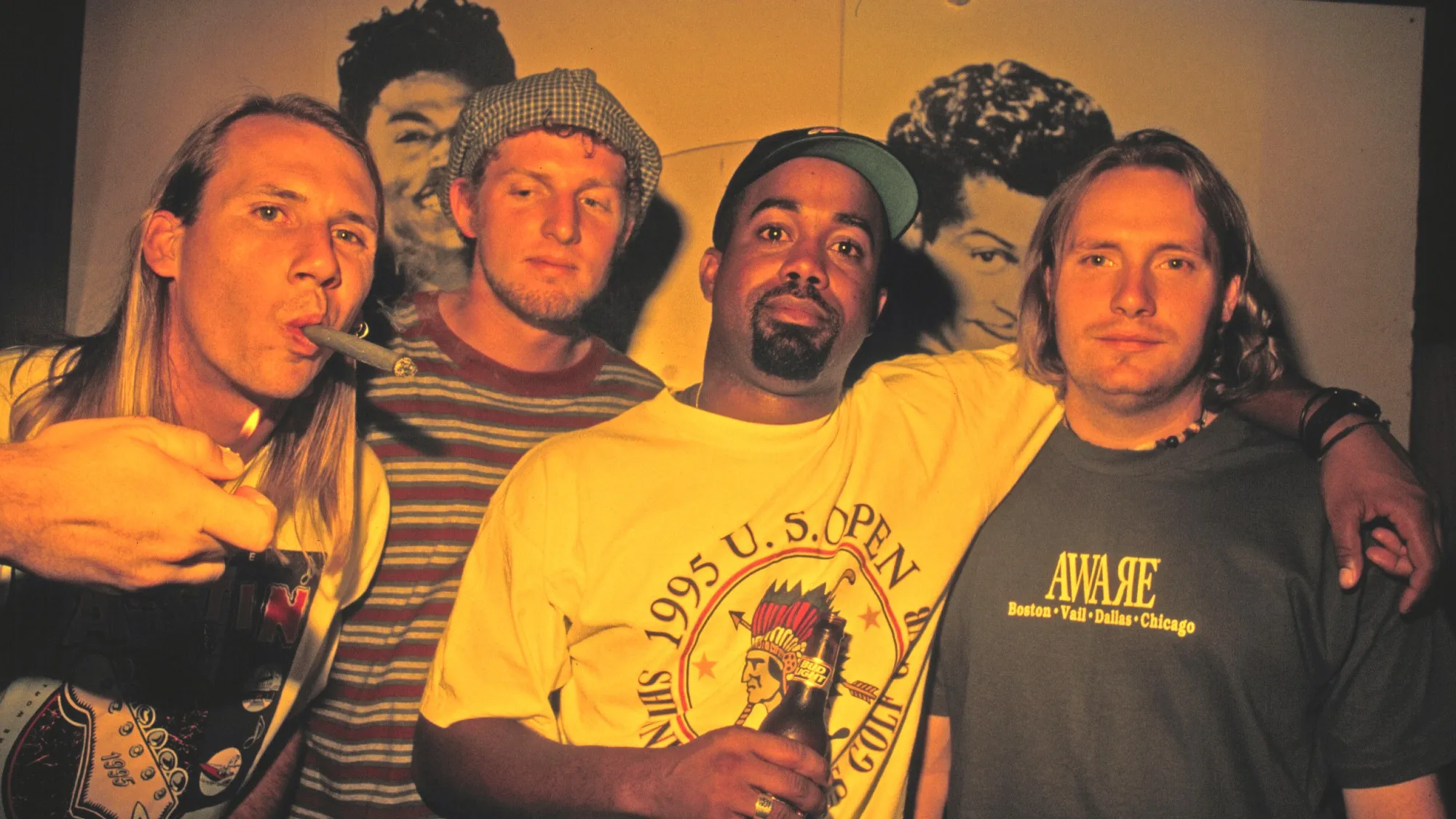
The release of Hold My Hand in 1994 marked a seismic shift in the American musical landscape, serving as the lead single for Hootie & the Blowfish’s debut studio album, Cracked Rear View. While the song eventually became a staple of 1990s pop-rock, its journey from a simple composition by four college friends to a multi-platinum anthem involves a series of unlikely events, including a surprise collaboration with a folk-rock legend and a songwriting process born out of technical simplicity. Written by band members Darius Rucker, Mark Bryan, Dean Felber, and Jim Sonefeld, the track not only propelled the band to international stardom but also established a bridge between the gritty alternative rock of the early 90s and a more melodic, roots-driven mainstream sound.
The Unexpected Participation of David Crosby
As Hootie & the Blowfish recorded their debut album at Southern Tracks in Atlanta, Georgia, the band sought to enhance the vocal depth of Hold My Hand. Known for their own tight, gospel-influenced harmonies, the group felt the track required an additional layer of professional polish. The solution came from an unexpected source: the band’s friend and associate, Gena Rankin. When Rankin suggested that the band recruit David Crosby for background vocals, the members initially dismissed the idea as an impossibility.
Crosby, a two-time Rock and Roll Hall of Fame inductee and a founding member of both The Byrds and Crosby, Stills & Nash, was considered a titan of vocal harmony. Darius Rucker later recalled that the band assumed Rankin was joking, given their status as a relatively unknown regional act at the time. However, the connection was made, and within forty-eight hours, Crosby arrived at the studio. His contribution provided the soaring, ethereal textures that complemented Rucker’s baritone, creating a sonic contrast that would become one of the song’s most recognizable features. This collaboration served as an early validation of the band’s talent, signaling to the industry that Hootie & the Blowfish possessed a broad appeal that resonated even with the architects of the 1960s folk-rock movement.
The Genesis of a Naive Masterpiece
The origins of Hold My Hand predate the band’s commercial success by several years, tracing back to the early days of their formation at the University of South Carolina. The song’s primary architect was the band’s drummer, Jim Sonefeld. At the time of the song’s conception, Sonefeld was primarily a percussionist and possessed limited proficiency on melodic instruments like the guitar or piano. This technical limitation, however, proved to be a creative asset.
Sonefeld has frequently discussed the "naive" quality of the song’s composition. Because he only knew a handful of chords, the musical structure remained uncluttered and direct. This simplicity allowed the emotional weight of the lyrics—a plea for unity, peace, and interpersonal connection—to take center stage. The song’s message of "holding hands" and "looking for a better way" struck a chord with a public that was beginning to move away from the angst-heavy themes of the grunge era toward a more optimistic, communal sentiment. Sonefeld’s "devout thought" and his urgency to express a profound feeling through a limited musical vocabulary resulted in a track that felt accessible and authentic to millions of listeners.
Chronology of a Global Phenomenon
The trajectory of Hold My Hand and the album Cracked Rear View represents one of the most significant commercial ascents in music history. The timeline of the song’s impact is characterized by a slow build followed by an unprecedented explosion in popularity:
- 1986–1993: Hootie & the Blowfish spend nearly a decade touring the "Chitlin’ Circuit" of the American Southeast, playing college bars and small clubs, and honing the songs that would eventually comprise their debut album.
- Early 1994: The band signs with Atlantic Records and begins recording with producer Don Gehman, known for his work with John Mellencamp.
- July 1994: Cracked Rear View is released. Hold My Hand is serviced to radio stations, initially gaining traction on Triple-A (Adult Album Alternative) and college stations.
- Late 1994: The song breaks into the Billboard Hot 100, eventually peaking at number 10. This success drives the album to the top of the charts.
- 1995: The band wins the Grammy Award for Best New Artist and Best Pop Performance by a Duo or Group with Vocal. Cracked Rear View becomes the best-selling album of the year.
- 1999: The album is certified Diamond by the RIAA, signifying 10 million copies sold. It has since been certified 21x Platinum, making it one of the top ten best-selling albums in U.S. history.
The Breakthrough into Pop Radio
For Darius Rucker, the success of Hold My Hand was a moment of profound personal and professional realization. After nine years of grassroots touring, the transition from being a "college band" to a "pop radio band" was jarring. Rucker has often recounted the specific experience of hearing the track on a major commercial station for the first time in early 1994. He noted that while the band had hoped for some level of airplay, the sheer saturation of the song across various formats—Top 40, Adult Contemporary, and Rock—was beyond their wildest expectations.
The song’s success was also significant in terms of representation. In a mid-90s rock scene that was largely homogenous, Rucker stood out as a prominent Black frontman of a mainstream rock band. The universal appeal of Hold My Hand helped bridge demographic divides, proving that the band’s "bar band" roots had a national resonance that transcended regional and cultural boundaries.
Statistical Impact and Market Performance
The commercial data surrounding Hold My Hand underscores its status as a cultural pillar of the 1990s. At its peak, the single reached number 6 on the Billboard Mainstream Top 40 and number 4 on the Adult Contemporary chart. Its longevity was even more impressive; the song remained on the Hot 100 for over 30 weeks, a testament to its enduring "stickiness" in the public consciousness.
The success of the single fueled the historic performance of Cracked Rear View. To date, the album has sold over 21 million units in the United States alone. When compared to other landmark releases of the era, such as Alanis Morissette’s Jagged Little Pill or Shania Twain’s Come On Over, Cracked Rear View remains a peer in terms of market penetration. The album’s success was driven by a string of four consecutive hits—Hold My Hand, Let Her Cry, Only Wanna Be with You, and Time—all of which shared the same earnest, melodic DNA established by the lead single.
The 2025 Revival and Continued Relevance
The legacy of Hold My Hand has proven to be remarkably durable, extending well into the 21st century. In 2025, the song experienced a significant cultural resurgence when country music star Scotty McCreery featured the track in his hit single Bottle Rockets. McCreery, who has long cited Rucker as a major influence, incorporated the vocals of Hootie & the Blowfish into the song, introducing the 1994 classic to a new generation of listeners.
This collaboration highlighted the symbiotic relationship between 90s pop-rock and modern country music. Darius Rucker’s own highly successful transition into country music—where he has achieved numerous number-one hits and a Grand Ole Opry induction—further solidified the link between the two genres. The 2025 revival of Hold My Hand demonstrated that the song’s themes of connection and simplicity remain relevant in an increasingly digital and fragmented musical landscape.
Analysis of Implications and Cultural Footprint
The impact of Hold My Hand extends beyond sales figures and chart positions. It represented a shift in the music industry’s "center of gravity" toward the Southeast, bringing attention to the vibrant music scene in Columbia, South Carolina. Furthermore, the song’s production style, overseen by Don Gehman, favored organic instrumentation and clear, upfront vocals at a time when much of the industry was focused on the heavy distortion and "wall of sound" production typical of the post-grunge era.
By blending elements of gospel, folk, and classic rock, Hootie & the Blowfish created a template for the "Adult Alternative" genre that would dominate the late 90s. The inclusion of David Crosby was more than a mere guest spot; it was a symbolic passing of the torch from the classic rock era to the modern mainstream. The song’s enduring popularity suggests that there is a permanent market for music that prioritizes melody, harmony, and a straightforward emotional message.
In conclusion, Hold My Hand remains a definitive document of 1990s American culture. From Jim Sonefeld’s humble four-chord beginning to David Crosby’s legendary vocal contributions, the track serves as a reminder of a time when a "college bar band" could capture the heart of the nation. As it continues to be covered, sampled, and celebrated decades later, the song stands as a testament to the power of musical sincerity and the unpredictable nature of artistic success.
