

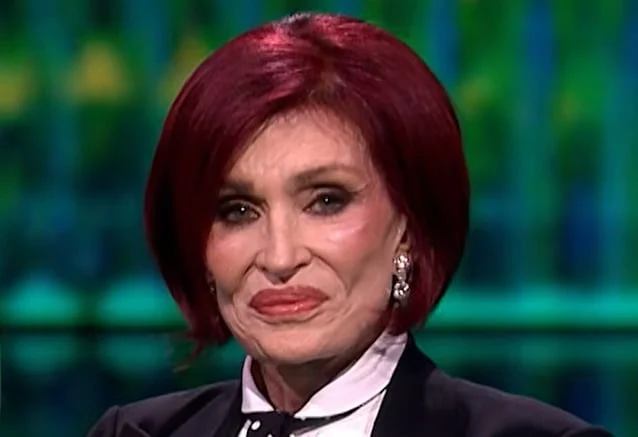
In a significant development for the hard rock and heavy metal community, Sharon Osbourne, manager and widow of iconic frontman Ozzy Osbourne, has officially confirmed plans for the triumphant return of the legendary Ozzfest festival. In a candid interview with Metal Hammer magazine, Osbourne revealed that the festival is slated to make its comeback in 2027, with Birmingham, United Kingdom’s historic Villa Park set to host the initial U.K. leg. This announcement reignites a beloved institution that has shaped festival culture for decades, promising a new chapter filled with both established titans and emerging talent.
The choice of Villa Park is deeply resonant, marking a return to the hallowed ground where Ozzy Osbourne delivered his poignant "Back To The Beginning" performance on July 5, 2025, widely speculated to be his final major U.K. concert. Sharon Osbourne indicated that the festival’s Birmingham presence could potentially extend to two nights, with the ultimate decision resting on fan demand. "It’s going to be at Villa Park again," Osbourne stated, emphasizing the venue’s significance. "Whether it’ll be two nights [in Birmingham], that’s up for the fans to tell me."
While specific artist lineups remain under wraps, Osbourne acknowledged that discussions are well underway. "Of course we’re speaking to people," she commented coyly. "I can’t let that out yet, but it’ll be soon." This strategic silence only amplifies the anticipation surrounding the potential roster, which is expected to feature a blend of Ozzfest veterans and promising newcomers, a hallmark of the festival’s original ethos.
The initial seeds for Ozzfest’s revival were sown in February 2026 during an appearance on "The Osbournes" podcast. At that time, Sharon Osbourne articulated a grand vision: "We wanna do two days in Aston Villa and then come to America. And we wanna hear from everyone where we should go in America. And also we’ve gotta find a lot of young, new talent, because that’s what [Ozzy] would want." This sentiment was further solidified by their son, Jack Osbourne, who elaborated on the timeline. He noted that Ozzfest would return in 2027 as a two-day event at Villa Park, followed by "two days in North America somewhere." Sharon Osbourne echoed this plan, adding, "Yeah. And then see how it does. And then if people want it, we’ll be there [in the] following years." This suggests a phased reintroduction, beginning with a concentrated U.K. event and expanding to North America, with future iterations dependent on the festival’s initial success.
Further details emerged regarding the festival’s long-term trajectory. While Ozzfest will not operate as a touring festival across the U.S. in 2027, tentative plans are in motion to take the event on the road in 2028 and beyond, contingent on sustained fan interest and demand. This adaptable approach underscores a strategic effort to rebuild the festival’s presence and ensure its longevity.
The Enduring Spirit of Ozzfest: More Than Just a Festival
Reflecting on what made Ozzfest a cultural phenomenon, Sharon Osbourne fondly recalled its unique atmosphere. "It was more fun," she stated. "When you go to other festivals, everybody’s so uptight. But that was always the thing about our festival. There was never anybody jockeying for position or thought they were better than anyone else. It was a summer camp." This nostalgic sentiment highlights the festival’s commitment to fostering a sense of community and inclusivity, a stark contrast to the often more corporate and stratified environments of other major music events.
Osbourne also expressed a personal wish to see Judas Priest frontman Rob Halford grace the Ozzfest stage, hinting at the potential inclusion of iconic figures from the metal pantheon. "I want to see Rob Halford there," she remarked, an indication of the caliber of artists she hopes to attract.
The discussion surrounding Ozzfest’s return is not new. In a February 6 appearance at MIDEM 2026, Osbourne had already unequivocally stated her commitment to reviving the festival. "Yes, absolutely. Yeah, we’re gonna do it," she confirmed. She reminisced about the last iteration in 2018, held at The Forum in Los Angeles, which occurred just a month before Ozzy’s serious health issues arose. "There was no plans to stop it. We were still gonna do it, but Ozzy couldn’t," she explained. Her conversations with Ozzy about the festival’s future without him revealed his own desire for its continuation. "Ozzy and I would talk about it, and he’d say, ‘Do you think Ozzfest would work without me?’ And I’m like, ‘Yeah, it’s a brand. It will work without you.’ And he said, ‘We should do it.’" This exchange underscores Ozzy’s enduring legacy and his vision for Ozzfest as an independent entity.
A Legacy of Nurturing Talent
Sharon Osbourne’s conversations with Billboard magazine in January of this year further illuminated the driving forces behind Ozzfest’s revival. "I had been talking to Live Nation about bringing Ozzfest back," she revealed. A central tenet of the festival’s philosophy, as articulated by Osbourne, has always been a commitment to emerging artists. "It was something Ozzy was very passionate about: giving young talent a stage in front of a lot of people," she emphasized. "We really started metal festivals in this country. It was [replicated but] never done with the spirit of what ours was, because ours was a place for new talent. It was like summer camp for kids." This dedication to fostering new blood is a cornerstone of Ozzfest’s identity and a key element of its planned resurgence.
Osbourne also articulated a desire for a more diverse musical landscape within the festival’s framework. "I’d like to mix up the genres," she told Billboard, suggesting a potential evolution beyond a purely heavy metal focus, while still retaining the genre’s core spirit.
A Timeline of Ozzfest’s Evolution
Ozzfest, which first launched 30 years ago, pioneered the concept of a national music festival dedicated exclusively to hard rock and heavy metal. Its early years were characterized by a traveling format, a model that proved immensely popular. However, the festival’s structure began to shift in the late 2000s. The U.S. touring version ceased after the "free" edition in 2007. It morphed into a one-off event in Dallas in 2008, took a hiatus in 2009, and returned with a significantly scaled-down six-city tour in 2010.
A notable chapter in Ozzfest’s recent history involved its merger with Slipknot’s Knotfest. The 2017 edition saw Ozzfest headlined by Ozzy Osbourne, with Rob Zombie closing out the subsequent day’s Knotfest bill, creating a two-day heavy metal spectacle. This collaborative approach highlighted a willingness to adapt and innovate within the festival landscape.
The most recent Ozzfest event, a special one-night-only New Year’s Eve celebration on December 31, 2018, at The Forum in Los Angeles, drew 12,465 fans. Produced by Live Nation, the concert generated approximately $1.2 million in ticket sales, with prices ranging from $59.50 to $179.50. The lineup at this event was a testament to Ozzy’s enduring influence, featuring Rob Zombie, Marilyn Manson, Jonathan Davis of KORN (in a solo set), and Body Count. A second stage outside The Forum was headlined by Zakk Sabbath, the Black Sabbath tribute band fronted by Ozzy’s long-time guitarist, Zakk Wylde.
Addressing Past Challenges and Future Ambitions
The complexities of organizing a festival of Ozzfest’s magnitude were candidly discussed by Sharon Osbourne on "The Osbournes" podcast in January 2024. She addressed the persistent issue of financial expectations from bands and their management, which had previously contributed to the festival’s cessation. "It always comes down to" whether bands and managers are "realistic" about their compensation, noted her daughter, Kelly Osbourne. Sharon concurred, expressing frustration with what she perceived as inflated demands. "It’s great. That’s what we wanted — everybody to do spin-offs and do their own festivals, and it’s great. It’s great for fans; it’s brilliant. But why is it when it comes to us that everybody thinks that we are trillionaires, and so that every manager who wants their band on our festival wants one of the fucking trillions they think we’ve got to put on the festival?"
Ozzy himself questioned the viability of focusing more on lesser-known acts to manage costs. Sharon acknowledged the importance of a "baby stage" for breaking new bands, which was always central to Ozzfest’s mission. However, she also highlighted the significant challenge for emerging artists transitioning from smaller crowds to the immense pressure of a main stage at a large festival. "It’s very intimidating," she said. "You could have maybe five thousand people at that baby stage, and then to go from five to fifty to sixty thousand people, and it’s really, really hard for baby bands. They’ve pay their dues anyway. That’s what it’s all about."
Jack Osbourne astutely observed that many newer rock festivals in the U.S. are essentially rehashes of the Ozzfest model. Sharon acknowledged this, stating, "Well, it’s the same bands just going around and around and around. But that’s what’s so good, because we started something, people have taken it, and it’s still great for the genre. It’s really good."
The Financial Realities of Festival Promotion
In an earlier October 2023 episode of "The Osbournes" podcast, Sharon Osbourne elaborated on the financial factors that led to Ozzfest’s hiatus. "Yeah, it was a very weird beast because all the bands were our mates, but the managers were greedy and for some reason they thought that we were making billions on it and we weren’t," she explained. "We made a profit. But it was not like — we couldn’t retire on it. And managers and agents wanted more and more and more, and it just wasn’t cost effective anymore. We stopped, because it just wasn’t cost effective."
She recounted a specific incident from the second or third Ozzfest where a band refused to perform until their demand for an additional $10,000 was met. When pressed by Jack to identify the band, Sharon revealed it was Glenn Danzig. Jack’s incredulous reaction, "Why are you gonna protect that twat?", underscored the contentious nature of artist negotiations. Despite the pressure, Sharon ultimately refused to pay the inflated sum. "They went on and played, and I went, ‘Fuck you. You signed a contract, your agent agreed it, and you’re just gouging,’" she recalled, demonstrating her resolve in upholding contractual agreements and resisting exploitative demands.
The forthcoming Ozzfest, with its confirmed 2027 return and strategic focus on Birmingham’s Villa Park, represents a significant moment for the heavy metal and hard rock music scene. Sharon Osbourne’s commitment to revitalizing the festival, while learning from past challenges, signals a renewed dedication to providing a platform for both legendary artists and the next generation of rock and metal talent, aiming to recapture the unique "summer camp" spirit that defined its early success. The global music community will be watching with keen anticipation as plans unfold for what promises to be a monumental comeback.
