

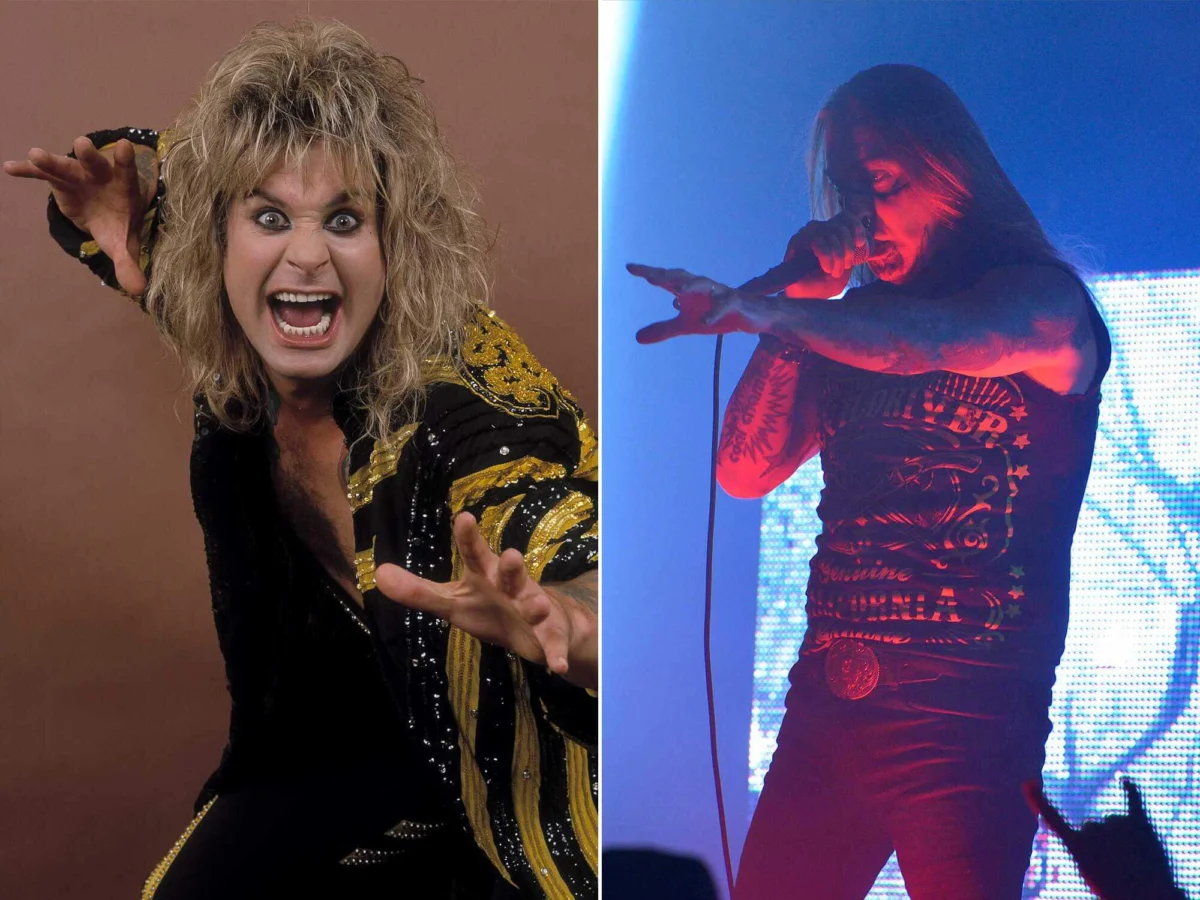
In a recent appearance that has ignited discussions across the heavy metal community, Dez Fafara, the esteemed vocalist for DevilDriver and former frontman of Coal Chamber, asserted his belief that Phil Anselmo, the iconic voice of Pantera, stands as the greatest frontman metal has ever produced. This bold declaration, made during an interview on the Garza Podcast with Suicide Silence guitarist Chris Garza, positions Anselmo even above the legendary Ozzy Osbourne, a figure widely regarded as one of the genre’s foundational pillars and most influential personalities. Fafara’s statement offers a potent peer endorsement, delving into Anselmo’s multifaceted contributions to heavy music, from his commanding stage presence to his profound songwriting impact and the enduring legacy of Pantera.
The Unpacking of a Controversial Claim
Fafara’s direct comparison between Anselmo and Osbourne immediately caught attention, given the almost sacrosanct status of the "Prince of Darkness." "Phillip – for me – I would say is the top frontman in the world, period, end of story," Fafara stated, as reported by Ultimate Guitar. He elaborated, "I love Ozzy, but I put him above Ozzy. That’s just cause…fuck, I don’t know, man. Plus, he’ll beat your fucking ass. He’s real. He’s a real fucking deal – Holyfield." This raw, visceral explanation points to a perception of authenticity and uncompromising power that Fafara associates with Anselmo, perhaps drawing a parallel to the formidable boxing prowess of Evander Holyfield to emphasize Anselmo’s no-nonsense, potent persona.
The statement transcends mere fan preference, coming from an artist who has carved out his own significant niche in the metal landscape for over two decades. Fafara’s career, spanning the nu-metal explosion with Coal Chamber and the groove-laden ferocity of DevilDriver, grants him a unique vantage point from which to assess the qualities that define an impactful frontman. His admiration for Anselmo is not solely rooted in raw aggression or charisma but extends to the deeper artistic contributions that have shaped generations of metal musicians.
Defining the "Greatest Frontman" in Metal
The debate over the "greatest frontman" in any genre is inherently subjective, yet it often revolves around a confluence of factors: vocal ability, stage presence, lyrical prowess, songwriting contributions, influence on other artists, and longevity. Ozzy Osbourne, with his unparalleled career trajectory from Black Sabbath’s pioneering doom to a multi-platinum solo career and status as a reality TV star, embodies many of these traits. His distinct vocal style, theatrical stage antics, and role in birthing heavy metal itself secure his place in the pantheon. Black Sabbath’s self-titled debut in 1970 is widely considered a foundational text of heavy metal, and Ozzy’s subsequent solo career, launched with 1980’s Blizzard of Ozz, continued to push boundaries and define the genre for decades.
Phil Anselmo, on the other hand, represents a different, arguably more intense, paradigm of frontmanship. Emerging in the late 1980s and truly exploding with Pantera in the 1990s, Anselmo’s vocal style evolved from traditional heavy metal singing to a guttural, aggressive roar that perfectly complemented the band’s pioneering groove metal sound. His stage presence was less theatrical and more confrontational, an embodiment of raw, untamed power and audience engagement. Pantera’s Cowboys from Hell (1990), Vulgar Display of Power (1992), and Far Beyond Driven (1994) are seminal albums that redefined metal’s sonic landscape, largely propelled by Anselmo’s commanding delivery and lyrics that resonated with a generation feeling disenfranchised. Far Beyond Driven notably debuted at number one on the Billboard 200, a remarkable feat for such an extreme metal album, underscoring Pantera’s mainstream impact.
Fafara’s emphasis on Anselmo’s "realness" and capacity to "beat your fucking ass" highlights a crucial aspect of his appeal within the metal community: an unvarnished authenticity that many fans crave. This perception of genuine grit and uncompromising attitude often holds significant weight in a genre that frequently champions rebellion and strength.
Anselmo’s Enduring Legacy and Pantera’s Influence
Fafara’s praise for Anselmo extends far beyond his intimidating persona, touching upon his profound impact as a musician and a writer. "He’s an amazing frontman, amazing writer, and obviously one of the biggest bands in the world. Influenced everybody. I don’t think there’s anybody not influenced by Pantera," Fafara stated. This sentiment echoes widely across the metal scene, where Pantera’s influence is undeniable and pervasive.
Pantera’s discography, particularly their output from Cowboys from Hell onwards, served as a blueprint for countless bands. Their unique blend of thrash metal’s aggression, hardcore punk’s intensity, and blues-infused Southern rock swagger, all anchored by the late Dimebag Darrell’s revolutionary guitar work and Anselmo’s versatile vocals, created a sound that was both innovative and immensely powerful. Anselmo’s lyrics often explored themes of anger, disillusionment, self-reliance, and defiance, resonating deeply with a generation of listeners. Songs like "Walk," "Fucking Hostile," "I’m Broken," and "Cemetery Gates" showcase his range from raw aggression to melodic introspection. The band’s commercial success, including multiple RIAA platinum certifications and extensive world tours, cemented their status as titans of the genre.
Beyond Pantera, Anselmo has maintained a prolific career, fronting a diverse array of projects such as Down, Superjoint Ritual, Philip H. Anselmo & The Illegals, and Arson Anthem. Each of these bands allowed him to explore different facets of heavy music, from the sludge metal of Down to the hardcore punk of Arson Anthem, demonstrating his adaptability and enduring passion for extreme music. This consistent output across multiple decades further solidifies his standing as a significant and continually evolving figure in metal.
A Friendship Forged in Metal: The Fafara-Anselmo Connection
The personal narrative shared by Fafara on the Garza Podcast provides a compelling backdrop to his deep respect for Anselmo, illustrating how a chance encounter blossomed into a close friendship and mentorship. The story dates back to the mid-1990s, a pivotal time for Fafara and his then-nascent band, Coal Chamber.
"I have a crazy story. When I was in Coal Chamber, I was walking down Melrose Ave. and Coal Chamber was just about to get signed, and I saw Phillip," Fafara recounted. Melrose Avenue, a vibrant hub of fashion, music, and counterculture in Los Angeles, was a fitting locale for such an encounter between two figures destined to leave their mark on heavy music. At this point, Coal Chamber was on the cusp of breaking through. Formed in 1993, the band was instrumental in the emerging nu-metal scene, characterized by downtuned guitars, rap-influenced vocals, and a strong emphasis on groove and atmosphere. They would eventually sign with Roadrunner Records in 1995, releasing their self-titled debut album in 1997, which quickly gained traction and established them as a prominent act.
Fafara, recognizing his idol, approached Anselmo. "And I said, ‘Hey man, I love your shit. I’m listening to your shit.’ And he put his bags down, he’s like, ‘Cool, man.’ He signed something for me. I’m like, ‘One day, I’m going to tour with you.’ And he goes, ‘You know what, man? Bad ass. I hope you will.’" This interaction speaks volumes about Anselmo’s accessibility and graciousness, contrasting with the fierce image he projected on stage. For Fafara, it was a moment of aspiration and a bold declaration of intent.
Remarkably, Fafara’s prediction came true with astounding swiftness. "Just a year later, that prediction came true," Fafara stated. "We pull up to a Pantera tour in my bus. Nobody’s on the bus but me. I hear the door knock and I answer it, and it’s Anselmo. And he goes, ‘Get your shit.’ I thought it was getting kicked off the tour." The suddenness of the command and Anselmo’s directness understandably led Fafara to fear the worst. However, the reality was a testament to Anselmo’s spontaneous generosity and desire to connect on a deeper level.
"I’m like, ‘OK.’ I got my bag and I go up on his bus. And he’s like, ‘This is my bunk, that’s your bunk below me. Throw your shit in – you’re living with me.’ And that’s how we became friends." This anecdote paints a vivid picture of a bond forged not just through shared musical interests, but through a deeply personal and unconventional gesture of hospitality. Living on the same tour bus, sharing intimate spaces and the rigors of the road, would undoubtedly have solidified their friendship, allowing Fafara to witness Anselmo’s character and artistry up close. This experience likely contributed significantly to Fafara’s profound respect and admiration, lending further weight to his "greatest frontman" claim.
The Broader Impact and Implications
Dez Fafara’s outspoken endorsement of Phil Anselmo resonates deeply within the metal community for several reasons. Firstly, it reignites the perennial debate about who holds the crown for various roles within the genre, forcing fans and critics alike to re-evaluate established hierarchies. While Ozzy Osbourne’s legacy is unassailable, Fafara’s statement offers a contemporary perspective from a working musician, highlighting the qualities that define leadership and impact in a more modern metal context.
Secondly, it underscores the enduring power and influence of Pantera, especially pertinent as the band’s surviving members, Anselmo and Rex Brown, have embarked on highly anticipated tribute tours, celebrating their monumental catalog. These tours, featuring Zakk Wylde on guitar and Charlie Benante on drums, have brought Pantera’s music to a new generation of fans and reignited the fervor among long-time devotees. Fafara’s statement serves as a powerful affirmation of the band’s and Anselmo’s continued relevance and iconic status in this context.
Thirdly, the personal story of Fafara and Anselmo’s friendship offers a rare glimpse into the camaraderie and mutual respect that can exist between artists, even those operating at different levels of fame. It humanizes the figures often placed on pedestals, revealing moments of connection and mentorship that shape careers and personal lives. Such narratives foster a sense of community within the often-fragmented music industry.
While Anselmo’s career has not been without its controversies and periods of public scrutiny, particularly concerning certain past remarks and incidents, Fafara’s focus remains squarely on his artistic prowess and personal character as observed by a peer. This highlights a distinction often made by musicians themselves: appreciating the art and the artist’s impact, sometimes separate from broader public discourse.
In conclusion, Dez Fafara’s declaration on the Garza Podcast is more than just a personal opinion; it is a significant statement from a respected peer, championing Phil Anselmo as the quintessential metal frontman. It is a testament to Anselmo’s unique blend of vocal power, songwriting acumen, ferocious stage presence, and the undeniable, enduring legacy of Pantera. This bold claim, backed by a personal history of admiration and friendship, is set to fuel discussions for years to come, solidifying Anselmo’s place in the ongoing narrative of heavy metal’s most impactful figures.
