

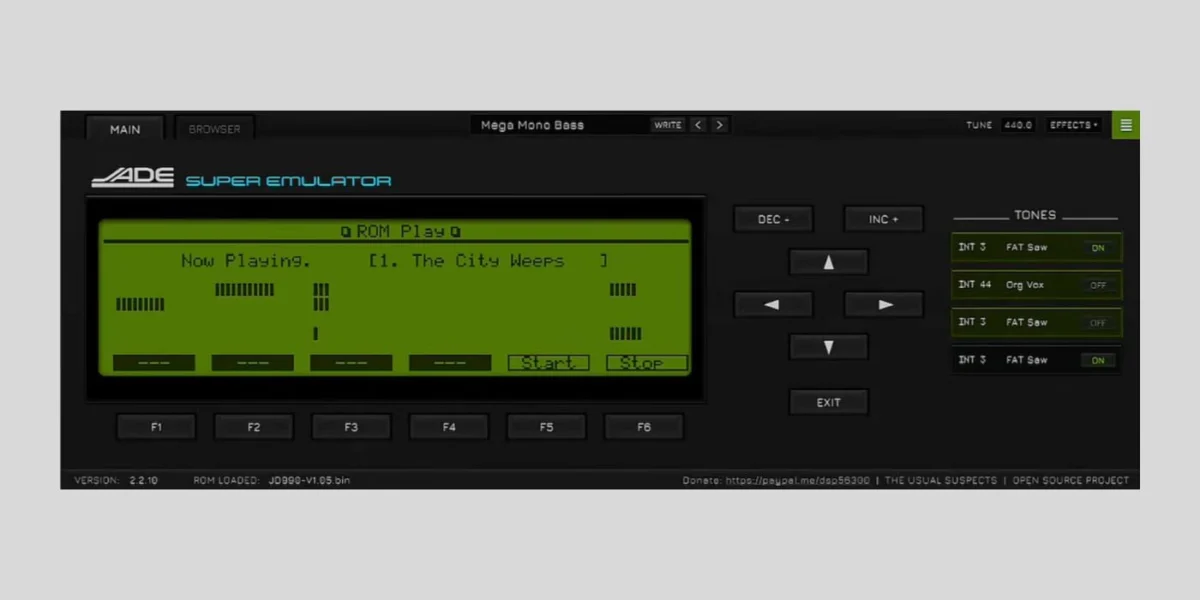
The world of music production is abuzz with the release of JADE, a meticulously crafted software emulator for the revered Roland JD-990 synthesizer. Currently available in an alpha version and offered completely free of charge, JADE promises to bring the distinctive sonic palette of the "Super JD" to digital audio workstations across multiple operating systems. This initiative, spearheaded by the dedicated development team known as "The Usual Suspects," continues their tradition of faithfully recreating vintage hardware, following successful projects like the JE-8086 (Roland JP-8080) and Xenia (Waldorf Microwave II/XT).
The Emulation Project: JADE and "The Usual Suspects"
JADE represents the latest endeavor from "The Usual Suspects," a group that has garnered significant acclaim within the music production community for their commitment to accurately emulating classic synthesizers. Their development philosophy centers on achieving unparalleled sonic authenticity, often necessitating the use of the original hardware’s ROM (Read-Only Memory) files. This approach, while ensuring a near-perfect sonic replication, also introduces a unique challenge regarding accessibility, as users must legally acquire the original ROM data to fully utilize the emulators.
The alpha version of JADE is currently distributed through the developers’ Discord channel, a common practice for independent projects fostering community engagement and gathering early feedback. It supports a comprehensive range of plugin formats, catering to virtually every major digital audio workstation (DAW) environment. These include AU (Audio Unit) for macOS users, VST2 and VST3 for broad compatibility across Windows and macOS, LV2 primarily for Linux-based systems, and CLAP (Common Linkable Audio Plugin), a newer open-source format gaining traction for its efficiency and modern features. This wide compatibility ensures that a vast majority of producers, regardless of their preferred platform or DAW, can experiment with JADE. An official release, anticipated to be available directly from the developer’s website, will likely follow a period of rigorous testing and refinement based on user feedback from this alpha phase.
The Original Icon: Roland JD-990 "Super JD"
To fully appreciate the significance of JADE, one must understand the legacy of the instrument it emulates: the Roland JD-990. Released in 1993, the JD-990 quickly earned its "Super JD" moniker as a significantly enhanced rackmount module derived from the popular JD-800 keyboard synthesizer. The early 1990s marked a pivotal period in synthesizer design, with digital synthesis technologies rapidly advancing and offering new possibilities in polyphony, waveform complexity, and effects processing. While the analog resurgence was still a few years away, digital instruments like the JD-990 were at the forefront of contemporary sound design, particularly influencing genres such as electronic dance music, ambient, and film scoring.
The JD-990 built upon the foundation of the JD-800, which itself was celebrated for its hands-on control and rich, digital-analog hybrid sounds. However, the JD-990 pushed these capabilities further, positioning itself as a professional-grade studio workhorse. Its enhancements were substantial, offering nearly double the number of internal PCM (Pulse Code Modulation) waveforms—a staggering 195—compared to its keyboard counterpart. These waveforms provided the raw sonic material for a vast array of sounds, from lush pads and cutting leads to percussive elements and intricate textures.
Beyond a larger waveform library, the JD-990 integrated advanced synthesis parameters that significantly expanded its sound design potential. These included oscillator sync, which allows one oscillator to reset the phase of another, creating harmonically rich and aggressive timbres; frequency cross modulation, where the frequency of one oscillator modulates another, leading to complex, often metallic or bell-like sounds; and ring modulation, a process that multiplies two audio signals, resulting in unique and often dissonant harmonic content. These features, typically found on more advanced or analog synthesizers, provided the JD-990 with a versatility that belied its digital architecture.
Crucially, the JD-990 also featured a sophisticated built-in multi-effects processor. This was a significant advantage in the era before ubiquitous software plugins, offering a comprehensive suite of studio-quality effects directly within the module. The processor included a three-band graphic EQ for precise tonal shaping, distortion for adding grit and saturation, a phaser for sweeping, ethereal textures, chorus for thickening and widening sounds, delay for echoes and spatial effects, and a lush reverb for creating expansive soundscapes. The integration of these effects meant that producers could craft complete, polished sounds without needing external processing, streamlining the workflow and enhancing the module’s value as an all-in-one sound design tool.
JD-990 vs. JD-800: A Legacy Refined
While sharing the fundamental architecture and sonic character of the JD-800, the JD-990 was designed to be a more powerful and flexible studio tool. One of its most notable upgrades was the multi-mode TVF (Time-Variant Filter). Unlike simpler filters, the JD-990’s TVF offered multiple filter types (low-pass, high-pass, band-pass) and was highly programmable, allowing for more intricate and dynamic sound shaping than what was possible with the JD-800. This enabled producers to sculpt sounds with greater precision, adding movement, character, and expressiveness to their patches.
The internal architecture of the JD-990 was also designed for maximal flexibility. Each patch could comprise up to four individual "tones," each with its own waveform, filter, envelopes, and effects routing. This multi-timbral capability meant the JD-990 could simultaneously play up to four different sounds, making it a true studio workhorse capable of handling complex arrangements. Its 24-note polyphony was generous for the time, allowing for rich chords and sustained textures without voice stealing.
Further enhancing its sound design capabilities, the JD-990 provided two LFOs (Low-Frequency Oscillators) per patch, which could be routed to modulate various parameters like pitch, filter cutoff, or amplitude, creating rhythmic movement and evolving timbres. Each of the four tones also featured three dedicated envelopes: one for Pitch, one for the TVF filter, and one for the TVF amplifier. These envelopes provided detailed control over the attack, decay, sustain, and release phases of a sound, allowing for everything from sharp, percussive transients to slow, atmospheric fades.
One much-loved characteristic that contributed to the JD-990’s "analog-like" warmth, despite its digital nature, was its ability to introduce subtle pitch drift. This slight, natural-sounding detuning, reminiscent of classic analog synthesizers, added an organic quality and a sense of "life" to its sounds, preventing them from sounding overly static or clinical—a common criticism of some early digital instruments.
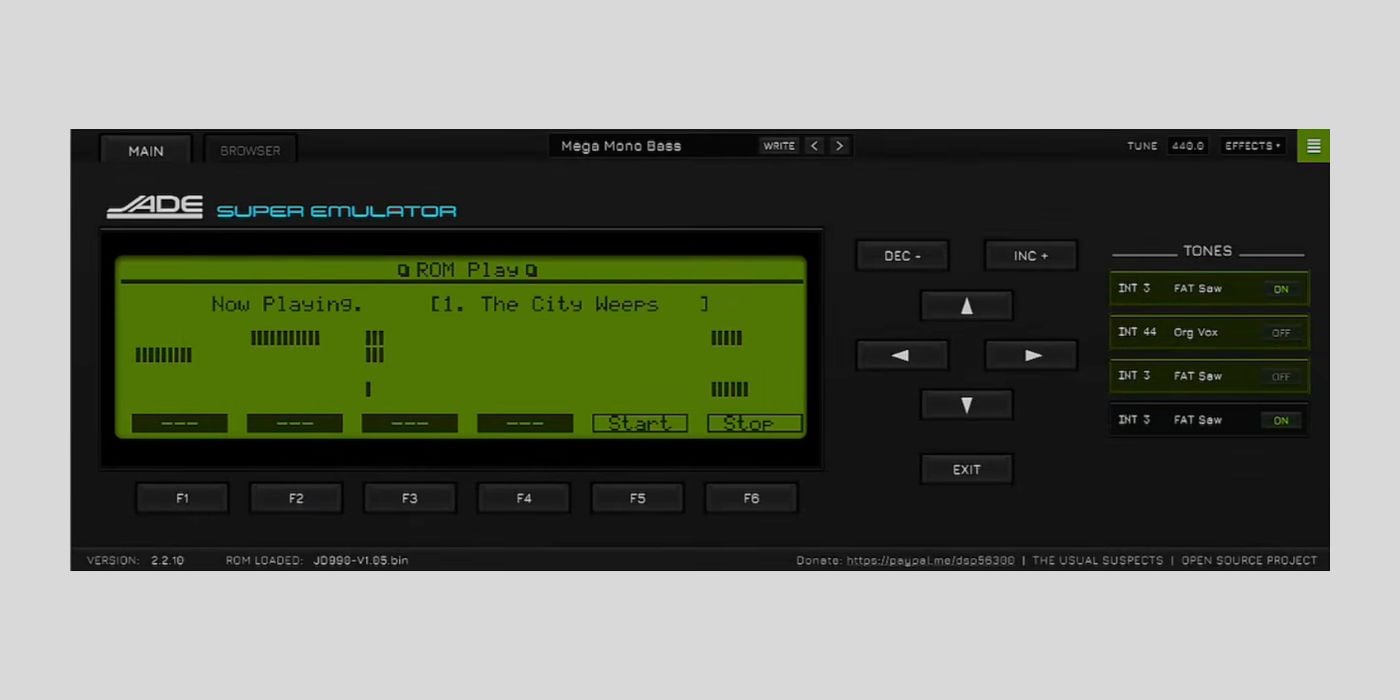
Despite its deep feature set and complex internal architecture, one of the most appreciated aspects of the JD-990 was its remarkably straightforward interface. While the JD-800 sported a plethora of physical sliders and knobs, the rackmount JD-990 managed to present its extensive parameters in a logical and accessible manner through its display and button layout. This intuitive design meant that users could quickly navigate and program sounds without getting lost in menus, fostering a more creative and immediate workflow. "The Usual Suspects" appear to have accurately mirrored this efficient workflow in JADE, ensuring that the software emulation retains the original hardware’s user-friendliness, a critical factor for any successful virtual instrument.
A Niche, Yet Revered, History and Musical Impact
The Roland JD-990 holds a unique place in synthesizer history. While it might not feature as prominently in popular culture as some of Roland’s earlier analog giants like the Jupiter-8 or the later digital workstations like the Fantom series, its influence on music production, particularly in the 1990s and early 2000s, was significant. Its rich, evolving pads, punchy basses, and crystal-clear leads became staples in a wide array of genres.
A prime example of the JD-990 in action is its unmistakable presence in Faithless’s iconic track "Insomnia." The synth’s distinctive sounds contributed heavily to the track’s atmospheric and driving energy, cementing its status in the electronic dance music canon. However, to pigeonhole the JD-990 solely as a "90s digital synth for dance music" would be a disservice to its versatility. Its capabilities extended far beyond, allowing producers to craft funky basslines, emotive arpeggios, dystopian soundscapes, and intricate textural elements suitable for film scores, ambient music, and experimental electronic compositions. Its extensive waveform library and advanced modulation options enabled a broad sonic palette, making it a dependable choice for musicians seeking depth and character in their digital sounds.
While some might debate its exact placement in a "greatest hits" list of Roland synthesizers—often influenced by a healthy dose of nostalgia—there’s no denying the JD-990’s enduring appeal. Its robust feature set and distinctive sound profile ensured its longevity in professional studios long after its initial release, and its legacy continues to resonate with producers seeking its unique sonic signature.
The Technical Challenge of Emulation and the ROM File Imperative
The reason JADE’s sound is consistently described as "spot on" lies in "The Usual Suspects’" meticulous approach to emulation, particularly their requirement for the original Roland ROM file. Unlike simpler emulations that might rely on sampled waveforms or reverse-engineered algorithms, this method ensures that the software replicates the JD-990’s sonic character with unparalleled accuracy. The ROM file contains the actual waveform data and potentially other crucial operational parameters that define the synthesizer’s fundamental sound.
This commitment to authenticity, while laudable from a technical and sonic perspective, presents a significant hurdle for potential users. Acquiring a legally obtained Roland ROM file can be challenging. For those who already own the original JD-990 hardware, extracting the ROM data is typically straightforward and falls within the bounds of personal use. However, for individuals without the physical hardware, the "waters are far muddier." The legality of downloading or distributing ROM files for commercial products without explicit manufacturer consent is often ambiguous and varies by jurisdiction. This means that while JADE itself is free, access to its full, authentic sound depends on navigating this often-complex legal landscape.
This situation reflects a common dilemma in the world of vintage hardware emulation. Developers strive to preserve the legacy of these instruments, but intellectual property rights often complicate the process. "The Usual Suspects" have consistently adopted this ROM-dependent model for their projects, making it a hallmark of their releases. While this means not everyone will be able to immediately put JADE to full use, the appreciation for their technical prowess and dedication to preservation remains evident within the music production community.
Broader Implications for Music Production and Preservation
The release of projects like JADE carries significant implications for the wider music production landscape. Firstly, it democratizes access to classic sounds. Original JD-990 units are becoming increasingly rare, expensive, and subject to the vagaries of aging electronics. A high-quality software emulation, especially one offered for free, allows a new generation of producers to experience and integrate these iconic sounds into their music without the prohibitive cost and maintenance burden of hardware.
Secondly, it plays a crucial role in the preservation of musical heritage. As physical hardware inevitably degrades, software emulations ensure that the unique sonic characteristics and operational workflows of these instruments are not lost to time. Developers like "The Usual Suspects" are, in essence, creating digital archives of these sonic artifacts, making them accessible and usable for decades to come.
Furthermore, these emulations often offer advantages that even the original hardware couldn’t provide. Software plugins seamlessly integrate into modern DAWs, allowing for instant recall of settings, limitless instances (CPU permitting), and easy automation of parameters. They eliminate the need for dedicated rack space, complex cabling, and external effects units, streamlining the production process significantly. While purists may always prefer the tactile experience of hardware, the convenience and flexibility of software are undeniable.
The ongoing debate surrounding ROM files also highlights the complex relationship between intellectual property, cultural preservation, and technological advancement. As vintage hardware becomes more sought after, the demand for legal and accessible ROM data is likely to grow, potentially prompting manufacturers to consider official licensing or alternative distribution models for their legacy assets.
Availability and Next Steps
For producers eager to explore the sounds of the Roland JD-990, the alpha version of JADE is available for download now. Prospective users should head to "The Usual Suspects’" Discord channel (link provided) to access the plugin files. It is important to reiterate the requirement for a legally acquired Roland JD-990 ROM file to unlock the full potential and authentic sounds of the JADE emulator. While this step adds a layer of complexity, it underscores the developer’s commitment to sonic fidelity.
As the alpha phase progresses, users are encouraged to provide feedback, helping "The Usual Suspects" refine JADE towards its official release. This collaborative approach between developers and the user community is a hallmark of many successful independent software projects and promises to yield a robust and highly accurate emulation of one of Roland’s most versatile and dependable digital synthesizers. Whether one places the JD-990 at the pinnacle of Roland’s achievements or merely as a significant contributor to its digital legacy, its enduring capability to "grace any hit record" is now more accessible than ever, thanks to the dedicated efforts behind JADE.
