

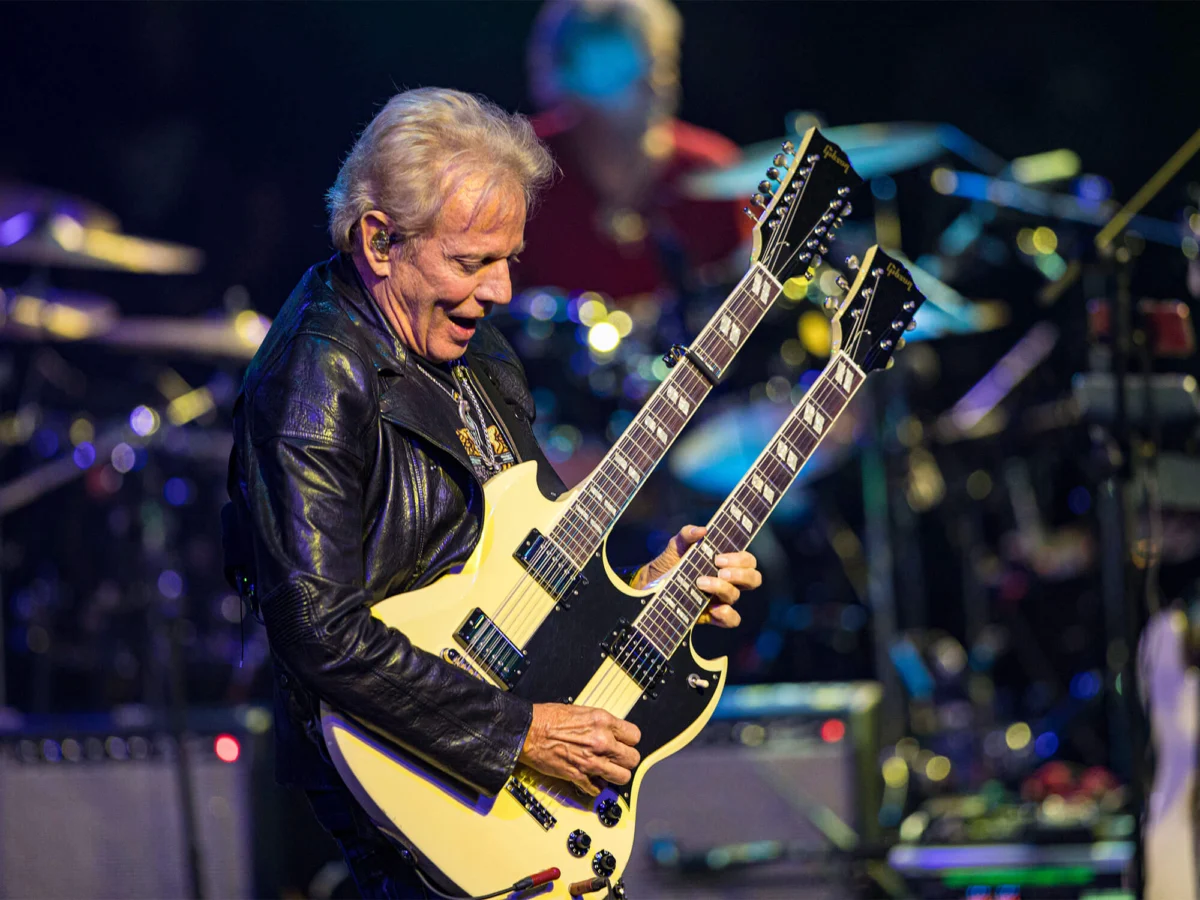
Don Felder, the legendary guitarist renowned for his pivotal role in the Eagles, maintains a steadfast commitment to performing the iconic "Hotel California" outro solo with absolute fidelity to its original recorded version. This dedication, articulated in a recent interview with Ultimate Classic Rock, stems from a profound respect for the song’s legacy and an unwavering obligation to the millions of fans who cherish every note. The solo, a monumental achievement in rock guitar history, is not merely a sequence of notes for Felder; it is a sacred trust, demanding rigorous practice and intense concentration at every live performance, even after nearly five decades since its creation.
Felder’s Philosophy: Precision Over Improvisation
Felder’s rationale for his unyielding precision is rooted directly in the expectations of his audience. He candidly expresses his concern about deviating from the established masterpiece: "Everybody knows every note in that solo, and I’m afraid if I started jamming on it people would go, ‘What is he doing? That’s wrong! That’s not the solo! Is he having a moment? Or maybe he’s just too old to remember it?’" This statement vividly illustrates the unique position of the "Hotel California" solo in popular culture, where its exact replication is not just preferred but implicitly expected by a fanbase intimately familiar with every nuance of the studio recording. For many, the live performance of this solo is a pilgrimage, a chance to relive a seminal musical moment exactly as they remember it.
The guitarist’s commitment extends to a surprisingly rigorous daily practice regimen. Despite having performed the solo hundreds of times throughout his career, both with the Eagles and as a solo artist, Felder reveals a pre-show ritual that underscores his dedication: "The one thing I do at every show, before I go on stage, is work on Hotel California because I don’t want to disappoint anybody." This diligent preparation highlights not only the solo’s inherent technical complexity but also the artist’s profound personal standard of excellence. It signifies that even for a seasoned virtuoso, mastering such an iconic piece requires continuous attention and respect, preventing any lapse into complacency.
Felder further emphasizes the mental effort involved in each rendition: "You never want to just go on autopilot with it." This declaration is crucial, as it speaks to the sustained focus required to deliver a flawless performance under the spotlight. It means that each live execution is a conscious act of precision, ensuring that the energy, phrasing, and intricate timing are delivered with the same impact and emotional resonance as the original recording, thereby preserving the magic that captivated listeners worldwide. This approach contrasts sharply with the improvisational freedom often associated with rock guitarists, positioning Felder as a meticulous interpreter of a fixed, beloved text.
The Genesis and Cultural Impact of "Hotel California"
The song "Hotel California" itself is far more than just a hit single; it is a cultural touchstone and the title track of an album that profoundly shaped the landscape of American rock music. Released in December 1976, the Hotel California album marked a significant stylistic evolution for the Eagles, showcasing a darker, more complex, and introspective sound compared to their earlier, more country-rock-oriented material. The title track, with its enigmatic lyrics, intricate musicality, and extended instrumental outro, quickly transcended mere commercial success to become a global phenomenon. It earned the prestigious Grammy Award for Record of the Year in 1978 and has contributed to the album’s staggering sales figures, exceeding 32 million copies worldwide, making it one of the best-selling albums in history.
The core musical idea for "Hotel California" originated with Don Felder. He developed an instrumental demo featuring a distinctive reggae-rock rhythm and a haunting chord progression in E minor, presenting it to his bandmates. Recognizing its immense potential, Glenn Frey and Don Henley then meticulously crafted the iconic, narrative-driven lyrics. These lyrics, often interpreted as a commentary on the hedonism, materialism, and underlying disillusionment prevalent in the Los Angeles music industry and the broader American dream of the 1970s, resonate deeply with listeners across generations. This lyrical depth, combined with the sophisticated musical arrangement and the captivating guitar solo, elevates the song beyond a simple rock track into a profound and enduring cultural statement, reflecting the anxieties and excesses of its era.
Deconstructing the Iconic Guitar Solo
The "Hotel California" outro solo is universally regarded as one of the greatest guitar solos ever recorded, not least for its innovative dual-guitar architecture. It is not merely a single performance but a meticulously crafted duet between Don Felder and Joe Walsh, a harmonious and technically brilliant interplay that became a signature of the Eagles’ sound. The solo unfolds in a structured yet dynamic manner: Felder initiates the solo with his characteristically melodic, precise, and emotionally charged phrasing, often described as elegant and fluid. This is then followed by Walsh’s distinctively more blues-infused, often slightly more erratic and improvisational flourishes, adding a raw, spontaneous energy. The two guitarists then converge into a breathtaking harmonized section, building to a climactic, almost orchestral, crescendo that provides a powerful and memorable resolution to the song.
Technically, the solo is a demanding piece, featuring a blend of fast arpeggios, intricate scale runs, soulful string bends, and masterful vibrato. However, its true genius lies beyond mere technical virtuosity; it resides in its profound emotional arc, which mirrors and amplifies the song’s narrative journey. The solo builds tension and releases it, evoking a sense of longing, grandeur, and ultimately, a melancholic resolution that lingers long after the final note fades. This carefully constructed emotional landscape is a testament to the collaborative brilliance of Felder and Walsh, and the meticulous production that shaped its final form.
The critical acclaim and enduring influence of the "Hotel California" solo are undeniable. It has been consistently ranked among the greatest guitar solos of all time by numerous authoritative music publications, including Guitar World, Rolling Stone, and Total Guitar. Its unique structure and compelling melodic lines have inspired countless aspiring guitarists and influenced generations of musicians across various genres. The solo’s structure—beginning with individual expression from each guitarist and culminating in a unified, soaring harmony—symbolizes the collaborative spirit and musical synergy that defined the Eagles during their commercial and artistic peak. Its status is such that it transcends the realm of popular music; it is an academic study for guitarists and a cultural touchstone for millions.
The Essential Gear: Gibson EDS-1275 Double Neck
For live performances of "Hotel California," Don Felder famously employs his distinctive Gibson EDS-1275 double neck guitar. This iconic instrument is far more than a mere stylistic choice; it is a practical necessity that allows Felder to faithfully replicate the song’s complex arrangement on stage. The EDS-1275 features two necks: a 12-string neck and a 6-string neck. This configuration enables Felder to seamlessly transition between the song’s acoustic-like intro and verse parts, which are traditionally played on the 12-string guitar, and the electric lead parts, including the entire iconic solo, which are performed on the 6-string neck.
The use of the double-neck guitar is a direct solution to a significant live performance challenge. The original studio recording of "Hotel California" involved multiple guitar tracks, overdubs, and intricate layering to achieve its rich sonic texture. While in the studio, different guitars could be used for different sections, a live setting demands efficiency and continuity. The EDS-1275 allows a single performer to emulate this layered sound without requiring instrument changes or sacrificing the fidelity of the arrangement. This strategic choice of instrumentation further underscores Felder’s unwavering commitment to ensuring that the live rendition captures the full sonic breadth and detail of the original recording, a crucial element in meeting fan expectations for this particular masterpiece.

The Broader Debate: Replication vs. Improvisation in Live Performance
Don Felder’s unwavering approach to the "Hotel California" solo casts a spotlight on a long-standing and often debated topic among musicians and audiences alike: the delicate balance between artistic improvisation and faithful reproduction of recorded material in a live setting. This discussion touches upon the very essence of live performance and the expectations audiences bring to a concert.
In certain musical genres, improvisation is not merely common but is, in fact, the very essence of the performance. Jazz musicians, for example, thrive on spontaneous creation, with solos and arrangements often being unique to each show. Blues artists frequently interpret standard forms with new melodic and rhythmic ideas, and jam bands like the Grateful Dead or Phish are celebrated precisely for their extended, often hour-long instrumental passages that diverge significantly from their studio counterparts. For these artists and their audiences, the thrill lies in the unpredictability and the immediate creative spark of the moment.
Conversely, in other musical traditions, adherence to the original score or recording is paramount. Classical music demands meticulous interpretation of a composer’s work, with deviations often seen as inappropriate. In much of pop music, particularly where a specific guitar riff, vocal melody, or synth line is integral to a song’s identity and commercial success, audiences often expect precise renditions. Any alteration might be perceived as a betrayal of the familiar and beloved version.
The "Hotel California" solo, in this context, stands as a fascinating example of a piece where the recorded version has achieved such canonical status that any deviation is perceived by many fans not as an artistic reinterpretation or a moment of spontaneous genius, but rather as a diminishment or an error. This phenomenon elevates the solo from a mere musical passage to a fixed cultural artifact, almost a ritualistic experience for the audience. The solo has been ingrained in the collective memory of generations of music lovers, a sonic landmark associated with specific emotional and historical contexts. For many, hearing it performed live is a nostalgic experience, a powerful connection to a specific moment in time and personal history. Altering it could disrupt this powerful emotional and historical link, leading to a sense of disappointment rather than discovery. Felder’s stance, therefore, champions the preservation of this collective memory and the integrity of a masterpiece that has transcended its original context.
Don Felder’s Solo Career and "Heavy Metal (Takin’ a Ride)"
Following his high-profile departure from the Eagles in 2001, Don Felder embarked on a successful solo career, allowing him to explore his distinct musical vision. He released albums such as Airborne in 1983 and Road to Forever in 2012, showcasing his enduring guitar prowess and songwriting talent. These endeavors allowed him to maintain a presence in the music world, performing his solo material alongside the Eagles classics for which he is celebrated.
In a recent interview, Felder offered a fascinating glimpse into his creative process and past ambitions, specifically discussing his 1981 solo track, "Heavy Metal (Takin’ a Ride)," which he re-recorded for his retrospective album The Vault – Fifty Years of Music. He revealed that this powerful instrumental was originally conceived with a much grander purpose: it was intended to be a potential follow-up to "Hotel California" for the Eagles’ 1979 album, The Long Run. More specifically, Felder envisioned it as an even more intense and challenging guitar showdown between himself and Joe Walsh.
Felder articulated his original concept for the track: "It had a real kind of heavy hand to it and I wrote it so that Joe and I could play even harder than we did – or edgier than we did – on Hotel California, against each other. It had harmony parts, trading-off solos and a much harder rock edge." This anecdote provides invaluable insight into Felder’s ambition to push the boundaries of the twin-guitar attack he had perfected with Walsh. It speaks to his innovative spirit and his desire to constantly evolve, even within the structured environment of a band known for its meticulous arrangements. Although the track ultimately became a solo piece, it stands as a testament to Felder’s vision and offers a tantalizing glimpse into what might have been another iconic Eagles guitar epic. The re-recording for The Vault allows fans to appreciate this powerful track within the broader context of his extensive career.
The Eagles’ Enduring Legacy and Current Engagements
Despite numerous personnel changes, hiatuses, and internal conflicts over the decades, the Eagles remain one of the most successful and enduring bands in rock history. Their music continues to resonate with both long-time fans who grew up with their albums and new generations discovering their timeless catalog. The band’s consistent touring success is a testament to the enduring power of their songs and the quality of their live performances.
The Eagles recently announced an extended residency at the state-of-the-art Las Vegas Sphere, further cementing their status as a premier live act capable of filling massive venues. These high-profile engagements demonstrate the continued, robust demand for their iconic catalog, with "Hotel California" undoubtedly serving as a central, non-negotiable pillar of their setlist. Even with the current lineup, which no longer includes Don Felder, the band’s guitarists are tasked with the immense responsibility of faithfully recreating his seminal contributions, particularly the intricate and beloved "Hotel California" solo, echoing Felder’s own commitment to precision. This reflects the solo’s monumental status, where its integrity transcends individual performers to become a sacred component of the band’s live identity.
Implications and Conclusion: The Art of Preserving a Masterpiece
Don Felder’s steadfast refusal to improvise on the "Hotel California" solo serves as a compelling case study in the complex dynamics between an artist, their seminal work, and their audience. It underscores the profound power of certain musical pieces to transcend mere performance and become fixed cultural touchstones. His dedication is not simply a testament to his professionalism and technical mastery, but also a profound recognition of the collective emotional and nostalgic investment fans have in the exact, original articulation of that legendary solo. In a world that increasingly values artistic reinterpretation and spontaneous creation, Felder’s approach champions the meticulous preservation of a masterpiece.
His commitment ensures that the magic of "Hotel California" is experienced live precisely as it was first recorded, honoring both its historical significance and its enduring impact on the hearts of millions. This principled stance solidifies his legacy not just as a brilliant and innovative guitarist, but also as a diligent guardian of one of rock music’s most treasured sonic monuments. By prioritizing fidelity to the original, Felder ensures that the timeless allure of "Hotel California" remains undiluted, continuing to transport audiences back to a moment of musical perfection, exactly as they remember it.
