

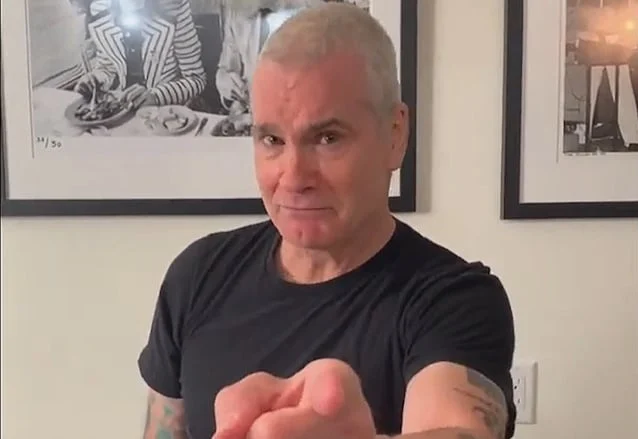
Henry Rollins, the formidable voice of punk rock and a multifaceted artist whose career has spanned decades of relentless creative output, is set to release a new memoir, "Bait Dog Boy," on March 2, 2027, through Penguin Random House. This 304-page account promises to delve into the formative experiences that shaped the iconic frontman of Black Flag and Rollins Band, offering an unflinching look at a childhood marked by hardship and a desperate quest for escape.
The publisher’s description of "Bait Dog Boy" as "a searing memoir of a broken childhood and the hope of escaping it" immediately signals the raw and introspective nature of the work. Rollins, known for his uncompromising honesty and visceral storytelling, is poised to confront a period of his life he has largely avoided addressing directly. The memoir is expected to chronicle his early years in Washington D.C., an environment characterized by emotional neglect and the presence of "a seemingly endless parade of abusive adults." It is within this challenging landscape that Rollins lays bare the profound absence of love, a void that would fundamentally influence his worldview and artistic trajectory.
The Genesis of a Lifeline: From Pain to Punk
The narrative arc of "Bait Dog Boy" is set to illuminate the pivotal moment when a young Henry Rollins discovered punk rock. This burgeoning music scene, particularly his encounters with Ian MacKaye, a fellow luminary of the D.C. hardcore scene and founder of Minor Threat, is presented as a transformative force. Punk rock, with its ethos of DIY rebellion and raw expression, is positioned not merely as a musical genre, but as a critical lifeline for a young man navigating a world seemingly intent on his subjugation. The concept of absorbing pain, likened to that of a "bait dog," is central to the memoir’s thematic exploration, suggesting a deep well of resilience forged through adversity.
Rollins’ own words, as quoted in the initial announcement, encapsulate this fierce determination: "I have no desire to be a survivor. I’d rather accept, absorb, adapt, fight and break that which seeks to break me – to be that which remains." This declaration underscores a philosophy of active resistance and transformation, a rejection of passive victimhood in favor of an assertive engagement with life’s challenges. The memoir promises to deliver this philosophy through Rollins’ signature style – "unmistakably blunt, brutal, and acerbic," a voice that has resonated with millions through his music, spoken-word performances, and written works.
A Literary Landscape: Rollins’ Expanding Oeuvre
The release of "Bait Dog Boy" marks a significant addition to Henry Rollins’ extensive literary output. Over his career, Rollins has established himself as a prolific author, with a body of work that includes poetry collections, essays, and previous memoirs such as "Get in the Van: On the Road with Black Flag," which earned him a Grammy Award for Best Spoken Word Album in 1995. His written works often mirror the intensity and directness of his musical performances, offering insights into his nomadic lifestyle, his political convictions, and his philosophical musings.
His career trajectory is a testament to his multifaceted artistic drive. Beyond his seminal work with Black Flag and Rollins Band, Rollins has achieved widespread recognition as a spoken-word artist, captivating audiences in colleges and theaters across the globe. His insatiable curiosity has also led him to explore remote and often challenging regions, including Nepal, Sri Lanka, Siberia, North Korea, South Sudan, and Iran, experiences that have undoubtedly enriched his perspective and informed his creative output. Furthermore, Rollins has cultivated a successful career in acting, appearing in notable films such as "The Chase," "Johnny Mnemonic," "Heat," and David Lynch’s "Lost Highway." He has also lent his voice to numerous voice-over projects and hosted television shows, demonstrating a remarkable versatility and an enduring commitment to engaging with a broad spectrum of creative endeavors.
The "Bait Dog" Metaphor: A Deeper Analysis
The central metaphor of the "bait dog" in "Bait Dog Boy" is particularly potent and warrants deeper consideration. In canine training, a bait dog is often used to provoke aggression in other dogs, exposing them to attack in controlled, albeit often cruel, environments. This imagery powerfully conveys a sense of being deliberately subjected to hardship, of being placed in a position where one is forced to endure or confront aggression. For Rollins, this metaphor likely encapsulates a childhood where he felt exposed to the emotional and psychological attacks of adults, where his own vulnerabilities were perhaps exploited or disregarded.
The choice of this metaphor suggests a profound understanding of how early experiences of trauma and neglect can shape an individual’s development. It implies a narrative of enduring constant onslaughts, of being a target, yet ultimately developing a form of resilience through this very exposure. The phrase "absorbing pain, like a bait dog" suggests not a passive suffering, but an active, albeit involuntary, process of internalizing and processing difficult experiences. This act of absorption, in Rollins’ framing, appears to be the precursor to his later philosophy of adaptation and defiance.
Chronology of a Formative Journey: From D.C. to the Stage
The journey chronicled in "Bait Dog Boy" is expected to follow a distinct chronological path, charting Rollins’ evolution from a child in a turbulent home to a cultural icon.
-
Early Childhood (1960s-1970s, Washington D.C.): The memoir will likely begin by detailing the unstable domestic environment of Rollins’ youth. This period would have been marked by the challenges of navigating relationships with "indifferent parents" and encounters with "abusive adults." The emotional vacuum described by the publisher is central to understanding the foundational experiences of his childhood. This era would have been characterized by the social and political climate of Washington D.C. during the latter half of the 20th century, which, while a center of power, could also harbor significant social inequalities and personal struggles.
-
Adolescence and the Discovery of Punk (Late 1970s – Early 1980s): This phase is crucial, representing the turning point in Rollins’ life. His interactions with Ian MacKaye and the nascent D.C. punk scene would have offered an alternative framework for understanding the world and his place within it. The discovery of punk rock provided not just an outlet for aggression and frustration, but a community and a set of ideals that resonated deeply with his experiences. This was a period of intense musical and ideological ferment in the D.C. area, with bands like Bad Brains, Minor Threat, and S.O.A. shaping a vibrant and confrontational scene.
-
Emergence with Black Flag (Early-Mid 1980s): The memoir will likely touch upon his integration into Black Flag, a band that would become synonymous with the raw energy and uncompromising spirit of American hardcore punk. This period marked his transition from a nascent punk enthusiast to a frontman, taking his personal struggles and channeling them into a powerful artistic expression that would influence countless musicians and fans. Black Flag’s touring life, often characterized by grueling schedules and confrontational performances, would have further tested and shaped his resilience.
-
Rollins Band and Beyond (Mid-1980s – Present): While "Bait Dog Boy" focuses on his formative years, the narrative will undoubtedly inform his subsequent career, including the formation of Rollins Band and his expansive work as a spoken-word artist, author, and activist. The lessons learned in his youth would have provided the bedrock for his enduring commitment to authenticity and his relentless pursuit of artistic expression across various mediums.
Supporting Data and Context
To fully appreciate the context of Rollins’ memoir, it’s helpful to consider the broader landscape of the punk rock movement and the social conditions of the eras he describes.
-
The Rise of Hardcore Punk: The late 1970s and early 1980s saw the emergence of hardcore punk as a more aggressive and politically charged evolution of earlier punk. Bands like Black Flag, with their relentless touring and confrontational sound, became emblematic of this movement. This subculture offered a sense of belonging and empowerment to individuals who felt disenfranchised by mainstream society. The DIY ethos was paramount, with artists often relying on independent labels, self-promotion, and direct engagement with their audience.
-
Social and Economic Factors: The period of Rollins’ childhood in Washington D.C. was marked by significant social and economic shifts. While the city was the seat of political power, it also grappled with issues of poverty, racial tension, and urban decay in certain neighborhoods. These broader societal currents could have contributed to the difficult environments that individuals like Rollins experienced.
-
Psychological Impact of Childhood Trauma: Research in psychology consistently highlights the long-lasting effects of childhood trauma, including emotional neglect and abuse. These experiences can lead to difficulties in forming healthy relationships, challenges with self-esteem, and a heightened sense of vulnerability. Rollins’ memoir offers a powerful anecdotal illustration of how individuals can process and, in some cases, transcend such early hardships through creative outlets and a determined will to survive and thrive.
Potential Reactions and Broader Implications
The announcement of "Bait Dog Boy" is likely to generate significant interest within the literary and music worlds. Fans who have followed Rollins’ career for decades will eagerly anticipate this deeply personal account, seeking to understand the origins of his often-acerbic worldview and his unwavering dedication to his craft.
-
Literary Community: Publishers and literary critics will be keenly observing the reception of "Bait Dog Boy." Rollins’ established reputation as an author, coupled with the raw subject matter, suggests that the memoir could be a significant literary event, potentially garnering critical acclaim for its honesty and literary merit. Its inclusion in the Penguin Random House catalog, a major publishing house, indicates a belief in its broad appeal and cultural significance.
-
Music Industry and Fan Base: For the punk and alternative music communities, this memoir offers a chance to gain deeper insight into one of their most iconic figures. The authenticity and raw emotion that characterized Black Flag’s music and Rollins’ subsequent work are deeply valued, and "Bait Dog Boy" promises to provide the personal context behind that intensity. It may also serve as an inspiration to others who have faced similar adversities.
-
Analysis of Resilience and Transformation: On a broader level, "Bait Dog Boy" can be seen as a testament to the human capacity for resilience and transformation. Rollins’ journey from a difficult childhood to becoming a celebrated artist and cultural commentator offers a compelling narrative of overcoming adversity. His philosophy of active engagement with challenges, rather than passive endurance, provides a powerful message of agency and self-determination. The memoir’s exploration of how art, particularly punk rock, can serve as a vital lifeline for those struggling to find their way is a theme that resonates deeply with many.
In conclusion, "Bait Dog Boy" by Henry Rollins is poised to be more than just another celebrity memoir. It is anticipated to be a searing, unflinching examination of a broken childhood and the indomitable spirit that rose from its ashes. Through his signature bluntness and profound introspection, Rollins is set to offer a compelling narrative of survival, adaptation, and the enduring power of art to forge a path through even the darkest of circumstances. The book’s March 2, 2027 release date marks a highly anticipated moment for those eager to delve into the formative experiences of a true cultural icon.
