

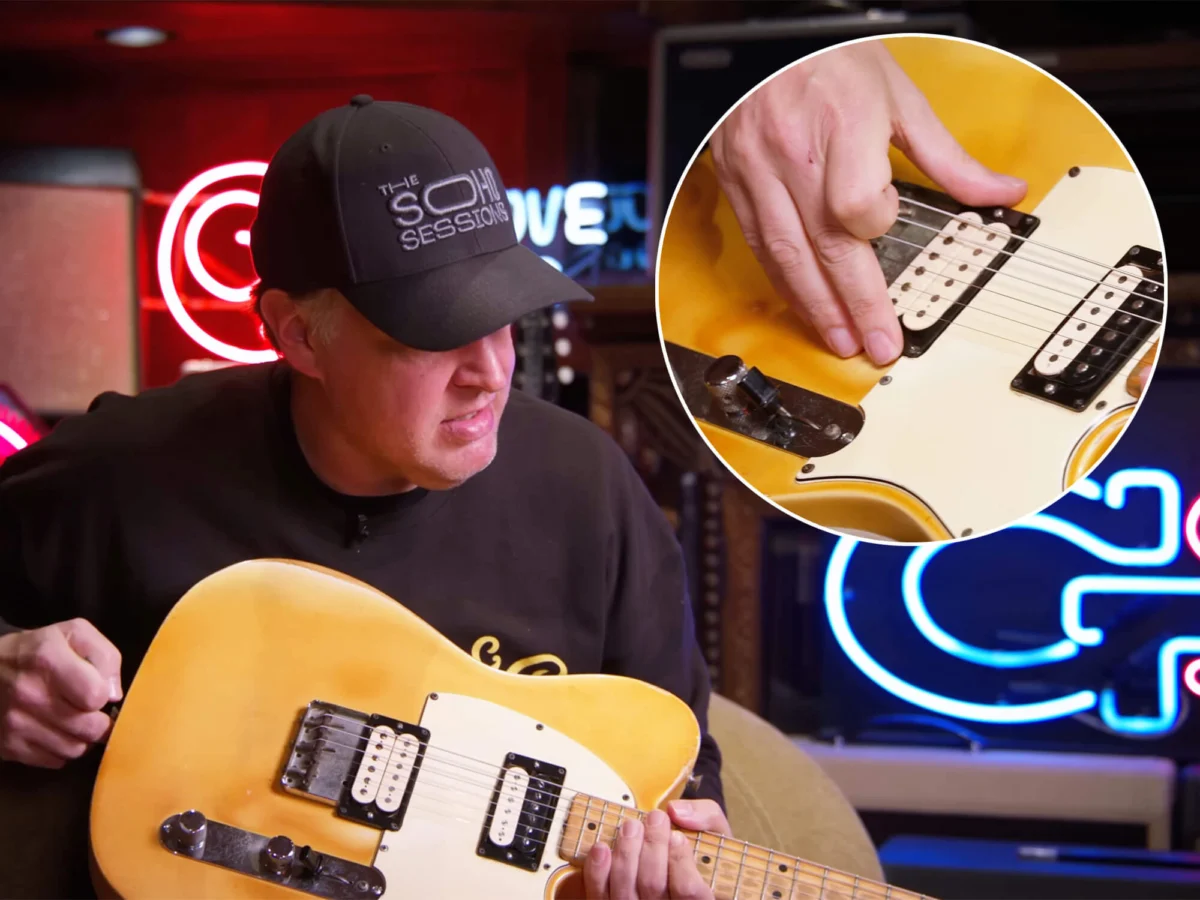
Blues titan and prolific vintage guitar collector, Joe Bonamassa, is challenging conventional purism within the high-stakes world of rare instruments, revealing that one of his most cherished guitars is a heavily modified 1968 Fender Telecaster, famously loaded with Gibson PAF humbucking pickups. This revelation, shared in a recent interview, underscores Bonamassa’s pragmatic philosophy that functionality, tone, and the intangible "magic" of an instrument can often supersede strict originality, a sentiment further reinforced by his evolving appreciation for digital amp modelers. His candid embrace of "hybrid" instruments and modern technology signals a significant shift from the traditionalist stance often expected from a connoisseur of his caliber, prompting discussions among musicians and collectors about the future definition of "vintage" and "authentic" tone.
Joe Bonamassa: The Vintage Guitar Aficionado with a Modern Twist
Joe Bonamassa has cemented his status as one of the most revered guitarists of his generation, lauded for his blistering blues-rock solos and profound understanding of tone. Beyond his formidable playing, Bonamassa is equally renowned for his extraordinary collection of vintage guitars and amplifiers, meticulously curated and housed in his fabled "Nerdville" archives across Nashville and Los Angeles. These collections, comprising hundreds of historically significant instruments, are a testament to his deep reverence for guitar heritage. For years, Bonamassa has been a vocal advocate for the unparalleled sound and craftsmanship of vintage gear, often touring with original ’59 Les Pauls, early Fender Stratocasters, and a vast array of classic tube amplifiers. This background naturally positions him as a gatekeeper of vintage purism, making his recent statements regarding his favorite guitar all the more compelling and, to some, surprising.
The Enigmatic 1968 Fender Telecaster: A Closer Look
At the heart of Bonamassa’s unconventional preferences lies a specific 1968 Fender Telecaster, an instrument that, by traditional vintage collector standards, would be significantly devalued due to its extensive modifications. Bonamassa acquired this unique piece approximately 15 years ago from an individual in Daytona Beach, Florida. Recalling the purchase, he emphasized that it wasn’t a particularly expensive acquisition, a detail that further highlights his focus on sonic performance over speculative market value. Upon plugging it in, he immediately recognized a distinct "magic," a subjective yet powerful indicator for any musician that an instrument possesses a unique voice.
The modifications to this particular Telecaster are substantial and deliberate. The most striking alteration involves the replacement of its original Fender single-coil pickups with legendary Gibson PAF (Patent Applied For) humbuckers. PAFs, originally produced by Gibson from the mid-1950s to early 1960s, are celebrated for their warm, rich, and powerful output, often considered the holy grail of humbucker tone. Their inclusion in a Telecaster represents a radical departure from its traditional sonic profile, marrying the thick, creamy sustain typically associated with a Gibson Les Paul with the characteristic snap and articulation of a Fender.
Further enhancing this tonal alchemy, the guitar is fitted with 500k potentiometers. In guitar electronics, potentiometers (or "pots") control volume and tone. While many Fender guitars traditionally utilize 250k pots, which tend to roll off more high-frequency content, 500k pots allow a greater range of high frequencies to pass through, resulting in a brighter, more open tone. This choice complements the darker, thicker nature of the PAF humbuckers, providing a balanced, articulate sound that retains clarity even under high gain.
Bonamassa vividly describes the instrument as "basically a Gibson Les Paul jammed into a Fender Telecaster." However, he is quick to point out the crucial differences that prevent it from being a mere imitation. The Telecaster retains its original maple neck and ash body. Ash, a popular tonewood for Telecasters and Stratocasters, is known for its bright, resonant, and articulate sound with pronounced highs and lows. The maple neck contributes to a snappy, clear attack and adds sustain. These Fender-specific wood characteristics, combined with the Gibson pickups, create a unique sonic footprint—a powerful, full-bodied tone that still possesses the unmistakable Fender clarity and "twang" in its underlying character. It’s this fusion of distinct tonal properties that Bonamassa celebrates as the "beauty of a Fender Telecaster: you can pretty much do anything to it."
The Utility Plank: Practicality Over Pristine
Bonamassa’s advocacy for modified instruments is not a blanket endorsement for reckless alteration of rare guitars. He offers a pragmatic caveat, stating, "Now, do I suggest going out there and buying a very expensive vintage Telecaster, taking a pin router to it and jamming a whole bunch of pickups in there? No." Instead, he champions the acquisition of instruments that have already undergone such transformations. This approach offers a two-fold benefit: it prevents the irreversible modification of historically significant, pristine vintage examples, and it provides an accessible pathway for musicians to obtain unique, high-performing instruments without the prohibitive cost associated with unblemished originals.
He refers to such guitars as "utility planks," emphasizing their capacity for versatile, professional-grade performance. A pre-modified vintage guitar, often overlooked by purist collectors, can be acquired at a more affordable price, making it a valuable workhorse for a gigging musician. This particular 1968 hybrid Telecaster exemplifies this utility, having seen extensive stage use across a spectrum of genres. Bonamassa attests to its flexibility, stating, "I’ve used this guitar for jazz fusion gigs, I’ve used it for rock gigs. I’ve used it for everything, because it has so much flexibility." This real-world application underscores his belief that an instrument’s true value lies in its musical capabilities and reliability, rather than its untouched originality or potential as an investment piece.
Beyond Hybrids: Bonamassa’s Evolving Gear Philosophy

Bonamassa’s openness to hybrid guitars is not an isolated anomaly in his gear philosophy; rather, it appears to be part of a broader, evolving perspective that increasingly challenges traditional purist dogma. In recent years, perhaps an even more striking departure from his established image as a vintage enthusiast has been his vocal endorsement of digital amp modelers. For decades, Bonamassa has been synonymous with the rich, organic tones of classic tube amplifiers—marshals, Fenders, Dumbles, and more—often citing their unparalleled responsiveness and sonic depth. His studio and touring rigs have consistently featured an impressive array of these vintage giants.
However, a notable shift has occurred. Bonamassa has openly admitted that he "wanted to hate" amp modelers, a sentiment widely shared by many traditionalists who view digital simulations as inferior imitations of analog circuits. Yet, after considerable experimentation and exposure to advancements in digital technology, his opinion has dramatically changed. He recently declared, "I was wrong about the fact that no modeller will replace a tube version, I think they’re gonna get there and surpass."
This statement from a figure of Bonamassa’s stature carries immense weight within the guitar community. It signifies a major validation for digital modeling technology, which has steadily improved over the past decade but has often struggled for full acceptance among players deeply entrenched in the analog world. His endorsement suggests that the gap between digital and analog tone is not only closing but, in his view, may soon be entirely bridged or even surpassed. This pragmatic embrace of technological progress, much like his love for a modified Telecaster, positions Bonamassa as a forward-thinking musician who prioritizes sonic excellence and practical performance over rigid adherence to past conventions.
The Broader Implications for Guitar Culture
Bonamassa’s evolving stance has significant implications for the wider guitar culture, particularly concerning the perception and valuation of vintage instruments and new technologies.
Firstly, it subtly redefines "vintage." While pristine, original examples will always command premium prices and historical significance, Bonamassa’s perspective suggests that a modified vintage instrument, if it delivers exceptional tone and playability, holds a different but equally valid form of value. This could encourage a more diverse approach to collecting and playing, where instruments are judged on their sonic merit and functional adaptability rather than solely on their untouched condition. For many players, this opens up a more accessible entry point into the world of vintage tones, as modified guitars are typically more affordable. It aligns with the historical "hot-rodding" culture of the 60s and 70s, where musicians frequently customized their instruments to achieve unique sounds, a practice that shaped much of modern guitar playing.
Secondly, his endorsement of digital amp modelers is a powerful signal to both the industry and players. For manufacturers of digital gear, it’s a monumental stamp of approval that could accelerate market acceptance and drive further innovation. For musicians, especially younger generations or those with budget constraints, it validates the pursuit of high-quality tone through more accessible and versatile digital platforms. This could lead to a broader adoption of modelers in professional settings, challenging the long-held belief that only tube amps can deliver "true" professional tone. It also highlights the ongoing debate between fidelity and flexibility, with digital solutions offering unparalleled versatility in a compact footprint, a crucial advantage for touring musicians.
Expert Opinions and Industry Reactions
While specific official reactions from other artists or manufacturers are not detailed in the original context, Bonamassa’s statements undoubtedly resonate throughout the industry. Luthiers and custom builders, who thrive on innovation and customization, likely view his hybrid guitar with admiration, seeing it as a testament to creative engineering and the endless possibilities of guitar design. Vintage dealers, on the other hand, might have mixed reactions. While some might appreciate his pragmatic honesty, others might worry about any perceived devaluation of untouched originals.
However, the prevailing sentiment among many working musicians and gear enthusiasts is likely one of respect for Bonamassa’s dedication to tone above all else. His journey with the 1968 Telecaster and his conversion to amp modelers demonstrate that for a professional musician, the ultimate goal is the sound and the ability to perform at the highest level, regardless of the instrument’s historical purity or the technology’s age. The "magic" he describes is not tied to a specific year or brand but to the undeniable feeling and sound an instrument produces in his hands. This prioritizes the art of music-making over the strictures of collecting, offering a refreshing perspective from one of the most respected figures in the guitar world.
Conclusion: A Pragmatic Vision for the Future of Tone
Joe Bonamassa’s candid embrace of a modified 1968 Fender Telecaster with Gibson PAF humbuckers, alongside his evolving appreciation for digital amp modelers, paints a picture of a musician whose gear philosophy is dynamic, pragmatic, and ultimately driven by the pursuit of exceptional tone and performance. He is a collector who reveres history but is not beholden to purism, demonstrating that the most inspiring instruments are often those that defy categorization and offer unique sonic possibilities. His willingness to challenge conventional wisdom, both in terms of instrument originality and technological preference, serves as a powerful reminder to the guitar community: the journey for ideal tone is ongoing, and sometimes, the most profound musical statements come from unexpected and innovative combinations, encouraging exploration, experimentation, and a focus on what truly matters—the music itself. This perspective not only enriches the discourse around vintage gear but also charts a forward-looking path for how musicians can integrate the best of the past, present, and future into their craft.
