

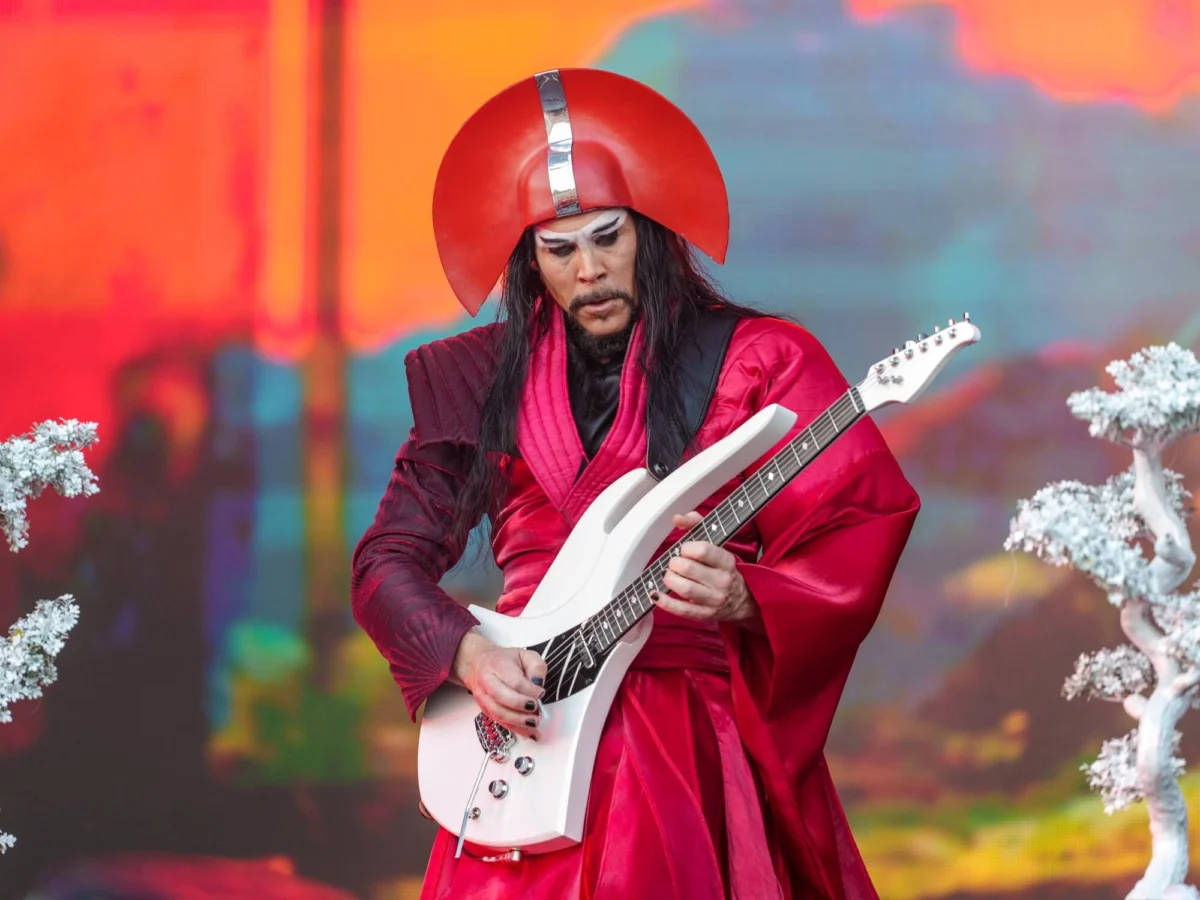
The discourse surrounding artificial intelligence in the music industry has undergone a significant transformation, with proponents increasingly shifting their focus from defending against accusations of plagiarism to highlighting AI’s potential for enhancing musical productivity. This evolving narrative has recently found a prominent voice in Luke Steele, frontman of the acclaimed Australian electronic music duo Empire of the Sun, who has likened AI technology in the studio to a "really smart guitar pedal," capable of empowering artists who master its use. His perspective adds a compelling layer to an already complex debate that pits innovation against concerns over artistic integrity and intellectual property.
Luke Steele’s Vision: AI as a Creative Amplifier
In a recent interview with iHeartRadio Canada, subsequently reported by Consequence Of Sound, Steele articulated his conviction that AI is not merely a technological novelty but a powerful instrument for musical creation. His analogy of AI as a "smart guitar pedal" suggests an integration of the technology as a sophisticated tool within an artist’s existing creative arsenal, rather than an external, usurping force. For Steele, AI acts as an extension of the artist’s capabilities, amplifying their potential and streamlining the creative process. This viewpoint underscores a pragmatic approach, framing AI as a means to unlock new sonic possibilities and accelerate workflow, thereby increasing an artist’s output and innovative capacity.
Steele is not oblivious to the disruptive potential of AI, acknowledging its steadily increasing influence could indeed sideline those unwilling or unable to adapt. He cautioned, "I think you’ve got to be careful, you know? ‘Cause [AI] is so powerful… it’s going to empower artists that know how to use it, and they’re going to become unstoppable… [if you don’t keep up], it’s going to come and swallow you like a boogie monster at night." This stark warning encapsulates the dual nature of AI as perceived by many in the industry: a force for unparalleled empowerment for the agile, and a looming threat for the stagnant. It highlights a critical juncture for musicians: either embrace and master these new tools or risk obsolescence in an rapidly evolving landscape.
A Consistent Advocate: Steele’s Enduring Support for AI Tools
Steele’s recent statements are not an isolated endorsement but rather a continuation of his consistent advocacy for AI’s role in music creation. As far back as April, in an interview with Clash Magazine, he had already declared AI an "amazing breakthrough in the world" and detailed specific AI tools that Empire Of The Sun was actively integrating into their studio practice. He described AI as a "breakthrough for artists, too because it’s such a powerful tool."
One notable example he provided was their work with "Base44" and a custom-built lyric generation tool they dubbed "Song Mountain." This "lyric maker," as Steele described it, could draw upon an eclectic database of linguistic styles, ranging from "scriptures to ancient American-Indian Quotes, to different flavours of taxi conversation." Such a tool, he explained, could "help craft different ways lines and verses are written," offering artists novel avenues for lyrical inspiration and composition. This concrete application demonstrates AI not just as a conceptual aid, but as a practical, hands-on instrument designed to augment traditional songwriting methods. By automating or assisting in the ideation phase, these tools can potentially free up creative energy for other aspects of music production, aligning perfectly with Steele’s emphasis on productivity and empowerment.
The Counter-Narrative: Plagiarism, Likeness, and Ethical Concerns
Steele’s enthusiastic embrace of AI stands in stark contrast to the growing chorus of artists and industry figures raising serious concerns about the technology’s ethical implications, particularly regarding intellectual property and personal likeness. This opposing camp argues that the current generation of AI models are often trained on vast datasets of existing creative works without explicit consent or compensation to the original creators, thereby perpetuating a form of digital plagiarism.
Prominent guitarists Sophie Burrell and Sophie Lloyd have publicly voiced their dismay over AI deepfakes that have replicated their musical style and visual likeness without their permission, effectively appropriating their artistic identities for commercially exploitable content. Similarly, YouTuber and musician Rhett Shull has highlighted instances where AI has directly lifted and repurposed his original content, raising critical questions about fair use, copyright infringement, and the fundamental rights of creators in the digital age. These cases underscore the urgent need for robust legal frameworks and ethical guidelines to govern AI’s development and deployment, ensuring that technological advancement does not come at the expense of human artistry and ownership. The core of their argument is that while AI can be a tool, its foundational training methods often bypass established ethical boundaries, leading to unauthorized use and potential financial detriment for creators.
Boy George’s Controversial AI Experiment and Platform Response
The debate took a particularly controversial turn with Boy George, who also stands as a proponent of AI’s utility in songwriting. Last week, George openly admitted to using AI to craft the lyrics for his pro-Israel track, We Will Dance Again. This admission, coupled with the song’s politically charged nature, ignited a fresh wave of discussion. Earlier in the year, George had already praised AI’s capabilities on Fearne Cotton’s Happy Place podcast, explaining how the technology had "really helped [him] as a lyricist," echoing Steele’s sentiment about AI as a productivity enhancer for creative writing.
However, the rapid dissemination of We Will Dance Again was met with swift action from the music platform Bandcamp. Within days of its release, the track was removed. A spokesperson for Bandcamp clarified their decision to NME, stating: "The track was removed based on violation of our Acceptable Use & Moderation Policy, which in specific regard to this case, prohibits music and audio that is wholly or in substantial part created, composed, or generated by artificial intelligence." This decisive move by Bandcamp marks a significant precedent, illustrating how digital distribution platforms are beginning to grapple with the complexities of AI-generated content and are implementing policies to regulate its presence. Bandcamp’s policy reflects a broader industry concern that while AI can assist, fully or substantially AI-generated content may fall outside acceptable creative or ethical boundaries, particularly when intellectual property and original human artistry are at stake.
Broader Industry Landscape: Navigating the AI Frontier
The divergent views of artists like Luke Steele and Boy George versus those like Sophie Burrell and Rhett Shull highlight the nascent and often turbulent integration of AI into the music industry. Beyond individual artists, the implications ripple across the entire ecosystem, affecting producers, labels, legal frameworks, and even the very definition of creativity.
- Economic Implications: The promise of AI in music production includes significant cost reduction, making high-quality production more accessible to independent artists and smaller labels. AI-powered mastering, mixing, and even composition tools can streamline processes that traditionally required expensive equipment and highly specialized human talent. However, this efficiency also raises fears of widespread job displacement for session musicians, composers, sound engineers, and lyricists, potentially devaluing human craft in favor of automated solutions. The market for AI music generation is projected to grow substantially, indicating a financial imperative for many companies to invest in this technology, further intensifying the debate about its impact on human employment.
- Ethical Quandaries and Intellectual Property: The fundamental challenge remains the ethical sourcing of AI training data. If AI models learn from copyrighted material without permission or compensation, every piece of music they help create could potentially carry a legal and ethical burden. Copyright offices globally are struggling to define ownership for AI-generated works, with some countries denying copyright protection to works created solely by AI, while others are exploring co-authorship models. This legal ambiguity creates a precarious environment for artists and developers alike. The case of Bandcamp removing Boy George’s track underscores the proactive stance platforms might take in the absence of clear overarching legal guidelines, opting to protect themselves and their users from potential liabilities or ethical breaches.
- Creative Evolution vs. Homogenization: Proponents like Steele argue that AI offers unprecedented creative liberation, allowing artists to experiment with genres, styles, and sounds that might otherwise be beyond their technical or theoretical grasp. AI could foster entirely new musical forms and accelerate the pace of innovation. Conversely, critics fear a potential homogenization of music, where AI, by its very nature, might trend towards statistically popular patterns, leading to a deluge of algorithmically optimized, yet soulless, content. The risk of AI merely remixing existing ideas rather than generating truly novel ones is a significant concern for those who champion originality and artistic distinctiveness.
- Accessibility and Empowerment: For many emerging artists, AI tools can democratize music creation, lowering the barrier to entry for production, arrangement, and even marketing. An independent artist with limited resources can now access tools that mimic the capabilities of a professional studio. This empowerment aligns with Steele’s vision of "unstoppable" artists, potentially leveling the playing field and fostering a new wave of diverse musical talent. However, the distinction between using AI as a tool and relying on it to "create" entirely becomes increasingly blurred, challenging traditional notions of authorship.
The Future of Music: Adaptation or Resistance?
Luke Steele’s "boogie monster" analogy serves as a potent reminder of the transformative power of AI in the music industry. It is a technology that demands engagement, whether through adaptation or active resistance. The ongoing tension between technological advancement and human artistry is not new; every major innovation, from the synthesizer to digital audio workstations, has faced initial skepticism before becoming integrated into the creative process.
The current challenge with AI, however, is arguably more profound due to its capacity for autonomous creation and its implications for intellectual property. The future trajectory will likely involve a multi-pronged approach: the development of more sophisticated and ethically sourced AI tools; the establishment of clearer legal frameworks for copyright and ownership; and ongoing dialogue within the artistic community to define acceptable parameters for AI’s use. Education will be paramount, enabling artists to understand and leverage AI responsibly, distinguishing between AI as a creative partner and AI as a replacement for human ingenuity. Ultimately, the industry must collectively determine how to harness AI’s undeniable potential for productivity and innovation while safeguarding the invaluable essence of human creativity, originality, and the rights of artists. The debate is far from settled, and the conversation initiated by artists like Luke Steele and the reactions from platforms like Bandcamp are merely the opening chords in what promises to be a long and complex symphony of technological and artistic evolution.
