

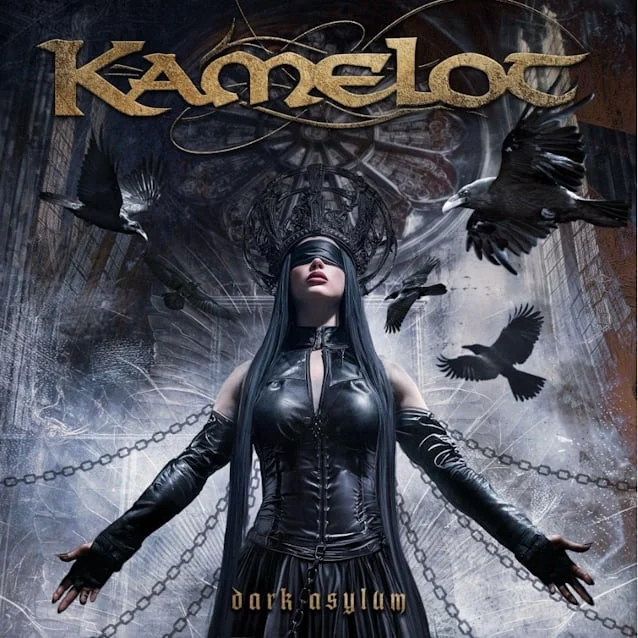
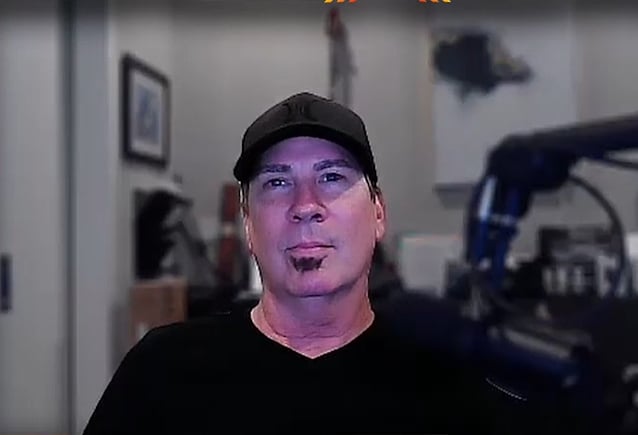
In a candid conversation with Jorge Botas of Portugal’s Metal Global, Thomas Youngblood, the acclaimed guitarist and a foundational member of the symphonic power metal pioneers KAMELOT, articulated a pronounced skepticism regarding the burgeoning use of artificial intelligence (AI) as a creative tool in music production. Youngblood’s remarks, made on August 10, 2026, came as KAMELOT stands on the cusp of releasing their fourteenth studio album, "Dark Asylum," on August 28 via Napalm Records, a testament to their enduring, human-driven artistic process.
Youngblood shared a personal sentiment, describing a "weird feeling" that the current trend of leveraging AI, exemplified by platforms like ChatGPT for tasks ranging from interview question assistance to melody and harmony generation, might ultimately prove to be a fleeting phenomenon. He voiced a hope that artists and audiences alike will eventually gravitate back towards traditional, human-centric creative methodologies. "I hope that it runs its course where people are, like, ‘Nah, this is kind of not worth it. It’s not worth the resources that it takes, all these things. Let’s think for ourselves. Let’s continue to do things old-school way,’" Youngblood stated. He acknowledged the uncertainty of this outcome but firmly asserted that for a band with a career spanning three decades and fourteen albums, the prospect of incorporating AI into their creative workflow is not something they would even consider.
When directly asked by Botas if he had ever felt tempted to employ AI for creative ideation, Youngblood was unequivocal in his response. "No, not at all," he replied. He admitted to a limited use of AI for practical organizational tasks, citing an instance where he used ChatGPT to compile tour dates into an itinerary. Beyond such functional applications, however, he expressed a strong aversion to its use in the artistic realm.
Youngblood also touched upon the inherent limitations and potential pitfalls of AI-generated content, particularly its reliance on vast datasets of past information. This reliance, he noted, makes AI systems susceptible to errors and the perpetuation of biases. "It’s a little scary, too, because it starts to learn who you are based on your questions. It’s weird. I’m not a fan," he admitted. His apprehension stems from the possibility that AI could evolve into an even more pervasive influence, drawing a parallel to the way search engines like Google have altered human behavior. "I hope it goes away, but the problem is people rely on these things, just like Google. We talked about Google years ago, how no one thinks for themselves. They Google it. So maybe it’s just gonna be the next kind of iteration of Google, for example," he observed, highlighting a societal shift towards outsourcing cognitive tasks.
The Dawn of "Dark Asylum": A New Chapter for KAMELOT
The release of "Dark Asylum" marks a significant milestone for KAMELOT, offering fans a deep dive into their evolving narrative and sonic landscape. The album, slated for release on August 28, 2026, through Napalm Records, promises a continuation of the band’s signature blend of symphonic, progressive, and power metal elements. The conceptual framework of "Dark Asylum" is rooted in the further development of the RavenHill narrative, a storyline that has been integral to KAMELOT’s recent works, exploring themes of inner turmoil, societal pressures, and the search for redemption.
To date, two singles have been released from "Dark Asylum": "Ashen World" and "Godlike Alchemy." These tracks have offered listeners a glimpse into the album’s ambitious scope, showcasing intricate arrangements that weave together orchestral passages, powerful guitar riffs, and evocative atmospheric textures. The production of "Dark Asylum" reunites KAMELOT with long-time collaborator Sascha Paeth, who returns as producer, ensuring the album adheres to the high standards of sonic excellence the band is known for. The critical task of mixing and mastering has been entrusted to Jacob Hansen, a renowned figure in the metal production scene, further cementing the album’s technical prowess.
Notable Collaborations and Sonic Exploration
A particularly noteworthy aspect of "Dark Asylum" is the guest appearance of Ignacia Fernández, the 28-year-old model who was crowned Miss World Chile in 2025. Fernández lends her voice to the tracks "Ashen World" and "Sanctuary," adding a unique dimension to these compositions. This collaboration underscores KAMELOT’s willingness to explore diverse artistic avenues and integrate new talents into their established sound. The inclusion of a prominent figure from the pageant world also signals a potential bridge to a broader audience, beyond the traditional metal fanbase.
"Dark Asylum" is structured as a cohesive collection of fifteen interconnected songs, designed to immerse the listener in the album’s overarching narrative. The compositions are characterized by their dynamic range, moving fluidly between grand orchestral movements, driving guitar-centric arrangements, and introspective atmospheric passages. This approach to songwriting allows for a rich, character-driven storytelling experience, a hallmark of KAMELOT’s conceptual albums.
A Legacy Forged in Metal: KAMELOT’s Enduring Influence
Formed in the early 1990s in Florida, KAMELOT has carved out a formidable reputation as a pioneering force in modern symphonic and progressive power metal. Over the course of more than three decades, the band has cultivated a devoted international following through their consistent delivery of conceptually rich albums and ambitious live performances. Their discography includes seminal works such as "The Fourth Legacy," "Karma," "Epica," "The Black Halo," "Ghost Opera," "Silverthorn," and "The Awakening," each contributing to their legacy as masters of narrative-driven metal.
KAMELOT’s musical identity is deeply intertwined with its commitment to storytelling, elaborate orchestral arrangements, and the fusion of diverse musical influences. This dedication to artistic integrity and human expression stands in stark contrast to the emerging trends in AI-assisted music creation, as highlighted by Youngblood’s recent comments. His perspective reflects a broader concern within the artistic community about the potential devaluing of human creativity and the unique emotional resonance that can only be achieved through genuine human experience and artistry.
The Broader Context: AI and the Future of Music Creation
The debate surrounding AI’s role in music creation is multifaceted and has gained significant traction across various creative industries. AI music generators, powered by sophisticated machine learning models, can analyze vast amounts of musical data to produce original compositions, often mimicking existing styles or generating entirely novel sonic landscapes. Companies are developing AI tools that can generate melodies, harmonies, lyrics, and even full instrumental arrangements. Some proponents argue that AI can serve as a powerful collaborative tool, democratizing music creation and accelerating the creative process for artists of all skill levels. For instance, AI can assist composers in overcoming writer’s block, generate variations on a theme, or even help in the arrangement of complex musical pieces.
However, as Youngblood points out, there are significant concerns about the implications of this technology. One primary concern is the potential for homogenization of music. If AI is trained on the same datasets and optimized for popular appeal, there’s a risk of producing music that lacks originality and emotional depth. The "scary" aspect of AI learning personal preferences, as mentioned by Youngblood, also raises questions about authenticity and the potential for AI to become a surrogate for genuine human connection and expression.
Furthermore, the economic impact on musicians and songwriters is a significant consideration. As AI becomes more capable of generating commercially viable music, there are fears that it could displace human artists, particularly in areas like background music for media, jingles, and even stock music libraries. The legal and ethical frameworks surrounding AI-generated content, including copyright and ownership, are still largely undefined, adding another layer of complexity to the ongoing discussion.
The stance taken by KAMELOT, and specifically by Thomas Youngblood, represents a vocal segment of the music industry that prioritizes the preservation of human artistry. Their commitment to crafting albums through traditional, human-driven processes, as exemplified by the forthcoming "Dark Asylum," serves as a powerful counterpoint to the rapid advancement of AI in creative fields. As AI technology continues to evolve, the dialogue between human creativity and artificial intelligence in music will undoubtedly remain a central and dynamic topic. The band’s enduring success, built on decades of human passion, innovation, and connection with their audience, provides a compelling case for the irreplaceable value of human artistry.
