

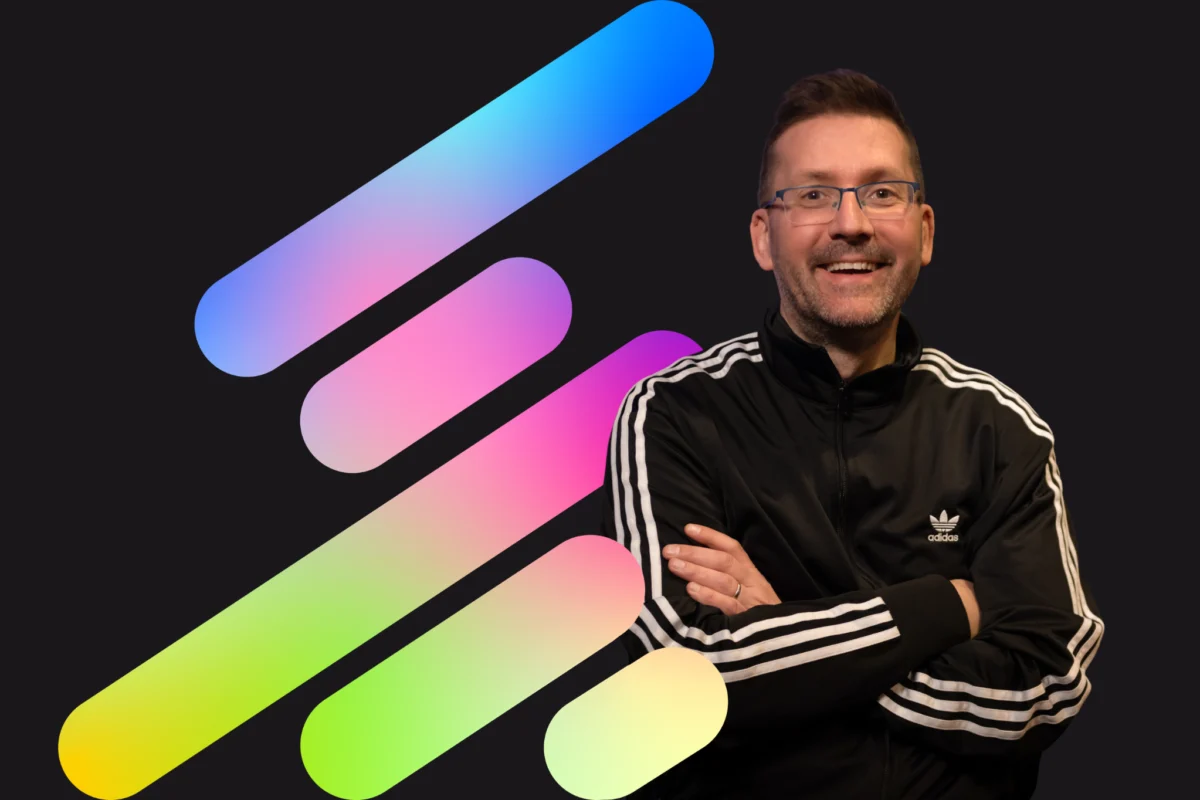
The landscape of live entertainment technology is set to converge in Hamburg this autumn as LEAT Con 2026 prepares to host one of the industry’s most influential figures, Tim Routledge, for a definitive exploration of modern lighting philosophy. Scheduled for October 6, 2026, at the Live Stage, Routledge’s presentation aims to dismantle the misconception that lighting design is merely a pursuit of visual spectacle, instead positioning it as a fundamental tool for emotional storytelling and audience connection. This keynote comes at a pivotal moment for the global event industry, which has seen a post-pandemic surge in demand for immersive, high-production-value live experiences that bridge the gap between physical attendance and digital broadcast.
The Evolution of Lighting Design at LEAT Con 2026
LEAT Con, the premier convention for Live Entertainment and Technology, has established itself as a critical hub for professionals in the fields of lighting, audio, event technology, and stagecraft. The 2026 edition arrives during a period of rapid technological transition, where the integration of Artificial Intelligence (AI) in lighting consoles and the push for carbon-neutral touring have become central themes. By securing Tim Routledge—a multi-award-winning designer known for his work on the Eurovision Song Contest, major stadium tours, and high-profile televised events—the convention reinforces its commitment to high-level technical discourse.
Routledge’s session, titled "Beyond the Beam: The Psychology of Light," will specifically address how light serves as a non-verbal language. The presentation is expected to draw from his recent portfolio, most notably his creative direction for the 2026 Eurovision Song Contest. In the context of such a massive global production, Routledge will illustrate how lighting designers must balance the gargantuan scale of a stadium environment with the "intimacy" required for a television close-up. This duality is often the difference between a broadcast that feels cold and mechanical and one that resonates emotionally with millions of viewers.
Case Study: The 2026 Eurovision Song Contest and Technical Precision
The cornerstone of Routledge’s LEAT Con address will be a technical and creative post-mortem of the Eurovision Song Contest 2026. As the world’s largest non-sporting live television event, Eurovision serves as the ultimate proving ground for lighting innovation. For the 2026 production, Routledge and his team managed a rig comprising over 2,500 automated fixtures and several kilometers of integrated LED tape, all synchronized via a complex network of fiber optics and redundant control systems.
Data from recent Eurovision productions indicates that the lighting department often manages upwards of 15,000 control parameters, requiring a level of precision that leaves zero margin for error. At LEAT Con, Routledge will delve into the "nuanced performance" aspect of his work. He will explain how subtle shifts in color temperature, the speed of a fade, or the angle of a key light can alter the audience’s perception of a performer’s vulnerability or strength. This "fine-tuning" is what Routledge argues creates the lasting impact of a show, moving beyond the "wow factor" of strobe lights and lasers to something more profound and human-centric.
The Chronology of leat con 26: A Strategic Industry Gathering
The convention is structured to provide a comprehensive overview of the event technology sector over a three-day period. The scheduling of Routledge’s keynote on the afternoon of October 6 is a strategic choice, designed to act as a bridge between the morning’s technical workshops and the evening’s networking events.
- October 5, 2026: Opening of the exhibition halls, focusing on hardware innovations in IP-rated fixtures and sustainable power solutions for outdoor festivals.
- October 6, 2026 (10:00 AM – 1:00 PM): Specialized seminars on Audio-over-IP (AoIP) and the implementation of 5G private networks for large-scale venues.
- October 6, 2026 (4:00 PM – 4:30 PM): Tim Routledge Keynote on the Live Stage, focusing on the intersection of technology and human emotion.
- October 7, 2026: Closing panels on the future of the workforce, addressing the global shortage of skilled technicians and the role of educational initiatives in the event sector.
This timeline reflects a broader industry trend toward holistic event planning, where the technical, creative, and logistical branches of production are increasingly interdependent.
Supporting Data: The Economic and Visual Impact of High-End Design
The demand for high-tier lighting design is supported by market data showing a significant increase in production budgets for "prestige" live events. According to industry reports from 2025, the global event technology market is projected to grow at a Compound Annual Growth Rate (CAGR) of 7.5% through 2030. Within this growth, the "lighting and effects" segment remains the largest contributor, driven by the adoption of LED technology which offers both creative flexibility and energy efficiency.
Routledge’s work exemplifies the "ROI of Aesthetics." In a digital age where clips of live performances are shared instantly on social media, the visual identity of a show becomes its primary marketing tool. Data suggests that concerts with "cinematic" lighting designs see a 30% higher engagement rate on social platforms compared to standard concert lighting. This shift has forced designers to think like cinematographers, ensuring that every frame of a performance is "Instagrammable" while still maintaining the visceral energy of a live gig.
Industry Responses and the Shift Toward Narrative Design
The announcement of Routledge’s participation has drawn praise from across the European event industry. Representatives from the Professional Lighting and Sound Association (PLASA) have noted that speakers of Routledge’s caliber are essential for elevating the status of technicians to that of "creative technologists."
"The industry is moving away from the era of ‘more is better,’" stated a spokesperson for the LEAT Con organizing committee. "Today, it’s about ‘smarter is better.’ Tim Routledge is at the forefront of this movement. His ability to use a single beam of light to tell a story is just as impressive as his ability to program a thousand moving lights. That is the message we want our attendees to take away: that technology is the tool, but the narrative is the goal."

Furthermore, manufacturers such as Robe and MA Lighting, who are expected to have a major presence at the convention, have hinted that the discussions led by designers like Routledge directly influence their Research and Development (R&D) cycles. The feedback from the "front lines" of major world tours dictates the next generation of console software and fixture optics.
Broader Implications for the Future of Live Experiences
Routledge’s focus on "sustainable emotion" also touches upon the environmental responsibilities of the industry. As touring productions face increasing scrutiny over their carbon footprints, the challenge for designers is to create high-impact visuals using less power. Routledge has been a vocal advocate for the transition to all-LED rigs, which can reduce energy consumption by up to 60% compared to traditional discharge-lamp setups without sacrificing the intensity or color depth required for stadium-level shows.
Moreover, the integration of Augmented Reality (AR) in live broadcasts—a technique Routledge successfully utilized in recent Eurovision cycles—is redefining the boundaries of the "stage." By blending physical lighting with virtual elements, designers can extend the visual world of a performance into the viewers’ living rooms. At LEAT Con, the discussion will likely touch upon how these "extended reality" (XR) workflows are becoming standard, even for mid-sized productions.
The implications of Routledge’s philosophy extend beyond the entertainment sector. The principles of emotional lighting are increasingly being applied in architectural design, retail environments, and corporate branding, where the goal is to influence human behavior and mood through the manipulation of the luminous environment.
Conclusion: A Masterclass in Visual Communication
As the event industry looks toward 2027 and beyond, the insights shared by Tim Routledge at LEAT Con 2026 will likely serve as a blueprint for the next generation of designers. By emphasizing the "why" over the "how," Routledge challenges the industry to return to the core of why live events exist: to foster a shared human experience.
Attendees at the Live Stage on October 6 can expect a session that is both a technical deep-dive and a creative manifesto. In an era dominated by screens and digital distractions, the work of designers like Routledge ensures that the live stage remains a place of singular, unrepeatable magic, powered by the precise application of light and a deep understanding of the human spirit. The convention continues to be an essential date on the professional calendar, providing the data, the technology, and the inspiration necessary to navigate the complex future of live entertainment.
