

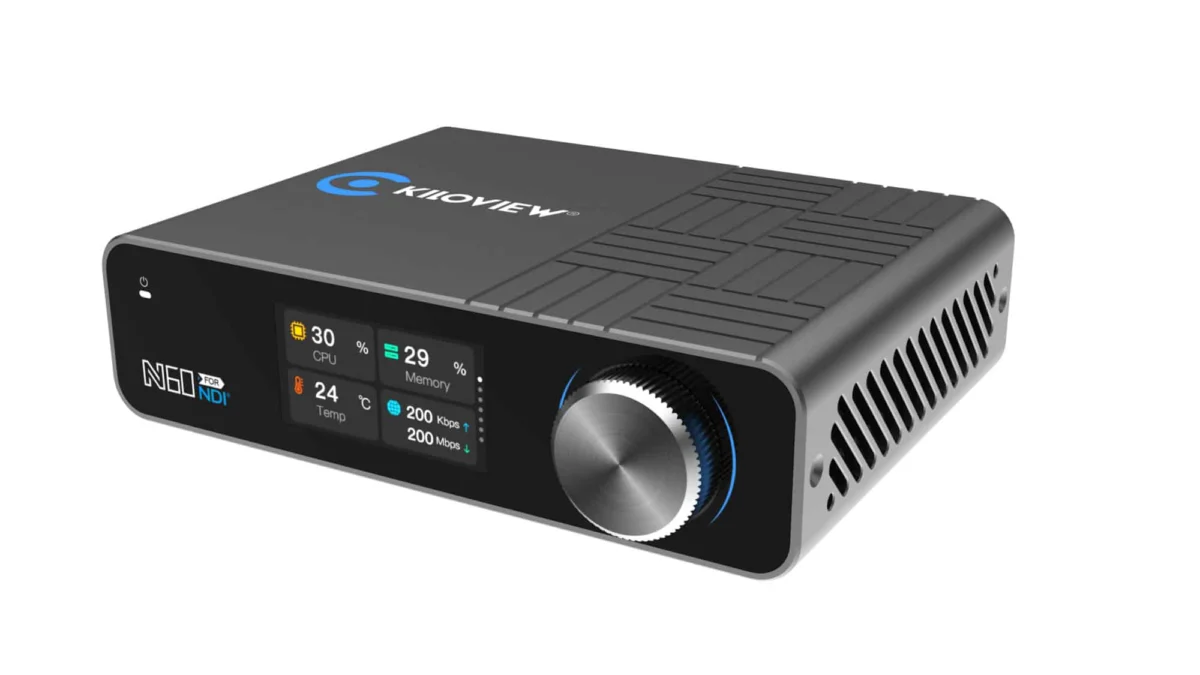
The landscape of professional video production has undergone a seismic shift over the last decade, transitioning from traditional baseband signals like SDI and HDMI toward versatile Internet Protocol (IP) based workflows. At the heart of this revolution is the Network Device Interface (NDI) protocol, a technology developed by NewTek that allows high-quality video to be transmitted across standard Gigabit Ethernet networks. Within this competitive ecosystem, the Chinese manufacturer Kiloview has emerged as a prolific provider of hardware solutions. The release of the Kiloview N60 represents the latest evolution in their portable converter lineup, a device designed to bridge the gap between 4K HDMI sources and the NDI ecosystem while introducing significant improvements in color depth, processing power, and user interface design.
Technical Specifications and Core Functionalities
The Kiloview N60 is a bidirectional NDI converter, meaning it can function as either an encoder (converting HDMI to NDI) or a decoder (converting NDI back to HDMI for monitoring or projection). While Kiloview’s previous entry-level models, such as the N3 and N4, successfully addressed the 1080p60 HD market, and the subsequent N30 and N40 models introduced 4K capabilities, the N60 is positioned as a more sophisticated "second generation" 4K tool.
One of the most significant technical advancements in the N60 is the shift in color processing. While many budget converters are limited to 8-bit color with 4:2:0 sub-sampling, the N60 supports 10-bit color depth and 4:2:2 sampling. This is a critical distinction for professional broadcast and cinema environments. In 10-bit workflows, the device can represent over a billion colors, compared to the 16.7 million colors available in 8-bit systems. This increased precision drastically reduces "banding" in gradients—such as blue skies or stage lighting—and provides the necessary headroom for high-dynamic-range (HDR) workflows and professional color grading.
The device supports a wide range of NDI flavors, including Full NDI (High Bandwidth) and NDI|HX2. At the time of its initial release, the manufacturer signaled that NDI|HX3 support would be added via firmware updates. NDI|HX3 is particularly noteworthy in the industry because it offers a "sweet spot" between the massive bandwidth requirements of Full NDI (often 250Mbps+ for 4K) and the higher latency of NDI|HX2, providing visually lossless quality at much lower bitrates.
Hardware Design and the Magic Rotor Interface
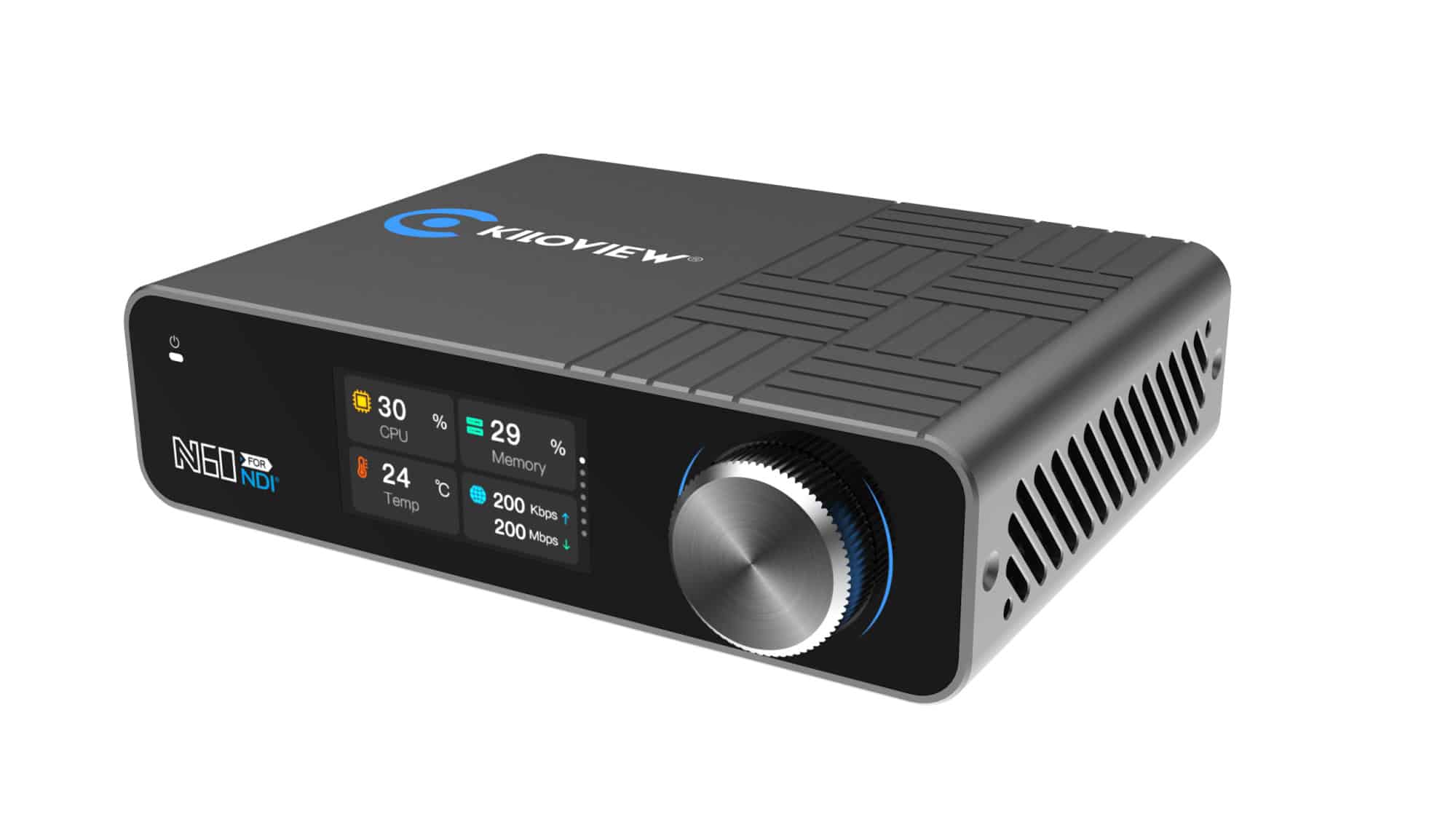
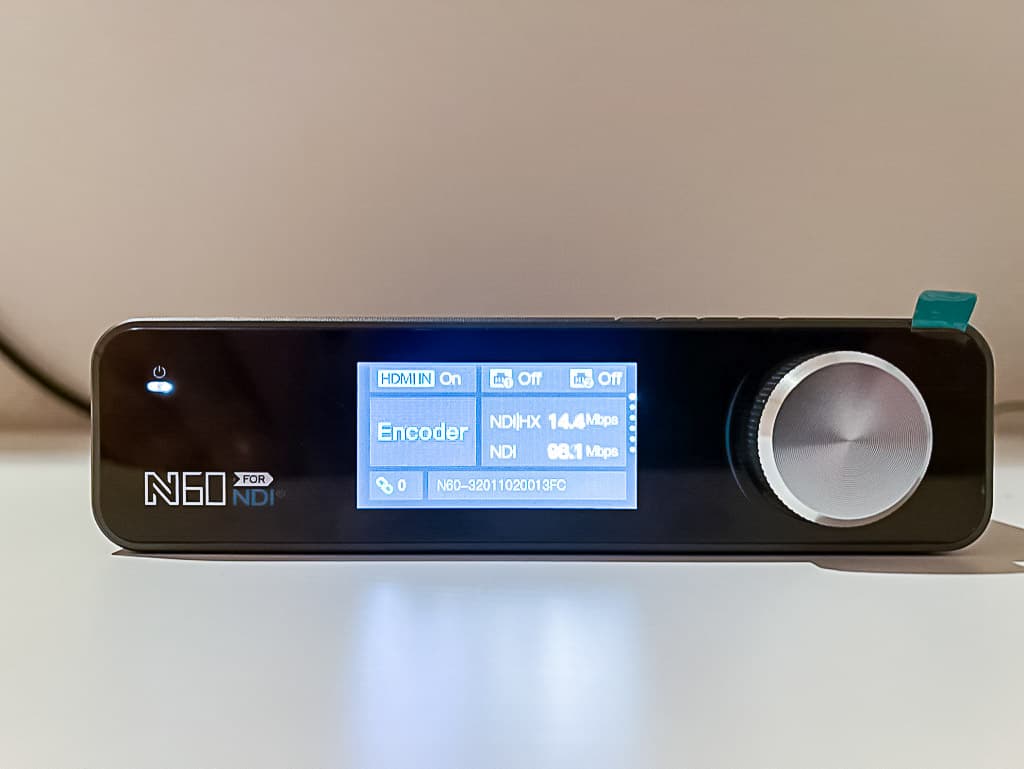
Physical design is often an afterthought in the converter market, with many devices relegated to "black box" status. Kiloview has deviated from this trend by integrating a 1.96-inch LCD screen on the front of the N60. This display serves as a multi-function interface, providing real-time data on IP addresses, device status, and active bitrates.
The screen is paired with what the manufacturer calls the "Magic Rotor," a large physical dial that allows users to navigate menus and adjust settings directly on the unit. In field environments where a laptop might not be immediately accessible, the ability to change a device from encoder to decoder mode or verify a network connection via the physical interface is a significant operational advantage. Furthermore, the screen doubles as a Tally indicator. When the N60 is mounted on a camera, the display can turn red or green to signal "on-air" or "preview" status, respectively, to the camera operator and talent.
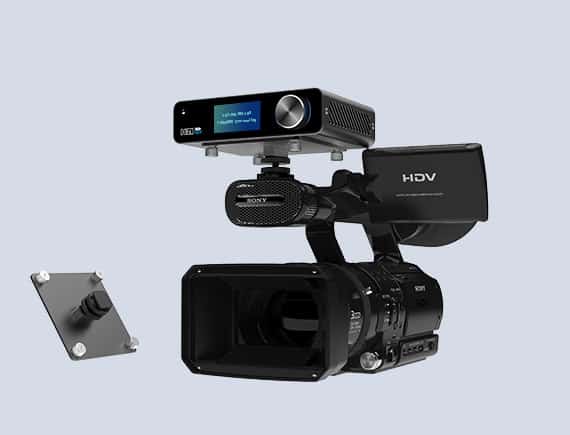
To support camera-mounted applications, Kiloview includes a cold shoe adapter plate in the box. All primary connections—including HDMI input/output, dual Ethernet ports, and power—are located on the rear of the unit to facilitate clean cable management. The device also features a 3.5mm jack for USB headsets, enabling the Kiloview Intercom System (KIS). This allows the converter to act as a communication node between the camera operator and the control room, a feature rarely found in standalone converters at this price point.
Chronology of Kiloview’s NDI Development
To understand the N60’s place in the market, it is necessary to look at the timeline of Kiloview’s technological progression.
- 2011–2017: Kiloview established itself as a specialist in H.264/H.265 encoding, primarily focusing on SDI/HDMI to RTMP streaming for the early web-video market.
- 2018–2019: As NDI gained traction, Kiloview released the N1 and N2 (battery-powered) and the N3 and N4 (HD SDI/HDMI) converters. These were lauded for their affordability but were limited to 8-bit HD processing.
- 2020–2021: With the industry-wide push toward 4K, the N30 and N40 were launched. These utilized 12G-SDI and HDMI 2.0 to handle 4K60p but maintained a traditional, screen-less form factor.
- 2022–2023: The N60 was introduced as the flagship of the portable range, integrating the LCD screen, 10-bit processing, and the "Magic Rotor" interface.
This chronology demonstrates a move away from "utility" hardware toward "smart" hardware that prioritizes user experience and high-end image fidelity.
Supporting Data: Power, Networking, and Thermal Management
Operational stability is the primary concern for live production engineers. The N60 is designed with dual Network Interface Controllers (NICs). This allows the device to output the same NDI stream to two different networks simultaneously, providing a layer of redundancy or allowing for separate management and production networks.
Power consumption is rated at approximately 16 watts, which is remarkably efficient for a 4K 10-bit processor. The device supports Power over Ethernet (PoE), allowing it to be powered via the same Category 6 cable used for data. However, technical specialists emphasize a critical safety protocol: when using PoE, network cables must be visually inspected or tested with a digital multimeter. The 57V current used in PoE can easily destroy a network interface if a cable is damaged or if pins are shorted.
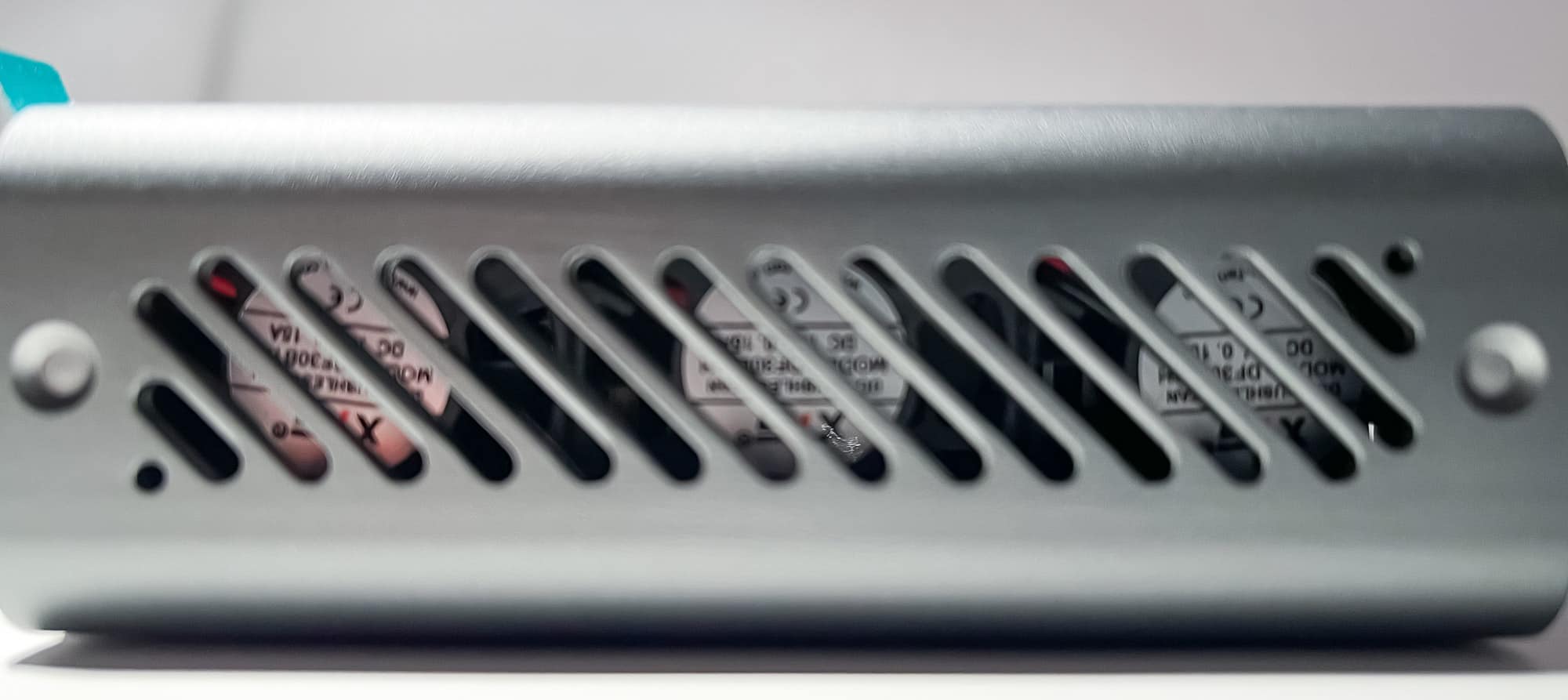
Because 4K video processing generates significant heat, the N60 is equipped with three internal cooling fans. In technical assessments using standard 1080p HD signals, these fans often remain idle or spin at low, inaudible speeds. However, when processing high-bitrate 4K60p signals, the fans activate to prevent thermal throttling. While this ensures the longevity of the internal chips, it introduces a noise floor that may be problematic in extremely quiet studio environments or when the unit is mounted directly next to a sensitive shotgun microphone.
Operational Observations and Software Integration
During hands-on technical evaluations, several nuances of the N60’s firmware have been identified. One notable feature is the device’s ability to record the incoming camera signal directly to a TF (microSD) card in .mov format. This provides an "iso-recording" or backup in case of network failure, ensuring that the footage is captured even if the NDI stream is interrupted.
In "Encoder" mode, the HDMI output acts as a loop-through, allowing the signal to be passed to an on-camera monitor. However, early technical reviews of the unit noted a firmware bug where audio was not consistently extracted from the HDMI signal for the loop-through—a minor issue that Kiloview has historically addressed through its frequent firmware update cycles.
In "Decoder" mode, the N60 can switch between nine pre-programmed NDI sources. This can be controlled via the Magic Rotor or by plugging a standard USB keyboard into the device’s USB port, using the number pad to switch sources. While the switch is not "seamless" (there is a brief moment of black between sources), it is a powerful feature for simple monitoring setups. A current limitation in the decoder firmware is that the device does not "announce" itself on the network in a way that allows external software like NDI Studio Monitor to configure it remotely; instead, users must access the device’s web interface by manually entering its IP address into a browser.
Broader Industry Impact and Implications
The Kiloview N60 arrives at a time when the Pro-AV and broadcast industries are debating the merits of various IP standards, such as SMPTE ST 2110 vs. NDI. While ST 2110 is favored by major television networks for its uncompressed nature, NDI—and hardware like the N60—has become the de facto standard for corporate AV, house of worship production, and mid-tier broadcast due to its ability to run on existing 1Gbps network infrastructure.
The N60’s "USB Grabber" mode is perhaps its most versatile hidden feature. By connecting the device to a computer via USB-C, it can be recognized as a standard UVC (USB Video Class) webcam. This allows a professional 4K cinema camera to be used as a high-end source for Zoom, Microsoft Teams, or OBS Studio, effectively turning the N60 into a professional-grade capture card.
Conclusion and Market Positioning
With a manufacturer’s suggested retail price of approximately €815, the Kiloview N60 occupies a competitive middle ground. It is more expensive than basic converters from brands like Magewell or BirdDog’s entry-level "Flex" line, but it offers features—such as the LCD screen, dual NICs, and 10-bit 4:2:2 processing—that are typically reserved for much larger, rack-mounted equipment.
The device is not without its trade-offs. The reliance on active cooling fans for 4K workloads and the current firmware limitations regarding audio extraction and decoder visibility suggest that the N60 is a tool for professional operators who are comfortable with technical configuration rather than a "plug-and-play" consumer device. However, for production environments moving into the 4K space, the N60 provides a robust, informative, and high-fidelity bridge into the world of IP video. As NDI HX3 becomes more prevalent, the N60 is well-positioned to remain a relevant and powerful component in the evolving toolkit of modern digital media production.
