

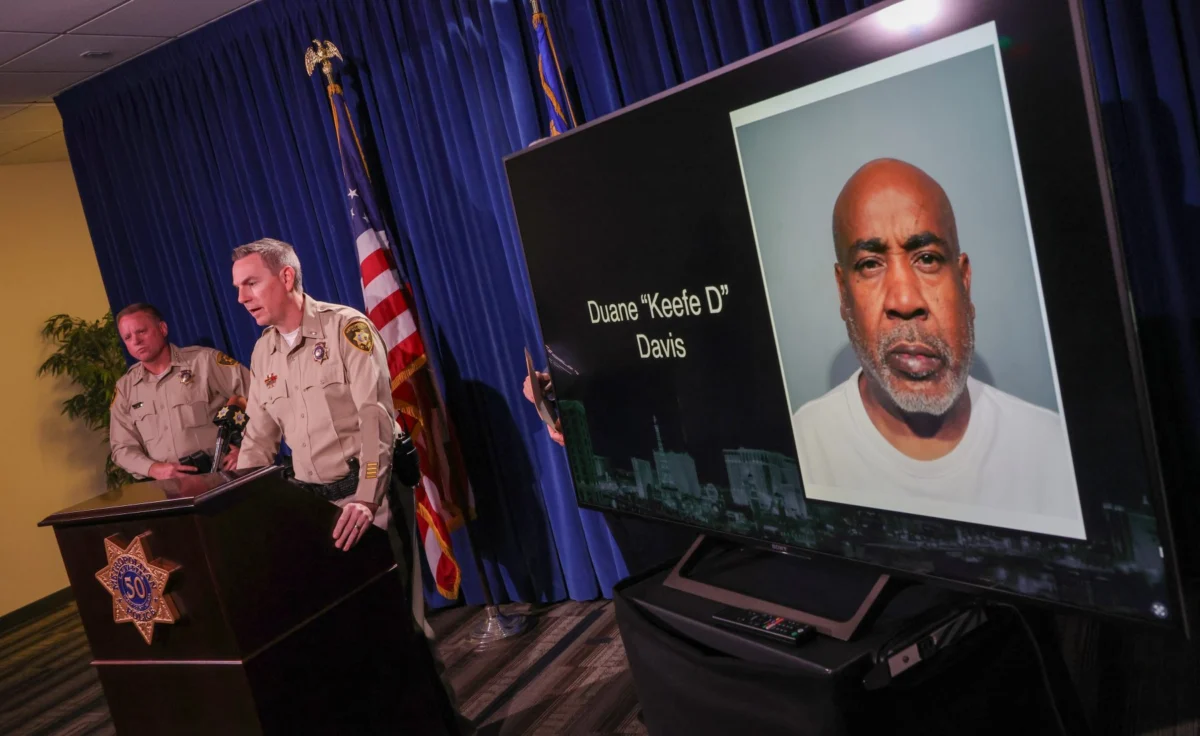
The highly anticipated murder trial concerning the 1996 killing of hip-hop icon Tupac Shakur commenced its inaugural week in a Las Vegas courtroom, delivering dramatic opening statements, intense witness testimony, and the revealing playback of recorded confessions from the defendant, Duane "Keffe D" Davis. After nearly three decades, the legal proceedings aim to finally unravel the mystery surrounding one of music history’s most enduring and tragic unsolved crimes, with Billboard closely tracking the pivotal developments.
The Long Road to Justice: Background of a Hip-Hop Legend’s Demise
Tupac Amaru Shakur, born Lesane Parish Crooks, was more than just a rapper; he was a poet, actor, and a powerful voice of a generation. His meteoric rise in the early 1990s saw him become one of the most influential and best-selling music artists of all time, known for his lyrical prowess, raw honesty, and passionate delivery. Albums like 2Pacalypse Now, Me Against the World, and All Eyez on Me solidified his status, selling millions and earning him critical acclaim. However, his career was also marked by controversies, legal troubles, and a very public feud that defined the era of East Coast vs. West Coast hip-hop.
The rivalry between Los Angeles-based Death Row Records, co-founded by Suge Knight and home to Tupac, and New York-based Bad Boy Records, headed by Sean "Diddy" Combs (then known as "Puffy"), escalated into a bitter and sometimes violent conflict. This deeply personal and business-driven animosity created a volatile backdrop for the events that unfolded in Las Vegas on September 7, 1996.
On that fateful evening, Tupac Shakur, then 25 years old, attended a Mike Tyson boxing match at the MGM Grand Garden Arena in Las Vegas with Suge Knight. Following the fight, a confrontation occurred in the hotel lobby involving Tupac, Knight, and Orlando Anderson, a member of the South Side Compton Crips gang. Surveillance footage captured Shakur and Knight assaulting Anderson, allegedly in retaliation for an earlier incident where Anderson had reportedly stolen a Death Row Records chain.
Hours later, as Knight drove a black BMW with Shakur in the passenger seat, they were stopped at a red light at the intersection of Flamingo Road and Koval Lane. A white Cadillac pulled up alongside them, and occupants of the Cadillac opened fire. Shakur was shot multiple times and rushed to the University Medical Center of Southern Nevada, where he succumbed to his injuries six days later, on September 13, 1996. The murder sent shockwaves through the music industry and left an indelible scar on pop culture, leaving millions to ponder who was responsible and why.
For nearly three decades, the investigation into Shakur’s murder remained cold, plagued by a lack of cooperating witnesses, conflicting narratives, and rampant speculation. Conspiracy theories abounded, ranging from the involvement of rival gangs to allegations of orchestrated hits by figures within the music industry. Despite numerous documentaries, books, and journalistic investigations, concrete legal action proved elusive, fueling public frustration and maintaining the case’s notorious status as one of America’s most prominent unsolved mysteries.
Duane "Keffe D" Davis: From Informant to Defendant
The long-stalled investigation gained significant momentum in recent years due to the increasingly open admissions of Duane "Keffe D" Davis. Davis, a self-proclaimed former leader of the South Side Compton Crips, had long been known to law enforcement as a peripheral figure in the events surrounding Tupac’s death. However, his willingness to speak publicly about his alleged involvement, particularly through a 2019 tell-all memoir titled "Compton Street Legend" and various interviews, dramatically changed the course of the investigation.
In his memoir and other public statements, Davis openly claimed to have been in the Cadillac from which the fatal shots were fired. Crucially, he identified his nephew, Orlando Anderson, as the individual who pulled the trigger. Anderson, who was the same man assaulted by Tupac and Suge Knight hours before the shooting, consistently denied involvement in Shakur’s murder until his own death in an unrelated gang shooting in 1998. Davis’s accounts detailed the motive as an act of retaliation for the assault on Anderson, a narrative that prosecutors have now squarely adopted.
Davis’s candid revelations, initially dismissed by some as attempts to gain notoriety or profit, provided investigators with a fresh avenue. His statements included details about the weapon used and the individuals present in the vehicle. While Davis had previously spoken to police detectives in proffer sessions in 2008 and 2009 under an agreement that his statements could not be used against him, a critical legal development occurred: a judge in the current case ruled that Davis had effectively waived that immunity by subsequently discussing the same events publicly in his memoir and media appearances. This ruling paved the way for his recorded confessions to be admissible as evidence in court.
On September 29, 2023, nearly 27 years to the day after Tupac Shakur was shot, Duane Davis was arrested in Las Vegas, Nevada. A Nevada grand jury subsequently indicted him on one count of murder with a deadly weapon. The arrest marked a historic turning point, offering a glimmer of hope that the legal system could finally provide answers and accountability for a crime that has haunted the music world for decades.
Week One: Key Moments and Dramatic Exchanges in Court
The first week of the Duane Davis murder trial, which commenced on Monday, August 17, immediately plunged into the heart of the case, laying out the prosecution’s theory and the defense’s counter-arguments before presenting initial witness testimony and crucial audio evidence.
Opening Statements: Revenge and Fiction
Prosecutor Binu Palal delivered a compelling opening statement, asserting that Davis had orchestrated the 1996 drive-by shooting as "an act of revenge" for the beating of his nephew, Orlando Anderson. Palal emphasized that while Duane Davis "did not pull the trigger," he was the mastermind who "made sure that the shooters were armed and ready to execute their revenge." The prosecution’s strategy hinges heavily on Davis’s own admissions, made both to police and in his memoir, presenting them as the cornerstone of their case. Palal underscored that these admissions would be heard "from Duane Davis himself," leaving little room for doubt regarding his central role.

In contrast, defense attorney Michael W. Sanft launched a vigorous attack on the credibility of Davis’s statements. Sanft argued that his client’s accounts of the shooting were mere "fiction," concocted for financial gain and to fuel his memoir. At one point, Sanft displayed a presentation slide for jurors that simply read "Bulls**t" in white text, pointedly stating, "Keffe D was known to do this," suggesting a pattern of fabricating stories for attention or profit. The defense aims to persuade the jury that Davis’s confessions are unreliable and uncorroborated by independent hard evidence, framing them as boasts rather than genuine admissions of guilt.
Early Witness Testimony: First Responders and Gang Dynamics
Following the opening statements, the jury immediately began hearing from witnesses. The first to testify was Garry Dale, a retired Las Vegas police officer. Dale provided a poignant account of being at the scene of the shooting and riding in the ambulance with a mortally wounded Tupac Shakur. He recounted his attempts to get the rapper to identify his assailant, but Shakur reportedly only repeated, "We’ll take care of it," multiple times, refusing to elaborate further. "I couldn’t get him to talk to me any further than that," Dale testified, highlighting the rapper’s stoicism or perhaps his adherence to street codes even in his final moments.
Tuesday’s proceedings introduced witnesses with deeper ties to the complex world of Death Row Records and gang affiliations. Reggie Wright Jr., a former head of security at Suge Knight’s Death Row Records, offered insights into the internal workings and external rivalries of the influential label. His testimony likely aimed to contextualize the volatile environment surrounding Shakur and Knight at the time of the murder.
Perhaps the most dramatic moment of the week came during the testimony of James McDonald, a former Bloods gang member reportedly linked to Suge Knight. McDonald, known for his outspoken nature, engaged in a heated exchange with defense attorney Sanft during cross-examination. At one point, McDonald directly addressed Davis, who was seated at the defense table, stating, "Talk to your lawyer, man," before turning to Sanft and declaring, "I’m not finna send him to prison. You are!" This extraordinary outburst underscored the high tensions in the courtroom and the personal stakes involved, providing a raw glimpse into the often-unpredictable dynamics of a trial rooted in gangland rivalries. McDonald’s combative stance and direct accusation towards the defense attorney likely left a lasting impression on the jury.
The Crucial Audio Recordings: Davis’s Own Words
Thursday and Friday saw the introduction of a key piece of evidence: audio recordings of meetings held in 2008 and 2009, in which Duane Davis discussed the shooting with police detectives. These recordings are central to the prosecution’s case. Detectives at the time had informed Davis that "nothing you say today can be used against you," an immunity agreement designed to encourage his cooperation. However, as previously ruled by the presiding judge, Davis waived this immunity by subsequently publishing his memoir and speaking publicly about the events.
In these tapes, jurors heard Davis explicitly state that his nephew, Orlando "Baby Lane" Anderson – the individual beaten by Tupac earlier that night – had fired the shots that killed Shakur. This direct accusation, coming from Davis himself, strongly corroborates the prosecution’s theory of a revenge-driven murder.
Moreover, the recordings also contained suggestions from Davis that Sean "Diddy" Combs, then known as "Puffy," was "involved in conversations about the killing." This revelation reignited long-simmering conspiracy theories that Combs might have played a role in ordering a hit on Shakur, a narrative often linked to the intense East Coast/West Coast hip-hop rivalry between Combs’ Bad Boy Records and Knight’s Death Row. It is important to note that Combs has consistently and vehemently denied any involvement in Shakur’s death. Following a recent Netflix docuseries that advanced similar theories, attorneys for Combs (who has recently faced his own significant legal challenges) sent a legal threat, characterizing the project as a "shameful hit piece." While these claims add a layer of intrigue to the trial, the prosecution’s primary focus remains on Davis’s direct involvement in orchestrating the shooting.
A Final Image: The Last Photo
The week concluded with testimony from Leonard Jefferson, who inadvertently captured the last-ever photograph of Tupac Shakur. Jefferson testified that he saw Shakur riding in a car with Suge Knight while stopped at a traffic light in Las Vegas on the night of the shooting. He recounted saying, "Ay, what up, Pac?" before quickly grabbing a 35mm camera from his central console and snapping the now-famous picture, a haunting image taken just moments before the tragedy unfolded. This testimony provided a vivid, real-time snapshot of the final carefree moments before the violence that would alter hip-hop history forever.
Broader Implications and The Quest for Justice
The Duane Davis trial represents a landmark moment, not only for the Shakur family and the legal system but for the global hip-hop community and fans who have sought answers for nearly three decades. This case challenges the notion that certain high-profile murders, especially those intertwined with complex street dynamics and celebrity culture, are destined to remain cold.
The central role of Davis’s own confessions in the prosecution’s case highlights a critical legal dynamic: how a defendant’s public statements, even if initially protected by immunity, can become their undoing when that protection is waived. The defense faces the formidable task of convincing a jury that these detailed admissions were pure fabrication, a narrative that will be difficult to sustain against the backdrop of historical events and other circumstantial evidence.
Beyond the immediate legal implications for Davis, the trial inevitably reopens old wounds and forces a re-examination of the violent era of 1990s hip-hop. It shines a spotlight on the destructive nature of the East Coast/West Coast rivalry and the lives it claimed. A conviction could set a significant precedent, demonstrating that even after decades, justice can still be pursued for high-profile unsolved crimes, potentially encouraging renewed efforts in other cold cases. Conversely, an acquittal would leave many questions unanswered and reinforce the tragic narrative of an unpunished crime.
As the trial is set to resume on Monday and continue for several more weeks, the world watches, hopeful that this long-delayed pursuit of justice will finally bring closure to one of music’s most enduring mysteries. The unfolding testimony promises to continue shedding light on the dark corners of that fateful night in Las Vegas, shaping the narrative of Tupac Shakur’s legacy and the legal reckoning for his murder.
