

The year 1979 stands as one of the most pivotal bookends in the history of modern music, serving as a sonic bridge between the analog, guitar-heavy textures of the 1970s and the synthesizer-driven, polished production that would define the 1980s. This period was characterized by a profound sense of transition, not only in the recording studios of London and Los Angeles but also in the socio-political fabric of the Western world. As the disco era reached its controversial climax and the raw aggression of early punk began to evolve into the more complex structures of New Wave and Post-Punk, three specific tracks emerged as harbingers of change. Pink Floyd’s "Another Brick in the Wall, Part 2," The Clash’s "London Calling," and Supertramp’s "The Logical Song" captured a unique atmosphere of finality and anticipation, effectively sounding like the "last night" of a decade that had redefined the cultural landscape.
The Socio-Political and Musical Climate of 1979
To understand the weight of these musical releases, one must examine the environment of 1979. In the United Kingdom, the "Winter of Discontent" had left the nation grappling with widespread strikes and economic instability, eventually leading to the election of Margaret Thatcher in May. In the United States, the Iran Hostage Crisis and the Three Mile Island nuclear accident contributed to a growing sense of anxiety and a desire for a new direction.
Musically, the industry was at a crossroads. The "Disco Demolition Night" at Chicago’s Comiskey Park in July 1979 signaled a violent backlash against the dominant dance genre, leaving a vacuum that rock music was eager to fill. However, rock itself was changing. The sprawling, blues-based epics of the early 70s were being replaced by shorter, more rhythmic, and technologically advanced compositions. The three tracks highlighted in this analysis represent the pinnacle of this evolution, blending the intellectual depth of the 70s with the commercial precision of the 80s.
Pink Floyd and the Architecture of Rebellion
Released in November 1979 as a lead single for the monumental rock opera The Wall, "Another Brick in the Wall, Part 2" remains one of the most successful and culturally significant songs in the Pink Floyd discography. While the band was traditionally associated with the psychedelic and progressive rock movements of the early-to-mid 1970s, this track signaled a departure toward a more structured, rhythmic sound that incorporated elements of the very disco music that rock fans were purportedly rejecting.
The production, overseen by Bob Ezrin alongside Roger Waters and David Gilmour, featured a steady, four-on-the-floor drum beat and a rhythmic, "scratchy" guitar part that mirrored the aesthetics of late-70s dance music. This was a deliberate choice by Ezrin, who recognized that for the song to achieve the reach Waters desired, it needed a contemporary pulse. The inclusion of the school choir from Islington Green School added a haunting, communal layer to the track, turning a personal grievance about the British educational system into a universal anthem of rebellion.
Statistically, the song was a global juggernaut. It reached Number 1 in the United States, the United Kingdom, West Germany, and several other nations. It was Pink Floyd’s first and only Number 1 single in the UK, selling over four million copies worldwide by the end of 1980. The track’s sophisticated use of glittering synthesizers and its polished, layered production provided a blueprint for the "Art Pop" and "Arena Rock" that would dominate the following decade.
The Clash and the Evolution of Punk
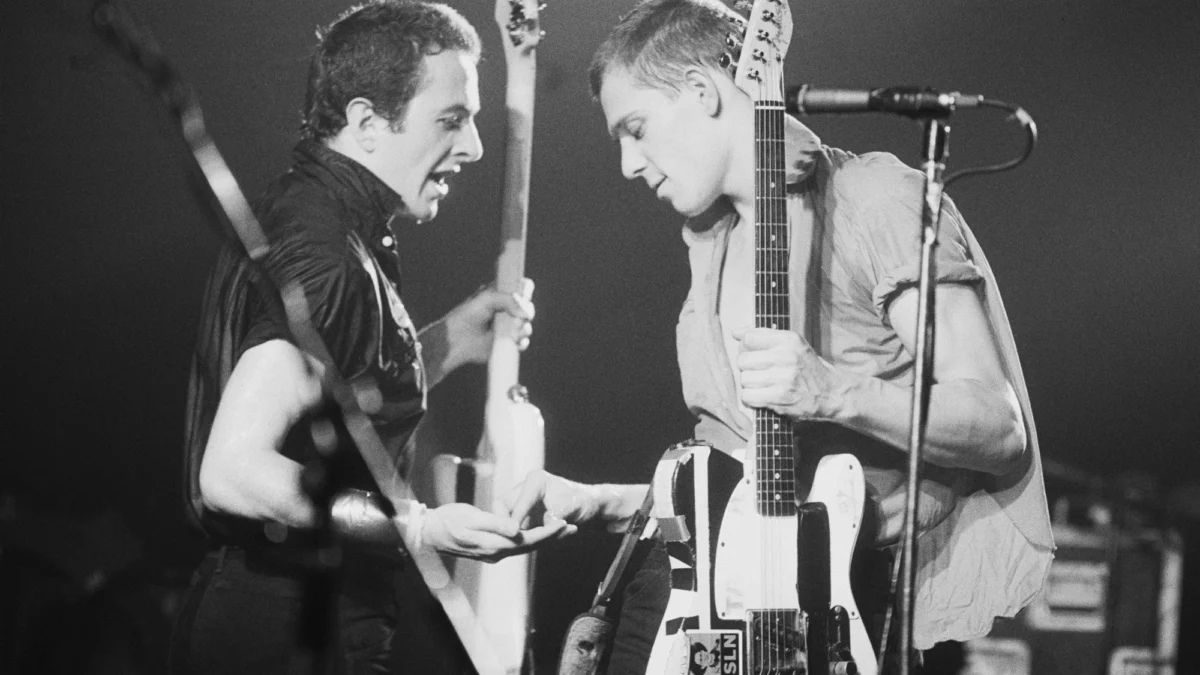
If Pink Floyd represented the transition of Progressive Rock, The Clash represented the maturation of Punk. Released in December 1979, the song "London Calling" and its parent album of the same name served as a definitive statement that punk rock had outgrown its "three-chord" limitations. While the genre had been born out of raw, amateurish energy in 1976 and 1977, The Clash moved into 1979 by incorporating elements of reggae, rockabilly, and jazz.
"London Calling" is a track steeped in the "spooky finality" of the late 70s. Its lyrics, penned by Joe Strummer and Mick Jones, referenced the real-world fears of the era: the threat of nuclear meltdown (inspired by Three Mile Island), the rising tide of the Thames, and the "zombie-like" state of the consumer public. The song’s minor-key urgency and the "howling" vocal delivery of Strummer created an atmosphere of impending doom, perfectly capturing the feeling of a decade coming to an end.
The recording process at Wessex Studios under producer Guy Stevens was legendary for its unconventional methods, including Stevens swinging chairs and throwing objects to elicit a more visceral performance from the band. Despite its dark themes, the song was a commercial success, peaking at Number 11 on the UK Singles Chart and finding significant traction on US dance and alternative charts. It effectively bridged the gap between the DIY ethics of the 70s and the more polished, politically charged "New Wave" sound that bands like U2 and R.E.M. would carry into the 1980s.
Supertramp and the Sophistication of Pop-Rock
While Pink Floyd and The Clash focused on social and political themes, Supertramp’s "The Logical Song," released in March 1979, explored the internal, existential transition from childhood innocence to adult cynicism. As the centerpiece of the album Breakfast in America, the song utilized the Wurlitzer electric piano—a staple of the 70s—but paired it with a level of studio precision and synthesizer integration that felt distinctly futuristic.
The song’s structure, characterized by its "clicking" percussion, saxophone solos, and the use of sound effects (such as the "Mattel digital football" sound), showcased the burgeoning influence of technology on rock music. Songwriter Roger Hodgson’s lyrics about being sent away to school to learn how to be "sensible, logical, responsible, practical" resonated with a generation that felt increasingly alienated by the rigid structures of modern life.
"The Logical Song" was a massive chart success, reaching Number 6 on the Billboard Hot 100 and Number 7 in the UK. It was also a critical success, winning the Ivor Novello Award for Best Song Musically and Lyrically in 1979. The track’s blend of intellectual inquiry and high-fidelity pop production became a standard for the "Slick Rock" and "Sophisti-pop" movements of the early 80s.
A Chronology of the Transition: 1979 Music Milestones
The transition from the 70s to the 80s can be tracked through several key releases and events throughout 1979:
- February 1979: The Bee Gees release "Spirits Having Flown," marking the peak of the disco era’s commercial dominance.
- March 1979: Supertramp releases Breakfast in America, proving that sophisticated pop-rock could achieve massive commercial heights.
- May 1979: The election of Margaret Thatcher in the UK shifts the cultural mood toward a more individualistic and often more cynical outlook.
- July 1979: "Disco Demolition Night" in Chicago symbolizes the end of the disco hegemony.
- August 1979: The Knack’s "My Sharona" signals a return to power-pop, but with a new, tighter production style.
- November 1979: Pink Floyd releases The Wall, a sprawling work that nonetheless contains the "disco-inflected" rock hit "Another Brick in the Wall, Part 2."
- December 1979: The Clash releases London Calling in the UK, effectively ending the decade with a call to arms for the new era.
Technological Implications and Production Trends
The sonic shift observed in these three tracks was largely driven by advancements in recording technology. The late 1970s saw the introduction of the first digital synthesizers and sequencers, as well as more sophisticated multi-track recording consoles.
In "Another Brick in the Wall," the use of the EMS VCS 3 synthesizer and the meticulous layering of tracks by Bob Ezrin allowed for a "wider" sound that felt more expansive than the raw recordings of the mid-70s. Similarly, the production on "The Logical Song" utilized the expertise of engineer Peter Henderson to create a "radio-friendly" sheen that maximized the clarity of every instrument—a trend that would become mandatory in the 1980s as FM radio became the primary medium for music discovery.
This era also saw the beginning of the "video age." While MTV would not launch until 1981, the promotional films for "London Calling" and "Another Brick in the Wall" were essential in creating a visual identity for the music. The Clash’s video, filmed in the rain on a pier, and the animated sequences in The Wall film, showed that music was no longer just an auditory experience; it was becoming a multimedia event.
Broader Impact and Historical Legacy
The legacy of 1979’s music lies in its ability to synthesize the experimentation of the past with the commercial requirements of the future. Pink Floyd, The Clash, and Supertramp each took the "art" of the 70s and packaged it into a format that was accessible, rhythmic, and technically flawless.
"Another Brick in the Wall, Part 2" remains a staple of classic rock radio, but its influence can also be heard in the "industrial rock" and "stadium pop" of later decades. "London Calling" is frequently cited as one of the greatest songs of all time, credited with showing that punk could be musically ambitious without losing its edge. "The Logical Song" continues to be praised for its lyrical depth and its role in defining the "California Sound" of the late 70s, despite the band’s British roots.
In conclusion, these three songs did more than just top the charts; they captured the collective consciousness of a world on the brink of change. They were the sounds of the "last night" of a decade defined by freedom and excess, providing the first glimpses of a new decade that would be defined by technology, image, and global connectivity. As the clock struck midnight on December 31, 1979, the music of Pink Floyd, The Clash, and Supertramp ensured that the transition was not a quiet fade-out, but a resounding, logical, and revolutionary anthem for the years to come.
