

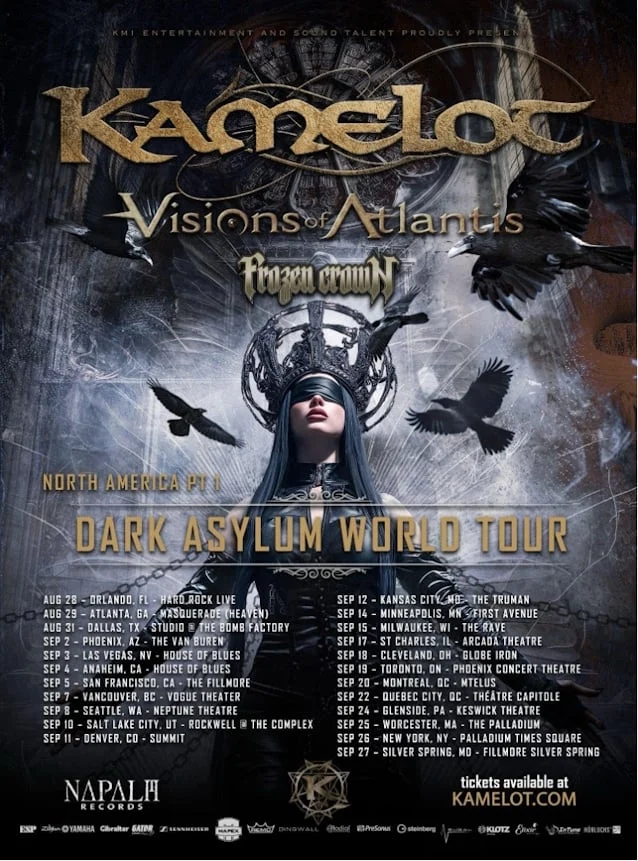
In a recent candid interview with Ethereal Metal, Kamelot frontman Tommy Karevik offered a comprehensive look back at his journey of succeeding the iconic Roy Khan, a transition that occurred nearly a decade and a half ago. Karevik, who has since become an integral part of the symphonic metal titans, has graced the band’s last five studio albums: "Silverthorn" (2012), "Haven" (2015), "The Shadow Theory" (2018), "The Awakening" (2023), and the highly anticipated upcoming release, "Dark Asylum" (2026). When pressed about the primary challenge of forging his own identity within a band possessing such a distinct and well-established sonic blueprint, Karevik acknowledged the significant passage of time as a factor in his integration.
"It’s been – what is it? – 14 years," Karevik stated. "I guess it’s enough time for it to start feeling like your own." He elaborated on the inherent difficulties of such a significant change within a beloved musical entity. "Of course, it’s a challenge. Anyone would understand it’s a challenge to step into someone else’s shoes [that is] immensely loved and talented."
Karevik admitted to initial apprehension, revealing, "And I would lie if I said I wasn’t nervous about it in the beginning." His understanding of Kamelot’s stature and impact evolved as he delved deeper into the band’s history. "I didn’t understand the magnitude of Kamelot before I started researching it, but when I saw and when I understood, I just took it upon myself to make sure, in the beginning, that I wasn’t trampling all over sacred ground, that you have to take care of this." This commitment to preservation manifested in his meticulous approach to the band’s musical core. "And so it was important for me to research the structure of the songs, what kind of vocals, what kind of melodies, intervals in the melodies, were used, and kind of work with that to make it not too far off what it had been before. Those were the first two albums, maybe."
The vocalist also addressed a common misconception among fans following the release of "Silverthorn." "It’s so funny ’cause I read a lot of comments [after the release of ‘Silverthorn’]. I don’t usually read a lot of comments because it can get you to dark places. But, of course, there was a lot of people writing about things in the beginning, and I remember seeing a lot of comments, like, ‘Obviously, the songs were already written. They had Roy’s songs already,’ so I just sang them. But literally nothing was written." This perception, while factually inaccurate, was interpreted by Karevik as a testament to his successful integration. "And it’s so funny to hear people think they know things. But I took it as a compliment because I had to do my homework to make sure that that was the way that people felt. So, from day one I wrote the melodies and the lyrics, with help from [co-producer] Sascha [Paeth] and [keyboardist] Oliver [Palotai] too, in the beginning. But, yeah, it’s funny."
However, his sense of ownership and creative freedom has steadily grown over the years. "But now – now it feels like my band, for sure, since a couple albums. I think with ‘The Awakening,’ I started taking more space. And I think with this album [‘Dark Asylum’], I maybe take even more space again, exploring even more." This evolution signifies a deepening artistic partnership and a confidence in his established role within Kamelot’s ongoing narrative.
A Delicate Transition: Honoring the Past, Embracing the Future
Karevik’s perspective on succeeding Khan has remained consistent since his initial integration. In a 2021 interview with MetalTalk, he articulated his philosophy: "I never thought about it as, ‘I’m gonna replace someone,’ to be honest. I thought about it as I wanna honor the legacy that was already there but bring something new into the fold as well. I thought of it as a huge challenge, of course. But my view on it was never, ‘I’m gonna go in and replace this guy,’ because I know he was loved, and he is still loved, in the metal community, and he will always be loved because of his talent and what he brought to the table with [Roy’s pre-Kamelot band] Conception and Kamelot. I never thought that that was my job to go in and replace him. I just wanted to take on what he had going for the band and just bring me – my personality and my energy."
This nuanced approach highlights a profound respect for the band’s history and the indelible mark left by his predecessor. "In many ways, it’s a different band," he continued. "It’s a little bit of a different energy now. But still, people have all these albums that they can listen to from the beginning, and they have new albums, and they will continue to have new albums with great songs. That’s kind of my take on it." This statement underscores a belief in the band’s capacity for continued artistic vitality, offering fans a rich catalog encompassing both their storied past and their dynamic present.
Fan Reception: A Testament to Openness and Evolution
The reception from Kamelot’s dedicated fanbase was a crucial element in Karevik’s integration. He recounted his initial concerns about how he would be received, especially given Khan’s significant popularity. "I have to say, it’s never an easy thing, especially coming in after someone that was so renowned," he told MetalTalk. "Thinking back, in hindsight, it couldn’t have gone any better, to be honest. I’m so happy that the fans were so accepting and really welcomed me with open arms. So I have only positive things to say about that. I thought it was gonna be more stressful, with the metal community often maybe living in the past a little bit, here and there."
Karevik candidly acknowledged the tendency within fan communities to romanticize past eras and personnel. "If I think about my favorite albums, for example, of my favorite bands, I also live in the past," he admitted. "Let’s just be real – I glorify some of the stuff in the past. And I think, ‘Ah, it’s never gonna be the same again.’ If my favorite band had to replace its singer, I don’t know what I would do. So I come from the same thought. So that’s why I’m so happy that everyone, or most of the people, were so welcoming." This introspection reveals a relatable understanding of fan sentiment and a genuine appreciation for the overwhelmingly positive response he received.
The Legacy of Roy Khan and Kamelot’s Continued Trajectory
Roy Khan’s departure from Kamelot in April 2011 marked the end of an era for the band and its followers. His exit followed a period of absence taken to address burnout, a significant issue that has increasingly gained recognition within the music industry. Since leaving Kamelot, Khan, a devout Christian, has pursued a different path, joining a church in Moss, Norway. He has also revisited his musical roots by reforming his pre-Kamelot band, Conception, with whom he released the EP "My Dark Symphony" in 2018 and the full-length album "State of Deception" in 2020.
Khan himself has spoken positively about Kamelot’s evolution under Karevik’s leadership. In a 2018 interview with Italy’s SpazioRock, he declared leaving Kamelot "the best decision I have ever made" and expressed his approval of the newer material. "Sounds classical Kamelot in my ears, and Tommy is a great singer," Khan stated, a testament to Karevik’s successful integration and the band’s enduring musical identity. This mutual respect between former and current vocalists underscores the maturity and collaborative spirit that can exist within the often-turbulent world of music.
"Dark Asylum": A New Chapter and Sonic Exploration
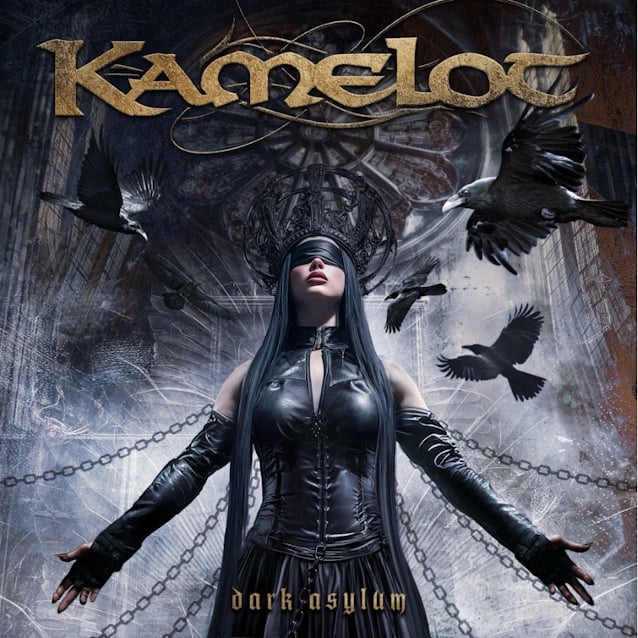
The upcoming album, "Dark Asylum," slated for release on August 28 via Napalm Records, promises to continue Kamelot’s artistic narrative. Two singles have already been unveiled, "Ashen World" and "Godlike Alchemy," offering a glimpse into the album’s sonic palette and thematic depth. Longtime Kamelot producer Sascha Paeth has returned to oversee the production, collaborating with Jacob Hansen, who handled mixing and mastering, ensuring a high standard of audio fidelity and artistic vision.
The album features a notable guest appearance from Ignacia Fernández, the 28-year-old model crowned Miss World Chile 2025. Fernández lends her voice to the tracks "Ashen World" and "Sanctuary," adding an intriguing dimension to the album’s vocal arrangements.
"Dark Asylum" is described as a cohesive body of work comprising fifteen interconnected compositions that further expand the RavenHill narrative. Musically, the album is poised to traverse a dynamic range, moving between lush orchestral passages, powerful guitar-driven arrangements, immersive atmospheric textures, and compelling character-driven storytelling. This multifaceted approach suggests an album that will appeal to long-time fans while also exploring new sonic territories, a hallmark of Kamelot’s sustained creative output.
Broader Implications: The Evolution of Symphonic Metal and Artist Transitions
Tommy Karevik’s tenure in Kamelot serves as a compelling case study in navigating significant artist transitions within established bands. The symphonic metal genre, with its often intricate musical structures and devoted fanbases, presents unique challenges for new members. Karevik’s success lies not only in his vocal prowess but also in his strategic approach: respecting the past, understanding the band’s core identity, and gradually infusing his own personality and creativity. This balanced methodology has allowed Kamelot to maintain its distinctive sound while simultaneously embracing evolution, a feat that has resonated positively with both critics and fans.
The fact that Roy Khan, the predecessor, has publicly endorsed Karevik’s contributions further solidifies the smooth transition and the enduring strength of Kamelot’s musical vision. This contrasts with many instances in music history where such changes have led to significant fan backlash or a decline in artistic quality. Kamelot’s trajectory, therefore, offers a valuable perspective on how established bands can successfully reinvent themselves and continue to thrive in the contemporary music landscape.
Furthermore, the continued output of high-quality albums and the exploration of new artistic avenues, as evidenced by "Dark Asylum," demonstrate Kamelot’s commitment to pushing the boundaries of symphonic metal. The inclusion of a prominent guest vocalist like Ignacia Fernández and the intricate narrative structure of the new album signal an ambition to remain at the forefront of the genre, engaging audiences with both familiar elements and fresh sonic explorations. Karevik’s role in this ongoing narrative is not merely as a vocalist but as a key creative force, shaping the band’s future while honoring its rich past. His journey underscores the importance of authenticity, hard work, and a deep respect for the music and its audience in navigating the complex dynamics of band transitions and artistic evolution. The successful integration of Karevik and the continued critical and commercial success of Kamelot stand as a testament to their enduring appeal and their ability to adapt and flourish in the ever-changing world of heavy music.
