

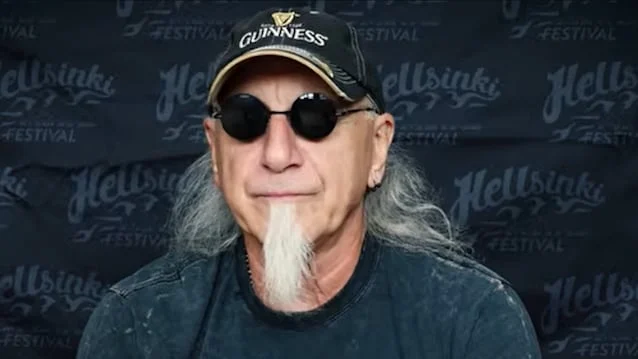
In a recent candid interview with Finland’s Chaoszine, ACCEPT frontman Mark Tornillo opened up about the significant challenges he faced upon joining the legendary German heavy metal band in 2009, stepping into the formidable shoes of original vocalist Udo Dirkschneider. Tornillo candidly admitted that the transition back into active musicianship, after a considerable hiatus from touring and recording, was far from effortless. This period, marked by a lack of recent professional musical output, presented a unique set of hurdles as he prepared to front one of metal’s most iconic acts.
The Reluctant Return: A Vocalist’s Steep Learning Curve
"Yeah, it was," Tornillo confirmed when asked about the difficulty of his reintegration into the music scene. His journey back to the demanding world of professional touring and recording involved seeking guidance from a seasoned vocal coach in New York City. This coach, who had previously worked with esteemed artists like Steven Tyler of Aerosmith, offered Tornillo a crucial piece of advice that underscored the fundamental nature of his vocal discipline. "Basically, what he said to me was, like, ‘Look, I can’t teach you how to sing. You know how to sing.’ He said, ‘I could teach you how to sing tomorrow.’ And I was, like, ‘Oh, okay. I’m very interested in that.’" This initial exchange highlighted that Tornillo’s inherent vocal talent was not in question, but rather the rigorous maintenance and re-establishment of his performing instrument were paramount.
The core lesson derived from this coaching was the indispensable role of proper vocal warm-up routines. Tornillo elaborated on this critical aspect of his preparation: "The main thing that I learned from him is you gotta do a proper warmup. If I just go out there all guns blazing first song without doing any vocal exercises or warmups, you’re not gonna last. You’re gonna get a quarter of the way through the set and you’re done. So I make sure I do a proper warmup now. And I try not to talk too much, ’cause that’s worse than singing." This emphasis on pre-performance rituals underscores the physical demands of sustained vocal performance at a professional level, especially within the aggressive sonic landscape of ACCEPT. The proactive approach to vocal health and preparation became a cornerstone of Tornillo’s enduring career with the band.
Reinterpreting the Classics: Forging a Unique Vocal Identity
When addressing the challenge of performing ACCEPT’s classic material, originally sung by Udo Dirkschneider, Tornillo revealed a thoughtful approach to honoring the band’s legacy while asserting his own vocal identity. "I definitely pick up some of his nuances," he stated, acknowledging the stylistic elements that are inherent to the band’s early sound. However, he stressed his desire to make these iconic songs his own. "But at this point in time, with the old songs, I kind of look at them as, like, making them my own, make it the way I would’ve done it back then. I mean, I want the crowd to be happy. I wanna make it try and sound like the record without being too ridiculously going over the top trying to sound like Udo." This balanced perspective demonstrates a respect for the original interpretations while prioritizing an authentic and engaging performance for contemporary audiences. The goal is to evoke the spirit of the classics without resorting to mere imitation, thereby enriching the live experience for long-time fans and introducing the material to new listeners with a fresh, yet familiar, delivery.
The Evolving Warm-up Routine: A Constant in Tornillo’s Performance
Tornillo further detailed the evolution and consistency of his vocal warm-up regimen. The tape provided by his vocal coach, which is approximately 45 minutes in length, remains a central component of his routine. He has, however, adapted it over the years to suit his evolving needs. "Yeah, it’s a tape that this person made for me that I do. It’s about 45 minutes long. I’ve edited some things out. I go back and I do some things over an octave higher than what it is on the tape just to get my upper range going. But it’s pretty much been the same thing for the last 15 years." This sustained dedication to a specific, albeit modified, warm-up routine highlights its effectiveness and Tornillo’s commitment to vocal excellence. The adjustment to incorporate higher octaves suggests a proactive effort to maintain and expand his vocal capabilities, particularly in his upper register, which is crucial for the demanding range required in many ACCEPT anthems.
Pre-Performance Rituals: The Discipline of Diet and Hydration
Beyond vocal exercises, Tornillo adheres to strict pre-performance habits concerning food and drink to optimize his singing condition. His approach to hydration and sustenance before a show is notably disciplined. "I don’t drink before the show," he stated unequivocally. "I’ll have a beer on stage. First song, there’s a beer out there, and I’ll start drinking beer. And that’s all I drink when I’m singing. Nothing else." This suggests that alcohol, in moderation and strategically timed, plays a role in his performance, perhaps as a relaxant or a performance enhancer, but its consumption is carefully controlled. Regarding food, his philosophy is equally stringent: "I don’t eat. I ate breakfast this morning. I won’t eat again until after the show. I want an empty stomach. It’s just way easier to sing when there’s nothing in there." This practice of fasting before a performance is a common strategy among singers, as a full stomach can impede diaphragmatic breathing and vocal support, and can also contribute to acid reflux, which is detrimental to the vocal cords.
"Blood of the Nations": A Pivotal Moment in Tornillo’s Vocal Development
Reflecting on his discography, Tornillo identified ACCEPT’s 2010 album, "Blood of the Nations," as a significant turning point in his development as a vocalist. This album marked his debut with the band and his return to studio recording after nearly a decade. "Definitely," he asserted when asked about albums where he felt he took a significant step forward. "I hadn’t recorded an album in – oof – almost 10 years at that point, and I really had no idea how it was gonna go." The production by Andy Sneap played a crucial role in coaxing his performance out. "And [longtime ACCEPT producer] Andy Sneap pretty much dragged it out of me for lack of a better term. I mean, it was a process. It was a lot of mental and physical work to get back to singing in that way that I used to do. It was not a terrible struggle, but harder than I thought it was gonna be, let’s put it that way." The immense pressure of re-establishing himself on a global stage with a band of ACCEPT’s stature, coupled with the rustiness from a prolonged absence, created a demanding yet ultimately rewarding experience. The album’s success, both critically and commercially, validated Tornillo’s position and marked a triumphant resurgence for ACCEPT.
The Ongoing Challenge of Age and Vocal Stamina
Looking ahead, Tornillo acknowledged the natural progression of aging and its impact on his vocal instrument. While recording subsequent ACCEPT albums has not become inherently more difficult in terms of process, the physical toll is undeniable. "It’s not harder than it used to be, but let’s face it, I’m not getting any younger either. The older you get, the instrument starts to get tired. But it’s hanging in there. I’m not gonna argue about it and I’m not gonna fight it." This pragmatic outlook reflects an acceptance of the physical realities of a long career in a demanding genre. His continued ability to perform and record at a high level, despite these challenges, speaks to his resilience and ongoing commitment.
"Teutonic Titans 1976–2026": A Monumental Celebration of ACCEPT’s Legacy
The interview also provided a platform to discuss ACCEPT’s upcoming 50th-anniversary album, "Teutonic Titans 1976–2026," slated for release on September 4, 2026, via Napalm Records. This ambitious project is designed to commemorate five decades of the band’s enduring influence on heavy metal.
A Star-Studded Reimagining of Classic Tracks
Led by guitarist Wolf Hoffmann, the sole constant member and the principal architect of ACCEPT’s sonic identity, the album features an unprecedented roster of 50 guest musicians contributing to 19 re-recorded versions of their most iconic songs. This ambitious undertaking positions "Teutonic Titans 1976–2026" as ACCEPT’s most star-studded and expansive release to date. The chronological progression through the band’s discography, from their formative years with albums like "I’m A Rebel" (1980) to "Eat The Heat" (1989), allows for a comprehensive retrospective. Each track has been reimagined with a fresh, all-star lineup, featuring contributions from a who’s who of the metal world. Crucially, the album retains the signature vocals of Mark Tornillo and the unmistakable riffs of Wolf Hoffmann, providing a consistent thread through the diverse sonic tapestries. The innovative approach ensures that no two songs on the album are alike, with each track showcasing a unique combination of vocalists, guitarists, bassists, and drummers, thereby lending each classic a distinct and contemporary edge.
Notable guest appearances include Tobias Forge (Ghost) on "Save Us" ("I’m A Rebel," 1980), accompanied by Ray Luzier on drums. The speed metal anthem "Fast As A Shark" ("Restless And Wild," 1982) is delivered with ferocious intensity by Philip Anselmo (Pantera), Kirk Hammett (Metallica), and Mikkey Dee (Scorpions). The powerful range of Rob Halford (Judas Priest) electrifies "Balls To The Wall," alongside the guitar work of Matthias Jabs (Scorpions). The reimagined "Love Child" is elevated by the contributions of Billy Corgan (Smashing Pumpkins) and David Ellefson (Megadeth), both from the "Balls To The Wall" album (1983). The extensive list of guest stars further solidifies the album’s monumental status, featuring K.K. Downing (Judas Priest), Bobby "Blitz" Ellsworth (Overkill), Hansi Kürsch (Blind Guardian), Chris Jericho (Fozzy), Ralf Scheepers (Primal Fear), Billy Sheehan (Mr. Big), Ola Englund (The Haunted), and Jeff Loomis (Nevermore). The current ACCEPT lineup, comprising Wolf Hoffmann, bassist Martin Motnik, guitarist Philip Shouse, and drummer Christopher Williams, alongside Jason McMaster (Dangerous Toys) on vocals, tackles the re-recording of "Hellhammer" ("Eat The Heat," 1989).
A Legacy Forged in Metal
Over its remarkable five-decade journey, ACCEPT has achieved global recognition, selling millions of albums and profoundly influencing generations of musicians. Their high-energy live performances and seminal albums such as "Balls To The Wall," "Restless And Wild," and "Metal Heart" have indelibly shaped the heavy metal landscape. Wolf Hoffmann’s distinctive guitar style and his unwavering musical vision have consistently positioned the band as one of the most respected entities in the heavy metal scene.
Following a period of hiatus in the band’s career, Wolf Hoffmann’s introduction to New Jersey-based singer Mark Tornillo in 2009 proved to be a watershed moment. The immediate and remarkable chemistry between the two musicians catalyzed ACCEPT’s reformation, leading to a swift resurgence in global success and the release of chart-topping albums. The enduring partnership between Hoffmann and Tornillo has solidified their place in the Metal Hall of Fame, with Tornillo now holding the distinction of being ACCEPT’s longest-reigning frontman. The band continues to garner critical acclaim and fan adoration for each new record released under this celebrated union, a testament to their continued creative vitality and their profound impact on the genre.
