

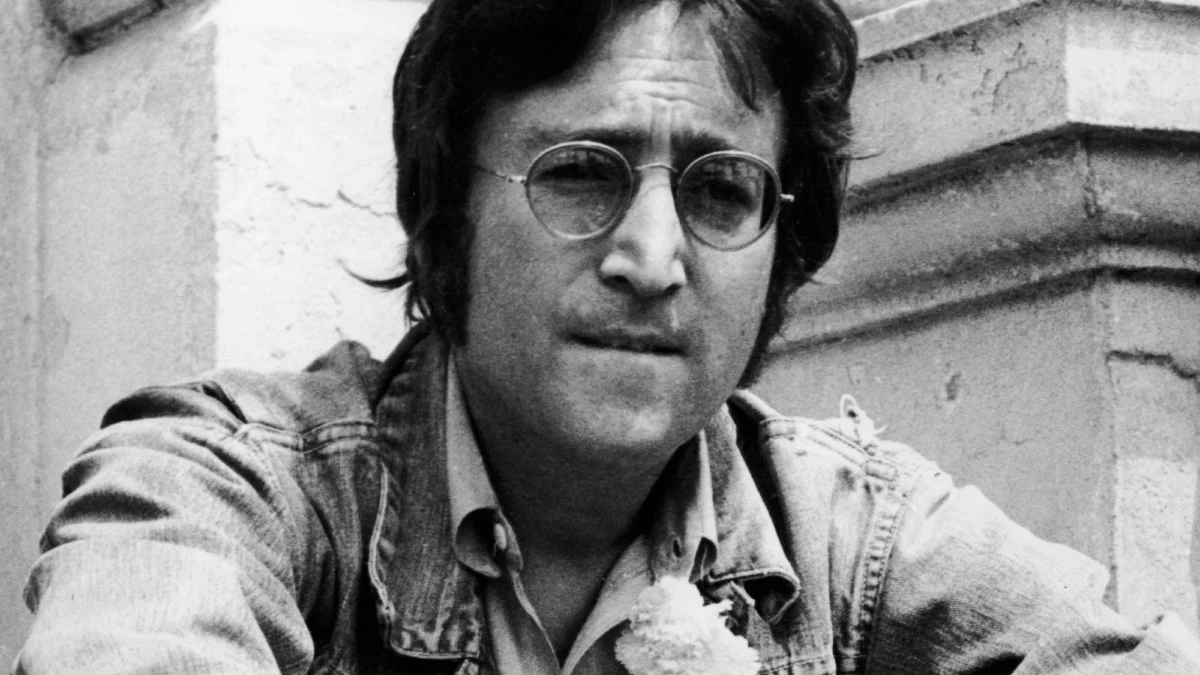
The dissolution of The Beatles in 1970 marked more than the end of a musical era; it signaled the liberation of John Lennon as an individual artist. While the collaborative environment of the "Fab Four" produced the most successful catalog in music history, it also necessitated a degree of compromise and brand management that frequently sanitized Lennon’s more radical impulses. Upon embarking on his solo career, Lennon effectively removed the filters of the Lennon-McCartney partnership and the commercial expectations of Apple Corps, revealing a raw, often confrontational persona that the constraints of a global pop phenomenon had previously obscured. This transition is most visible through a selection of his solo works that challenged political structures, religious institutions, and the very concept of the celebrity mythos he helped create.
The Shift from Collective Identity to Individual Autonomy
The transition from a member of The Beatles to a solo artist was not merely a career change for Lennon; it was a psychological and philosophical realignment. During the late 1960s, Lennon began to feel the weight of the "Beatle John" persona. In his 1970 interview with Jann Wenner of Rolling Stone, Lennon famously remarked that the band had become "the biggest bastards on earth" and that he felt stifled by the need to maintain a unified front. The creative friction between Lennon and Paul McCartney, while productive, often resulted in a "smoothing over" of Lennon’s sharper edges to ensure radio-friendliness and universal appeal.
Lennon’s solo debut, John Lennon/Plastic Ono Band (1970), served as a stark departure from the lush arrangements of Abbey Road. Influenced heavily by Arthur Janov’s Primal Scream therapy, the album replaced the Beatles’ signature harmonies with sparse instrumentation and vocal performances that ranged from whispers to literal screams. This period established the "unfiltered Lennon," an artist who viewed music not just as entertainment, but as a medium for radical self-expression and social agitation.
Political Provocation in Working Class Hero
While The Beatles touched on social issues in songs like "Revolution" and "Blackbird," they generally maintained a level of lyrical ambiguity that allowed for broad interpretation. In contrast, Lennon’s solo work, particularly "Working Class Hero," was an overt piece of political commentary that targeted the systemic conditioning of the individual within a capitalist society.
Recorded in late 1970, "Working Class Hero" features only Lennon’s voice and an acoustic guitar, echoing the folk-protest style of early Bob Dylan. The lyrics—“As soon as you’re born, they make you feel small / By giving you no time instead of it all”—critique the education system, the workforce, and the false promise of social mobility.
The song’s impact was immediate and controversial. Due to its use of the word "f***ing," it faced significant censorship. In the United States, several radio stations were threatened with fines by the Federal Communications Commission (FCC) for airing the track, and in Australia, the song was banned outright. This level of direct, profane, and systemic critique was something the Beatles’ management would likely have vetoed to protect the band’s commercial interests. By releasing it as a solo artist, Lennon proved he was willing to sacrifice airplay for the sake of an uncompromising message.
The Deconstruction of the Myth in God
Perhaps no song better illustrates Lennon’s need to break free from the Beatles’ legacy than "God." Released on his debut solo album, the track serves as a systematic deconstruction of the idols and ideologies that defined the 20th century. Lennon utilizes a "litany of rejection," listing various entities he no longer believes in, including magic, the I Ching, Jesus, Buddha, Elvis, and ultimately, The Beatles themselves.
The line “I don’t believe in Beatles / I just believe in me” acted as a definitive closing of the door on the 1960s. For a global audience that still hoped for a reunion, this was a shocking declaration of independence. From a journalistic perspective, "God" functions as a manifesto. It signaled that Lennon was no longer interested in being a "leader" or a "guru"—roles he had grown to loathe during the height of Beatlemania.
The song’s production, handled by Phil Spector, Lennon, and Yoko Ono, was deliberately stark, featuring Billy Preston on piano. The lack of vocal layering or complex production techniques forced the listener to confront the lyrics directly. It was a rejection of the "myth-making" that had characterized the latter half of the Beatles’ career, replacing it with a vulnerable, human-centric reality.
Paternal Vulnerability in Beautiful Boy (Darling Boy)
Lennon’s solo career was not defined solely by anger or political dissent; it also allowed him to explore levels of domestic intimacy that he had previously avoided. During his time with The Beatles, Lennon often projected a "tough" image, frequently delegating more sentimental or "soppy" songs to McCartney. However, his final studio album, Double Fantasy (1980), showcased a man who had found peace in fatherhood and domesticity.
"Beautiful Boy (Darling Boy)," written for his son Sean Lennon, is a tender lullaby that stands in stark contrast to the vitriol of his early 1970s work. The song includes the famous observation, “Life is what happens to you while you’re busy making other plans.”
This track represents a different kind of freedom—the freedom to be soft. In the context of his biography, this was a significant evolution. Lennon’s relationship with his first son, Julian, had been strained by the pressures of The Beatles’ fame. By 1980, after a five-year "house-husband" hiatus from the music industry, Lennon returned with a work that prioritized his role as a father over his role as a rock star. This level of personal transparency was a hallmark of his solo years, proving that he no longer needed the "safety net" of a band to express his most private emotions.
Chronology of Artistic Autonomy: 1968–1980
The timeline of Lennon’s departure from the group format into total autonomy reveals a gradual shedding of his public persona:
- 1968: Release of Unfinished Music No. 1: Two Virgins. This experimental album with Yoko Ono was the first sign that Lennon was moving toward avant-garde and highly personal expressions outside of the band.
- 1969: Formation of the Plastic Ono Band. Lennon released "Give Peace a Chance" while still technically a member of The Beatles, establishing his identity as a peace activist.
- 1970: The official breakup of The Beatles and the release of John Lennon/Plastic Ono Band. This album is widely considered the "divorce" from his past.
- 1971: Release of Imagine. While the title track was more melodic and accessible, the album contained "How Do You Sleep?", a scathing attack on Paul McCartney, further distancing himself from his former partner.
- 1972: Some Time in New York City. This was Lennon’s most overtly political and least commercially successful period, focusing on issues like the Attica State prison riots and the Northern Ireland conflict.
- 1975–1980: The "Five-Year Silence." Lennon retreated from public life to raise Sean, an act of defiance against the industry’s demand for constant output.
- 1980: Release of Double Fantasy. This final work synthesized his political awareness with his personal contentment, shortly before his death on December 8, 1980.
Supporting Data: Commercial and Critical Reception
While The Beatles were a guaranteed commercial juggernaut, Lennon’s solo career saw more varied results, reflecting his refusal to adhere to a specific formula.
According to RIAA data, Imagine remains his most successful solo studio album, certified 3x Multi-Platinum in the United States. However, his more "unfiltered" works, such as Plastic Ono Band, while critically acclaimed today (ranked #85 on Rolling Stone’s 500 Greatest Albums of All Time), reached only #6 on the Billboard 200 at the time—a "failure" by Beatles standards but a success for a raw, experimental rock record.
Lennon’s impact on the singles charts also reflected his shift toward social commentary. "Imagine" has become one of the most performed songs of the 20th century, yet at the time of its release, it was seen by some as a radical secular hymn. The song’s enduring legacy—ranking as the third greatest song of all time by Rolling Stone—validates Lennon’s move toward themes of global unity over pop romance.
Broader Impact and Implications for the Music Industry
John Lennon’s solo career fundamentally changed the expectations for a "pop star." Before Lennon, artists were largely expected to maintain a curated, positive image for their fan base. Lennon’s willingness to be "the villain," to be vulnerable, and to be overtly political paved the way for the "confessional" singer-songwriter movement of the 1970s.
His solo output demonstrated that an artist could survive—and thrive—after leaving the most successful group in history by leaning into their own idiosyncrasies rather than trying to replicate the group’s sound. The "holding back" that occurred within The Beatles was a byproduct of the group’s perfectionism and democratic structure. By removing that structure, Lennon allowed for a type of honesty that, while sometimes messy or inconsistent, was undeniably authentic.
Ultimately, the three songs "Working Class Hero," "God," and "Beautiful Boy" serve as a tripartite map of Lennon’s psyche. They show a man moving from societal critique to the destruction of personal myths, and finally, to the acceptance of love and family. Had he remained within the confines of The Beatles, these messages would likely have been diluted to fit the "Fab Four" brand. In his solo career, John Lennon was not just a musician; he was a witness to his own life and the world around him, proving that his truest self was found not in the harmony of a group, but in the singular, often dissonant voice of an individual.
