

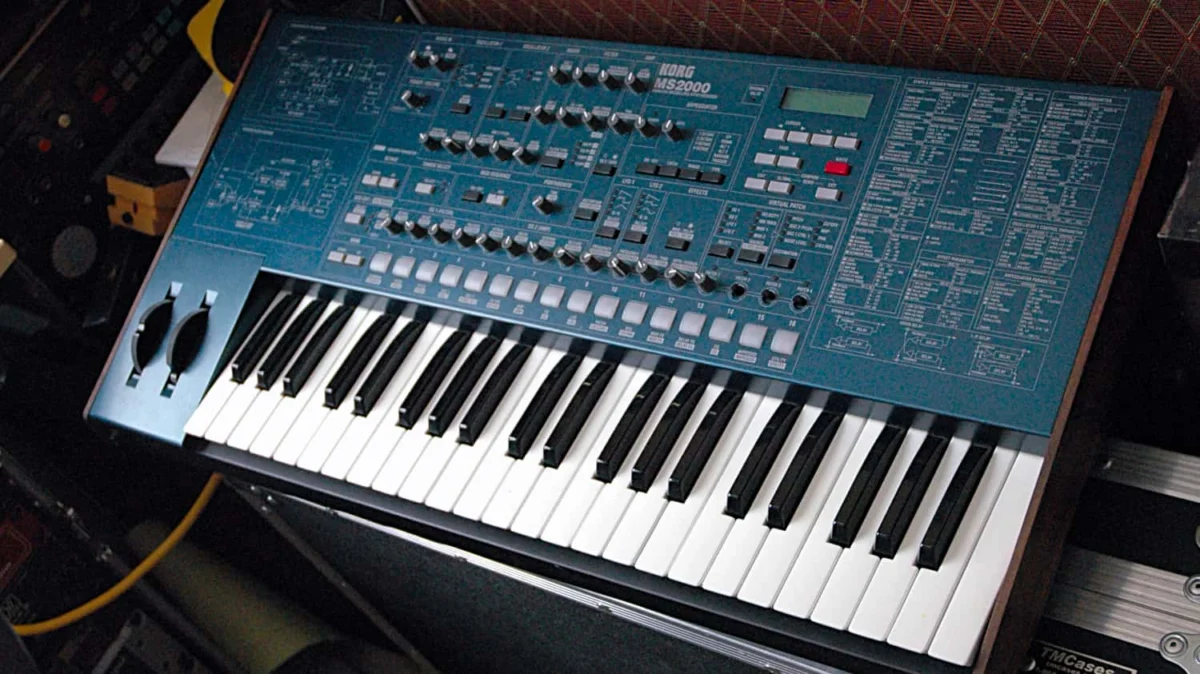
The Korg MS2000, a digital-analog modeling synthesizer that has remained a staple in electronic music production since its debut at the turn of the millennium, has received a modern utility upgrade through the release of a new, free web-based editor and librarian. Developed by sound designer and synthesist Ian Dixon, the tool leverages the Web MIDI API to provide a comprehensive interface for patch management and real-time parameter manipulation. This development addresses a long-standing challenge for owners of legacy hardware: the difficulty of managing complex sound libraries and deep synthesis parameters through aging physical interfaces and discontinued proprietary software.
Dixon’s Korg MS2000 Editor Librarian is designed to operate entirely within a web browser, eliminating the need for specialized drivers or local software installations. By connecting a MIDI interface to a computer and utilizing a Web MIDI-compatible browser such as Google Chrome or Microsoft Edge, users can now gain full control over the MS2000’s internal architecture. The tool is intended to streamline the workflow for both the keyboard version and the MS2000R rack-mount module, offering features that range from bulk System Exclusive (SysEx) data management to real-time visual editing of envelopes and oscillators.
Technical Context and the Legacy of the Korg MS2000
To understand the significance of this new utility, it is necessary to examine the historical and technical standing of the Korg MS2000. Released in 2000, the MS2000 was Korg’s definitive entry into the virtual analog (VA) market, designed to compete with the likes of the Roland JP-8000 and the Nord Lead series. While its four-voice polyphony was considered modest even at the time of its release, the synthesizer gained a cult following due to its "knob-per-function" interface, powerful 16-step motion sequencer, and its inclusion of the Digital Waveform Generator System (DWGS) inherited from the Korg DW-8000.
The MS2000’s sound engine was so successful that it formed the basis for the Korg MicroKorg, which was released in 2002 and went on to become one of the best-selling synthesizers of all time. Because the MS2000 and the MicroKorg share a nearly identical synthesis architecture, Dixon’s editor provides a crucial bridge between these two ecosystems, allowing MS2000 owners to import and utilize the vast libraries of patches originally created for the MicroKorg.
Despite its enduring popularity, the MS2000’s hardware interface, while tactile, can be cumbersome for modern production workflows. Managing 128 internal memory slots and navigating the "virtual patch" modulation matrix requires significant manual effort. Furthermore, as operating systems have evolved, many of the original software editors released in the early 2000s have become obsolete, leaving users to rely on generic SysEx librarians or manual front-panel editing.
Features of the Web MIDI Editor and Librarian
Ian Dixon’s editor introduces several modern conveniences that transform the MS2000 into a more versatile instrument for the contemporary studio. One of the primary functions of the tool is the ability to read all programs currently stored on the hardware unit. Once the synthesizer is connected and the MIDI ports are configured within the browser, the editor can pull the entire internal library, allowing the user to save, rename, and reorganize patches on a local computer.
The real-time editing capabilities represent a significant leap forward for the MS2000 workflow. The editor provides a centralized dashboard for all primary synthesis parameters, including:
- Oscillator Selection: Users can toggle between traditional analog waveforms (saw, pulse, sine) and the 64 DWGS waveforms. The editor also provides controls for pulse width modulation, cross-modulation, and ring modulation.
- Filter and Amp Visualization: Unlike the original hardware, which relies on physical knobs without visual feedback on a screen, the editor provides a visual representation of the ADSR (Attack, Decay, Sustain, Release) envelopes. This allows for more precise sound shaping.
- Virtual Patch Routing: The MS2000 features four "Virtual Patches" that allow users to route modulation sources (such as LFOs or envelopes) to destinations like filter cutoff or pitch. The editor simplifies this process by providing a clear matrix interface.
- Motion Sequencer Management: One of the MS2000’s most celebrated features is its 16-step motion sequencer, which records and plays back knob movements. The editor allows for easier manipulation of these sequences, which can be difficult to fine-tune on the hardware’s small LCD screen.
A standout feature of the tool is the "Audition" mode. This allows users to send patch data to the synthesizer’s edit buffer without overwriting the stored memory. This functionality is particularly useful for sound designers who wish to test hundreds of patches from external SysEx banks before deciding which ones to commit to the hardware’s limited 128 slots.
The Role of Web MIDI in Hardware Longevity
The choice of Web MIDI as the platform for this editor is a strategic one that reflects a broader trend in the music technology industry. Web MIDI is a W3C specification that allows web applications to enumerate, select, and interact with MIDI devices connected to a user’s computer. Because the logic resides on a web server rather than in a compiled executable file, the software is inherently cross-platform, functioning equally well on Windows, macOS, and Linux without the need for installation.
This approach addresses the "software rot" that often plagues legacy hardware. Many musicians own synthesizers from the 1990s and 2000s that are still sonically viable but lack functional software support on modern 64-bit operating systems. By utilizing the browser as the host, developers like Dixon ensure that their tools remain accessible as long as web standards are maintained.
Dixon’s implementation also includes a "controlled randomization" feature. This algorithm generates new patches by applying semi-random values to specific parameters while keeping others (such as master volume or basic oscillator tuning) stable. This feature is designed to spark "happy accidents," a popular technique in electronic music production where the user discovers unique timbres that would be difficult to program intentionally.
Market Impact and Community Response
The release of the Korg MS2000 Editor Librarian comes at a time when the second-hand market for virtual analog synthesizers is seeing a resurgence. According to data from secondary market platforms like Reverb and eBay, the MS2000 has maintained a steady resale value, often fetching between $500 and $900 depending on condition. The availability of free, high-quality management tools is likely to bolster the desirability of these units, as it mitigates one of the primary drawbacks of using vintage digital gear.
While Korg has released "plug-in" versions of many of its classic synthesizers through the Korg Collection, many purists prefer the physical MS2000 for its specific converter characteristics and the tactile experience of its front panel. Dixon’s editor does not replace the hardware interface but rather augments it, allowing the user to move between the tactile knobs and the precision of a mouse-driven interface seamlessly.
Initial reactions from the synthesizer community have been positive, with users noting the editor’s ability to "modernize" the feel of the MS2000. By providing a patch browser that feels more like a modern VST (Virtual Studio Technology) instrument, the tool reduces the friction involved in integrating 24-year-old hardware into a modern Digital Audio Workstation (DAW) environment.
Chronology of Development and Availability
The development of the Korg MS2000 Editor Librarian follows Dixon’s previous work in the "The Digital Lifestyle" project, where he has explored the intersection of consumer technology and music production. The project was born out of a personal need to manage patches more efficiently on the MS2000, which Dixon describes as a "brilliant virtual analogue synth" that suffers from slow front-panel management.
The editor’s timeline of features indicates a focus on compatibility. The ability to load MicroKorg SysEx banks was a high-priority feature during development, given the massive amount of community-created content available for that platform. By making the MS2000 "MicroKorg-compatible," Dixon has effectively unlocked thousands of free sounds for MS2000 owners that were previously difficult to port over.
The Korg MS2000 Editor Librarian is currently available as a free resource hosted on The Digital Lifestyle website. Dixon has indicated that the project is open to feedback, with the potential for future updates based on user requests. This community-driven model of software development has become increasingly common in the niche world of synthesizer maintenance, where independent developers step in to provide the support that original manufacturers have long since discontinued.
Broader Implications for Synthesizer Maintenance
The emergence of third-party web editors for legacy gear like the MS2000 signals a shift in how the industry views the lifespan of electronic instruments. In the past, a synthesizer’s utility was often tied to the lifespan of its proprietary software. Today, the combination of universal MIDI standards and open web technologies allows the community to extend the life of these instruments indefinitely.
As more musicians seek to integrate "out-of-the-box" hardware into their setups, the demand for stable, easy-to-use librarians will only grow. Dixon’s work demonstrates that even a two-decade-old synthesizer can be made to feel like a contemporary tool with the right software intervention. For the Korg MS2000, a machine that helped define the sound of electronic music in the early 2000s, this new editor ensures that it will remain a functional and relevant part of the studio for years to come.
