

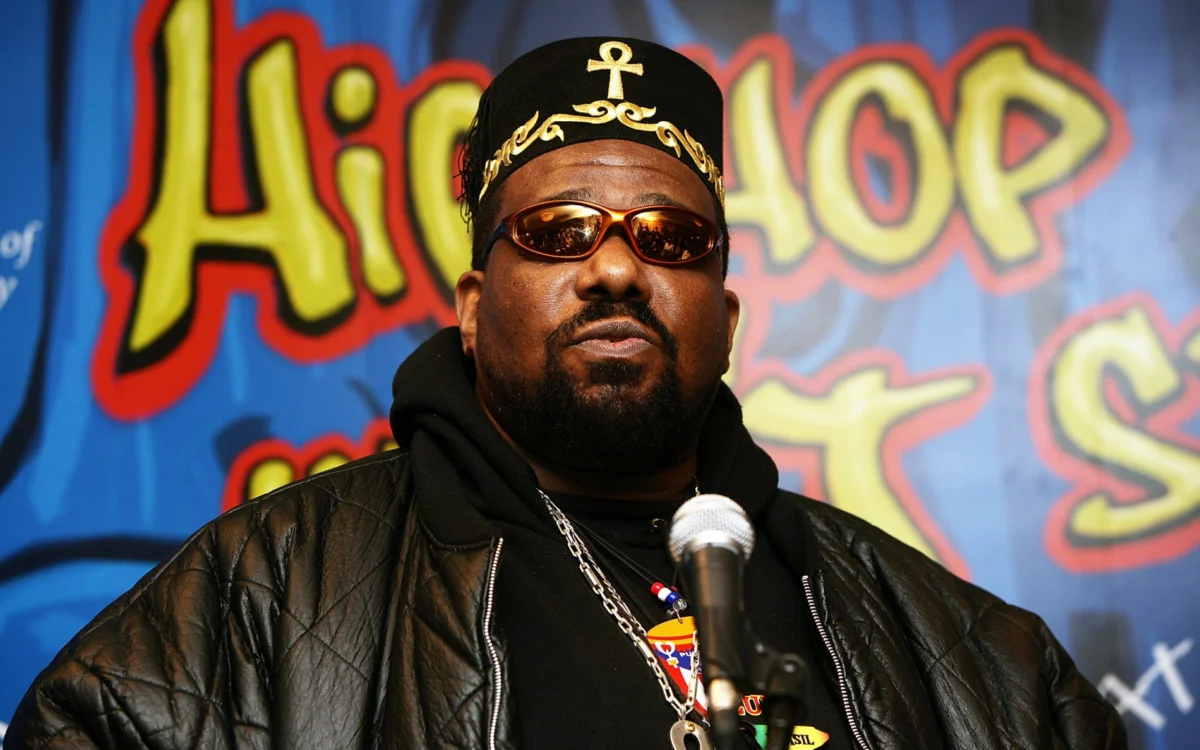
The world of music and culture is mourning the passing of Afrika Bambaataa, born Lance Taylor, a towering figure in the genesis of hip-hop, who died on Thursday, April 9, at the age of 68. His death, confirmed by his lawyer to the Associated Press, was attributed to prostate cancer. Bambaataa, a visionary rapper, DJ, and producer, leaves behind a legacy that is as monumental as it is complicated, marked by profound contributions to a global cultural movement and shadowed by serious allegations of sexual abuse.
A Founding Father’s Departure and the Birth of a Culture
Afrika Bambaataa is widely recognized as one of the three founding fathers of hip-hop, alongside DJ Kool Herc and Grandmaster Flash. His influence was instrumental in shaping not only the sonic landscape of the genre but also its foundational ethos. In the 1970s, emerging from the South Bronx, a borough grappling with urban decay and social unrest, Bambaataa, a former member of the Black Spades street gang, channeled his energy into forging a new artistic and social paradigm. He founded the Universal Zulu Nation, an organization that became a cornerstone of hip-hop culture, articulating and promoting its four core elements: DJing, graffiti art, breakdancing, and MCing.
The Zulu Nation was more than just a collective; it was a philosophy. Bambaataa envisioned hip-hop as a force for positive social change, a vehicle for peace, unity, love, and enjoyment – principles that resonated deeply within the disenfranchised communities of the Bronx. This commitment to a higher purpose, embodied in the Zulu Nation’s tenets, helped to transform the perception of street culture from one of violence and despair into a vibrant and empowering art form.
Kurtis Blow, executive director of the Hip Hop Alliance, offered a poignant tribute, stating, "Today, we acknowledge the transition of a foundational architect of Hip Hop culture, Afrika Bambaataa. He helped shape the early identity of Hip Hop as a global movement rooted in peace, unity, love, and having fun. His vision transformed the Bronx into the birthplace of a culture that now reaches every corner of the world."
The Sonic Architect: "Planet Rock" and Beyond
Afrika Bambaataa’s impact as a recording artist was equally profound. His 1982 masterpiece, "Planet Rock," a collaboration with the Soulsonic Force, remains an iconic track that not only charted in the top 50 of the Billboard Hot 100 but also served as a watershed moment for electronic music and its integration into hip-hop. The song’s innovative use of Kraftwerk samples and its futuristic, electro-funk sound laid the groundwork for a wave of electro-rap and dance-pop records, demonstrating Bambaataa’s forward-thinking approach to music production.
"Planet Rock" wasn’t just a hit song; it was a sonic manifesto. It showcased Bambaataa’s ability to synthesize diverse musical influences, from funk and soul to European electronic music, into something entirely new and groundbreaking. This innovative spirit cemented his reputation as a musical alchemist, capable of transforming existing sounds into futuristic sonic tapestries. The track’s enduring influence can be heard in countless subsequent electronic and hip-hop productions, a testament to its lasting power.
Beyond "Planet Rock," Bambaataa’s discography includes other notable works that further solidified his place in hip-hop history. His early singles, such as "Zulu Nation Anthem," served as anthems for the burgeoning culture, while his album "Death Mix Vol. 1" showcased his prowess as a DJ and curator. His willingness to experiment and push boundaries, evident in his eclectic sampling and genre-bending productions, made him a perpetual innovator.
A Complex Legacy: Navigating Allegations and Accountability
Despite his undeniable contributions, Afrika Bambaataa’s legacy is undeniably complex, marred by disturbing allegations of sexual abuse that surfaced in the years leading up to his death. These accusations cast a long shadow over his celebrated career and sparked critical conversations within the hip-hop community and beyond.
The first significant public accusation emerged in 2016 when a man named Ronald Savage alleged that Bambaataa had sexually abused him in the 1980s when Savage was a teenager. Bambaataa vehemently denied these allegations. However, the narrative shifted when Savage later walked back some of his claims, stating in 2024 that Bambaataa was "not a pedophile" and suggesting the encounter was consensual, albeit with a perceived age discrepancy.
This initial accusation, regardless of its later retractions, opened the floodgates for other individuals to come forward. Several other men subsequently accused Bambaataa of similar acts of sexual abuse during their teenage years. The gravity of these allegations necessitated a closer examination of Bambaataa’s personal life and the power dynamics inherent in his position of influence.
In 2021, a civil lawsuit was filed by an anonymous man who accused Bambaataa of sexual abuse and trafficking over a four-year period, beginning in 1991 when the plaintiff was 12 years old and Bambaataa was in his 30s. Bambaataa did not respond to this lawsuit, resulting in a default judgment against him in 2025, where the alleged victim was awarded damages by the court. The failure to contest the lawsuit or appear in court further complicated the public perception of the allegations.
The Hip Hop Alliance, while acknowledging Bambaataa’s foundational role, also recognized the dual nature of his legacy. Kurtis Blow’s statement continued, "At the same time, we recognize that his legacy is complex and has been the subject of serious conversations within our community." This sentiment reflects a broader societal reckoning with the past actions of influential figures, demanding that their contributions be viewed alongside the harm they may have caused.
The Broader Impact: Hip-Hop’s Evolving Narrative
The passing of Afrika Bambaataa marks the end of an era, but the conversation surrounding his legacy is far from over. His contributions to hip-hop are indelible, positioning him as a pivotal figure in the development of a genre that has become a dominant global cultural force. The impact of hip-hop over the last 50 years is immeasurable, influencing music, fashion, language, and social commentary worldwide. Bambaataa, alongside pioneers like DJ Kool Herc and Grandmaster Flash, laid the essential groundwork for this cultural phenomenon.
However, the ongoing discussions about sexual abuse allegations against prominent figures in the arts and entertainment industries underscore the need for accountability and a critical re-evaluation of historical narratives. The complexities of Bambaataa’s life and career serve as a reminder that individuals are not always monolithic, and their legacies can be a tapestry woven with both brilliance and darkness.
The hip-hop community, having grown and evolved significantly since its inception, is now at a point where it can critically engage with its own history. This includes celebrating the innovators and visionaries while also acknowledging and addressing the harm caused by those who held positions of power. Bambaataa’s death prompts a continued examination of how to honor artistic genius while simultaneously ensuring justice and support for survivors of abuse.
The evolution of hip-hop has mirrored societal shifts, including increased awareness and discourse around issues of consent, power, and accountability. As the genre continues to mature, so too will its capacity to engage with the multifaceted legacies of its pioneers, striving for a more comprehensive and equitable understanding of its past and its future. The void left by Afrika Bambaataa’s passing is significant, both for his immense creative output and for the ongoing dialogue his life and death inevitably provoke.
