

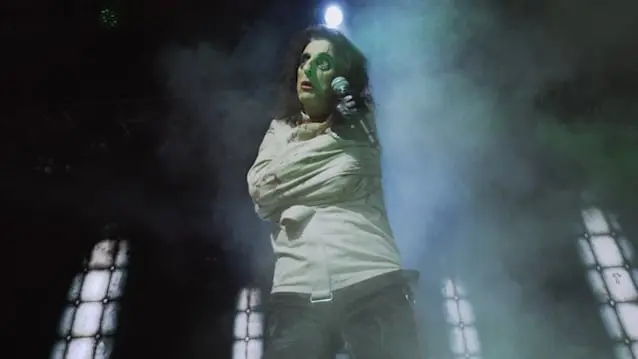
In a candid and expansive interview with CBS Mornings, legendary shock rock pioneer Alice Cooper, born Vincent Damon Furnier, offered a deep dive into the genesis and evolution of his iconic stage persona, a character that has captivated audiences for over five decades. This insightful discussion, coinciding with the release of his new autobiography, "Devil On My Shoulder," reveals the meticulous craftsmanship and psychological underpinnings of one of rock’s most enduring and influential figures. Cooper’s exploration of his alter ego provides a fascinating glimpse into the deliberate creation of an artistic entity that transcends the boundaries of mere musical performance, solidifying his place in cultural history.
The Birth of an Icon: Crafting the Unforgettable Alice
Cooper, who was born Vincent Damon Furnier, elaborated on the fundamental motivation behind the creation of Alice. "I think I honestly wanted Alice to be my favorite rock star, and so he still is," he stated, as transcribed by BLABBERMOUTH.NET. "He looks exactly what I want my rock star to look like. He sings like that. He sings about the things I want him to sing about." This reveals a strategic approach to persona development, where the artist envisioned an ideal rock star and then meticulously brought that vision to life. The visual elements – heavy mascara, flamboyant costumes, and a stage show steeped in horror imagery – were not accidental but rather deliberate choices to embody this idealized rock god.
The androgynous nature of the Alice persona was a significant departure from the predominantly masculine archetypes prevalent in early rock and roll. This deliberate ambiguity allowed the character to occupy a unique space, challenging societal norms and expectations. Cooper explained the strategic decision to maintain a certain distance between himself and the audience through his character. "He’s sort of this arrogant villain, condescending villain. And at the end, I let them in on it. Then I go, ‘Well, well, well, look who we have here.’ And then he starts talking to them. And they go, ‘Oh.’" This calculated reveal, where the seemingly unattainable villain momentarily acknowledges the audience, creates a powerful dynamic of intrigue and connection without diminishing the character’s mystique.
Cooper further articulated this separation: "But I’ve never let Alice talk to the audience. It’s because then he’s human, then he’s one of them, and they don’t want him to be one of them. They don’t want him to be [Jon] Bon Jovi. They don’t want him to be Paul McCartney. They want him to be this other thing that exists somewhere over in here." This statement underscores the profound understanding Cooper possesses of audience psychology and the power of escapism in entertainment. By maintaining Alice as an otherworldly entity, he ensured that the character remained a subject of fascination, rather than becoming mundane or relatable in a way that would dissipate his allure. This intentional creation of a distinct, almost mythical persona is a key factor in Alice Cooper’s enduring appeal, setting him apart from many of his contemporaries who often blurred the lines between their on-stage and off-stage identities.
The Guerrilla Theater of Early Days: From Mop to Masterpiece
The evolution of Alice Cooper’s live performances is a testament to the band’s ingenuity and adaptability, particularly in their formative years. Cooper recounted the pragmatic approach born out of necessity: "We were very versatile about finding things that worked. In the very beginning, we couldn’t afford props. If I could find a mop backstage, it could be a girl. It could be something I ride on. It could be a weapon. It could be anything. So we learned guerrilla theater first." This "do-it-yourself" ethos forged a creative foundation, forcing the band to rely on imagination and resourcefulness rather than expensive production. This early period instilled a deep understanding of theatricality and performance that would later be amplified with greater resources.
As the band’s success grew, so did their capacity for elaborate stagecraft. "Then the more money we got, the more produced it became." This progression allowed them to translate their raw theatrical instincts into more polished and impactful spectacles. Cooper cited the 1930s Broadway and stage show "Hellzapoppin’" as a significant influence, noting its "absurdity." He explained, "The absurdity of it, only attach that to rock and roll, and throw a little horror into it." This fusion of anarchic humor and visceral horror, filtered through the lens of rock music, became the hallmark of the Alice Cooper live experience.
The controversial and groundbreaking element of theatrical execution, particularly the infamous stage "hangings," was a deliberate provocation. Cooper stated, "And then if you’re gonna do the hanging, really do it right. Make it look really real. And the more the parents hated that, the better we were. The kids loved everything the parents hated. And the more that we could tap into that, the better." This astute observation highlights the counter-cultural appeal of Alice Cooper. In an era where parental disapproval was often a badge of honor for rebellious youth, the band expertly leveraged this dynamic. The more shock and outrage they generated among the older generation, the more they resonated with their target audience. This strategy not only fueled their notoriety but also cemented their status as icons of adolescent rebellion and liberation. The commercial success of albums like "Love It to Death" (1971) and "Billion Dollar Babies" (1973), both certified platinum, demonstrates the effectiveness of this approach, indicating a substantial commercial appeal built upon their boundary-pushing artistry.
The Engine of Endurance: Motivation and the Specter of Age
At nearly 80 years old, Alice Cooper continues to deliver electrifying performances, a feat that defies conventional expectations. When asked about his sustained drive, Cooper attributed it, somewhat paradoxically, to fear. "I think, and I say this a lot of times, and people don’t get it – a lot of it comes from fear. You’re up in front of 20,000 people. You better deliver." This admission reveals a profound sense of responsibility and a relentless commitment to his craft. The pressure to meet the high expectations of a massive audience serves as a powerful motivator, pushing him to consistently exceed perceived limitations.
Cooper recounted an anecdote that illustrates this point: "Right now, they’re expecting Alice Cooper to be an old man, 78-year-old man, walking up there. And I remember some lady was telling this other lady, ‘Well, he probably sits down most the show.’ And then they saw the show, and I’m, like, [all over the stage]… I’ve always felt that I had to prove myself." This constant need to validate his presence and performance, even after decades of success, speaks to an intrinsic drive that goes beyond external validation.
When pressed on the origin of this persistent need to prove himself, Cooper offered, "I don’t know. But it’s a good agent to have, because I never, ever phone it in. It’s, like I have to do it full out, 100%." This internal impetus ensures that every performance is delivered with maximum effort and authenticity. He further emphasized the importance of maintaining the integrity of the Alice Cooper persona, stating, "And I always said, ‘If I can’t look like Alice, if I can’t perform like Alice, if I weigh 100 pounds more, Alice is gone. Somebody else should play Alice. My daughter, Calico, should play Alice.’" This poignant statement highlights his deep respect for the character he created and his commitment to ensuring it remains a vibrant and credible entity. The potential succession of his daughter, Calico Cooper, a performer in her own right who has toured with him, underscores a thoughtful consideration for the future of the Alice Cooper legacy, ensuring its continuity through a bloodline that understands its essence.
The Alice Cooper Brand: Intellectual Property and Artistic Legacy
The conversation also touched upon the business aspect of his iconic persona, specifically regarding the potential sale of the "Alice Cooper" intellectual property rights, a move recently undertaken by KISS. Cooper, with characteristic humor, dismissed the idea: "No, I don’t think so. We don’t need the money. [Laughs]" This lighthearted response belies a deeper sentiment about the personal and artistic significance of the Alice Cooper identity. For Cooper, the character is not merely a commodity to be traded but an intrinsic part of his artistic soul.
He also addressed the often-speculated rivalries with fellow theatrical rock pioneers like David Bowie. Dispelling any notions of animosity, Cooper stated, "But KISS are good friends. They’re really good friends. When they came out, everybody wanted there to be a big [feud]… And [David] Bowie too. ‘Oh, Alice and Bowie hate each other.’ And we did not. We were friends." Cooper expressed admiration for Bowie’s ability to translate theatricality into mainstream success, acknowledging Bowie’s own groundbreaking work. "I loved the fact that he took the idea that there was finally a band that could do this outrageous theatrics and have hit records at the same time. That never happened before. We were the first band that did that. And then I think Bowie went, ‘Okay, I wanna do that.’" Cooper’s gracious recognition of Bowie’s artistic evolution, stating, "In fact, he used to tell the Spiders from Mars, he’d say, ‘Come. I want you to see Alice. This is what we need to do.’ Then he took it into outer space, and he created his character. So I’m not threatened by that." This demonstrates a magnanimous perspective on artistic influence, acknowledging the symbiotic relationship between creative forces.
The enduring power of the Alice Cooper brand is evident in its pervasive influence across multiple media. Beyond his musical achievements, which include over 50 million albums sold worldwide, a star on the Hollywood Walk of Fame, and induction into the Rock and Roll Hall of Fame, Cooper has made significant forays into film and television. His memorable cameo in the 1992 cult classic "Wayne’s World" introduced his persona to a new generation, while his appearance in NBC’s 2018 production of "Jesus Christ Superstar Live in Concert" alongside John Legend and Sara Bareilles showcased his versatility as a performer. Further testament to his cross-generational appeal are his appearances on "The Muppets" and "That ’70s Show!" and his role in Tim Burton’s "Dark Shadows." The widespread appeal of his music is further underscored by numerous cover versions by artists ranging from Etta James to The Smashing Pumpkins and Megadeth, and samples by The Beastie Boys and Disturbed, illustrating the timeless quality of his songwriting. His collaborations with legendary figures like Vincent Price and his co-founding of Hollywood Vampires with Joe Perry and Johnny Depp further solidify his esteemed position within the music industry. The recent critical acclaim for "The Revenge of Alice Cooper" (2025), which reunited original band members, further demonstrates the enduring resonance of his early work.
"Devil On My Shoulder": A New Chapter
Alice Cooper’s new autobiography, "Devil On My Shoulder," promises to offer an even deeper exploration of his remarkable life and career. Published by Grand Central Publishing’s Da Capo imprint on October 6th in the U.S., the book is poised to provide fans with unparalleled insights into the man behind the legend. The interview with CBS Mornings serves as a potent prelude, highlighting Cooper’s enduring charisma, his profound understanding of performance art, and his unwavering dedication to the singular creation that is Alice Cooper. His journey, marked by innovation, controversy, and an unyielding commitment to theatricality, continues to inspire and captivate, solidifying his status as a true titan of popular culture. The narrative arc of Alice Cooper, from a misunderstood theatrical experiment to a global phenomenon, is a compelling case study in artistic vision and the power of a well-crafted persona to transcend time and genre.
