

The professional synthesis community and electronic music enthusiasts recently received an in-depth technical overview of the Arturia PolyBrute 12 through a comprehensive masterclass hosted by prominent music technology retailer Perfect Circuit. The session, led by Matt Piper, a distinguished professor of synthesis at the Los Angeles College of Music (LACM), serves as a definitive guide to Arturia’s latest flagship analog synthesizer. This educational initiative aims to bridge the gap between high-level hardware engineering and practical creative application, detailing the sophisticated signal architecture and expressive capabilities that define the PolyBrute 12.
As the successor and expanded version of the original PolyBrute, the PolyBrute 12 represents a significant milestone in analog synthesis, doubling the voice count of its predecessor while introducing a revolutionary keybed technology. The masterclass, spanning over 43 minutes of technical demonstration and sound design theory, provides a granular look at how these advancements translate into sonic possibilities. By positioning an academic expert like Piper at the helm, the presentation moves beyond a standard product demonstration into the realm of formal synthesis education, reflecting the growing demand for deep-dive technical content in the pro-audio market.
Technical Architecture and the FullTouch Ecosystem
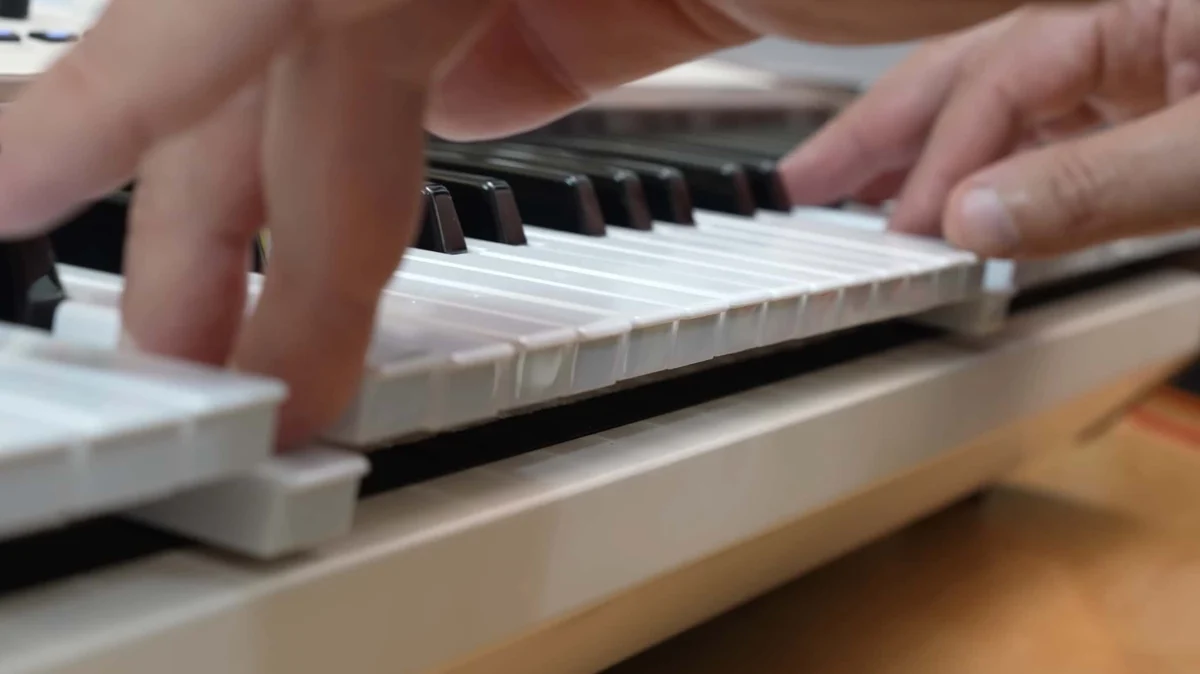
At the core of the PolyBrute 12’s appeal is its "FullTouch" keyboard, a primary focus of Piper’s masterclass. Unlike standard MIDI controllers or traditional synthesizers that offer basic velocity and channel aftertouch, the PolyBrute 12 utilizes a proprietary keybed design that tracks the entire motion of the key. This allows for multiple zones of expression: initial strike (velocity), traditional aftertouch, and a unique "FullTouch" mode where the pressure applied throughout the key’s travel directly modulates synthesis parameters in real-time.
Piper demonstrates that this technology is not merely a tactile luxury but a fundamental shift in how polyphonic expression is managed. By utilizing MIDI Polyphonic Expression (MPE) standards, the PolyBrute 12 allows each of its 12 voices to be modulated independently. In the masterclass, this is illustrated through patches where individual notes within a chord can be filtered or pitch-bent independently based on finger pressure, a feat previously reserved for specialized controllers like the Haken Continuum or the ROLI Seaboard.
The doubling of the voice count from six to twelve is another critical data point highlighted in the session. This increase is not just about playing larger chords; it provides the necessary headroom for complex "Morphing" functions and long-release pads that would otherwise suffer from voice stealing on more limited hardware. The PolyBrute 12 maintains a pure analog signal path for its oscillators and filters, while utilizing digital control for its massive modulation matrix, ensuring a blend of vintage sonic character and modern precision.
Chronological Overview of the Masterclass Proceedings
The masterclass follows a logical pedagogical structure, beginning with a high-level overview before descending into specific synthesis modules. The event timeline can be categorized into four distinct phases:
Phase I: Expressive Interface and Modulation Logic
The opening 15 minutes of the session focus on the physical interface. Piper explores the "Morphée" controller—a three-axis touch pad that allows for simultaneous control of multiple parameters. This is followed by a demonstration of the "Morph" knob, a feature unique to the PolyBrute line that allows a user to seamlessly transition between two entirely different patch states (A and B). This section concludes with an analysis of the Modulation Matrix, which acts as the "brain" of the unit, featuring 32 destinations and 12 sources, facilitating complex routing that rivals modular systems.
Phase II: The Analog Signal Path
Starting at the 20-minute mark, the focus shifts to the Voltage Controlled Oscillators (VCOs) and the dual-filter architecture. Piper provides a detailed breakdown of VCO 1 and VCO 2, including the "Metalizer" circuit, which introduces wavefolding to create harmonically rich, metallic textures. The filter section is given significant weight, showcasing the contrast between the 12dB/octave Steiner-Parker filter and the classic 24dB/octave Ladder filter. The "Brute Factor" knob—a feedback loop that adds grit and saturation—is demonstrated as a tool for harmonic thickening and aggressive sound design.
Phase III: Advanced Synthesis Techniques
The latter half of the masterclass dives into Frequency Modulation (FM), Hard Sync, and Parallel Filtering. Piper illustrates how the PolyBrute 12 can function as a powerful FM synthesizer despite its analog nature, using VCO 2 to modulate VCO 1 or the filters. This section is particularly valuable for sound designers interested in creating non-traditional analog sounds, such as metallic percussion and complex evolving textures.
Phase IV: Practical Patch Application
The session concludes with a "Patch Playthrough," where Piper moves from theoretical explanation to practical results. He demonstrates the instrument’s versatility by showcasing a range of sounds, from a highly realistic accordion emulation—highlighting the nuance of the FullTouch keybed—to a modern "Party Drop" electronic lead. This segment proves the instrument’s utility across genres, from cinematic scoring to contemporary pop production.
Supporting Data and Market Positioning
The release of the PolyBrute 12 and the accompanying masterclass occur within a specific context of the synthesizer market. Data from industry analysts suggest a sustained resurgence in high-end analog hardware. While software instruments dominate the entry-level market, professional musicians and studios are increasingly investing in "flagship" instruments that offer tactile interaction and unique hardware-based synthesis methods.
Technical specifications of the PolyBrute 12 include:
- Voices: 12-voice polyphony with "Duo-split," "Layer," and "Unison" modes.
- Oscillators: Two analog VCOs per voice with saw, triangle (with Metalizer), and square waves.
- Filters: Multimode Steiner-Parker and 24dB Ladder filter with global drive.
- Modulation: 3 envelope generators, 3 LFOs, and a 12×32 modulation matrix.
- Effects: High-quality digital effects engine including delay, reverb, and modulation.
- Connectivity: MIDI In/Out/Thru, USB, Expression and Sustain pedal inputs, and Sync I/O.
By offering 12 voices, Arturia has positioned the PolyBrute 12 to compete directly with other high-end polyphonic analogs such as the Sequential Prophet-10, the Moog One, and the UDO Super 6. However, the inclusion of the FullTouch keybed and the Morphée controller gives it a unique selling proposition focused on "performance-oriented synthesis," a niche that Arturia has aggressively pursued since the launch of the original MatrixBrute.
Professional Reactions and Industry Implications
The collaboration between Arturia, Perfect Circuit, and the Los Angeles College of Music reflects a broader trend of "edutainment" in the music industry. By providing high-quality, free educational content, manufacturers and retailers build brand loyalty while ensuring that users can maximize the potential of their significant financial investments.
Industry reactions to the masterclass have been largely positive, with professionals noting the clarity of Matt Piper’s explanations. Educators have pointed out that the PolyBrute 12 serves as an excellent teaching tool because its "knob-per-function" layout makes the signal flow visible and understandable, a point Piper emphasizes during the 15-minute mark of the video.
From a broader perspective, the PolyBrute 12 signifies the maturation of Arturia as a hardware company. Originally known for its "V Collection" software emulations of vintage gear, the company has spent the last decade establishing itself as a premier innovator in analog hardware. The PolyBrute 12 is seen as the culmination of this journey, integrating the aggressive "Brute" sound of their early monophonic synths with the sophisticated modulation and polyphony required by modern composers.
Analysis of Sound Design Capabilities
The masterclass highlights that the PolyBrute 12 is designed for "organic" sound design. The concept of "Morphing" is central to this. Unlike traditional presets that are static, a PolyBrute patch is essentially a three-dimensional space. By moving the Morph knob or the Morphée pad, the user is not just changing a single parameter like a filter cutoff; they are interpolating between hundreds of parameter values simultaneously.
Piper’s demonstration of the "Most Realistic Accordion Patch" is a masterclass in itself regarding the use of envelopes and pressure. By mapping the FullTouch pressure to both volume and filter brightness, he replicates the bellows action of an accordion with a level of realism rarely heard in analog synthesis. This suggests that the PolyBrute 12 is moving the conversation of analog synthesis away from "vintage replication" toward "expressive instrument design."
Furthermore, the "Brute Factor" and "Metalizer" circuits provide a pallet of overtones that distinguish the Arturia sound from the smoother, more polished tones of competitors like Roland or Oberheim. This "edge" makes the PolyBrute 12 particularly suitable for industrial, techno, and modern cinematic soundscapes where harmonic distortion and unpredictability are desired traits.
Conclusion and Future Outlook
The Arturia PolyBrute 12 sound design masterclass by Perfect Circuit and Matt Piper stands as a significant resource for the synthesizer community. It provides a thorough technical roadmap of an instrument that aims to redefine the relationship between a keyboardist and their synthesizer. As MPE technology becomes more standardized and analog components become more stable and versatile, instruments like the PolyBrute 12 are likely to become the centerpiece of professional studios.
The masterclass concludes by reinforcing the idea that while the technology inside the box is complex, the goal is to make the electronic instrument feel "alive." By doubling the polyphony and expanding the touch sensitivity, Arturia has addressed the primary feedback from users of the original PolyBrute, creating a tool that is as much a performance instrument as it is a sound design laboratory. As the music industry continues to evolve, the emphasis on expressive, tactile hardware—as demonstrated in this session—remains a dominant force in the professional audio landscape.
