

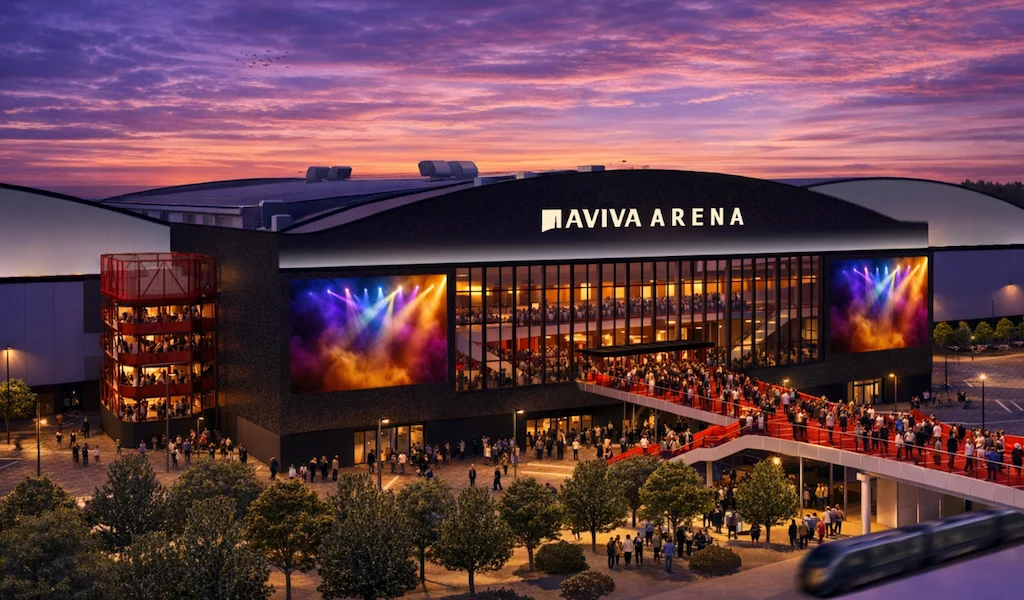
The development of the Aviva Arena in Bristol has reached a significant promotional milestone with the release of a specialized stop-motion film, offering the public a detailed preview of the landmark venue scheduled to open in late 2028. Commissioned by the operator YTL Live, the film utilizes a meticulously handcrafted scale model to depict both the interior bowl and the surrounding infrastructure of what is set to become the premier entertainment destination in the South West of England. This creative approach to architectural visualization highlights the intersection of Bristol’s storied industrial heritage and its modern reputation as a global hub for the creative arts.
The production of the film represents a considerable technical undertaking, mirroring the precision required for the arena’s actual construction. Each sequence was captured at a rate of 24 individual frames per second, requiring over 60 hours of dedicated animation work. The model itself was constructed locally in Bristol, emphasizing the project’s commitment to regional craftsmanship. By opting for stop-motion—a medium famously associated with Bristol’s world-renowned animation industry—YTL Live and Aviva have created a marketing asset that resonates with the city’s cultural identity while providing a tangible sense of the arena’s scale and atmosphere.
A New Chapter for the Historic Brabazon Hangars
The Aviva Arena is being integrated into the historic Brabazon Hangars at the former Filton Airfield. These hangars hold a unique place in aviation history as the birthplace of the Bristol Brabazon and, most notably, every British-built Concorde supersonic airliner. The decision to repurpose these existing structures rather than demolish them is a central pillar of the project’s architectural philosophy. By transforming the three interconnected hangars into a unified entertainment complex, the developers are preserving a piece of 20th-century engineering history while adapting it for 21st-century commercial use.
Spanning a massive footprint, the hangars provide the volume necessary to house a 20,000-capacity arena, which will rank among the largest indoor venues in the United Kingdom. The transformation involves complex acoustic engineering and structural reinforcement to ensure that a building designed for aircraft assembly can meet the rigorous sound and weight-bearing requirements of modern touring productions. The stop-motion film highlights this transition, showing how the cavernous industrial space will be partitioned and outfitted with state-of-the-art seating, hospitality suites, and staging areas.
Strategic Partnership and the Aviva Branding Legacy
In February 2026, the naming rights for the venue were officially awarded to the insurance and financial services giant Aviva. This partnership marks a significant investment in the regional economy and aligns the Bristol project with other high-profile venues in the Aviva portfolio. The Bristol arena joins the Aviva Stadium in Dublin and the Aviva Studios in Manchester (home of Factory International), establishing a "cultural triangle" of venues supported by the brand across the British Isles.
Phoebe Barter, Group Brand Director at Aviva, emphasized that the arena is intended to be more than just a building; it is envisioned as a catalyst for community and shared experiences. According to Barter, the use of the stop-motion film allows the public to "imagine the experiences that await them from late 2028—from iconic music concerts and major sporting events to unforgettable shared moments." The branding deal is expected to provide the financial stability necessary to sustain the arena’s ambitious programming schedule, which aims to host more than 120 major events annually.
Economic Projections and Regional Impact
The anticipated economic impact of the Aviva Arena on Bristol and the wider West of England region is substantial. Upon reaching full operational capacity, the venue is projected to attract over 1.4 million visitors per year. This influx of tourism is expected to generate significant revenue for local businesses, including hotels, restaurants, and retail establishments. Furthermore, the construction and subsequent operation of the arena are slated to create thousands of jobs, ranging from high-level technical roles in event production to hospitality and facility management.
Andrew Billingham, CEO of YTL Live, described the project as a "once-in-a-generation opportunity" to fill a long-standing gap in the region’s cultural infrastructure. For decades, Bristol has lacked a large-scale indoor arena, often resulting in major international touring acts bypassing the city in favor of Cardiff, Birmingham, or London. The 20,000-seat capacity of the Aviva Arena is specifically designed to compete on a global stage, ensuring that Bristol can host the world’s highest-grossing concert tours and major indoor sporting championships.
Development Timeline and Construction Progress
The journey toward the Aviva Arena has been a multi-year process involving complex planning permissions and infrastructure upgrades. Following the naming rights announcement in early 2026, the focus has shifted toward the heavy engineering phase of the project. The late 2028 opening date allows for a comprehensive overhaul of the Filton site, which includes the development of the broader "Brabazon" neighborhood—a new urban district featuring thousands of homes, parks, and commercial spaces.

A key component of the timeline is the synchronization of transport infrastructure. To support 20,000 visitors per event, a new railway station (North Filton) is being developed to connect the arena directly to Bristol Temple Meads and the national rail network. Additionally, dedicated bus rapid transit links and cycling infrastructure are being integrated into the site plan to ensure the venue meets modern sustainability standards and minimizes its impact on local traffic.
Architectural Innovation and Sustainability
The reuse of the Brabazon Hangars is frequently cited by YTL Live as a major win for sustainability. By utilizing the existing steel and concrete shells of the hangars, the project significantly reduces the "embodied carbon" typically associated with a new build of this magnitude. This approach aligns with Bristol’s goals of becoming a carbon-neutral city and sets a precedent for how large-scale industrial heritage sites can be revitalized.
Inside the venue, the "bowl" design is intended to be highly flexible. The stop-motion film illustrates a configuration that can be adapted for intimate theater-style performances as well as full-capacity end-stage concerts and center-stage sporting events. Advanced LED lighting, high-definition digital signage, and premium acoustic treatments are being integrated to ensure that the fan experience is consistent regardless of the event type. The inclusion of diverse hospitality options, from "club level" seating to luxury private boxes, reflects the evolving demands of the live entertainment market.
Addressing Regional Competition and Market Position
The emergence of the Aviva Arena will fundamentally alter the live music landscape in the United Kingdom. Currently, the market is dominated by venues such as the O2 Arena in London and the newly opened Co-op Live in Manchester. By positioning itself in Bristol, the Aviva Arena captures a massive catchment area that includes the South West, South Wales, and parts of the Midlands.
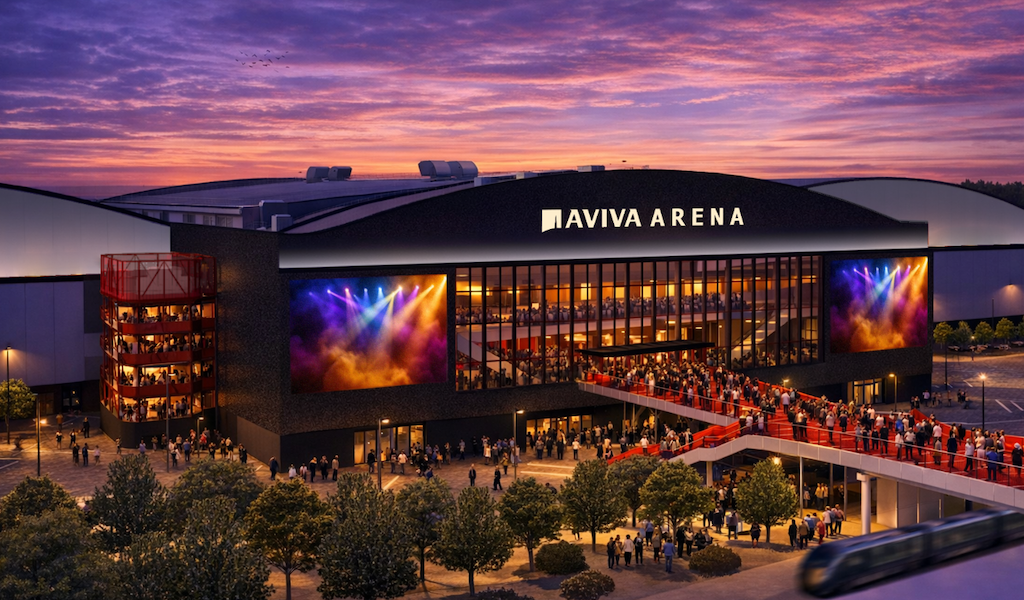
Market analysts suggest that the venue’s success will depend on its ability to offer a "destination experience" that goes beyond the performance itself. The integration of the arena into a wider entertainment complex—featuring bars, restaurants, and leisure facilities—is a strategic move to encourage longer visitor stays. The stop-motion film emphasizes this "all-day" appeal, showing the vibrant activity in the public plazas surrounding the hangars.
Official Responses and Public Sentiment
The release of the film has garnered positive reactions from local government officials and cultural leaders. The project is seen as a vital component of Bristol’s post-industrial identity, proving that the city can maintain its creative edge while supporting large-scale commercial development.
Andrew Billingham noted that the transformation of the hangars "already captures the imagination" of the public. He emphasized that the stop-motion model brings the vision to life in a way that traditional computer-generated imagery (CGI) cannot, providing a "unique and captivating" look at the venue’s energy. For many residents, the arena represents the fulfillment of a decades-long promise to bring a world-class venue to the city, ending the era of "arena-sized" gaps in Bristol’s cultural calendar.
Conclusion: A Vision Nearing Reality
As the Aviva Arena moves closer to its 2028 debut, the stop-motion film serves as a bridge between the site’s illustrious past and its promising future. By combining the historical significance of the Brabazon Hangars with cutting-edge entertainment technology and a strong corporate partnership with Aviva, YTL Live is positioning the venue as a cornerstone of British culture.
The project stands as a testament to the power of adaptive reuse and regional investment. While the physical construction continues in Filton, the creative showcase provided by the handcrafted model ensures that the "ambition and energy" of the project remain at the forefront of the public consciousness. When the doors finally open, the Aviva Arena will not only be a place for music and sports but a symbol of Bristol’s enduring ability to innovate and inspire on a global scale.
