

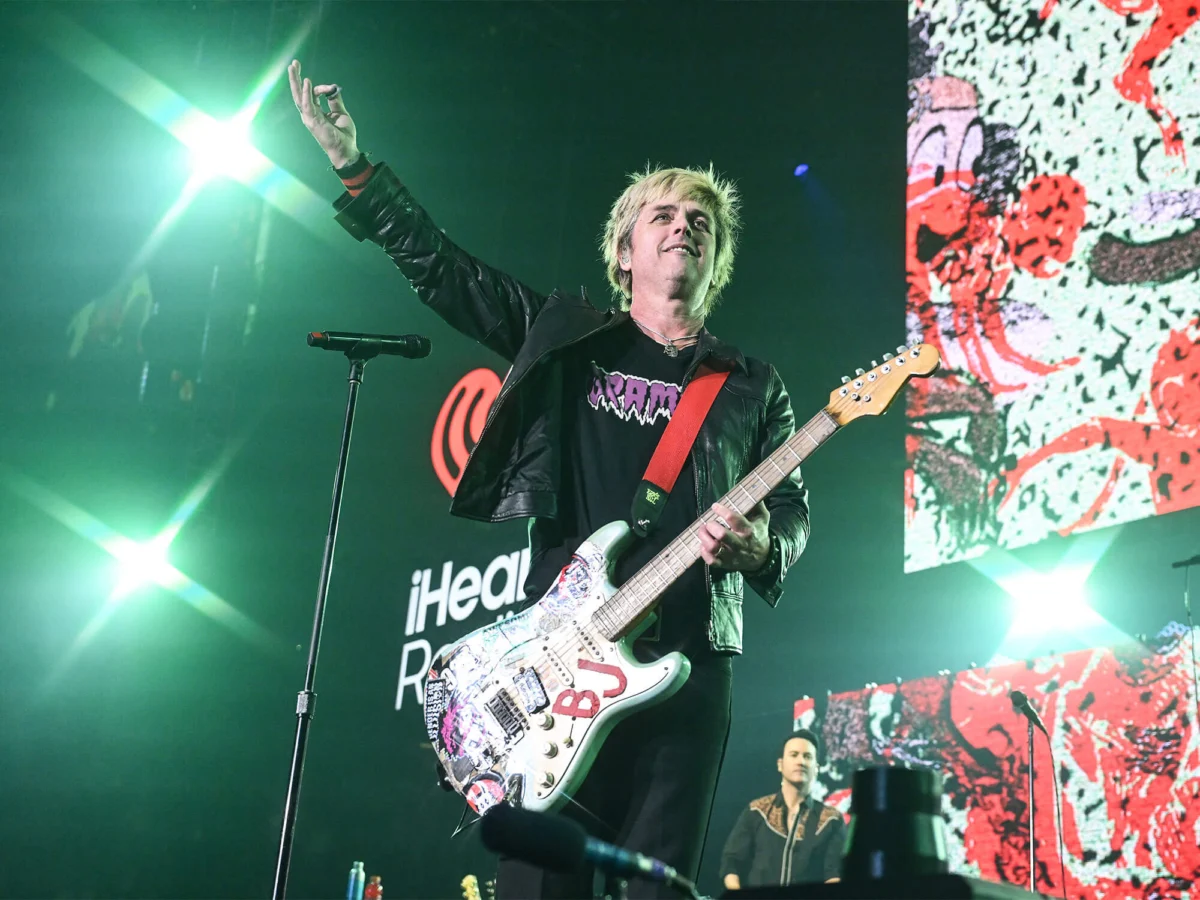
In the vast and ever-evolving landscape of rock and roll, certain instruments transcend their utilitarian purpose to become indelible symbols, extensions of an artist’s very identity. For Green Day frontman Billie Joe Armstrong, that instrument is undoubtedly "Blue," his Fernandes S-type electric guitar, a loyal companion he has owned since the tender age of 12. This iconic guitar, a testament to enduring loyalty and sonic consistency, has recently taken center stage as Armstrong delved into its profound significance during an interview with leading US music retailer Sweetwater, offering fans a rare glimpse into the history and heart behind his most cherished axe.
The Genesis of an Icon: Blue’s Humble Beginnings
The story of "Blue" begins not in a glamorous music store, but in a more personal setting, back in 1985. Armstrong, then a nascent musician with aspirations of rock stardom, yearned for a Fender Stratocaster. His mother, recognizing his passion, purchased the Fernandes S-type from his guitar teacher. This seemingly modest acquisition, a copy of the coveted Stratocaster design, would unknowingly become the bedrock of a multi-platinum career and a punk rock legend. "My mom bought it for me from my guitar teacher back in 1985 or something like that," Armstrong recounted to Sweetwater. "I just loved it so much. I really wanted a Stratocaster. It’s been part of my life ever since. Through the years I’ve kept it. I felt like it was a sound that I needed to hold onto." This early adoption of a Fernandes, a brand known for producing high-quality and often more accessible versions of classic American designs, speaks to Armstrong’s practical punk ethos from the outset, prioritizing playability and feel over brand prestige.
From those formative years, Blue became Armstrong’s primary instrument, accompanying him through countless garage band rehearsals, local club gigs in the vibrant East Bay punk scene, and eventually, the hallowed stages of the Gilman Street Project. It was on these stages, amidst the raw energy of early Green Day, that Blue began to absorb the essence of Armstrong’s burgeoning musical persona and the burgeoning sound that would define a generation. Its presence during this crucial developmental phase solidified its status as more than just a guitar; it was a partner in crime, an extension of Armstrong’s creative voice, laying the groundwork for the unique sonic identity that would soon conquer the world.
A Visual Autobiography: The Art of Personalization
One of Blue’s most instantly recognizable features is its distinctive appearance, a vibrant tapestry of stickers, scratches, and personal markings that tell a visual story of Armstrong’s life and career. Far from being pristine, Blue is a testament to constant use and a defiant embrace of the DIY punk aesthetic. "I just started plastering stickers all over it, putting the ‘BJ’ on it," Armstrong explained, gesturing to the guitar. He revealed intimate details, such as a photograph on the back from his 7th-grade year, where he’s doing his "best Mick Mars impression," a nod to the Mötley Crüe guitarist who inspired many budding rockers of the era. He also pointed to the guitar’s lower bout, where layers of fresh stickers conceal older ones, humorously noting, "I think there’s a couple of ex-girlfriend’s pictures inside of here, stuff like that."
This visual accumulation is not merely decorative; it’s a profound statement. In the world of punk rock, an instrument’s battle scars and personalized embellishments are badges of honor, reflecting a history of relentless performance and a rejection of corporate polish. Blue’s ever-changing facade mirrors Armstrong’s journey, each sticker a memory, each scratch a story from decades of touring and recording. This raw, unfiltered aesthetic has become as iconic as Green Day’s music itself, inspiring countless fans to personalize their own instruments, fostering a deeper connection between artist, instrument, and audience. Blue is not just a guitar; it is a living artifact, constantly evolving, much like Armstrong’s career.
The Sonic Heartbeat of a Generation: Blue’s Indispensable Sound
Beyond its visual uniqueness, Blue’s most critical contribution lies in its indispensable role in shaping Green Day’s signature sound. Armstrong has consistently regarded Blue as crucial to his sonic identity, particularly during the band’s breakout period. "When we went in to record Dookie, I was really adamant about playing Blue because I just felt like it was such a part of my sound for my whole life," he asserted. "There was something that was really important to me."
This insistence underscores the deep, almost symbiotic relationship between Armstrong and Blue. The guitar’s specific tonal characteristics, combined with Armstrong’s playing style and choice of amplification, created a sound that was both raw and melodic, aggressive and catchy – a hallmark of Green Day’s early success. Blue was the primary guitar for the recording of the band’s seminal albums, including their major label debut Dookie (released February 1, 1994), which catapulted Green Day to global superstardom, selling over 20 million copies worldwide and defining the sound of a generation. Its distinctive tone also permeated 1995’s darker, more introspective Insomniac, and was featured prominently on the band’s first four and a half albums, encompassing 39/Smooth (1990), Kerplunk (1991), Dookie, Insomniac, and parts of Nimrod (1997).
Armstrong elaborated on Blue’s unique sonic fingerprint: "I could have played a different guitar, but there was something about this that just had, at that time, a deep distortion that created something unique. A lot of people have a distortion sound, but nothing that comes across as instantly identifiable. I think that’s what my Blue guitar and the Plexi has." The mention of a "Plexi" refers to classic Marshall amplifier heads, specifically the JTM45 or JCM800 models, known for their powerful, harmonically rich overdrive. This combination of Blue’s inherent characteristics and a classic Marshall setup forged a distortion tone that became instantly recognizable – a blend of grit, clarity, and sustain that perfectly encapsulated Green Day’s pop-punk anthems. It’s a sound that has influenced countless guitarists and remains a benchmark for aggressive yet articulate rock tones.
A Timeline of Triumph: Blue’s Journey Through Green Day’s Milestones
- 1985: Billie Joe Armstrong’s mother purchases "Blue," a Fernandes S-type guitar, from his guitar teacher. Armstrong is 12 years old.
- Late 1980s – Early 1990s: Blue becomes Armstrong’s primary instrument during Green Day’s formative years, performing in clubs like the Gilman Street Project in Berkeley, California.
- 1990: Green Day releases their debut album, 39/Smooth, featuring Blue prominently.
- 1991: Kerplunk!, Green Day’s second album, continues to showcase Blue’s sound and its growing collection of stickers.
- 1994: Dookie is released, propelling Green Day to global fame. Armstrong insists on using Blue for its recording, cementing its iconic status. The album sells over 20 million copies worldwide.
- 1995: Insomniac, a darker follow-up, again features Blue as Armstrong’s main recording guitar.
- 1997: Blue is used for parts of Nimrod, marking its presence on the "first four and a half albums" of Green Day’s discography.
- Decades of Touring: Blue remains a constant in Green Day’s live rig, visible to millions of fans thanks to its distinctive personalized look.
- 2024: Billie Joe Armstrong discusses Blue in detail with Sweetwater, sharing its history and personal significance, reaffirming its legendary status. Green Day performs at the NFL Tailgate prior to Super Bowl LVIII, where Armstrong’s signature Marshall stack, inspired by Blue’s color, is road-tested.
Broader Impact and Implications: Blue’s Legacy in Music Culture
The story of Billie Joe Armstrong and Blue resonates deeply within music culture, extending beyond Green Day’s dedicated fanbase. It highlights several key implications:
-
The Enduring Power of a Signature Instrument: Blue exemplifies how an instrument can become intrinsically linked to an artist’s identity and sound. Like Willie Nelson’s "Trigger," B.B. King’s "Lucille," or Eric Clapton’s "Blackie," Blue is not merely a tool but a character in its own right, embodying a significant portion of music history. This connection fosters a sense of authenticity and nostalgia that fans deeply appreciate.
-
Validation of Personalization and DIY Ethos: In an era often dominated by pristine, factory-fresh gear, Blue stands as a powerful testament to the value of personalization and the punk rock DIY aesthetic. Its stickers, wear, and tear are not imperfections but rather cherished markers of a life lived on the road and in the studio. This approach encourages musicians to make their instruments uniquely their own, fostering creativity and a deeper bond.
-
Inspiration for Aspiring Musicians: The narrative of a humble Fernandes S-type becoming a legendary guitar offers immense inspiration to aspiring musicians who may not have access to high-end, vintage instruments. It underscores the message that talent, dedication, and a deep connection to one’s instrument are far more important than brand name or cost.
-
Brand Identity and Legacy: Blue’s pale blue hue has become so synonymous with Armstrong that it has inspired his recent signature gear. The Marshall 1959BJA Marshall stack, road-tested at the 2024 Super Bowl, is wrapped in a similar color, directly referencing Blue’s iconic finish. This collaboration between Armstrong and Marshall not only extends his personal brand but also solidifies Blue’s influence as a design inspiration. It demonstrates the profound impact a single instrument can have on an artist’s entire aesthetic and commercial legacy.
-
The Value of History in Gear: The Sweetwater interview itself underscores the growing interest in the stories behind famous instruments. In an age of digital music, the tangible history embedded in a guitar like Blue offers a powerful narrative that connects generations of fans and musicians, reminding us of the human element at the heart of music creation.
Official Responses and Insights from the Source
Armstrong’s candid conversation with Sweetwater provides invaluable first-hand insight into the emotional and practical significance of Blue. His emphasis on the guitar being "part of my life ever since" and "a sound that I needed to hold onto" speaks volumes about the deep bond. The fact that he was "really adamant about playing Blue" during the Dookie sessions highlights not just a preference, but a conviction that the guitar was integral to capturing the authentic Green Day sound. For a musician to prioritize a single instrument over potentially more versatile or technically advanced options for such a pivotal recording demonstrates an unwavering belief in its unique contribution.
The interview also serves as a direct affirmation from Armstrong about the guitar’s "ultimate punk rock" status. This isn’t just a marketing slogan; it’s a declaration rooted in decades of experience, where Blue has been a constant companion through the band’s evolution from underground heroes to global superstars. The detailed recounting of its stickers and battle scars further humanizes the instrument, transforming it from mere wood and wire into a living archive of Armstrong’s personal and professional journey.
In conclusion, Billie Joe Armstrong’s Fernandes S-type, affectionately known as "Blue," stands as one of rock music’s most iconic instruments. From its humble origins as a 12-year-old’s cherished gift to its pivotal role in shaping the sound of a multi-platinum band, Blue embodies the spirit of punk rock: raw, authentic, and unapologetically personal. Its visual history, sonic fingerprint, and enduring presence in Armstrong’s career make it far more than just a guitar; it is a legendary artifact, a symbol of unwavering loyalty, and an ongoing source of inspiration for musicians and fans worldwide. As Armstrong continues to wield Blue on stages across the globe, its story continues to unfold, cementing its place in the pantheon of rock and roll history.
