

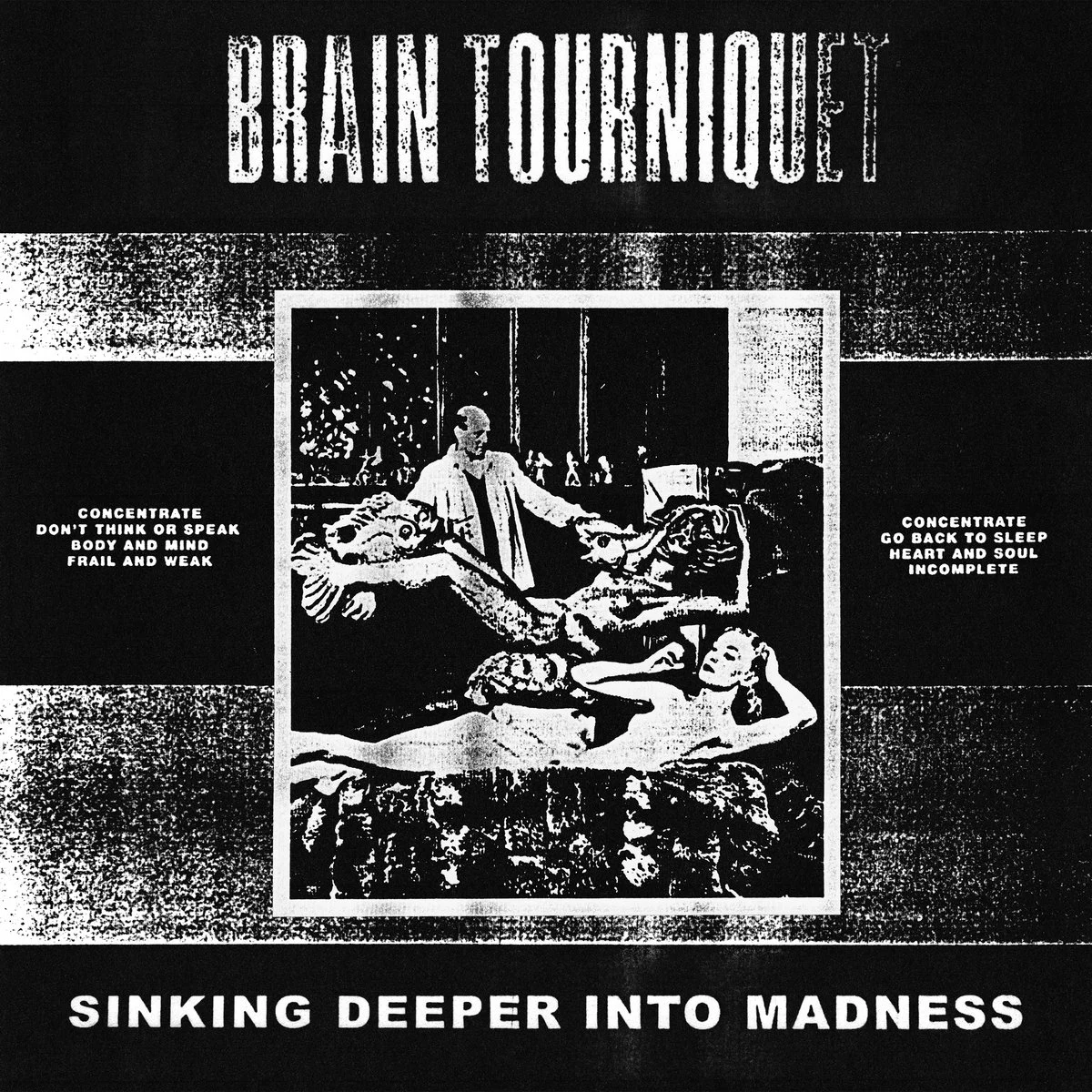
Washington D.C.’s formidable powerviolence outfit, Brain Tourniquet, has released their highly anticipated new album, Sinking Deeper Into Madness, through Iron Lung Records. This latest offering is a profound exploration of mental disintegration, presented as a harrowing lobotomy-based concept album that pushes the boundaries of extreme music, both sonically and thematically. The album’s central narrative, detailing a protagonist’s descent into an empty void following a medically induced procedure, is complemented by a soundscape described as unhinged, culminating in a six-minute, ooze-encrusted doom-scuzz cover of The Beatles’ psychedelic masterpiece, "Tomorrow Never Knows."
The release of Sinking Deeper Into Madness follows a trajectory of increasingly experimental and challenging works from Brain Tourniquet, cementing their reputation as innovators within the abrasive subgenre of powerviolence. Their distinctive approach to extreme music has consistently sought new avenues for sonic aggression and thematic depth, earning them critical attention and a dedicated following.
The Unveiling of ‘Sinking Deeper Into Madness’: A Concept Rooted in Despair
Sinking Deeper Into Madness is not merely an album; it is a meticulously crafted narrative experience. The conceptual framework, detailed by the band and label, centers on an unnamed protagonist urged by family to undergo a lobotomy after a severe manic episode. The album then traces the protagonist’s torturous journey through "extreme bouts of joy, fear, regret, and remorse," ultimately concluding with their mind disintegrating into "total emptiness." This stark concept provides a visceral canvas for Brain Tourniquet’s signature sound, which is characterized by its unrelenting intensity and chaotic structures.
The album’s sonic architecture is designed to reflect this internal collapse. It reportedly sounds "fucking unhinged" even before reaching its grand finale, suggesting a sustained atmosphere of psychological distress and sonic disarray. This deliberate chaos serves to immerse the listener in the protagonist’s deteriorating mental state, using discordant harmonies, crushing rhythms, and raw vocalizations to evoke the profound horror of losing one’s self. The decision to tackle such a sensitive and historically fraught subject matter through the lens of extreme music positions Sinking Deeper Into Madness as a bold artistic statement, inviting listeners to confront uncomfortable truths about mental health, medical intervention, and the fragility of the human mind.
A Deep Dive into the Concept: Lobotomy and its Historical Context
The choice of lobotomy as the album’s central concept is particularly potent, given its complex and often dark history in psychiatric medicine. A lobotomy, or prefrontal lobotomy, is a neurosurgical procedure that involves severing connections in the brain’s prefrontal cortex. Pioneered by Portuguese neurologist Egas Moniz in the 1930s (for which he received the Nobel Prize in Physiology or Medicine in 1949), and popularized in the United States by Walter Freeman and James W. Watts, the procedure was initially hailed as a miracle cure for severe mental illnesses, including schizophrenia, manic depression, and obsessive-compulsive disorder.
However, the widespread use of lobotomies, particularly the more rudimentary transorbital method championed by Freeman, was fraught with controversy. While some patients experienced a reduction in severe symptoms, many suffered irreversible side effects, including personality changes, emotional blunting, cognitive deficits, and even death. Critics condemned the procedure as dehumanizing, barbaric, and a drastic oversimplification of complex mental disorders. By the 1950s, with the advent of psychotropic medications and growing ethical concerns, the practice of lobotomy largely fell out of favor.
Brain Tourniquet’s utilization of this historical procedure as a narrative device is significant. It taps into a collective cultural memory of medical intervention gone awry and the profound fear of losing one’s identity and autonomy. The album’s concept artfully avoids glorifying or trivializing the procedure, instead focusing on the subjective experience of the patient – the "bouts of joy, fear, regret, and remorse" – before the ultimate descent into "total emptiness." This approach transforms a medical tragedy into a metaphor for existential dread, making the album resonate beyond the confines of its specific narrative. It encourages reflection on the fragility of consciousness and the profound implications of altering the very core of one’s being.
Brain Tourniquet’s Sonic Signature: Powerviolence Pushing Boundaries
Brain Tourniquet operates within the brutal confines of powerviolence, a subgenre of hardcore punk that emerged in California during the late 1980s and early 1990s. Characterized by its extreme brevity, rapid-fire tempos, abrasive production, and often sludgy, feedback-laden breakdowns, powerviolence distinguishes itself from traditional hardcore by pushing speed, aggression, and sonic dissonance to their absolute limits. Bands like Infest, Spazz, and Man Is The Bastard laid the groundwork for a sound that reveled in chaos, often featuring songs lasting mere seconds, punctuated by abrupt tempo changes, blast beats, and guttural vocals.
Brain Tourniquet has consistently demonstrated a commitment to both honoring and expanding upon these foundational elements. Their music is indeed "abrasive," as noted by critics, but it is this very abrasiveness that allows them to "always find fucked-up new things to do with extreme music." Unlike some purist adherents to the genre, Brain Tourniquet appears unafraid to inject elements that might challenge listener expectations, whether it’s through extended song structures, complex conceptual narratives, or unexpected cover choices. Their ability to maintain the raw, visceral energy of powerviolence while weaving in these innovative elements is a testament to their artistic vision and technical prowess. The band’s output is not merely fast and loud; it is meticulously crafted sonic violence, designed to provoke and immerse.
The Evolution: From ‘An Expression In Pain’ to ‘Sinking Deeper Into Madness’
The release of Sinking Deeper Into Madness represents a logical, albeit audacious, progression from Brain Tourniquet’s previous works, particularly their 2023 album, …An Expression In Pain. That album, a concise 20-minute offering, showcased the band’s willingness to subvert genre conventions. Its most notable feature was an 11-minute title track, an almost unheard-of duration within a genre largely defined by its minute-long (or shorter) bursts of aggression. The remaining tracks on …An Expression In Pain adhered more closely to the traditional powerviolence structure, averaging about a minute apiece, creating a stark contrast that highlighted the deliberate nature of the extended piece.
The decision to compose and perform an 11-minute song in full, especially within the context of a live warehouse venue setting – an environment often characterized by chaotic, rapid-fire performances – was a bold statement. It demonstrated Brain Tourniquet’s capacity for sustained intensity and their readiness to challenge audience expectations regarding song structure and performance duration. This earlier experimentation with extended forms foreshadows the structural ambition of Sinking Deeper Into Madness, particularly its six-minute grand finale.
This evolution signifies a band deeply engaged with the possibilities of extreme music, unwilling to be confined by the self-imposed limitations of their genre. They are not merely recreating established formulas but actively seeking to expand the sonic and conceptual vocabulary of powerviolence, preparing their audience for increasingly complex and immersive experiences.
The Unexpected Finale: A Doom-Scuzz Reimagining of "Tomorrow Never Knows"
Perhaps the most startling element of Sinking Deeper Into Madness is its grand finale: a six-minute "dizzying, ooze-encrusted doom-scuzz cover" of The Beatles’ "Tomorrow Never Knows." This choice of cover is not merely an homage but a radical reinterpretation that speaks volumes about Brain Tourniquet’s artistic ethos.
"Tomorrow Never Knows," from The Beatles’ groundbreaking 1966 album Revolver, is widely regarded as one of the most influential psychedelic rock songs ever recorded. Lyrically inspired by Timothy Leary’s The Psychedelic Experience: A Manual Based on The Tibetan Book of the Dead, the song delves into themes of ego death, transcendence, and spiritual awakening. Musically, it was revolutionary, featuring tape loops, backward guitars, heavy modulation, and Ringo Starr’s distinctive, hypnotic drum beat. It represented The Beatles’ embrace of studio experimentation and their push into uncharted sonic territories.
Brain Tourniquet’s decision to transform this iconic piece into a "doom-scuzz" anthem is audacious. The original song, with its ethereal vocals and meditative atmosphere, is diametrically opposed to the brutal aggression of powerviolence. By filtering "Tomorrow Never Knows" through their extreme lens, Brain Tourniquet is likely stripping away its psychedelic lightness, replacing it with a sense of dread, decay, and the very "total emptiness" described in their album concept. The "doom-scuzz" descriptor suggests a slow, crushing, grime-laden sound, a far cry from the original’s buoyant experimentation.
This cover serves multiple functions. It highlights the band’s willingness to cross musical boundaries, demonstrating their influences might extend beyond typical extreme music parameters. More importantly, it recontextualizes the original song’s themes. Where The Beatles sang of "floating downstream" into a blissful void, Brain Tourniquet’s interpretation likely evokes a more terrifying, involuntary descent into oblivion, aligning perfectly with the album’s lobotomy narrative. It transforms a journey of spiritual enlightenment into one of enforced mental erasure, effectively subverting the original’s optimistic nihilism into a harrowing existential dread. This bold artistic move is poised to be a significant talking point, further solidifying Brain Tourniquet’s reputation for innovative and thought-provoking music.
Iron Lung Records: A Bastion for Extreme Sounds
The release of Sinking Deeper Into Madness through Iron Lung Records is a significant factor in its reception and placement within the extreme music landscape. Iron Lung Records, an independent label founded by Jensen Ward of the band Iron Lung, has carved out a formidable reputation as a purveyor of uncompromising, boundary-pushing hardcore, powerviolence, and grindcore. Known for its curated roster of artists who prioritize raw aggression, experimentalism, and a DIY ethos, Iron Lung has become a trusted name for enthusiasts seeking music that challenges conventional structures and pushes sonic limits.
The label’s commitment to releasing music that is both sonically extreme and artistically daring makes Brain Tourniquet a natural fit. Iron Lung’s discography is populated with bands that, like Brain Tourniquet, refuse to settle for formulaic expressions of aggression, instead opting for innovative approaches to sound and concept. This partnership ensures that Sinking Deeper Into Madness reaches an audience primed for its intensity and thematic complexity, reinforcing the band’s standing within a respected and influential segment of the underground music scene.
Industry Reactions and Broader Implications
While specific statements from the band or label are not yet widely available beyond the album’s concept explanation, the release of Sinking Deeper Into Madness is expected to generate considerable discussion within the extreme music community and beyond.
A hypothetical statement from a band representative might articulate their creative intent: "With Sinking Deeper Into Madness, we aimed to create a truly immersive and uncomfortable experience. The lobotomy concept allowed us to explore profound themes of identity, control, and the terrifying prospect of mental obliteration, using our music as a conduit for that descent. We believe extreme music is uniquely suited to convey these kinds of raw, visceral emotions."
Similarly, a spokesperson from Iron Lung Records might comment on the label’s commitment to supporting such challenging artistry: "Brain Tourniquet consistently delivers music that not only rips but also makes you think. Sinking Deeper Into Madness is a testament to their unwavering vision, pushing the boundaries of what powerviolence can achieve, both sonically and conceptually. It’s exactly the kind of uncompromising, intelligent extremity we strive to champion."
From a critical perspective, the album’s implications are multifaceted. It further solidifies Brain Tourniquet’s position as a leading voice in contemporary powerviolence, demonstrating that the genre remains fertile ground for innovation rather than stagnation. The choice of a lobotomy-based concept could spark broader discussions about the intersection of art, mental health, and medical history, inviting listeners to engage with challenging subject matter through a unique artistic lens. The audacious Beatles cover will undoubtedly be a talking point, potentially introducing Brain Tourniquet to new audiences curious about this extreme reinterpretation of a classic. This artistic boldness may also inspire other extreme bands to delve into more complex thematic territories and experiment further with song structure and covers, pushing the entire genre forward.
The Future Trajectory of Brain Tourniquet
With Sinking Deeper Into Madness, Brain Tourniquet has not only delivered a compelling and unsettling album but has also firmly established a trajectory of relentless innovation. Their willingness to experiment with song length, incorporate complex conceptual narratives, and boldly reinterpret iconic works suggests a band unafraid to challenge both their own creative limits and the expectations of their audience. This album positions them not just as purveyors of abrasive music, but as significant artists contributing to the ongoing evolution of extreme genres.
The band’s ability to consistently find "fucked-up new things" to do with their sound ensures that their future releases and live performances will be keenly anticipated. Brain Tourniquet is clearly committed to using the raw power of powerviolence as a vehicle for profound artistic expression, creating music that is as intellectually stimulating as it is sonically devastating. Sinking Deeper Into Madness is more than just an album; it is a harrowing journey into the void, confirming Brain Tourniquet’s status as essential listening for anyone seeking the cutting edge of extreme music.
