

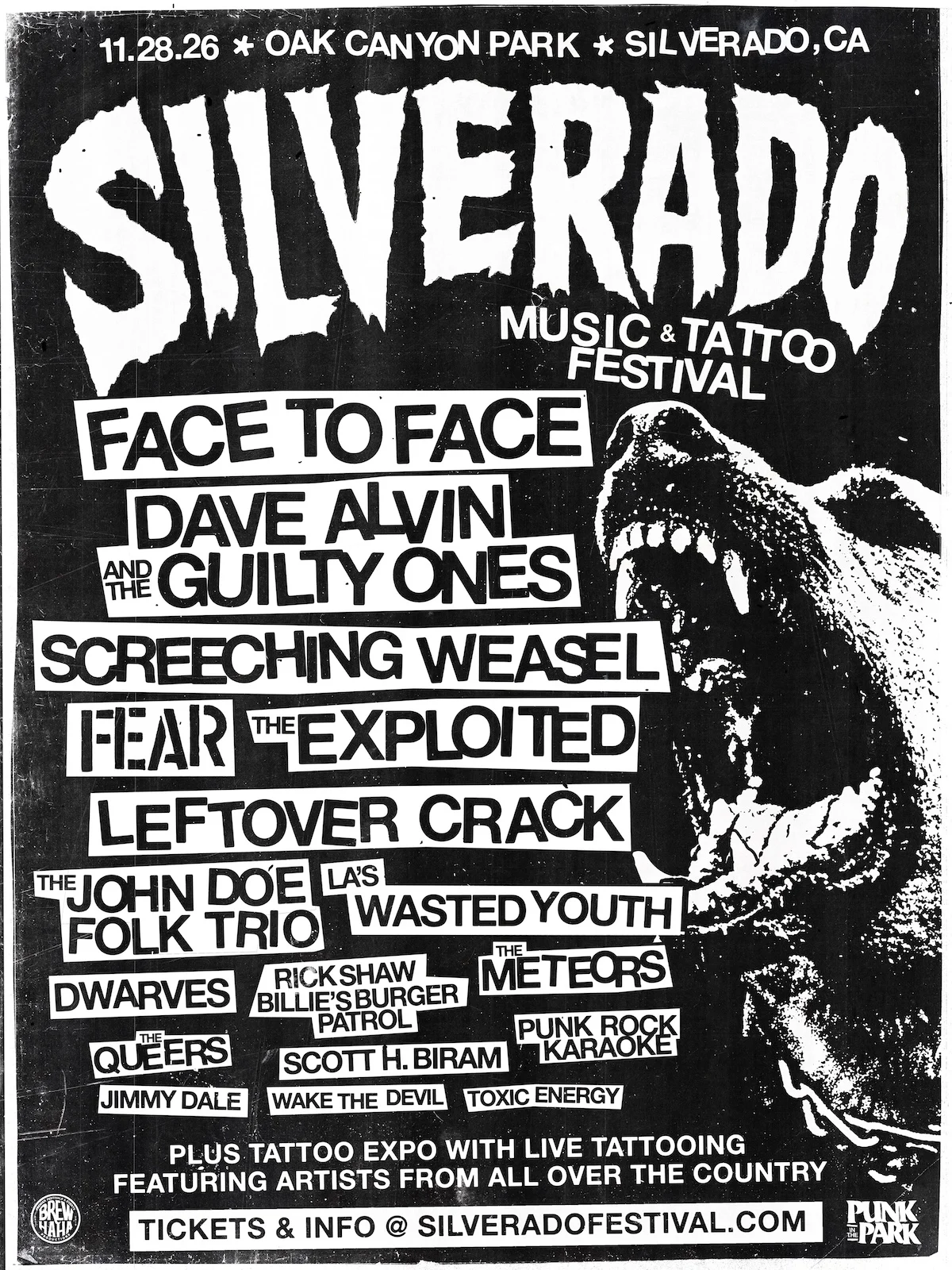
In a significant development for the West Coast music festival scene, Brew Ha Ha Productions, the company behind the once-prominent Punk In The Park series, has announced a new venture: the Silverado Music & Tattoo Festival. This strategic rebranding and launch come after the multi-city Punk In The Park series faced sustained and severe backlash throughout the past year, leading to the cancellation of all its planned 2026 events. The controversy stemmed from the discovery that Cameron Collins, owner of Brew Ha Ha Productions, had made a donation to Donald Trump’s 2024 presidential campaign, a move that proved deeply antithetical to the established anti-establishment ethos of the punk rock community and its leading figures.
The core of the dispute ignited last year when news surfaced of Collins’ political contribution. For many within the punk rock genre, which historically prides itself on counter-culture, anti-authoritarianism, and progressive social commentary, supporting a figure like Donald Trump was perceived as a direct contradiction of the genre’s foundational principles. This revelation sent shockwaves through the community, prompting immediate and vocal reactions from both artists and fans alike.
A Timeline of Controversy and Cancellation
The unraveling of Punk In The Park began swiftly after the initial discovery of Cameron Collins’ donation. The sequence of events illustrates the profound impact of political alignment, or perceived misalignment, on cultural events:
- Late Last Year (Initial Discovery): Reports emerged confirming Cameron Collins’ donation to Donald Trump’s 2024 presidential campaign. This information quickly spread through punk rock forums, social media, and music news outlets, igniting a fervent debate. The core of the outrage centered on the perceived hypocrisy of an organizer of a punk festival supporting a political figure widely viewed as anathema to punk’s core values of rebellion, anti-establishment sentiment, and social justice.
- December 2023 (Dropkick Murphys’ Stance): One of the most significant blows to Punk In The Park’s reputation came from the Dropkick Murphys. The Boston-based Celtic punk band, known for their strong working-class ethos and outspoken political views, declared that they would no longer perform at the festival. Their statement, widely reported, underscored the severity of the situation and lent considerable weight to the growing boycott. The Dropkick Murphys have a long history of aligning with progressive causes and expressing solidarity with labor movements and marginalized communities, making their withdrawal a powerful symbolic act within the punk landscape.
- December 2023 (Cameron Collins’ Initial Response): In an attempt to mitigate the damage, Cameron Collins issued a public statement clarifying his political stance. While the exact content of his statement sought to explain his motivations or perhaps distance his personal views from the festival’s ethos, it largely failed to quell the burgeoning discontent. For many critics, the act of donation itself, regardless of subsequent explanation, was an irreconcilable breach of trust.
- Early This Year (Dead Kennedys’ Involvement and Jello Biafra’s Outcry): The controversy resurfaced with renewed intensity when the iconic punk band Dead Kennedys were scheduled to perform at a subsequent Punk In The Park event. Jello Biafra, the band’s influential former frontman and a prominent voice in political activism and punk culture, publicly expressed his profound dissatisfaction with the festival’s association with Collins. While Biafra was not performing with the current iteration of the Dead Kennedys, his outspoken condemnation added another layer of pressure and moral weight to the growing chorus of criticism. His reaction highlighted the enduring principles of punk and the expectations of political integrity from its practitioners.
- Early This Year (Cancellation of All 2026 Events): Faced with "persistent backlash" that showed no signs of abating, Brew Ha Ha Productions ultimately made the decision to cancel all planned Punk In The Park events for 2026. This move signaled a significant retreat, acknowledging the insurmountable challenge of continuing the festival under such intense public scrutiny and artist boycotts. The cancellation represented not just a financial loss but also a substantial blow to the brand identity of Punk In The Park, which had built a reputation as a key event in the punk festival circuit.
The Ethos of Punk Rock and Political Alignment
The profound reaction to Cameron Collins’ political donation is deeply rooted in the historical and ideological foundations of punk rock. Emerging in the mid-1970s, punk was a radical departure from the perceived complacency of mainstream rock, characterized by its DIY ethic, raw sound, and often overtly political and anti-establishment lyrics. Bands like The Clash, Sex Pistols, Dead Kennedys, and Black Flag championed themes of social injustice, anti-authoritarianism, economic inequality, and rebellion against the status quo.
For decades, this political consciousness has been a defining characteristic of the genre. Many punk artists and fans view political engagement, particularly in opposition to conservative or authoritarian figures, not merely as an option but as an intrinsic component of punk identity. Festivals that cater to this community are often expected to align with these values, or at the very least, not contradict them so directly. The support for a figure like Donald Trump, whose policies and rhetoric have been widely criticized by progressive movements for their perceived divisive, nationalist, and often anti-immigrant stances, was seen by many in the punk community as a direct affront to everything the genre stands for. This ideological clash underscores why Collins’ donation triggered such a visceral and widespread response, leading to a de facto boycott that ultimately proved unsustainable for the festival.
Brew Ha Ha Productions’ Strategic Shift and Diversification
Brew Ha Ha Productions is a prominent event organizer known for curating a variety of music and craft beverage festivals, particularly in Southern California. Before the full cancellation of Punk In The Park, the company had already begun exploring new avenues and expanding its portfolio. This diversification strategy appears to be a broader effort to navigate the evolving festival landscape and, perhaps, to insulate the company from future controversies linked to a specific brand.
Earlier this year, Brew Ha Ha successfully hosted and announced several non-punk events. The Sublime Fest, a tribute to the iconic reggae-rock band, took place across three cities in the spring and summer, demonstrating the company’s ability to draw large audiences for different musical genres. Additionally, the Dial Up Festival, an event featuring 90s and early 2000s alternative and rock acts, is slated for November. These events showcase Brew Ha Ha’s operational capabilities and its capacity to attract diverse audiences beyond the punk rock demographic.
The decision to launch the Silverado Music & Tattoo Festival, explicitly branded as "not Punk In The Park," represents a deliberate attempt to create a new identity and potentially distance the new event from the reputational damage suffered by its predecessor. While the tease of a "Punk In The Park return" last month might have suggested a direct revival, the formal announcement confirms a new name and a somewhat altered thematic focus, incorporating the tattoo culture alongside music.
Introducing the Silverado Music & Tattoo Festival
The newly announced Silverado Music & Tattoo Festival is scheduled for Thursday, November 28, at Oak Canyon Park in Silverado, California. The choice of location and timing suggests a focus on the Southern California market, a traditional stronghold for Brew Ha Ha Productions. The lineup for the inaugural festival reveals a blend of punk veterans, alternative acts, and roots-rock artists, indicating a potentially broader appeal than the strictly punk-focused Punk In The Park.
The announced lineup includes:
- Face To Face: A long-standing melodic punk band, bringing a familiar punk presence.
- Dave Alvin And The Guilty Ones: Represents a shift towards roots rock and Americana, appealing to a different segment of music fans.
- Screeching Weasel: A controversial but influential pop-punk band, known for their lengthy career and sometimes polarizing figurehead, Ben Weasel. Their inclusion suggests an appeal to classic punk fans despite past controversies.
- Fear: Iconic first-wave punk band, ensuring a raw, aggressive punk element.
- The Exploited: Legendary Scottish street punk band, known for their uncompromising style and anti-establishment stance, reinforcing the festival’s punk credibility.
- Leftover Crack: An influential crust punk/ska punk band, known for their radical political lyrics.
- The John Doe Folk Trio: Features John Doe of the seminal L.A. punk band X, but in a folk context, further broadening the musical scope.
- LA’s Wasted Youth: Another classic L.A. punk act.
- Dwarves: A notoriously provocative and raw punk band.
- Rick Shaw Billie’s Burger Patrol: Likely a more contemporary or local act.
- The Meteors: Pioneers of psychobilly, adding a distinct subgenre.
- The Queers: Pop-punk stalwarts.
- Scott H. Biram: A one-man band known for his blues, country, and punk influences, again diversifying the sound.
The inclusion of "Tattoo Festival" in the name is a notable addition. Tattoo culture has long been intertwined with punk and alternative music scenes, offering a natural thematic extension that could attract a broader audience interested in both music and body art. This combination may serve to differentiate the event from other music festivals and provide an additional draw, potentially mitigating the specific political sensitivities that plagued Punk In The Park. The diverse lineup, spanning various subgenres and even adjacent styles, could be a deliberate strategy to appeal to a wider audience, reducing reliance on a strictly defined punk demographic that proved so sensitive to political affiliations.
Wider Industry Implications and Future Outlook
The saga of Punk In The Park and the subsequent launch of the Silverado Music & Tattoo Festival offer significant insights into the evolving dynamics of the live music industry, particularly in an increasingly polarized political climate.
- Artist Power and Fan Activism: The incident unequivocally demonstrates the power of artists and fan communities to influence business decisions based on perceived ethical or political breaches. In an age of heightened social awareness and digital communication, the collective voice of a festival’s core audience can swiftly and effectively challenge organizers whose actions are seen as contrary to the community’s values.
- Brand Reputation and Economic Impact: The cancellation of Punk In The Park events undoubtedly resulted in substantial financial losses, including lost ticket sales, vendor fees, and marketing investments. The damage to the brand’s reputation could also have long-term effects on its ability to attract talent and audiences. This case serves as a stark reminder for festival organizers that brand integrity, particularly in niche markets like punk rock, is paramount and inextricably linked to the personal actions of its leadership.
- Navigating Political Divides: For event producers, the challenge of navigating an increasingly politically charged environment is becoming more complex. While some may argue for a strict separation of business and personal politics, this incident highlights that for certain genres and communities, such a separation is either impossible or unacceptable. Organizers must now contend with the potential for personal political views to directly impact their professional ventures, especially when those views clash with the core values of their target audience.
- Strategic Adaptation: Brew Ha Ha Productions’ pivot with the Silverado Music & Tattoo Festival illustrates a strategic adaptation to adversity. By creating a new brand and diversifying the musical offerings, the company is attempting to reset its public image and broaden its appeal, potentially avoiding the specific political pitfalls that led to the demise of Punk In The Park. The success of this new festival will be a critical test of whether a rebrand and a diversified lineup can effectively overcome past controversies and rebuild trust with a discerning audience.
The Silverado Music & Tattoo Festival represents a new chapter for Brew Ha Ha Productions, emerging from the ashes of a significant controversy. Its success will depend not only on the strength of its lineup and organization but also on its ability to resonate with an audience that remains highly sensitive to the broader cultural and political context in which music festivals operate. The industry will undoubtedly watch closely to see if this new venture can successfully navigate the complex interplay of music, culture, and politics in the contemporary landscape.
