

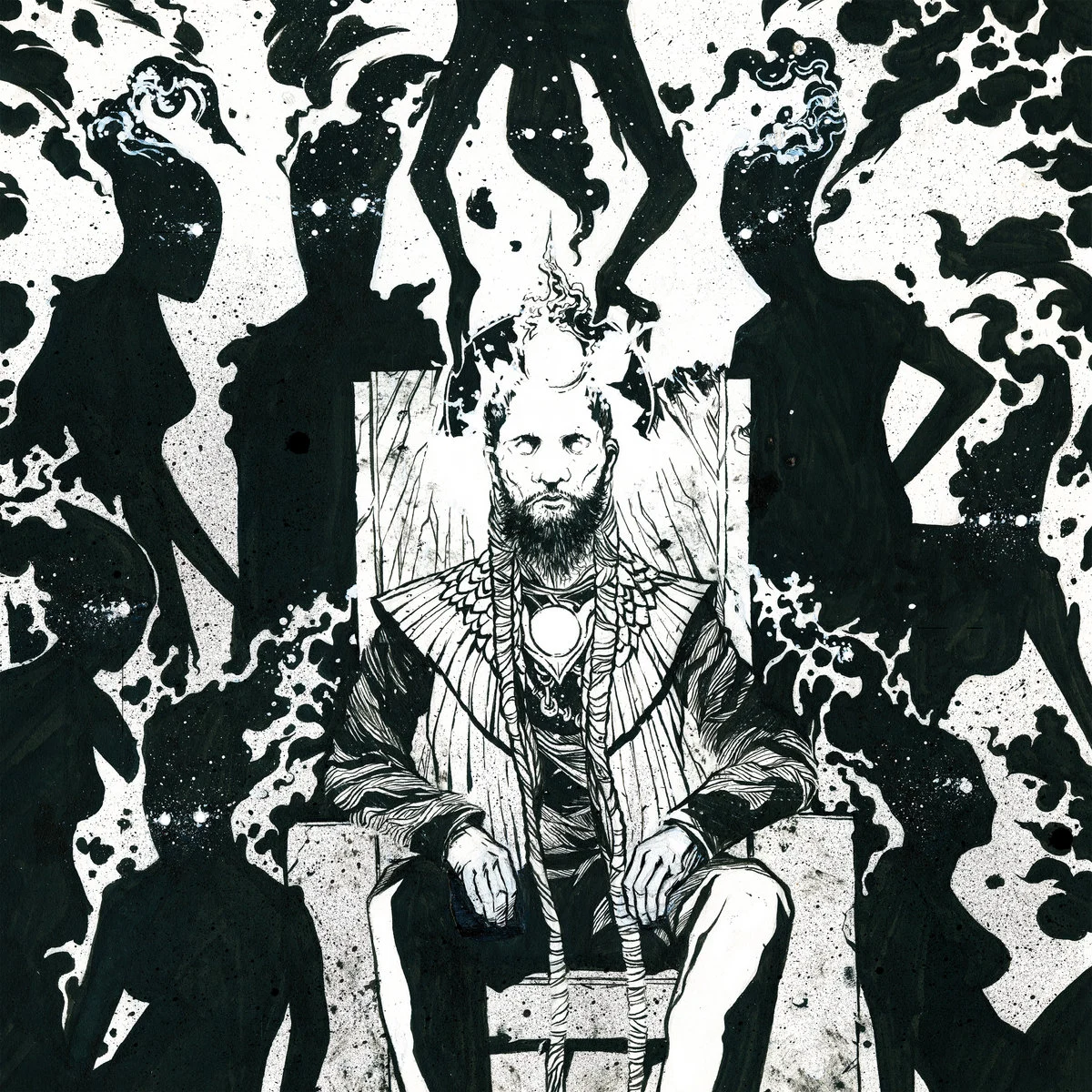
Philadelphia indie rapper Curly Castro has unveiled his highly anticipated new album, Yaphet, a project five years in the making that immediately distinguishes itself with a colossal opening posse cut, "Black Don’t Crack," drawing parallels to an assembly of the esteemed Backwoodz Studioz "Avengers." Released via Backwoodz Studioz, the album represents a significant milestone in Castro’s career, showcasing his signature raspy flow and charismatic delivery against a backdrop of meticulously crafted beats by Milwaukee producer Locust. This release is poised to captivate the discerning ears of underground hip-hop enthusiasts, not only for Castro’s solo prowess but also for the impressive roster of collaborators that underscore the album’s collective strength and the vibrant ecosystem of independent rap.
The Evolution of Curly Castro: A Veteran’s Return
Curly Castro, a prominent figure within the independent hip-hop landscape, has carved out a distinctive niche through his potent lyricism and unwavering commitment to the craft. Known to many as one half of the critically acclaimed duo PremRock, Castro has maintained a long-standing and integral relationship with the Backwoodz Studioz label, a collective synonymous with experimental, thought-provoking, and often politically charged hip-hop. His journey to Yaphet is marked by a consistent output of EPs and collaborative projects, but this album signifies his first solo full-length endeavor in half a decade, a period that has allowed for profound artistic growth and refinement.
Born and raised in Philadelphia, Castro’s upbringing in a city rich with musical heritage, particularly in jazz, soul, and burgeoning hip-hop scenes, undoubtedly influenced his artistic sensibilities. His flow, often described as a "throwback," harks back to the golden era of East Coast hip-hop, characterized by intricate rhyme schemes, impactful delivery, and a narrative depth that eschews superficiality. This foundation, combined with a willingness to explore contemporary sonic landscapes, positions him as a bridge between hip-hop’s foundational elements and its progressive future. His charisma, a quality immediately evident in his vocal presence and live performances, ensures that his often dense and layered narratives remain engaging and accessible. The hiatus between solo albums has seemingly served as a crucible, allowing Castro to distil his experiences, observations, and lyrical prowess into a cohesive and impactful body of work, making Yaphet not just an album, but a statement of enduring artistic vitality.
Backwoodz Studioz: A Pillar of Independent Hip-Hop
The significance of Yaphet‘s release is amplified by its affiliation with Backwoodz Studioz, a label that has become a veritable institution within the underground rap community. Co-founded by the enigmatic rapper billy woods and Vordul Mega of Cannibal Ox, Backwoodz Studioz emerged as a beacon for artists prioritizing lyrical integrity, innovative production, and uncompromising artistic vision over commercial mainstream appeal. Since its inception, the label has fostered a unique environment for artists who defy easy categorization, cultivating a reputation for releasing some of the most critically acclaimed and intellectually stimulating hip-hop of the past two decades.
The label’s ethos is deeply rooted in independence, collaboration, and a shared commitment to pushing the boundaries of the genre. Artists under the Backwoodz umbrella, including ELUCID (as part of Armand Hammer), Quelle Chris, Fatboi Sharif, and SKECH185, often feature on each other’s projects, creating a rich tapestry of interconnected narratives and sonic experiments. This collaborative spirit is precisely what makes the "Backwoodz Studioz Avengers assembling" analogy so fitting for the opening track of Yaphet. It’s not merely a collection of features; it’s a testament to a vibrant, mutually supportive community of artists who share a common goal of creating meaningful, impactful music outside the confines of corporate music structures. The label’s dedication to quality control, coupled with its consistent output of artistically daring projects, has solidified its status as a vital force, providing a platform for voices that might otherwise be marginalized in a more commercialized industry.
The Sonic Architecture of Yaphet: Locust’s Masterful Production
At the heart of Yaphet‘s distinctive sound is the production work of Milwaukee beatmaker Locust, who helmed the entire project. Locust’s approach to production on Yaphet is characterized by a deep reverence for hip-hop’s foundational sounds, manifested through the expert use of "unclearable samples from classic rap and reggae records." This choice speaks volumes about the artistic intent behind the album. In an era where sample clearance can be a labyrinthine and prohibitively expensive process, the deliberate selection of "unclearable" samples hints at a defiant artistic stance, prioritizing sonic texture and nostalgic resonance over commercial viability. It suggests a commitment to a raw, authentic sound that celebrates the illicit thrill and creative freedom inherent in early hip-hop’s sampling practices.
Locust’s production style on Yaphet is not merely about looping obscure breaks; it’s about crafting intricate soundscapes that complement Castro’s lyrical intensity. The beats are layered, often gritty, and possess a tangible weight that anchors Castro’s flow. This synergy is crucial; Locust doesn’t just provide background music, he creates an immersive environment that enhances the album’s thematic depth. The influence of classic reggae records, in particular, adds a unique rhythmic and atmospheric dimension, injecting a sense of dub-infused spaciousness and bass-heavy warmth that differentiates Yaphet from more conventional boom-bap offerings. The result is a sound that feels both timeless and fresh, deeply rooted in hip-hop tradition while simultaneously pushing its boundaries.
Lyrical Depths and Cultural References: A Tapestry of Meaning
Beyond the sonic landscape, Yaphet is a rich tapestry of lyrical depth and cultural references. Castro’s writing is dense with meaning, rewarding repeated listens with new discoveries. Early impressions highlight "dozens of X-Men references," a thematic choice that offers a compelling lens through which to explore contemporary issues. The X-Men saga, with its themes of mutation, ostracization, the struggle for acceptance, and the burden of extraordinary power, provides fertile ground for Castro to metaphorically address social injustices, personal struggles, and the outsider status often felt by artists in the independent music scene. This recurring motif elevates the album beyond mere storytelling, imbuing it with a layer of allegorical significance that resonates deeply with audiences grappling with identity and societal pressures.
Adding another layer of distinctiveness is the inclusion of a sample from "a classic bit from the absurdist battle rapper O-Solo." This unexpected nod to a niche figure within the battle rap circuit serves multiple purposes. Firstly, it’s a deep cut for connoisseurs, signaling Castro’s profound immersion in and respect for various facets of hip-hop culture. Secondly, O-Solo’s "absurdist" style hints at a vein of dark humor or unconventional wisdom woven into Yaphet‘s fabric, suggesting that while the album tackles weighty themes, it does so with an awareness of the genre’s inherent playfulness and capacity for unexpected turns. These specific references, alongside Castro’s established lyrical prowess, underscore the album’s intellectual curiosity and its commitment to engaging with a broad spectrum of cultural touchstones.
"Black Don’t Crack": An All-Star Hip-Hop Summit
The album’s opening track, "Black Don’t Crack," stands as a monumental statement piece, immediately signaling the ambitious scope of Yaphet. Clocking in at a formidable six minutes, this posse cut brings together an assembly of seven distinct voices, each contributing to a dynamic and evolving narrative. The track is built upon "tons of instantly recognizable breakbeats," which, in Locust’s skillful hands, "shift slightly as each of its seven rappers takes a crack at it." This subtle manipulation of the sonic foundation ensures that while the track maintains a cohesive groove, it also adapts to the individual styles and cadences of its esteemed contributors.
The lineup for "Black Don’t Crack" reads like a who’s who of contemporary underground hip-hop luminaries:
- Fatboi Sharif (New Jersey iconoclast): Known for his surreal, often unsettling lyrical imagery and unique delivery, Sharif adds an element of unpredictable artistry.
- Blueprint (Columbus Def Jux veteran): A seasoned artist from the influential Def Jux label, Blueprint brings a thoughtful, often introspective and socially conscious perspective, grounded in years of experience.
- Brian Ennals (hungry young Baltimore lion): Representing a newer wave of talent, Ennals injects raw energy and a fresh, urgent voice into the mix.
- SKECH185 (Brooklyn-via-Chicago artist): Another integral part of the Backwoodz ecosystem, SKECH185 is celebrated for his abstract, complex lyricism and innovative approach.
- AJ Suede (Seattle veteran): With his distinctive, often laconic yet impactful flow, Suede contributes a West Coast independent sensibility.
- billy woods (label boss): The co-founder of Backwoodz Studioz, woods’s appearance is always a highlight, his dense, cryptic, and profound verses serving as a lyrical anchor.
The inclusion of such a diverse and respected group of artists on a single track not only elevates the profile of Yaphet but also serves as a powerful testament to the collaborative spirit that defines the Backwoodz Studioz collective and the broader underground hip-hop scene. It’s a sonic summit, where distinct voices converge to celebrate shared artistic principles and demonstrate the enduring power of lyrical craftsmanship.
"Railroad Spikes": Visual Storytelling and Sonic Intrigue
Accompanying the album’s release is the video for Castro’s new single, "Railroad Spikes." The visual component adds another dimension to the album’s narrative, allowing Castro to extend his storytelling beyond the audio realm. The single’s title itself, "Railroad Spikes," evokes imagery of hard labor, foundational infrastructure, and perhaps a journey or struggle, hinting at thematic elements that could range from perseverance and resilience to the foundational elements of culture or community.
Intriguingly, there’s speculation that "Railroad Spikes" "may or may not sample the score from Raiders Of The Lost Ark." If true, this detail further underscores Castro’s penchant for weaving unexpected cultural references into his work. The iconic score by John Williams, instantly recognizable for its adventurous and epic quality, would provide a dramatic and cinematic backdrop, potentially aligning with themes of exploration, discovery, or confronting formidable challenges. Such a sample choice would not only be a clever artistic flourish but also a testament to Castro’s ability to draw from a wide array of influences to create a distinct and memorable sonic experience. The combination of compelling visuals and intriguing sonic elements ensures that "Railroad Spikes" serves as a powerful individual statement and an effective gateway into the larger world of Yaphet.
Broader Impact and Implications for Independent Hip-Hop
The release of Yaphet holds significant implications for Curly Castro’s career, Backwoodz Studioz, and the broader landscape of independent hip-hop. For Castro, it marks a triumphant return to solo work, solidifying his position as a formidable lyrical force and demonstrating his continued evolution as an artist. The album’s strong production and high-caliber collaborations are likely to garner critical acclaim, potentially expanding his audience beyond his dedicated core fanbase.
For Backwoodz Studioz, Yaphet reinforces the label’s reputation as a consistent purveyor of quality, artist-driven hip-hop. Each successful release from one of its artists strengthens the collective’s brand and underscores its vital role in nurturing innovative talent. In an industry increasingly dominated by streaming algorithms and viral trends, labels like Backwoodz Studioz serve as crucial counter-narratives, proving that artistic integrity and substantive content can still find a dedicated audience.
More broadly, Yaphet contributes to the ongoing vibrancy and diversity of the underground hip-hop scene. In an era where genre boundaries are constantly blurring, Castro’s commitment to lyrical density, classic sampling techniques, and a strong sense of community stands as a powerful statement. It reminds listeners of the rich heritage of hip-hop while simultaneously demonstrating its capacity for continuous reinvention and depth. The album’s success will be measured not just in sales figures, but in its ability to resonate with listeners, spark conversation, and inspire a new generation of artists to pursue their unique artistic visions.
Yaphet is more than just an album; it is a meticulously crafted artistic statement, a collaborative triumph, and a testament to the enduring power of independent hip-hop. It is out now on Backwoodz Studioz, inviting listeners to delve into its complex layers and experience the full scope of Curly Castro’s vision.
