

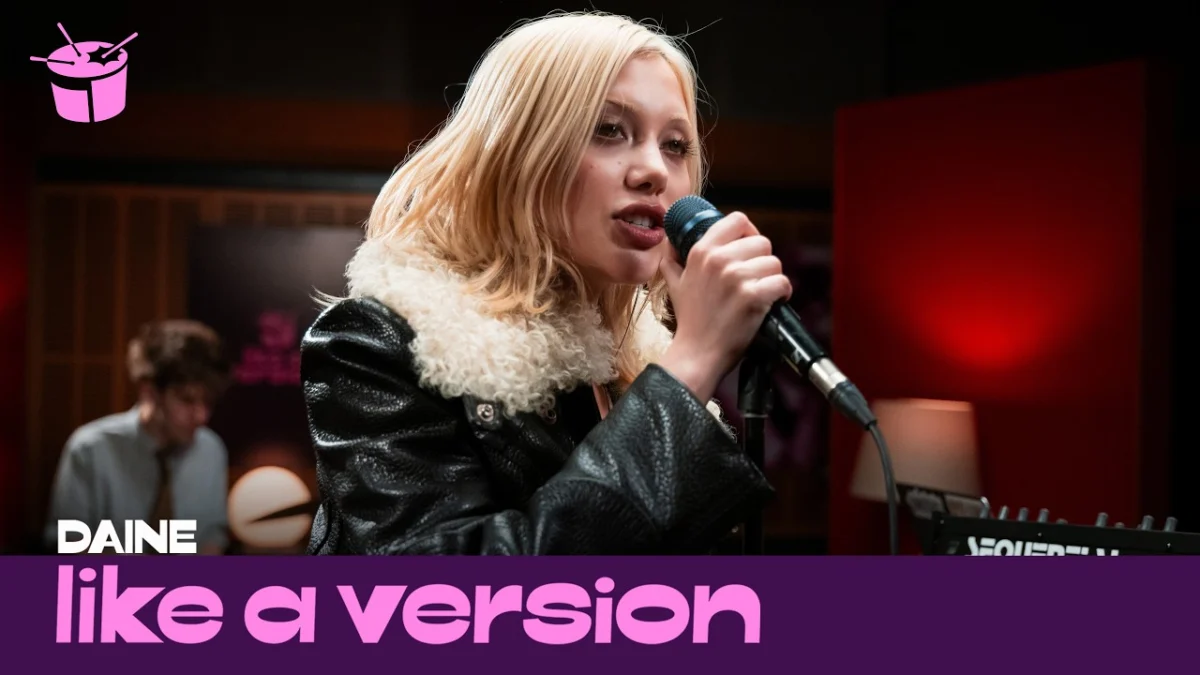
Australian hyperpop sensation daine recently captivated audiences with a dynamic performance on Triple J’s esteemed "Like A Version" series, delivering a "rocked-out" reinterpretation of Martin Solveig and Dragonette’s ubiquitous 2010 dance anthem, "Hello." This high-profile appearance, which also featured a live rendition of daine’s own track "PQC," marks a significant moment for the artist, coming on the heels of several critically acclaimed singles and ahead of the anticipated November release of their debut album, In Endless Awe & Agony. The performance not only showcased daine’s eclectic musical range but also provided a moment of positive artistic expression following a recently resolved public dispute with fellow artist Bassvictim, signaling a shift in focus towards their burgeoning creative output.
daine’s Ascendance and the Hyperpop Phenomenon
daine has rapidly emerged as a prominent voice within the burgeoning hyperpop landscape, a genre characterized by its genre-bending experimentalism, high-energy production, and often digitally processed aesthetics. Hailing from Australia, daine’s music frequently fuses elements of emo, pop-punk, electronic textures, and traditional pop songwriting, creating a distinctive sound that resonates with a generation fluent in internet culture and sonic eclecticism. Artists within the hyperpop sphere, including daine, are known for pushing boundaries, dismantling conventional genre structures, and embracing a maximalist approach to sound design.
The genre itself gained significant traction in the late 2010s and early 2020s, largely propelled by online communities and platforms like SoundCloud, Bandcamp, and TikTok. While rooted in experimental electronic music, hyperpop has evolved to incorporate diverse influences, from nightcore and trance to punk and indie rock, attracting a dedicated global fanbase. daine’s contributions, such as their recent singles "PQC" and "Love Love Love Love," exemplify this fusion, blending introspective lyrics with exhilarating, often aggressive, sonic backdrops. These tracks have not only garnered significant critical attention but have also built considerable anticipation for In Endless Awe & Agony, positioning daine as a torchbearer for the genre’s continued evolution and mainstream crossover potential. The debut album is expected to further solidify daine’s unique artistic vision, weaving together themes of emotion, digital identity, and modern youth culture within a sonically adventurous framework.
The Enduring Legacy of "Hello"
Martin Solveig and Dragonette’s "Hello," released in 2010, was an undeniable global phenomenon that transcended traditional dance music boundaries to become a mainstream pop staple. The track, characterized by its infectious synth hooks, pulsating beat, and Dragonette’s distinctive vocal delivery, quickly climbed international charts, reaching number one on the US Hot Dance Club Songs chart, topping the charts in Belgium and France, and achieving significant success across Europe and Australia. Its catchy chorus and uplifting vibe made it a ubiquitous presence on radio stations, in clubs, and at sporting events worldwide, cementing its status as one of the defining pop-dance anthems of the early 2010s.
The song’s widespread appeal was evident in its critical reception as well. Notably, Stereogum founder Scott Lapatine expressed a deep appreciation for "Hello," including it on his Pazz & Jop singles ballot in 2011. Pazz & Jop, an annual critics’ poll historically conducted by The Village Voice, served as a significant barometer of critical consensus in music, with ballots from hundreds of music journalists determining the year’s most acclaimed albums and singles. Lapatine’s inclusion of "Hello" underscored its broad appeal, demonstrating that its impact extended beyond dance charts to resonate with influential music critics who typically championed more indie or alternative fare. This acknowledgment from a respected figure in music journalism highlights the song’s enduring quality and its ability to captivate diverse audiences, making it a compelling choice for artistic reinterpretation over a decade later.
Triple J’s "Like A Version": A Platform for Reinvention
Triple J, Australia’s national youth broadcaster, has cultivated a reputation for breaking new artists, championing alternative music, and fostering a vibrant music community. Its "Like A Version" segment, which originated in 2004, has become a cornerstone of Australian music culture and a global phenomenon. The weekly segment features prominent and emerging artists performing a cover song of their choice, alongside one of their original tracks, live in the Triple J studio.
The series is renowned for its capacity to generate viral moments, showcasing artists’ versatility, creativity, and often their unexpected musical influences. Past "Like A Version" performances have frequently gone viral, garnering millions of views on YouTube and introducing artists to new audiences both domestically and internationally. These covers often provide a unique lens into an artist’s musical DNA, revealing their inspirations and demonstrating their ability to transform familiar material into something entirely new. For many Australian artists, an appearance on "Like A Version" is a significant career milestone, offering unparalleled exposure and the opportunity to make a lasting impression with a unique performance. The segment has become synonymous with inventive musical reinvention, often leading to covers that are as, if not more, celebrated than the originals they pay homage to.
daine’s Transformative Rendition of "Hello"
daine’s decision to cover "Hello" for "Like A Version" was both unexpected and inspired, allowing the artist to bridge the gap between their hyperpop sensibilities and a mainstream dance-pop classic. The performance saw daine completely overhaul the original’s bright, electronic soundscape, injecting it with a raw, "rocked-out" energy that showcased their punk and emo influences. The transformation was profound: where Solveig and Dragonette’s version pulsed with synthesizers and a clean electronic beat, daine’s rendition embraced distorted guitars, live drums, and a more aggressive, yet still melodic, vocal delivery.
The arrangement highlighted daine’s ability to strip down and rebuild a familiar track, demonstrating a keen understanding of songwriting structure while infusing it with their signature sonic aesthetic. The shift in instrumentation from electronic to rock-band format was particularly striking, emphasizing heavy guitar riffs and a driving rhythm section that lent the song a grittier, more anthemic feel. daine’s vocal performance navigated between the original’s melodic hooks and a more impassioned, almost angsty delivery, adding layers of emotional depth not present in the original’s lighter tone. This reinterpretation not only paid homage to a beloved track but also boldly stamped daine’s artistic identity onto it, proving their versatility and their capacity to transcend genre confines.
Following the cover, daine performed their own track, "PQC," live. This performance served as a compelling contrast and complement to the "Hello" cover. "PQC" in its live iteration retained its characteristic blend of propulsive beats and melancholic, yearning vocals, demonstrating how daine’s studio sound translates effectively into a live, raw setting. The juxtaposition of the two performances—a reimagined classic and a potent original—underscored daine’s artistic range and their command over both established and nascent musical territories. The entire "Like A Version" session solidified daine’s reputation as a compelling live performer capable of delivering impactful and memorable musical experiences.
Broader Implications and Future Outlook
daine’s "Like A Version" performance carries significant implications for their career trajectory and potentially for the broader hyperpop movement. The choice of "Hello" and its rock-infused reinterpretation signals a strategic move to demonstrate artistic versatility and appeal to a wider audience beyond the confines of genre-specific fanbases. Such a high-profile, transformative cover on a platform like Triple J can significantly boost an artist’s visibility, introducing them to listeners who might not typically engage with hyperpop.
Potential Artist Statement (Inferred):
While daine has not issued a direct statement regarding the performance, it is plausible to infer their artistic motivation. "Choosing ‘Hello’ was an intentional act," daine might express, "a way to connect with a song that’s universally loved while showcasing how my own influences, from rock to electronic, can transform something familiar. It’s about breaking down expectations and showing that hyperpop isn’t just one sound; it’s a spirit of experimentation and emotional honesty."
Network and Industry Reaction (Inferred):
Triple J representatives might commend the performance, stating, "daine’s ‘Like A Version’ is a testament to the power of artistic interpretation. Their ability to take a global hit and reimagine it so completely, infusing it with their unique energy, is precisely what makes this series so compelling. It’s an exciting moment for Australian music." Industry analysts could view this as a shrewd move, noting how covers often act as a gateway for new fans, particularly when performed with such creative conviction. The performance has already generated considerable buzz online, with comments praising the unexpected blend of genres and daine’s powerful delivery.
This exposure, coupled with the anticipation for In Endless Awe & Agony, positions daine for a significant surge in their career. The album, which has been teased through singles like "PQC" and "Love Love Love Love," is expected to be a landmark release, offering a comprehensive exploration of daine’s sonic and lyrical themes. The "Like A Version" performance effectively serves as a powerful preamble to the album, demonstrating daine’s artistic depth and their capacity to command a diverse musical landscape.
Moreover, daine’s success in reinterpreting a mainstream hit through a hyperpop lens could further validate the genre’s artistic merit and its potential for crossover appeal. It demonstrates that hyperpop artists are not confined to niche sounds but possess the musicality and vision to engage with popular culture in meaningful and innovative ways. As the music industry continues to evolve, embracing genre fluidity and digital innovation, artists like daine are at the forefront, pushing creative boundaries and redefining what is possible within contemporary music. The "Hello" cover is not just a performance; it is a statement of artistic intent and a clear indicator of daine’s promising future as a significant force in the global music scene.
