

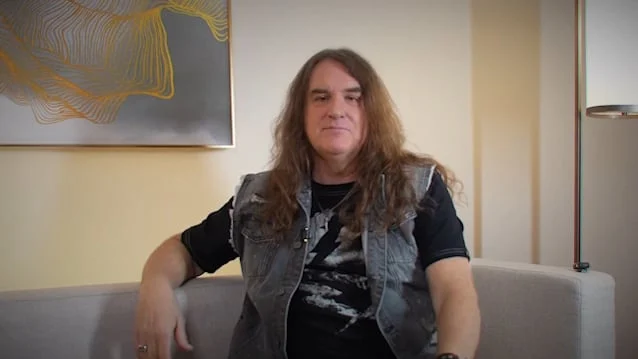
In a recent candid interview with Rock Kommander, David Ellefson, a founding member and bassist of the iconic thrash metal band Megadeth, offered a comprehensive reflection on his extensive tenure with the Dave Mustaine-led outfit, spanning decades and encompassing pivotal moments in the band’s history and the broader music industry. Ellefson detailed the raw, unadulterated beginnings of Megadeth, the band’s early struggles and triumphs, their pioneering adoption of digital technology, and his subsequent diverse musical endeavors following periods of separation from the group. His insights provide a unique perspective on the evolution of heavy metal and the enduring impact of innovative approaches to fan engagement.
The Genesis of a Metal Titan: From Apartment Dreams to Global Recognition
Ellefson’s recollection of Megadeth’s inception is painted with the vivid imagery of camaraderie and shared passion. "For me, MEGADETH is something I did for so many decades," he stated, emphasizing his foundational role. "’Cause I was a founding member of it. So we met just like this, in an apartment, and drank some beers, talked about heavy metal, talked about rock and roll. We got guitars in our hands. The songs were starting to be written. And we just kept it moving from there." This intimate setting, fueled by a shared love for the genre, laid the groundwork for what would become one of the most influential bands in thrash metal history.
The early success of any nascent band, especially in a competitive music scene, hinges on its ability to capture the public’s imagination. Ellefson elaborated on this crucial element, explaining, "When you start something, you really have to believe in it, because you’re ultimately trying to convince other people that this is the thing, this is cool." He attributed Megadeth’s initial traction, in part, to a compelling narrative that resonated with audiences. "Now, I was lucky because with MEGADETH, the music connected with people. They liked it. There was a story there about Dave [Mustaine] coming out of [his former band] METALLICA. So right from the beginning there was a story." This biographical element, the departure of a prominent musician from an already established act, provided an immediate hook, distinguishing Megadeth from countless other emerging bands. "Because what makes my band any different than your band or his band or her band? What’s the hook, as they say, right? So there has to be something of interest." Ellefson’s relocation from Minnesota to Hollywood, a city synonymous with the music industry’s apex, proved instrumental in his early immersion into the burgeoning thrash metal scene. His involvement from the band’s very inception, not as an addition but as a co-founder, underscored his integral role in shaping Megadeth’s identity.
Charting the Sonic Evolution: The Capitol Years and the Dawn of the Internet Age
The first two decades of Megadeth’s career, which Ellefson terms the "Capitol Records years," were particularly formative in defining the band’s signature sound. This period saw a continuous evolution, a conscious effort to refine and expand their musical palette. "The first 20 years – I call it the Capitol Records years – those first 20 years of the group was really what defined the sound of it. The sound evolved. It constantly was being kind of tended to."
The music landscape of the 1990s presented a significant paradigm shift with the emergence of the grunge movement, spearheaded by bands like Nirvana and Pearl Jam. This seismic change in popular music taste inevitably influenced the broader industry, including radio, MTV, and media outlets. Ellefson acknowledged this external pressure, noting, "The ’90s was very interesting because the Seattle movement showed up – NIRVANA, PEARL JAM, all that we know it is. [It was] very different, because that affected what things outside of us were gonna be reacting to – MTV, the media, radio."
Amidst these evolving trends, Megadeth embraced a nascent technological revolution: the World Wide Web. In 1994, as the band prepared to release their album "Youthanasia," Capitol Records proposed a groundbreaking initiative: the creation of the very first band website. Ellefson recalled, "And as we need those vehicles to help our fans always be connected with us, probably one of the greatest things that happened was this new thing called the World Wide Web, otherwise known as the Internet. And Capitol Records came to us in 1994, when we launched an album called ‘Youthanasia’, and they asked us if we would be interested in forming basically the very first-ever band web site, which we did, called Megadeth Arizona – ’cause the band was based in Arizona at that time."
This proactive engagement with online platforms positioned Megadeth as early adopters of digital communication in the music realm. Ellefson described their consistent embrace of innovation: "And so we were a very much an early adapter. We were always an early adapter with technology, with kind of the new way of doing things." The band’s reputation as a "state-of-the-art speed metal band" likely contributed to their willingness to explore new technological frontiers. The establishment of "Megadeth Arizona" served as a vital tool for launching "Youthanasia," paving the way for the acquisition of the more encompassing domain, "Megadeth.com." The platform quickly evolved into a hub for fan interaction, featuring chat rooms and message boards, predating the modern era of online news sites and comment sections. Ellefson recognized the profound impact of this digital connectivity: "The Internet, for us, was a very useful tool to be connected with our fans all around the world, ’cause we were a big international rock group." He drew a parallel to contemporary artists, noting the enduring power of the internet for building global fanbases, even for emerging acts. "I was just talking to an artist yesterday, a brand new artist, and they were talking about how much the Internet has helped them to gain this very big worldwide fanbase, and they’re just now starting to go on tour and they’re very young group. Young people understand the Internet. It’s been their friend from the beginning. And so I’m glad I got to be part of that generation at the very beginning, to understand what it is."
A Period of Transition and Reinvention: From Megadeth’s Hiatus to Diverse Projects
Ellefson’s narrative then shifts to periods of significant change within Megadeth and his own career trajectory. He acknowledged a phase where the band temporarily disbanded, noting his absence during the initial reunion attempts in 2004 and 2005. However, he returned in 2010, embarking on another decade-long chapter with the group. This later period was marked by notable achievements, including the "Big Four" concerts featuring Metallica, Slayer, and Anthrax, a testament to Megadeth’s enduring influence and stature.
A significant milestone during this reunion was the band’s long-awaited Grammy win. After numerous nominations – Ellefson recalled "11 nominations" – Megadeth finally secured a Grammy Award for Best Metal Performance for the song "Dystopia" from the album of the same name. While Ellefson suggested that the award might not have held the same weight for the fanbase as it did for the industry, he recognized its symbolic importance. "To our fans, did they care if we won a Grammy? Probably not. For the industry, I think it was a cool acknowledgement that we always mattered, we were always relevant, we were always important not only to our fans, but even inside the industry of music and entertainment, we were always a leader." He characterized the "Dystopia" album as one of Megadeth’s "great records," reflecting a sense of artistic satisfaction.
Following his departure from Megadeth in the early 2000s, Ellefson pursued a period of significant personal and professional growth. He pursued higher education, earning a business degree, and gained valuable industry experience working for Peavey, a prominent musical instrument manufacturer, in artist relations. This role provided him with a unique vantage point on the emerging artists of the time, including bands like Slipknot, Kid Rock, and Nickelback, who would go on to achieve massive success. "I worked for Peavey, doing artist relations, which was a way to sort of connect to companies’ musical products with the artist community. And at the time, a lot of young groups like SLIPKNOT, Kid Rock, NICKELBACK were coming up the ranks, and I interfaced with them very early on. And they became tomorrow’s big rock groups. They became the KISS of tomorrow. So I understood it."
Beyond his corporate role, Ellefson continued to explore his musical creativity through various projects. He formed the band F5 and contributed as a guest musician on two Soulfly albums, collaborating with Max Cavalera. These experiences broadened his musical horizons, allowing him to engage with different styles and creative processes. "So that kind of opened and it expanded my musical horizons to be able to do more than just be in one group. So I got to do both then."
His return to Megadeth in 2010 was informed by this diverse background. He brought not only his foundational knowledge of the band and its songwriting but also a wider perspective gained from his independent musical explorations and industry insights. He also played a key role in the genesis of "all-star" music events, co-founding Metal Allegiance and contributing to the early concept of the "Motörhead’s Motörboat" cruise, which popularized the idea of renowned musicians collaborating on themed cruises. "I started another all-star group called METAL ALLEGIANCE that we put on the MOTÖRHEAD ‘Motörboat’ cruise. And that kind of started the all-star thing on these cruises where famous rockers get together and they do the all-star jam kind of thing. So, I got to be part of a lot of early ideas, early things that stuck and caught the attention of other people."
Legal Entanglements and Shifting Band Dynamics
The history of Megadeth is inextricably linked with the complex relationship between David Ellefson and Dave Mustaine. Ellefson was a member of Megadeth from its inception in 1983 until 2002, when the band initially disbanded due to Mustaine’s severe nerve damage. The subsequent reformation of Megadeth by Mustaine in 2004 saw the release of "The System Has Failed," with studio musicians filling the band’s ranks. This period was marked by a legal dispute between Ellefson and Mustaine.
In 2004, Ellefson filed a lawsuit against Mustaine, seeking $18.5 million, alleging outstanding merchandise and publishing royalties. The case was dismissed in court in January 2005. Five years later, Ellefson rejoined Megadeth. Upon his return, Ellefson has openly discussed his role as a salaried employee rather than a co-founding owner. In an interview with Metal-Rules.com, he explained his initial reluctance to return in 2004 due to the proposed terms, which he felt diminished his ownership stake. His eventual return in 2010, however, was motivated by a renewed love for playing music, fostered by his experiences in other musical settings. He found value in the clarity of being a sideman, which allowed him to focus on performance and songwriting without the broader business responsibilities. "Going from being a co-founding owner to just a sideman musician was initially why I didn’t come back in 2004. I was not happy with the participations that were presented to me. In recent times, coming back, I found great joy in doing music with a lot of other people in other settings that helped me fall back in love with playing music. Now I can come back into or go into musical situations and be able to be there for a purpose and level of pay. Being a sideman absolves you from being involved in all the other stuff."
The lawsuit filing in 2004 revealed deep-seated animosity. Ellefson’s legal documents alleged that his attempts to resolve differences amicably were met with "verbal abuse, threats, lies and continued invective from Mustaine." The bassist also suggested that Mustaine resented his sobriety, as Ellefson had overcome a past addiction. The dispute extended to the internet, with Mustaine reportedly posting on Megadeth.com accusing Ellefson of extortion.
Mustaine, in a lengthy online statement at the time, presented his perspective on the failed 2004 reunion. He claimed Ellefson missed several deadlines to accept an offer that included 20% of the artist royalties for "The System Has Failed," no publishing royalties, and a weekly salary of $2,500 while on tour.
The final chapter of Ellefson’s tenure with Megadeth concluded nearly five years prior to the current interview, with his dismissal following the public circulation of sexually explicit messages and video footage involving the bassist on Twitter. This event marked a definitive end to his decades-long involvement with the band he helped create.
Enduring Legacy and Future Prospects
David Ellefson’s reflections offer a profound glimpse into the formative years of a metal institution, the strategic adoption of emerging technologies, and the complex dynamics that shape long-standing musical partnerships. His journey, from co-founding Megadeth in a humble apartment to navigating legal battles, embracing technological shifts, and forging a multifaceted career, underscores his resilience and enduring passion for music. His ongoing involvement in various musical projects and his insights into the evolving music industry continue to cement his legacy as a pivotal figure in the history of heavy metal. The narrative of Megadeth, as told through Ellefson’s experiences, is a testament to artistic evolution, the power of fan connection, and the ever-changing landscape of the global music business.
