

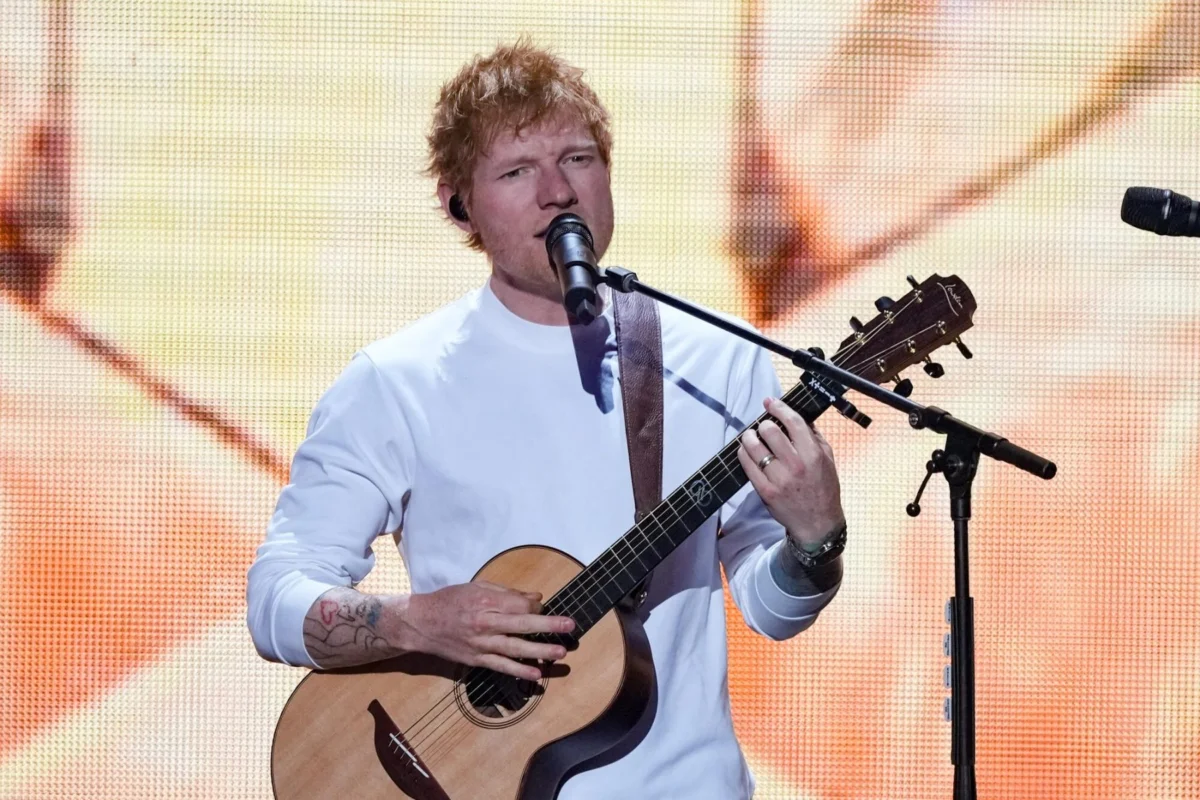
Philadelphia’s Lincoln Financial Field, a venue typically buzzing with anticipation for an Ed Sheeran concert, instead became the stage for an extraordinary opening act on Saturday, September 19. Before a single guitar chord was struck, the global superstar, known for his affable demeanor and meticulously crafted loop-pedal performances, found himself compelled to address a maelstrom of controversy that had engulfed his tour. Sheeran, who has repeatedly articulated his aversion to political entanglement and his desire to steer clear of the label "activist musician," was thrust into an uncomfortable spotlight, forced to navigate a complex geopolitical issue that had already fractured his touring ensemble and tested his resolve.
The Unfolding Crisis: A Chronology of Controversy
The genesis of this unprecedented disruption lies in the volatile landscape of the Israel-Palestine conflict, a subject that has increasingly polarized public opinion globally and, by extension, the entertainment industry. The immediate catalyst was Sheeran’s scheduled opening act, the Grammy-winning rapper Macklemore, known for his socially conscious lyrics and outspoken views. Macklemore had recently made public statements expressing solidarity with Palestine, a stance that quickly drew ire from influential figures within the entertainment and sports sectors.
Sources indicate that significant pressure was exerted by a consortium of venue owners, notably led by Robert Kraft, the billionaire owner of the New England Patriots and a prominent advocate for Israel. Kraft’s considerable influence, stemming from his vast business empire and philanthropic activities, reportedly played a pivotal role in the decision-making process. The pressure culminated in Macklemore’s removal from the tour, a development that sent shockwaves through the music community and ignited a broader conversation about artistic freedom and political censorship.
The fallout was immediate and far-reaching. In a powerful display of solidarity, several other scheduled openers for Sheeran’s tour, whose names were not explicitly detailed but whose actions spoke volumes, withdrew their participation. This collective action underscored the gravity of the situation and the depth of feeling among artists regarding Macklemore’s removal. Adding to Sheeran’s logistical nightmare, Beoga, the acclaimed Irish folk band that had served as his backing musicians for the tour, also announced their departure. Their decision, described as being "in solidarity with Macklemore and empathy toward Palestinians," left Sheeran without his established musical support just days before a major stadium show.
The entire saga quickly escalated into a major news story, transforming what was intended to be a celebratory series of concerts into a public relations quagmire for Sheeran, an artist whose career had largely been defined by its lack of controversy. Prior to the Philadelphia show, Sheeran had already released an online statement attempting to clarify his position. However, this initial communication was met with considerable scrutiny, highlighting the difficulty of addressing such a sensitive issue through written words alone. The need for a direct, in-person address to his audience became undeniable.
Sheeran’s Reluctant Activism: The Onstage Address
As the nearly full Lincoln Financial Field awaited the concert to officially commence, Sheeran stepped onto the stage, not with a guitar in hand, but with a palpable sense of gravity. His initial words, delivered with a carefully measured tone and reportedly referenced from a teleprompter, laid bare the emotional and professional toll of the preceding week.
"I’m used to my music being criticized, and I’m always happy to take that because I’m lucky a lot of you like my stuff, and to be honest, I’m surprised," Sheeran began, his voice tinged with a blend of humility and weariness. "I’m not surprised that other people don’t. It’s normal. But this week, the criticism was about something much more important, and I’ve had to take and make difficult decisions, and I am making mistakes, and I’m so, so sorry." This opening acknowledged the unprecedented nature of the situation, differentiating it sharply from typical artistic critiques and confessing to the immense pressure he had faced.
He then delved into the heart of the matter, offering a carefully balanced condemnation of the violence plaguing the Middle East. "What happened in Israel at the Nova music festival on October 7th was horrific and compounded centuries of Jewish pain. What is happening in Gaza is catastrophic, unjustifiable, and disproportionate," Sheeran articulated. His statement sought to acknowledge the suffering on both sides of the conflict, a rhetorical tightrope walk designed to appeal to a broad audience while still taking a definitive moral stance against violence and injustice. He further emphasized, "My heart has been broken by the scale of devastation and loss of civilians’ lives, of children’s lives. And the systemic injustice we’re seeing unfold in the West Bank cannot be overlooked." This segment of his address highlighted a universal humanitarian concern, focusing on the loss of innocent lives and systemic issues rather than assigning blame to specific political entities.
Concluding this initial statement, Sheeran conveyed a commitment to engagement and learning. "I am already speaking to people across the spectrum to work out how to make a contribution that helps victims of these terrible times, and listening and learning because I do not know enough," he stated, presenting himself as an individual grappling with a complex issue rather than an authority. He then pivoted to the intended purpose of the evening: "I honestly am so grateful that you’re here tonight with me. This concert is still a place where everyone is welcome, and everyone here can stand beside people that have opposing views. Everyone here can stand by people that they don’t agree with on everything, and they can all agree on singing these songs. And these songs are about love, hope and unity." This plea for unity through music resonated deeply with the audience, who responded with an appreciative roar.
Behind the Scenes: Tour Logistics and Personal Impact
The controversy profoundly altered the logistical fabric of Sheeran’s "Loop Tour," a series of performances celebrated for their minimalist approach, with Sheeran largely alone on stage, crafting intricate soundscapes using only a loop pedal. Macklemore’s removal, followed by the solidarity-driven departures of the other openers and Beoga, magnified Sheeran’s characteristic solitude to an unintended degree.
Further testament to the heightened tensions and perceived threats was the cancellation of the "B stage" segment of the show. This traditional part of Sheeran’s concerts typically involved him moving to a smaller, secondary stage positioned amidst the audience, fostering a more intimate connection with fans. However, Sheeran explained during the show that this element had been scrapped due to safety concerns, stating he was "concerned about what might happen if [he] stood in the middle" of the crowd. This decision underscored the palpable anxiety surrounding the event, hinting at intelligence or advice that necessitated extraordinary precautions, even if security measures were not overtly visible to the casual observer. Reports from media outlets like TMZ had indeed suggested heightened security was in place, though its implementation was discreet.
To fill the void left by Beoga, Sheeran quickly assembled a last-minute backing band for the evening. Without directly naming Beoga or elaborating on their departure – presumably assuming the audience was either aware of the full story or didn’t require the detailed explanation – he introduced his new accompanying musicians, led by violinist Alicia Enstrom, a veteran who had toured with Sheeran in the past. This hastily formed ensemble then joined him for the Ireland-set section of the show, including the popular hit "Galway Girl." It remained unclear whether this new configuration would accompany him for subsequent tour dates, adding another layer of uncertainty to the tour’s future.

Throughout the rest of the show, Sheeran made only occasional, subtle references to the tumultuous week. Before performing "Old Phone," he quipped that "until this week," the only time he made headlines was when he was involved in legal proceedings, a lighthearted but telling acknowledgment of his preference for an uncontroversial public life. Earlier, a jokingly delivered question to the crowd about their enjoyment of the openers also served as a subtle nod to the recent upheaval. These comments were artfully delivered, designed to be understood by those privy to the situation but sufficiently understated to pass over the heads of audience members, particularly younger fans, who might not have been fully aware of the preceding drama.
A Raw Confession: The Emotional Climax
As the concert neared its grand finale, Sheeran took a seat at the edge of the stage, setting the scene for what would be his most profound and unscripted statement of the night. Unlike his earlier, carefully prepared remarks, this address felt raw, spontaneous, and deeply personal, offering a rare glimpse into the emotional toll the week had exacted on him.
"The last week of my life has been one of the worst weeks of my life, and today has been one of the weirdest days of my life. Tonight has been honestly the best show of my life," Sheeran declared, his voice thick with emotion. The juxtaposition of personal anguish with professional triumph highlighted the cathartic experience the concert had become for him. He continued, revealing the existential crisis he had faced: "I really didn’t know whether this tour would carry on, I really didn’t know whether I’d get on stage again, whether I even wanted to be an artist at all." This candid admission underscored the profound pressure and self-doubt that had plagued him.
He then spoke of betrayal and abandonment, painting a picture of isolation amidst the controversy. "But, you know, in these situations, you really find out who your friends are. And it’s been a weird week. I just feel like everything happened very quickly. And the whole time I have so many people telling me to cancel this tour, and I have so many people falling out of my life that I’ve known for years and years and years, people just kind of backing away." This revelation offered a poignant counterpoint to his public image, exposing the vulnerability beneath the superstar facade.
Sheeran attributed his resolve to continue the tour directly to the unwavering support of his audience. "I saw ticket sales for this gig, and I didn’t see cancellations, I saw people buying tickets. I’m there, and everyone’s telling me to cancel, and I’m feeling all of my friends and family and people I know abandon me. And I look at the end of the week, and I see 50,000 people who haven’t abandoned me." This powerful affirmation of his fanbase’s loyalty served as his anchor, reaffirming his purpose as an artist. "People will say what they want, but I’m doing this for you. I love you. I love this. I love the unison we have here. I love the feeling this concert brings. I love bringing people together of all races, all religions, all political ideas."
His final words before the encore echoed his initial online statement and his core philosophy of unity through music. He apologized for the necessity of taking a stance, framing it as an unwelcome intrusion into the pure escapism of a concert. "A lot of people here have differing opinions, and we’ve had a great night. And you are standing next to people and dancing with people who you may disagree with. And you probably understand them better by being, you know, one and love. I have had so many opinions on this. But the root of it is love. And if this tour ends, love doesn’t win. Love doesn’t win. You know? I can’t let you guys down. That’s why I’m here tonight, on my own, for you guys." After wiping his eyes, Sheeran rose, and with a flourish of pyrotechnics, seamlessly transitioned into the final songs of his set, performing as if the preceding emotional monologue had never happened.
Broader Implications: Artists, Activism, and Industry Pressure
The Ed Sheeran tour controversy serves as a stark illustration of the increasing entanglement of entertainment with geopolitics and social activism in the 21st century. The incident highlights several critical implications for artists, the music industry, and the broader cultural landscape.
Firstly, it underscores the growing pressure on public figures to take explicit stances on complex global issues. In an era dominated by social media and instant commentary, the expectation for celebrities to weigh in on matters of social justice and international conflict has intensified. For artists like Sheeran, who prefer to maintain an apolitical public persona, this presents a significant dilemma: remain silent and risk accusations of indifference, or speak out and risk alienating segments of their fanbase, or, as seen, face commercial and logistical repercussions. Sheeran’s carefully worded statements reflect the treacherous path artists must navigate when addressing such deeply divisive subjects.
Secondly, the incident exposes the considerable power dynamics within the entertainment industry. The reported influence of figures like Robert Kraft and venue owners in shaping tour lineups raises serious questions about artistic freedom and the potential for financial and political pressure to dictate creative expression. While venues and promoters have legitimate business interests in ensuring smooth operations and avoiding controversy, the removal of an artist based on their political views sets a concerning precedent for censorship and self-censorship within the industry. This could lead to a chilling effect, where artists might shy away from expressing controversial opinions for fear of jeopardizing their careers or tour opportunities.
Thirdly, the solidarity shown by the other openers and Sheeran’s backing band, Beoga, signals a growing collective consciousness among artists. Their willingness to sacrifice lucrative tour slots to stand with Macklemore and in empathy with Palestinians demonstrates a powerful commitment to ethical principles over commercial gain. This form of collective action could inspire similar movements in the future, potentially shifting the balance of power within the industry and encouraging more artists to use their platforms for social commentary.
Finally, the incident reflects the economic realities of large-scale touring. Tour disruptions, even for a single show, can lead to immense financial losses, contractual disputes, and logistical nightmares. Sheeran’s personal confession about questioning the continuation of his tour and his career highlights the intense personal and professional stress involved. His decision to carry on, fueled by the unwavering support of his fans, demonstrates the powerful bond between artist and audience, which can, at times, transcend political divides. However, it also emphasizes the precarious position artists find themselves in when their creative endeavors become entangled in geopolitical storms.
Moving forward, the Ed Sheeran tour controversy will likely be cited as a case study in how the cultural landscape is adapting to an increasingly polarized world. It forces a reevaluation of the role of artists as entertainers versus public intellectuals and highlights the challenges of fostering unity through music when the world outside the concert hall remains deeply fractured. For Sheeran, the Philadelphia show was a temporary reprieve, a moment of unity in a tumultuous week. The broader implications, however, will continue to resonate, shaping future conversations about art, activism, and the intricate dance between them.
