

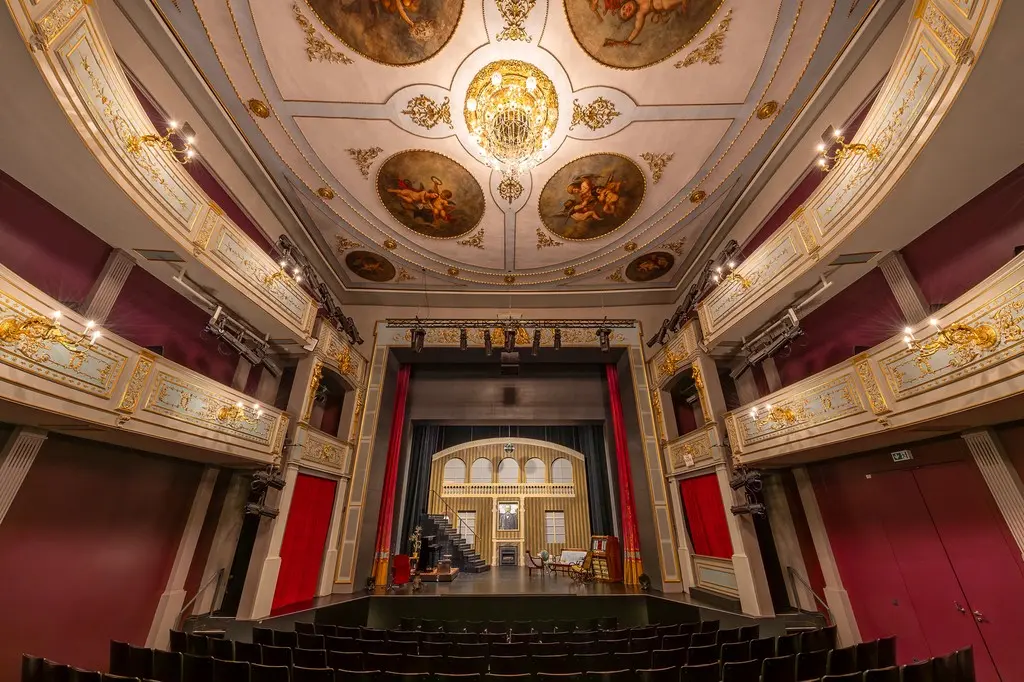
The ETA Hoffmann Theater in Bamberg has officially transitioned into a new era of theatrical sound engineering, becoming one of the first major cultural institutions to implement the Sennheiser Spectera wideband wireless system. Since October 2025, the historic venue has utilized this groundbreaking Wireless Multi-Channel Audio System (WMAS) to manage its complex audio requirements across both its main auditorium, the "Großes Haus," and its experimental "Studio" stage. This technological overhaul represents a significant leap forward in spectral efficiency and operational reliability, replacing legacy equipment that had served the theater for over two decades. By adopting a system that bundles up to 64 audio links within a single rack unit, the ETA Hoffmann Theater is not only addressing current technical challenges but is also strategically positioning itself ahead of looming changes in international frequency regulations.
A Necessary Evolution: Replacing Two Decades of Legacy Hardware
The decision to modernize the theater’s wireless infrastructure was driven by both necessity and foresight. For 23 years, the ETA Hoffmann Theater relied on traditional Sennheiser wireless microphone paths. While these systems were hallmarks of reliability in their time, they had reached the end of their functional lifecycle by the mid-2020s. Maintenance was becoming increasingly difficult, and the analog-digital transition in the RF spectrum had left the theater with limited flexibility.
The project was spearheaded by Janic Hackner, Head of Sound and Video Technology at the theater. Recognizing that a simple one-to-one replacement of old hardware would not suffice for the demands of modern productions, Hackner sought a solution that could handle high-density channel counts without the intermodulation risks associated with traditional narrowband systems. The procurement was made possible through significant funding from the government of Upper Franconia (Regierung von Oberfranken), highlighting the regional importance of the theater as a cultural lighthouse.
The planning phase involved close collaboration with Daniel Schreiber, a prominent specialist planner based in Bamberg, and Thomann Audio Professionell, the integration arm of the world-renowned music retailer located in nearby Burgebrach. Together, they designed a system centered around the Sennheiser Spectera ecosystem, which utilizes WMAS technology to revolutionize how radio frequencies are managed in a live environment.
Technical Architecture and System Configuration
The core of the new installation consists of two Spectera Base Stations. These units are remarkably compact, each occupying only a single height unit (1RU) in a standard 19-inch rack, yet they are capable of managing up to 64 bidirectional audio links. For the ETA Hoffmann Theater, the deployment includes 18 SEK bodypacks, which serve as the primary interface for actors and musicians.
The RF distribution is managed through four DAD antennas, strategically placed to ensure total coverage of the performance spaces. To maintain power efficiency and operational readiness, the theater integrated four L 6000 rack charging stations, which house BA-70 lithium-ion batteries. This setup ensures that the audio team can manage long rehearsal days and back-to-back performances without the logistical headache of disposable batteries or slow charging cycles.
The system operates within the UHF band, specifically utilizing 8-MHz blocks with center frequencies set at 474, 494, 506, and 516 MHz. This frequency selection was deliberate, providing the theater with a robust operating window that avoids interference from local broadcasters and other digital services. The audio signals themselves are integrated into the theater’s broader digital network via Dante (Primary/Secondary) at a sample rate of 48 kHz, ensuring high-fidelity, low-latency transmission from the stage to the mixing consoles.
Overcoming Architectural Challenges in a Listed Building
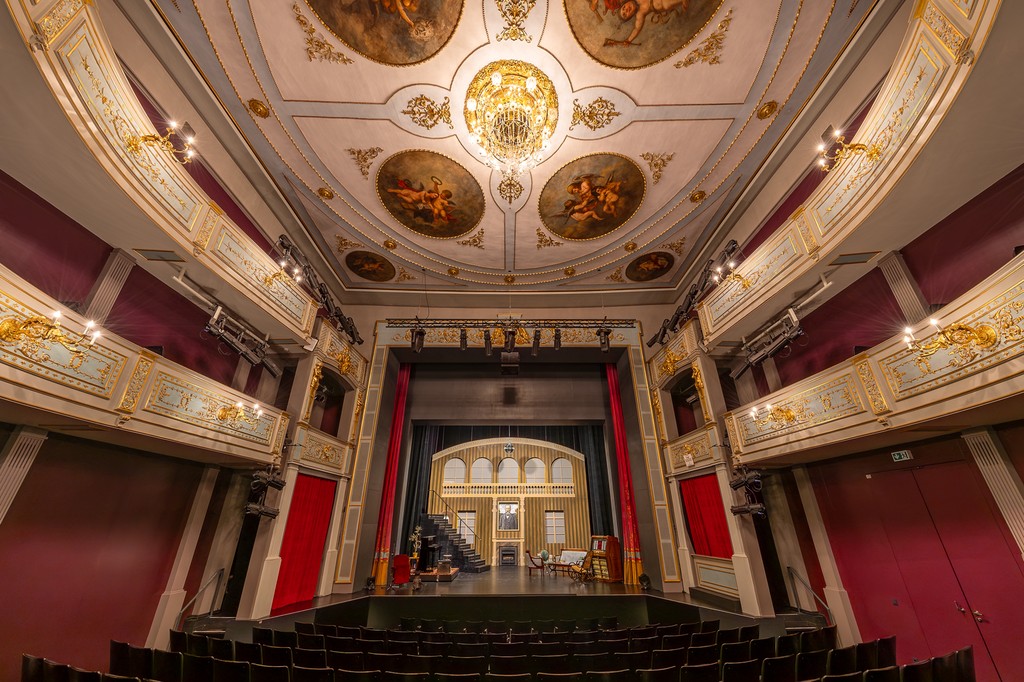
Implementing modern wireless technology in a historic, listed building like the ETA Hoffmann Theater presents unique hurdles. The "Großes Haus" is characterized by its stunning verdigris-and-gold tiers, ornate ceiling paintings, and heavy steel structural elements. While steel is often the enemy of traditional wireless systems—causing "dead zones" due to signal reflections—the WMAS technology used in Spectera thrives in these conditions.
Janic Hackner noted that the multipath propagation caused by the theater’s steel structure actually assists the Spectera system. Because WMAS uses wideband technology, it can utilize reflections to its advantage, resulting in a more stable link compared to narrowband systems that might suffer from destructive interference in the same environment. This allowed the team to cover the entire auditorium with just two antennas per stage, a significant reduction in hardware complexity.

Furthermore, the installation team utilized existing infrastructure to minimize physical interventions in the historic fabric of the building. The DAD antennas were connected via an existing fiber optic network originally intended for MADI signals. This "plug-and-play" approach meant that no new cable runs were required through the protected walls of the theater, preserving its architectural integrity while radically upgrading its technical capabilities.
Operational Flexibility and the Havarie Concept
One of the standout features of the Spectera installation is its built-in redundancy, often referred to in German theater circles as the "Havarie" (emergency) concept. The two base stations—one for the Main House and one for the Studio—are linked in a way that allows for "antenna cross-patching."
If the base station in the Studio were to fail, the antennas in that space can be instantly patched into the base station of the Main House via a central patch panel. In this scenario, the Studio antennas appear as "Antennas C and D" on the primary base station. According to Hackner, even in the event of a total hardware failure in one room, the system can be reconfigured and the bodypacks re-paired in under 15 minutes. Because a single base station can handle 64 links, it has more than enough capacity to run productions in both venues simultaneously if necessary.
This level of flexibility extends to the bodypacks themselves. The SEK bodypacks feature E-Ink displays, which remain legible even when the battery is removed. This allows the wardrobe and "Maske" (makeup) departments to identify which pack belongs to which actor at a glance, streamlining the "mic-up" process before a show. The bodypacks are also versatile in their application; they are used not only for headsets and lavalier microphones but also for transmitting instrument signals and even providing wireless audio to speakers integrated into the stage scenery.
Future-Proofing and the 2030 Frequency Horizon
The shift to Spectera was largely motivated by the uncertain future of the UHF spectrum. Currently, the UHF band (470–694 MHz) is a primary resource for wireless microphones, but international agreements suggest that this spectrum may be further reclaimed for mobile telecommunications after 2030.
"A key criterion for me was a future-proof transmission technology with broad frequency range coverage," Hackner explained. By utilizing WMAS, the theater can achieve higher spectral efficiency, fitting more channels into less bandwidth. This efficiency will be crucial as the available "white space" in the RF spectrum continues to shrink. The Spectera system allows the audio team to adjust the operating mode of each link depending on the specific needs of a production—choosing between maximized battery life for long plays or increased range for complex, multi-level stage designs.
Industry Implications and Integration with Universe Control
The success of the Bamberg installation is being closely watched by the European theatrical community. Florian Denzler of Thomann Audio Professionell emphasized that the Spectera system’s open API (Application Programming Interface) opens new doors for workflow integration.
Looking ahead, there are plans to integrate the wireless system into the "Universe Control" platform. This would allow the sound team to monitor battery levels, RF signal strength, and audio gain from a single, unified interface that also manages other technical departments like lighting or stage machinery. This holistic approach to theater technology is expected to become the standard for high-end venues over the next decade.
Despite the high praise for the system’s reliability and robustness against interference from LED walls and stage motors, the transition has also provided valuable feedback for Sennheiser’s developers. Hackner has suggested a software update to allow the deactivation of the "automatic sleep mode," which currently shuts down bodypacks after five minutes without antenna contact. In the high-stakes environment of live theater, where actors may be waiting in "dead zones" or off-stage for extended periods, such granular control is essential.
Conclusion: A Benchmark for Modern Cultural Venues
The ETA Hoffmann Theater’s adoption of Sennheiser Spectera marks a turning point in the professional audio industry. By moving away from the constraints of 20th-century narrowband technology and embracing the wideband capabilities of WMAS, the theater has solved long-standing issues related to RF interference, structural obstacles, and spectral scarcity.

As the 2025/26 season continues, the system has already proven its worth through its flawless execution in a variety of productions, ranging from intimate studio pieces to grand-scale dramas in the main house. The project stands as a testament to the power of collaborative planning between theater technicians, specialist planners, and industry-leading integrators. For other venues facing the aging of their own wireless fleets and the looming 2030 frequency deadline, the ETA Hoffmann Theater serves as a clear blueprint for a successful, future-ready technical migration.
