

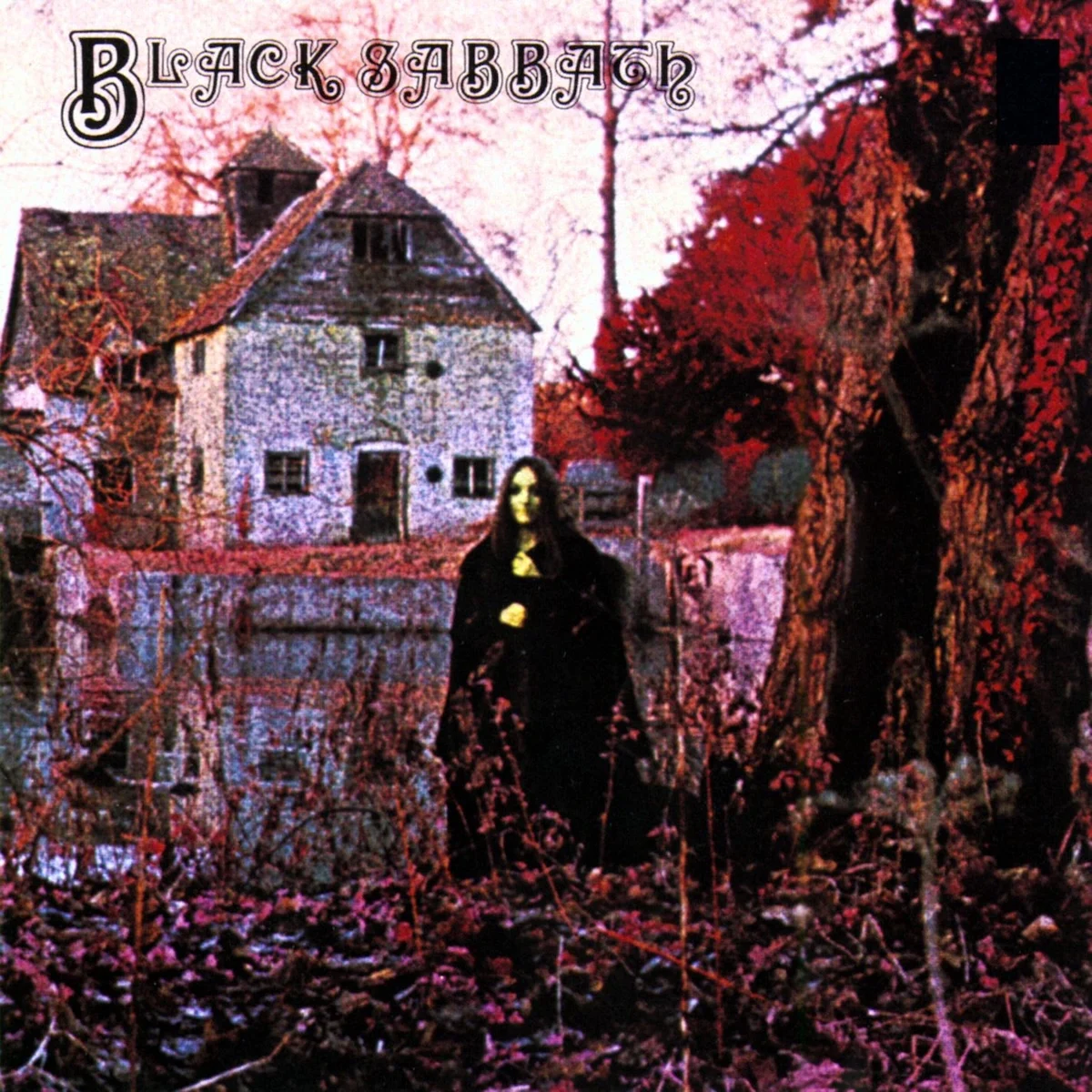
Shortly before the global pandemic fundamentally reshaped daily life, the legendary heavy metal pioneers Black Sabbath were commemorating the 50th anniversary of their groundbreaking debut album. As part of these celebrations, a long-held mystery surrounding the album’s iconic cover art was finally unveiled: the identity of the enigmatic "witch" figure was revealed to be Louisa Livingstone. Far from being merely a historical footnote, Livingstone has continued to evolve as an artist, currently making electronic music under the moniker Indreba. Her latest release, Alice, is a psychedelic rock opera that delves into the complex realm of artificial intelligence, notably created with the assistance of AI itself. The album, influenced by Lewis Carroll’s Alice In Wonderland and the psychedelic rock sounds of Jefferson Airplane, directly addresses contemporary digital existence, with lyrics that reference algorithms, endless scrolling, and ubiquitous screens. In a recent interview with Rolling Stone, Livingstone detailed how the concept for Alice originated from profound conversations with an AI chatbot about panpsychism—the philosophical theory positing that everything, including artificial intelligence, possesses some form of consciousness. This dialogue ultimately inspired a narrative where "myself (or Alice!) falling in love with AI but that in the end it’s just a beautiful illusion along with everything else on the internet… and getting back to being oneself and nature."
The Unveiling of an Icon: Louisa Livingstone and Black Sabbath’s Legacy
The revelation of Louisa Livingstone’s identity in late 2019 and early 2020 marked a significant moment for fans of Black Sabbath and the broader history of rock music imagery. For half a century, the spectral figure gracing the cover of Black Sabbath’s self-titled debut album had remained shrouded in mystery, contributing to the album’s dark, foreboding aura that perfectly encapsulated the nascent heavy metal genre. Released on Friday the 13th, February 1970, the album itself was a seismic event, often credited with laying the foundational blueprints for heavy metal with its downtuned guitars, ominous lyrics, and groundbreakingly heavy sound. Tracks like "Black Sabbath," "The Wizard," and "N.I.B." established a new sonic paradigm that diverged sharply from the prevailing psychedelic and blues-rock trends of the era.
The album’s cover, shot by photographer Keith MacMillan (known as Keef) at Mapledurham Watermill in Oxfordshire, England, depicted a cloaked figure in a bleak, autumnal landscape. The misty atmosphere, the ancient mill, and the unsettling presence of the "witch" created an enduring image that became synonymous with the band’s pioneering sound. For decades, the true identity of the model was the subject of speculation and legend. Livingstone’s revelation came at a fitting time, coinciding with the band’s 50th anniversary celebrations, allowing a new generation of fans and long-time aficionados to connect a face and a name to one of rock’s most iconic and mysterious visual representations. Her brief but impactful appearance on that cover undoubtedly contributed to its lasting mystique, a testament to how even a fleeting image can embed itself deeply within cultural consciousness.
From Modeling to Indreba: Livingstone’s Evolving Artistic Path
Louisa Livingstone’s connection to the Black Sabbath album cover represents just one facet of a diverse artistic career that spans modeling, acting, and, more recently, electronic music. Her journey from being the face of an iconic album cover to becoming a sophisticated electronic musician under the moniker Indreba illustrates a consistent thread of creative exploration and adaptability. While her early career saw her contributing to the visual arts through modeling and acting, her later years have been dedicated to crafting intricate soundscapes that reflect her intellectual curiosity and engagement with contemporary themes.
As Indreba, Livingstone has cultivated a distinct electronic sound, characterized by atmospheric textures and experimental structures. Her artistic evolution mirrors a broader trend among creatives who move between different mediums, leveraging their experiences in one field to inform and enrich their work in another. The transition from being a silent, enigmatic figure in a photograph to a vocal, articulate artist exploring complex philosophical concepts through music highlights a profound personal and artistic journey. Her decision to embrace electronic music, a genre often at the forefront of technological innovation, set the stage for her latest endeavor, Alice, where technology itself becomes both a tool and a subject of artistic inquiry.
‘Alice’: A Psychedelic Odyssey Through AI and Consciousness
Indreba’s new album, Alice, stands as a compelling example of artistic innovation in the digital age, fusing philosophical inquiry with cutting-edge technology. The album is framed as a psychedelic rock opera, drawing clear influences from the whimsical yet often dark narrative of Lewis Carroll’s Alice In Wonderland and the pioneering psychedelic sound of bands like Jefferson Airplane. This combination creates a rich tapestry where the fantastical elements of Carroll’s world meet the sonic exploration of 1960s counterculture, all filtered through a modern lens contemplating artificial intelligence.
The album’s lyrical content directly addresses the pervasive influence of digital technology on modern life. Mentions of "algorithms," "scrolling," and "screens" serve as touchstones for listeners navigating an increasingly virtual existence. Livingstone’s conceptual journey for Alice began in a truly modern fashion: through conversations with an AI chatbot. This interactive process led her to ponder panpsychism, the intriguing philosophical theory that suggests consciousness is not exclusive to biological brains but might be an intrinsic property of all matter, including advanced AI. This exploration culminated in the central narrative of Alice: a journey of falling in love with AI, only to realize the relationship is ultimately a "beautiful illusion" inherent in the digital realm, prompting a re-evaluation of self and a return to nature. This arc reflects a contemporary struggle for authenticity and genuine connection in a world saturated with simulated experiences.
The Interplay of Human Creativity and Artificial Intelligence
A crucial aspect of Alice‘s creation is Livingstone’s embrace of artificial intelligence as a collaborative tool. She revealed her experimentation with "cloning my own voice and seeing what different things I can do with the help of AI." This technique, known as AI voice synthesis or voice cloning, allows artists to manipulate and expand their vocal capabilities in unprecedented ways, creating new textures and performances that might be difficult or impossible through traditional means. Her experience highlights a growing trend within the music industry: the integration of AI as a creative partner.
Livingstone’s perspective on AI is nuanced and insightful, moving beyond initial skepticism to a recognition of its potential as a powerful artistic instrument. "I used to be very judgmental about AI like many people, but it’s a tool that you can use to create either absolute rubbish or ‘slop’ as it’s called, to something really good and interesting," she stated. This distinction between "slop" – a term often used to describe low-effort, mass-produced AI content – and genuinely innovative creation underscores a vital point: the quality of AI-generated or AI-assisted art remains fundamentally dependent on the human user. "It’s still down to the user and their input… It will always reflect the person who is using it and how well or badly they use it and their musical tastes and knowledge." This emphasizes that AI, while transformative, does not diminish the artist’s role but rather augments it, placing greater importance on the user’s vision, skill, and aesthetic judgment.
AI’s Expanding Footprint in the Music Industry: Opportunities and Debates
The use of AI in music production, as exemplified by Indreba’s Alice, is part of a rapidly accelerating global trend. Artificial intelligence is no longer confined to scientific research labs; it is actively shaping the creative landscape of the music industry. From generative AI models that can compose original melodies and harmonies to sophisticated algorithms that master tracks or even create entire virtual instruments, the applications are vast and continually expanding. Tools like Amper Music, AIVA, and Google Magenta are democratizing music creation, allowing individuals without extensive musical training to produce professional-sounding pieces. AI can analyze vast datasets of music to identify patterns, predict trends, and even create personalized listening experiences for consumers.
However, the rapid integration of AI also sparks significant debate and raises complex ethical and legal questions. Copyright ownership of AI-generated music is a contentious issue, particularly when AI models are trained on existing copyrighted works. Concerns about artistic authenticity and the potential for AI to devalue human creativity are also prevalent. Critics worry that an over-reliance on AI could lead to a homogenization of sound or a proliferation of "slop" – uninspired, algorithmically-produced content that lacks human depth and emotion. Livingstone’s acknowledgment of "slop" speaks to this very real concern within the creative community. The industry is grappling with finding a balance between leveraging AI’s powerful capabilities for innovation and preserving the unique, irreplaceable elements of human artistry and emotion that have traditionally defined music.
Panpsychism and the Search for Consciousness
At the philosophical core of Alice lies panpsychism, a concept that has gained renewed attention in discussions about artificial intelligence. Panpsychism proposes that consciousness, or proto-consciousness, is a fundamental and pervasive feature of the universe, rather than an emergent property unique to complex brains. In this view, even seemingly inanimate objects or basic particles possess some rudimentary form of mind or experience. When applied to AI, this theory suggests that highly advanced artificial intelligences might not just simulate consciousness but could, in fact, possess a genuine form of subjective experience.
Livingstone’s engagement with an AI chatbot about panpsychism highlights a growing human fascination with the inner world of machines. If AI can engage in conversations about such profound philosophical concepts, it naturally prompts questions about the nature of its own existence. The album’s narrative of "falling in love with AI" explores the human tendency to anthropomorphize technology and project emotional depth onto complex algorithms. The subsequent realization that this connection is ultimately a "beautiful illusion" serves as a poignant commentary on the digital age’s capacity for both profound connection and profound deception. It encourages listeners to reflect on what constitutes true consciousness, authentic connection, and the boundaries between the virtual and the real, ultimately advocating for a return to self-awareness and the tangible reality of nature.
Broader Implications and Future Outlook
Louisa Livingstone’s latest artistic endeavor, Alice, serves as a powerful testament to the evolving nature of creativity and the enduring human quest for understanding in an increasingly complex world. Her journey from being a mysterious figure on a seminal album cover to an electronic musician at the forefront of AI-assisted art encapsulates a fascinating trajectory, bridging half a century of cultural and technological change. By leveraging AI not just as a technical tool but as a conceptual muse, Livingstone challenges conventional notions of authorship, collaboration, and the very definition of consciousness.
The implications of Alice extend beyond the realm of music. It prompts broader societal discussions about our relationship with artificial intelligence, the boundaries of human-machine collaboration, and the ethical considerations that arise when technology begins to mimic or even surpass human capabilities. As AI continues to advance, artists like Livingstone will play a crucial role in exploring its philosophical dimensions, pushing creative boundaries, and helping humanity navigate the profound changes it brings. Her work suggests that while AI offers unprecedented possibilities for artistic expression, the ultimate value and meaning will always stem from the human intellect, intention, and the unique perspective that an artist brings to the creative process. In an era where digital illusions can often eclipse tangible reality, Indreba’s Alice is a timely reminder to seek genuine connection, both within ourselves and with the natural world, even as we embrace the transformative power of technology.
