

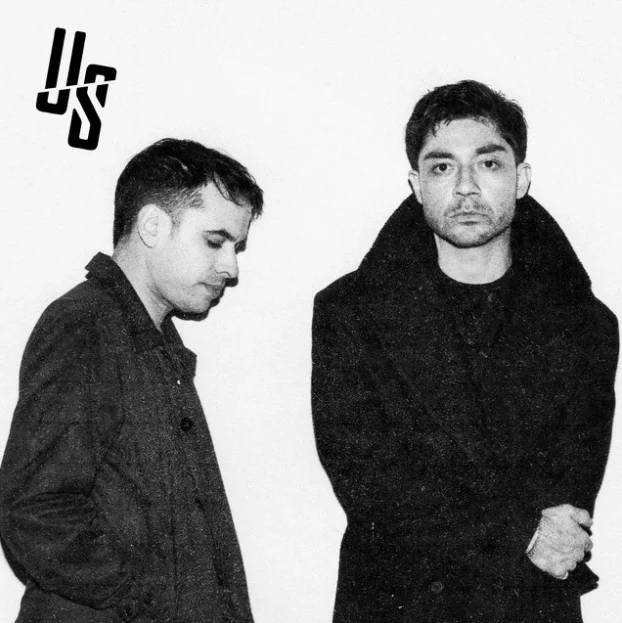
The conventional blueprint for electronic music duo collaboration often involves a digital dance of file transfers, with stems shared across the cloud and compositional ideas exchanged via text messages, culminating in a track assembled asynchronously. This method, while efficient and prevalent, typically lacks the spontaneous synergy that can arise from direct, in-person creation. Unterström, the electronic music duo, initially forged their early sound through this very digital conduit. Their first two singles, meticulously crafted through remote collaboration, achieved a notable level of success, garnering support from prominent figures in the electronic music scene, including Above & Beyond, Armin van Buuren, Ferry Corsten, and Markus Schulz, all of whom integrated these tracks into their celebrated DJ sets. This widespread endorsement underscored the potential of Unterström’s sonic output, even when born from dispersed creative efforts.
However, the genesis of their latest release, a track titled "Fragment," represents a significant departure from their established modus operandi. It is the direct result of the duo deciding to converge their creative energies within the same physical space, a move that imbued the project with a distinct character and a more organic developmental arc. This collaborative session, marked by an absence of rigid schedules or pressing deadlines, became the crucible for "Fragment." The creative environment was Sound Factory, a renowned studio located in Los Angeles. For two days, the members of Unterström eschewed pre-determined plans, instead opting to inhabit the producer’s chairs interchangeably, allowing the evolving sonic landscape of the track to dictate its own completion.
The Unfolding of "Fragment": A Deliberate Departure from Convention
The production process for "Fragment" was characterized by a continuous state of flux. Far from a linear progression towards a defined endpoint, the track resisted definitive closure. Each time the arrangement seemed to reach a natural conclusion, the duo reportedly "pried it back open," meticulously adding further layers, textures, and harmonic explorations. This iterative approach suggests a deep engagement with the creative process, a willingness to explore tangents and push the boundaries of the initial concept. This deliberate act of deconstruction and reconstruction is central to understanding the unique identity of "Fragment."
The inherent nature of club music often relies on predictability and familiarity. Tracks are frequently built around eight-bar loops, delivering easily digestible rhythmic patterns and recognizable builds that culminate in anticipated drops. This structure allows for a communal experience, where dancers can anticipate sonic shifts and move in unison, guided by the predictable ebb and flow of the music. "Fragment," however, stands in stark contrast to this convention. The article posits that the track “moves forward and mostly doesn’t look back,” signifying a composition that prioritizes evolution over repetition. It is described as a piece that “keeps mutating instead of settling into a pattern.”
This deliberate rejection of conventional club music structures suggests a more intricate and perhaps more intellectually engaging listening experience. The foundational elements of "Fragment" are rooted in techno and melodic house, genres known for their rhythmic drive and emotional depth. However, the article implies that "the rest is a carefully constructed friction," hinting at the introduction of unexpected elements, dissonances, or complex sonic interactions that disrupt the expected flow and create a dynamic tension. This friction is not presented as a flaw, but rather as a deliberate artistic choice, contributing to the track’s unique character and its departure from the predictable.
From Booth Secret to Public Release: A Strategic Shift
Intriguingly, "Fragment" was not initially conceived for public consumption. The track began its life as a "live ID," a term used within DJ culture to describe an unreleased track that a DJ might play during their sets as a special offering or a preview of upcoming material. These "live IDs" are often closely guarded secrets, intended to create moments of exclusivity and excitement within a performance. The implication here is that "Fragment" was so potent and captivating in its raw, in-progress state that it was deemed worthy of being held back, a weapon in the DJ’s arsenal.
However, the decision to release "Fragment" signifies a recognition of its broader artistic merit. The track has transcended its initial purpose as a DJ tool and has been deemed ready for wider dissemination. This transition from a private performance asset to a publicly available release suggests a confidence in its enduring appeal and its ability to resonate with listeners beyond the confines of a live set. The journey of "Fragment" from a remote digital collaboration to a spontaneous studio creation, and finally to a public release, encapsulates a significant evolution in Unterström’s artistic trajectory.
Supporting Data and Contextual Analysis
While the provided text focuses on the creative process, a deeper understanding of "Fragment’s" significance can be informed by broader trends in electronic music production and distribution. The shift towards remote collaboration, accelerated by technological advancements and global events, has democratized music creation to an unprecedented degree. However, it has also highlighted the enduring value of in-person studio sessions for fostering a specific kind of creative chemistry. The success of Unterström’s earlier, remotely produced tracks suggests a strong foundation in digital workflow. The decision to subsequently engage in a face-to-face session for "Fragment" can be interpreted as a deliberate effort to explore a different facet of their creative potential, one that prioritizes immediate feedback, shared intuition, and the serendipity of spontaneous interaction.
The mention of established electronic music luminaries supporting Unterström’s earlier work is a crucial piece of supporting data. Artists like Above & Beyond, Armin van Buuren, Ferry Corsten, and Markus Schulz are titans of the trance and progressive house scenes. Their endorsement is not merely a casual nod of approval; it signifies that Unterström’s music possesses the quality, emotional resonance, and technical proficiency to stand alongside the productions of globally recognized artists. This level of validation from industry leaders provides a strong indication of Unterström’s talent and their potential for sustained success. The fact that their initial, remotely produced tracks were embraced by such discerning ears suggests that their core musical ideas are exceptionally strong, capable of transcending the method of their creation.

The description of "Fragment" as a departure from conventional club music structures, with its emphasis on mutation and forward momentum rather than predictable loops and drops, aligns with a broader artistic movement within electronic music. Many contemporary producers are experimenting with more complex song structures, longer developmental arcs, and a greater degree of sonic unpredictability. This trend can be seen as a response to an increasingly saturated market, where artists are seeking to differentiate themselves through innovative sound design and unconventional arrangements. The "carefully constructed friction" mentioned in the article could refer to elements such as polyrhythms, shifting time signatures, or the juxtaposition of disparate sonic textures, all of which can create a more engaging and challenging listening experience for the audience.
Timeline and Chronology of "Fragment’s" Development
While the article doesn’t provide exact dates, a logical chronology can be inferred:
-
Phase 1: Remote Collaboration and Early Success: Unterström creates their first two singles asynchronously, leveraging file transfers and digital communication. These tracks gain traction and are supported by prominent DJs like Above & Beyond, Armin van Buuren, Ferry Corsten, and Markus Schulz. This phase establishes Unterström’s presence and reputation in the electronic music scene.
-
Phase 2: The "Fragment" Inception (Live ID): During this period, "Fragment" originates as a concept or an early sketch, intended exclusively for live DJ sets. It functions as an unreleased "weapon" in their DJ performances, building anticipation and serving as a special offering to audiences.
-
Phase 3: The Sound Factory Session: The pivotal moment for "Fragment" occurs when the duo decides to work together in person at Sound Factory in Los Angeles. This two-day, schedule-free session marks a deliberate shift towards a more organic and collaborative creation process. The track undergoes extensive refinement and development during this period, resisting easy completion.
-
Phase 4: Evolution and Public Release: The track, initially conceived as a private DJ tool, is ultimately deemed ready for public release. This signifies a transition from a performance-specific element to a fully realized musical composition ready for wider consumption by fans and the broader music community.
Potential Reactions and Implications
The decision by Unterström to release "Fragment" could elicit several reactions from their fanbase and the wider electronic music community. For those who have followed their previous work, particularly the tracks supported by major artists, there will likely be anticipation and excitement to hear what this new, in-person collaboration has yielded. The inherent experimental nature of "Fragment," as described, may appeal to listeners who appreciate artists pushing sonic boundaries and deviating from established norms.
From an industry perspective, the journey of "Fragment" from a live ID to a public release highlights the evolving landscape of music promotion and artist development. The fact that a track initially conceived for exclusive DJ sets has been deemed worthy of a wider release suggests a growing appreciation for the artistic integrity and sonic innovation of such tracks. This could encourage other artists to be more open about their creative processes and to leverage their live sets as incubators for new material.
The success of "Fragment" could also have implications for Unterström’s future creative direction. Having experienced the benefits of in-person collaboration, they may choose to incorporate more such sessions into their workflow. This could lead to a more diverse and dynamic discography, blending the efficiency of digital collaboration with the spontaneity and depth of studio synergy. Furthermore, the positive reception of a track that challenges conventional club music structures could empower them to continue experimenting with more complex and avant-garde sonic territories, potentially influencing the broader trends within their chosen genres.
In conclusion, "Fragment" represents more than just a new release for Unterström; it signifies a deliberate artistic evolution. By moving from a remotely assembled sound to a collaboratively crafted experience, and by transforming a secret DJ tool into a public offering, the duo has demonstrated a commitment to pushing their creative boundaries and delivering a unique sonic statement. The track’s unconventional structure and its genesis story offer a compelling narrative within the contemporary electronic music scene, highlighting the enduring power of collaboration and the pursuit of artistic innovation.
