

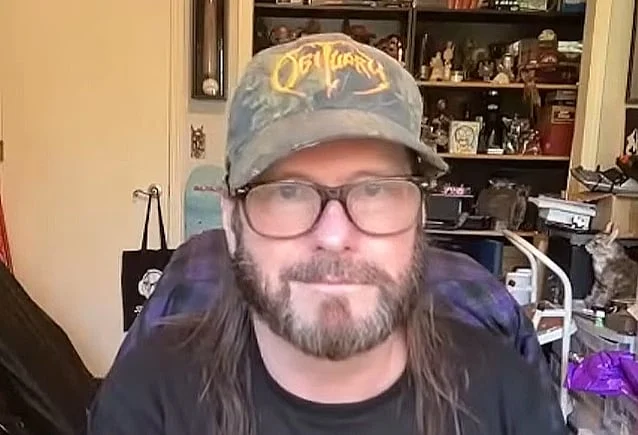
In a recent candid interview on The Mistress Carrie Podcast, Gary Holt, the formidable guitarist for thrash metal legends EXODUS and SLAYER, expressed a profound indifference towards the Rock And Roll Hall Of Fame, vehemently questioning its legitimacy and the criteria it employs for induction. His remarks come as heavy metal’s ongoing struggle for broader recognition within the institution continues to be a point of contention among artists and fans alike. Holt’s commentary not only highlights his personal disdain for the Hall but also serves as a microcosm of a larger debate concerning genre representation and historical accuracy in musical accolades.
Holt’s direct and unvarnished assessment of the Rock And Roll Hall Of Fame was triggered by a question regarding the importance of an act like IRON MAIDEN’s induction for the respect of the heavy metal genre. His response was unequivocal: "I personally couldn’t give a shit, ’cause the Rock And Roll Hall Of Fame is fucking lame." He elaborated on his sentiment, pointing to what he perceives as a biased selection process. "The obvious ones get in, and if you had, like, three Motown hits, you’re pretty much guaranteed of getting in," Holt stated, drawing a stark contrast between mainstream pop success and the enduring impact of pioneering rock and metal acts.
He then presented specific examples to underscore his critique. "IRON MAIDEN’s still selling out stadiums, and isn’t in," he noted, emphasizing the disconnect between commercial success and Hall of Fame recognition for established metal bands. Holt also lamented the exclusion of THIN LIZZY, a band he credits with pioneering twin guitar harmonies and producing legendary albums, despite significant sales. The guitarist’s frustration intensified as he juxtaposed these omissions with inclusions he deemed questionable. "Missy Elliott is in. Fucking N.W.A.’s in, and they wrote vile anti-police rhetoric. And I think they had, like, what? Two records? How do they fucking get in? And THIN LIZZY’s not in there."
Holt’s grievances extended to the perceived inequities in how different genres and artists are treated. He pointed out that JUDAS PRIEST, another seminal metal band, was inducted "through a back door," implying a less-than-straightforward process. The absence of MOTÖRHEAD from the Hall was also highlighted as a significant oversight. For Holt, the entire system appears to be a "popularity contest," citing the eventual, albeit delayed, induction of KISS as a grudging acknowledgment rather than a proactive recognition of their monumental influence.
Further solidifying his disinterest, Holt revealed that he has never visited the Rock And Roll Hall Of Fame museum in Cleveland, Ohio, and has "no desire to go." He likened the appeal of such a visit to the superficiality of seeking out stars on the Hollywood Walk of Fame, concluding, "I just fucking— I don’t care." This sentiment reflects a deeper disillusionment with the institution’s perceived value and relevance to the artists who have, in his view, truly shaped the landscape of popular music.
A History of Exclusion and Frustration
The sentiment expressed by Gary Holt is not an isolated one. His SLAYER bandmate, Kerry King, has also been a vocal critic of the Rock And Roll Hall Of Fame, sharing his own experiences and frustrations. In a previous interview with Billboard Brasil, King was questioned about SLAYER’s eventual induction. His initial reaction, laced with sarcasm, was, "Pfft. Why don’t we see them there yet? [Laughs] I don’t know. We’ve never even been on the nomination list, so I don’t know what they’re waiting for. How many more decades do we have to play? Forty years isn’t enough, I guess. I don’t know. We’ll see."
King’s perspective on the Hall of Fame museum itself offers a contrasting view to Holt’s. While Holt expressed no interest, King shared that he visited the museum approximately 10 to 15 years prior, expecting a brief visit that ultimately stretched to four hours due to the quality of the exhibits. "I went to [the Rock And Roll Hall Of Fame museum in Cleveland, Ohio] thinking I’d be there for, like, a half hour, and I didn’t go there until like 10, 15 years ago. It took me a while. And I’m, like, ‘Eh, I’ll go check it out for maybe like a half hour.’ I was in there for four hours, and there’s a lot of cool stuff in there." This indicates that while the museum’s content may be impressive, it does not translate into a belief in the institution’s credibility or fairness.
Reflecting on the potential of SLAYER being inducted, King articulated that it wouldn’t be the ultimate validation of his career. However, he acknowledged a personal desire, particularly for his parents. "Is it something that’s gonna make my career complete? Absolutely not. If my parents were alive, I would be stoked if we got in there so I can say, ‘Hey, mom, I’m in the Rock And Roll Hall Of Fame.’ That would be cool." This statement reveals a nuanced view, where personal sentiment and family recognition hold weight, even amidst broader skepticism of the process.
King also candidly addressed the perceived flaws in the voting and election procedures. "To me, if it happens, it happens, ’cause, obviously, the voting process and the election process is a little faulty. So we’ll see. And me here badmouthing it probably isn’t helping my situation. [Laughs]" He concluded that if SLAYER were nominated and elected by fans, it would be an honorable recognition of their impact: "If we ever got nominated and the fans elected us to be in, it would be honorable, for sure, just to say these kids from Los Angeles got together and ripped the world a new fucking asshole."
When the interviewer highlighted SLAYER’s profound influence on heavy metal, King acknowledged their role within a broader movement. "Yeah, we were part of it, for sure. There was a movement of a lot of bands, ironically at the same time, that came out and then put thrash on the map." This recognition of a collective effort, rather than solely individual achievement, is a recurring theme in discussions about metal’s place in music history.
King’s past interviews have consistently echoed these sentiments. In a 2015 conversation with VH1.com, he reiterated his surprise and admiration for the Rock Hall museum. "I went there last year, and I was surprisingly amazed. It was awesome… I thought I’d be there for, like, 40 minutes. I spent three and a half hours. The stuff in there is amazing. It’s way cooler than I ever imagined it would have been. It is really cool." However, this positive experience with the museum did not diminish his critical view of the induction process.
He openly expressed his desire for SLAYER’s induction, noting the long wait for other influential metal bands. "I’m not making a ploy to get in, but it makes me think, ‘Man, I hope they call my name one of these days.’ I think it took them a long time to get METALLICA in there. But METALLICA basically opens door for us, because when you think of metal who do you think of next from that generation? Of course there’s [BLACK] SABBATH, [JUDAS] PRIEST and [IRON] MAIDEN, without question. But for the ‘Big Four,’ you think METALLICA… We’ve always been number two on the ‘Big Four’ shows. So come on, Rock Hall, give us that call! We’re ready! I’ll donate some change or something. [Laughs]" This statement underscores the perception that foundational metal bands paved the way for subsequent generations, yet the recognition remains elusive for many.
A Pattern of Delayed Recognition for Hard Rock and Metal
The Rock And Roll Hall Of Fame’s eligibility criteria stipulate that artists are considered 25 years after the release of their first album or single. However, the history of the institution is replete with examples of iconic hard rock and metal bands whose inductions have been significantly delayed, sparking ongoing debate about the Hall’s commitment to representing the full spectrum of rock music. Bands like IRON MAIDEN and MOTÖRHEAD, despite decades of influence and commercial success, have yet to be honored. This stands in contrast to the induction of GUNS N’ ROSES, who were inducted in their first year of eligibility, highlighting a perceived disparity in how different subgenres are prioritized.
The timeline of inductions for prominent metal acts reveals a consistent pattern of delayed recognition. BLACK SABBATH, widely considered the godfathers of heavy metal, were not inducted until 2006, a full 37 years after the release of their debut album in 1969. METALLICA, another cornerstone of the genre, followed three years later in 2009, 25 years after their first single. While these inductions were celebrated, they also underscored the long wait for bands that had already achieved legendary status.
The Rock Hall’s own rules acknowledge that beyond the 25-year mark, "other criteria include the influence and significance of the artists’ contributions to the development and perpetuation of rock ‘n’ roll." This clause, however, is notoriously open to interpretation, leading to accusations that the selection committee operates with subjective biases that often overlook the profound impact of heavier musical styles.
Further illustrating this point is the case of KISS. Eligible since 1999, the band did not receive their first nomination until 2009 and were ultimately inducted in 2014, a 15-year gap from their initial eligibility. Similarly, DEEP PURPLE, eligible since 1993, had to wait until 2016 for their induction. These prolonged waits suggest a reluctance on the part of the Hall to embrace artists whose sound and aesthetic might have been considered outside the traditional purview of "rock and roll" in its formative years.
JUDAS PRIEST, another pivotal force in the evolution of heavy metal, finally entered the Hall of Fame in 2022, receiving the Musical Excellence Award. This category, initially known as the "Sidemen" category, is designated for artists who have demonstrated originality and influence that have dramatically impacted music. While an honor, the award signifies a different tier of recognition than the main induction, and its application to such a foundational band again raises questions about the primary induction process.
The issue of posthumous inductions also remains a sensitive topic. When asked in a 2017 interview with Loudwire about the absence of MOTÖRHEAD’s Lemmy Kilmister and Ronnie James Dio from the Rock Hall, Kerry King drew a parallel to a similar situation in the NFL Hall of Fame. "It’s kind of like Ken Stabler not going to the NFL Hall Of Fame. They waited till he died, when he can’t enjoy it, and that’s a super bummer." He lauded Dio as "one of my top two singers of all time, and he was a good friend and a good dude," and noted that "Lemmy, the career speaks for itself."
King reiterated his confusion regarding the Hall’s operational framework. "The Rock And Roll Hall Of Fame, it’s weird. It’s private. It’s privately owned, so people from the music industry don’t vote. I don’t actually know how it works." Despite his critique of the process, he maintained his positive assessment of the museum itself: "I’ve been there and it’s very cool, I’ve gotta tell you that. I went there, like two, three years ago, and I expected to hang out for, like, an hour, and I was there for, like, three hours. It was very cool. If you ever get around Cleveland, check it out. But that being said, I still don’t understand the process. But yes, [Lemmy and Ronnie James Dio] motherfucking should be in the Hall Of Fame."
The Broader Impact and Implications
The persistent criticisms from prominent figures like Gary Holt and Kerry King raise significant questions about the Rock And Roll Hall Of Fame’s role in preserving and celebrating music history. The institution is widely regarded as the premier honor in popular music, and its perceived biases can influence public perception and the historical narrative of music genres.
The exclusion of influential metal bands not only deprives these artists of a significant accolade but also perpetuates a perception that heavy metal, despite its global reach and enduring cultural impact, has not been fully embraced by the mainstream music establishment. This can have ripple effects on how the genre is taught in academic settings, discussed in popular media, and understood by younger generations of music enthusiasts.
Moreover, the subjective nature of the "influence and significance" criteria allows for a degree of gatekeeping, where certain sounds and aesthetics are implicitly favored over others. This can lead to a homogenization of the narrative, potentially overlooking the diverse and often revolutionary contributions of artists who pushed the boundaries of what was considered acceptable or commercially viable.
The continuous debate surrounding the Rock And Roll Hall Of Fame and its inductees underscores the importance of critical discourse in music history. As artists like Holt and King continue to voice their dissent, they contribute to a larger conversation about who gets to define musical legacy and what criteria should be used to honor artistic achievement. The ongoing exclusion of key figures in hard rock and metal serves as a potent reminder that the recognition of musical merit is not always a straightforward or equitable process, leaving many fans and musicians questioning the true meaning of such accolades. The continued success of bands like IRON MAIDEN and SLAYER, evidenced by their ability to sell out stadiums and maintain dedicated fan bases, suggests that artistic integrity and widespread acclaim can transcend institutional recognition, offering a powerful testament to their enduring legacy independent of the Rock And Roll Hall Of Fame.
