

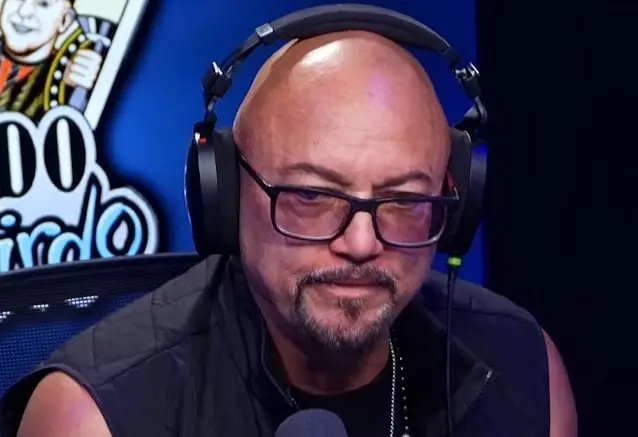
Geoff Tate, the former frontman of the iconic progressive metal band Queensrÿche, recently sat down with Chris Kael, bassist for Five Finger Death Punch, and comedian Craig Gass on the "Beardo & Weirdo" podcast. During the candid conversation, Tate delved into the highly publicized and acrimonious split from his bandmates in 2012, seeking to clarify public perception surrounding the events that led to his departure and the subsequent legal battles. A central point of discussion was the notorious incident in Brazil, which had been widely reported to involve physical altercations and the alleged use of a knife.
Dispelling the "Knives" Narrative: A Business Dissolution, Not a Brawl
Tate directly addressed the rumors of physical violence, particularly those alleging he assaulted guitarist Michael Wilton and brandished a knife at then-drummer Scott Rockenfield during an April 2012 performance in São Paulo. "There were no knives," Tate emphatically stated, as transcribed by BLABBERMOUTH.NET. He explained that the proliferation of such stories was a byproduct of the intense legal proceedings that followed his ousting. "There were so many stories," he recalled. "Because you remember at the time, there was a lawsuit going on. And what do people do in lawsuits? They throw out all kinds of information to sort of influence the case, so to speak. So, I mean, there were all kinds of stories floating around that were ridiculous."
The singer characterized the breakup as a "corporate dissolution of a band that was incorporated and a business entity." According to Tate, the process was governed by established business protocols, involving necessary financial settlements and adherence to legal frameworks for dissolving a company. "And there are rules that you have to follow when you are dissolving the corporation, and there’s payoffs that need to be made to the people involved, and it’s just a matter of business. You have to do that. It wasn’t, like, ‘You’re not measuring up,’ and blah, blah, blah, blah. It was nothing like that. It was simply the end of it, the end of the business, so to speak." This perspective positions the split not as a personal betrayal or artistic falling out, but as a pragmatic, albeit difficult, business transaction.
A Detailed Account of the Brazil Confrontation: Fired Family and a Moment of Lost Control
Tate provided a more detailed recollection of the events leading up to the São Paulo incident, a narrative that contrasts sharply with the more sensationalized reports. Over 14 years prior to his podcast appearance, Tate had already begun to refute the knife accusation in an interview with Rolling Stone magazine. He described a pre-show meeting in the dressing room where he confronted rumors of his impending replacement. "I asked them straight up about the rumors I’d heard about them replacing me," Tate told Rolling Stone. "I was definitely concerned about this. What kind of plan was that? Was it serious? What was going on?"
The band members, he claimed, denied any plans to replace him but then revealed they had dismissed their manager, office assistant, and a guitar tech – all of whom were Tate’s family members. "I asked them, ‘Why is this happening?’" Tate recounted. "They really couldn’t give me a straight answer, or any kind of answer that made any kind of business sense. It seemed like a personal vendetta against me." The meeting concluded, and the band prepared for the show.
It was backstage, as Tate was getting ready to perform, that the situation escalated. According to his account, Scott Rockenfield approached him, smirked, and allegedly said, "We just fired your whole family, and you’re next." This statement, Tate explained, triggered an explosive reaction. "I just lost it," he admitted. "I tried to punch him. I don’t think I landed a punch before somebody grabbed me and hauled me to the side. On my way, I managed to shove Wilton, and really, that was it." He emphasized that he quickly regained composure and that the band completed the performance without further incident. Crucially, he reiterated, "no knife involved. You can’t really get knives into foreign countries."
The Legal Fallout: Lawsuits and Counter-Suits
The conflict between Tate and the remaining Queensrÿche members, Eddie Jackson (bass), Michael Wilton (guitar), and Scott Rockenfield (drums), quickly spilled into the public and legal arenas. In June 2012, Tate and his wife, Susan Tate, who had served as the band’s former manager, initiated legal action. Their lawsuit sought to secure the rights to the Queensrÿche name, proposing that Tate would compensate Jackson, Wilton, and Rockenfield for their respective shares in the band’s business entities.
In response, Wilton, Rockenfield, and Jackson filed a countersuit. This legal maneuver accused Geoff Tate of "creative obstruction" and "violent behavior." Susan Tate was also targeted, with allegations of "questionable business practices." This dual legal offensive painted a starkly different picture of the band’s internal dynamics and the reasons behind the split, setting the stage for a protracted and deeply public dispute.
Divergent Perspectives on the Rocklahoma Incident
The Brazil incident was not the only point of contention. The controversial performance at the Rocklahoma festival, where Tate allegedly told the audience, "You guys suck," also became a focal point in the legal battle and public discourse. Michael Wilton, in a 2013 interview with Guitar World magazine, described the mounting tension within the band, identifying the Brazil incident and the Rocklahoma performance as critical turning points.
"There was a lot of tension in the band at that time, and the turning point obviously was when we did those shows and things just kind of blew up," Wilton stated. He elaborated on the impact of these events, noting the increased need for security and the strained atmosphere backstage. "The Brazil assault, the Rocklahoma situation – it just got worse and worse and worse. We just said, ‘Wow, we can’t go on like this. Is this how we’re gonna live? Do we have to hire extra security? Do we have to stay in our little area on the stage?’ It just wasn’t working. You don’t even know. The stress it puts on you, the stress it puts on your family, the stress it puts on your fans… It was unbearable."
Geoff Tate, however, offered a counter-narrative regarding the Rocklahoma incident. In a sworn "reply declaration" filed in support of his motion for a preliminary injunction against Wilton, Jackson, and Rockenfield (which aimed to prevent them from using the Queensrÿche name), Tate argued that his comment was taken out of context. He claimed his intention was not to insult the audience but to "motivate or excite them."
"The show was the Rocklahoma festival in Oklahoma. It was May and it was very hot and Queensrÿche played late in the evening, after the fans had watched a number of other bands," Tate explained in his declaration. "Queensrÿche opened its set with a number of its older songs, including ‘Damaged’, ‘I Don’t Believe In Love’ and ‘Hit The Black’. The fans were unresponsive. This has happened before and, when it occurs, as the singer, I try to motivate them to get more involved in the show. That is what I did here. I was trying to motivate them, inspire them to get more excited about the show."
Tate’s Reconciliation of His Actions and the Band’s Intentions
In the same legal declaration, Tate revisited the Brazil incident, acknowledging his regret for losing his temper. "I previously discussed the incident in Brazil when I punched Rockenfield and slapped Wilton," he wrote. "I was upset at the time, having been told that my wife and daughter had been fired, and that I was ‘next.’ I regret losing my temper and my actions are not acceptable." He sought to portray this as an uncharacteristic lapse in judgment, describing himself as "even keeled, mild-mannered and easy-going" and not prone to aggressive behavior.
He reiterated that the altercation was brief and did not continue during or after the show. Furthermore, he contended that Rockenfield and Wilton were neither injured nor fearful of him, citing their continued performances with him in subsequent shows and their lack of legal action. Tate asserted his belief that the Brazil incident was not the true cause of his dismissal. Instead, he suggested, "I think instead that they had planned on firing me since at least February 2012 and that this incident just gave them an excuse to do it." This perspective frames the events as a pre-meditated ousting, with the physical altercation serving as a convenient justification.
Settlement and the Future of Queensrÿche
After a legal battle spanning nearly two years, a settlement was reached between Geoff Tate and the remaining members of Queensrÿche in April 2014. The agreement brought an end to the litigation over the band’s name. Under the terms of the settlement, Michael Wilton, Scott Rockenfield, and Eddie Jackson retained the right to continue performing as Queensrÿche. In return, Geoff Tate was granted the exclusive right to perform the band’s seminal albums, "Operation: Mindcrime" and "Operation: Mindcrime II," in their entirety live.
This resolution allowed both factions to move forward, albeit with separate identities. The Queensrÿche led by Wilton, Rockenfield, and Jackson subsequently recruited vocalist Todd La Torre. This iteration of the band has released four studio albums: "Queensrÿche" (2013), "Condition Hüman" (2015), "The Verdict" (2019), and "Digital Noise Alliance" (2022), establishing a new chapter for the iconic progressive metal act. Geoff Tate, meanwhile, has continued to tour and perform, often focusing on the classic Queensrÿche material, particularly the concept albums that defined a significant part of the band’s legacy. The settlement effectively bifurcated the Queensrÿche identity, leaving fans with two distinct avenues to experience the band’s music, a testament to the enduring legacy and the complex history of one of metal’s most influential groups.
