

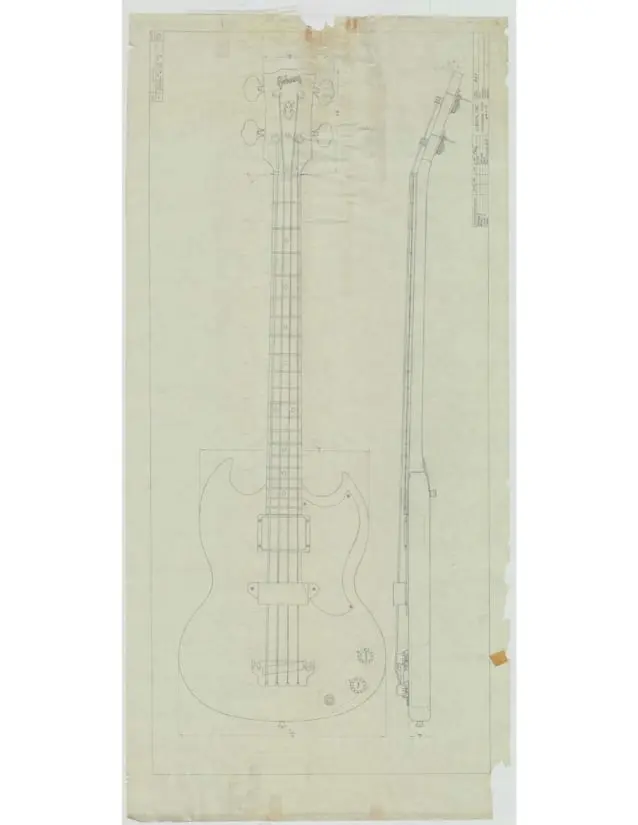
Gibson, the iconic American instrument manufacturer, has embarked on an extraordinary mission to help legendary bassist, songwriter, author, and Guns N’ Roses founding member Duff McKagan recover a pivotal piece of music history: his very first bass guitar, a Cherry Red Gibson EB-0. This deeply personal instrument, which accompanied McKagan through his formative years in Seattle and the nascent stages of his illustrious career, mysteriously vanished in the mid-1980s and has not been seen since, leaving a significant void in his personal and professional narrative.
The quest to locate the missing Gibson EB-0 is being highlighted in a new video interview, where McKagan eloquently recounts his early life in Seattle, Washington, a city steeped in musical innovation. Surrounded by the eclectic record collections of his older siblings, and drawing inspiration from a diverse spectrum of artists ranging from the raw energy of local garage-rock pioneers The Sonics to the burgeoning punk movement, a young McKagan harbored an unshakeable ambition to carve out his own space in the world of music. This dream, fueled by youthful determination and modest earnings, soon materialized with the purchase of a pre-owned Gibson EB-0.
"I had a paper route," McKagan reminisces, painting a vivid picture of his early dedication. "My first bass was a Gibson Cherry EB-0. I paid for it in installments with my paper route money." This modest transaction marked the beginning of a profound connection between the aspiring musician and his instrument. The bass became an extension of himself, a constant companion through his formative experiences. It was the instrument through which he absorbed the aggressive ethos of punk rock, the catalyst for forming his first bands, the silent partner in his early songwriting endeavors, and the faithful accomplice as he navigated the vibrant, often gritty, underground music scene of Seattle.
Crucially, the Cherry Red Gibson EB-0 was the vessel through which McKagan first encountered the seismic influence of Black Flag. The band’s seminal album, "My War," resonated deeply with him during a challenging period, providing solace and a sense of validation. "That ‘My War’ record got me through shit," McKagan states, underscoring the profound emotional impact of the music. The act of affixing a Black Flag sticker to his cherished bass became a personal declaration of allegiance and a tangible link to the powerful sound that was shaping his artistic identity.
Long before the roar of sold-out arenas and the dizzying heights of global superstardom, the Cherry Red Gibson EB-0 was present for every crucial step: the sweat-drenched rehearsals in cramped spaces, the exhilarating local gigs that honed his craft, and the embryonic chapters of McKagan’s burgeoning career. More than just an instrument, it was a foundational tool that helped sculpt the aggressive attack and melodic sensibility that would later become defining characteristics of Guns N’ Roses’ groundbreaking sound. "The approach that I still have; it was born from playing that thing," McKagan elaborates, attesting to the instrument’s enduring legacy on his playing style. "I learned to attack playing that bass."
The Tumultuous Transition to Los Angeles and the Bass’s Disappearance
In 1984, the relentless pursuit of his musical aspirations led McKagan to relocate to Los Angeles, a city synonymous with dreams and the often-harsh realities of the music industry. He brought his trusted Gibson EB-0 with him, a tangible link to his past and a symbol of his unwavering commitment. However, amidst the maelstrom of forming Guns N’ Roses, the groundbreaking recording sessions for "Appetite for Destruction," and the band’s meteoric ascent from the intimate clubs of Hollywood to the colossal stages of international fame, the instrument inexplicably disappeared.
"My Gibson EB-0 was my bass at home," McKagan explains, recounting the period with a sense of bewilderment. "In that whole chaos of us getting signed and making ‘Appetite,’ the bass just disappeared. It must have gotten misplaced. Hollywood was nuts at that point. I have no idea what happened to it." The frenetic pace of the band’s early success, characterized by constant touring, recording, and the sheer intensity of their rise, created an environment where personal possessions could easily become casualties of the whirlwind.
A Legacy Instrument and Its Historical Significance
Now, nearly four decades after its disappearance, Gibson is leveraging its global reach and deep connection to musical heritage to assist McKagan in this unique quest. The Cherry Red Gibson EB-0 is not merely a personal memento; it represents a significant artifact in the history of rock music. Introduced by Gibson in 1959 and famously redesigned in 1961 with its distinctive SG-style body shape, the EB-0 became an iconic instrument of its era. Its compact yet powerful design and distinctive tone made it a favored choice among numerous influential bassists, including Jack Bruce of Cream, Dennis Dunaway of Alice Cooper, and Mike Watt of Minutemen, further solidifying its place in the annals of musical history.
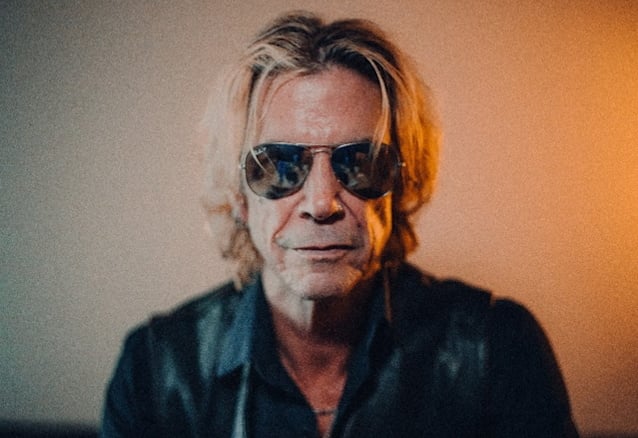
For McKagan, the Cherry Red Gibson EB-0 embodies a transformative period. It was the instrument that facilitated his immersion into punk rock, the silent witness to the formation of his earliest bands, the sonic partner as he opened for the legendary Black Flag, and the crucible in which he forged the innovative musical approach that continues to define his career. "The approach that I still have to music to this day, it was born from playing that thing," McKagan reiterates. "It turned imagination into possibility. It made me think, ‘This is possible.’" This sentiment speaks volumes about the empowering nature of finding the right instrument at the right time, a catalyst for unlocking creative potential.
The Worldwide Search for a Cherished Bass
The call to action has been issued: the worldwide search for the Cherry Red Gibson EB-0 has officially begun. Whether the bass is currently residing in a private collection, adorning a wall as a decorative piece, stored away in forgotten boxes, or resting unnoticed beneath a bed, Gibson and Duff McKagan are appealing to the global music community for any information that could lead to its recovery. The instrument represents not just a physical object, but a tangible link to the genesis of one of rock’s most celebrated careers, a symbol of raw talent and unwavering ambition.
Individuals who possess any information regarding Duff McKagan’s original Gibson EB-0 Bass are strongly encouraged to visit duffmckagan.com or send an email to [email protected] This collaborative effort aims to leverage the vast network of musicians, collectors, and fans to bring this cherished piece of musical history back to its rightful owner.
Duff McKagan: A Multifaceted Rock Icon
Duff McKagan’s journey from the vibrant punk scene of Seattle to global rock superstardom is a testament to his enduring talent and relentless drive. Born and raised in Seattle, he immersed himself in the city’s burgeoning punk rock landscape during the late 1970s and early 1980s. His early musical explorations saw him contributing his skills on bass, guitar, and drums to various local acts, including The Fastbacks and 10 Minute Warning, honing his abilities and developing his distinctive sound.
His relocation to Los Angeles in 1985 proved to be a pivotal moment, leading to his integration into Guns N’ Roses. McKagan’s raw, punk-infused energy injected a unique edge into the band’s blues-rooted hard rock sound. The band’s meteoric rise, propelled by seminal albums such as "Appetite for Destruction" (1987) and the "Use Your Illusion I" and "II" (1991) albums, cemented their status as rock royalty. McKagan’s signature driving, chorus-laden bass tone became an instantly recognizable element of the Guns N’ Roses sound, contributing significantly to their enduring appeal and earning him a prestigious induction into the Rock and Roll Hall of Fame in 2012.
Beyond his foundational role in Guns N’ Roses, McKagan has maintained an impressively prolific and multifaceted musical career. He has stepped into the spotlight as a frontman, guitarist, and vocalist with his own punk-hard rock outfit, Duff McKagan’s Loaded. Furthermore, he co-founded the Grammy-winning supergroup Velvet Revolver, uniting him with fellow Guns N’ Roses alumni Slash and Matt Sorum, alongside vocalist Scott Weiland of Stone Temple Pilots. His extensive discography also includes collaborations with projects such as Neurotic Outsiders and Walking Papers, and he has lent his talents as a sought-after session musician and writer for esteemed artists like Ozzy Osbourne and Iggy Pop. McKagan has also cultivated a successful solo career, releasing critically acclaimed albums including "Believe In Me" (1993), the alt-country-tinged "Tenderness" (2019), and "Lighthouse" (2023). The permanent reunion with Guns N’ Roses in 2016 has seen them embark on record-breaking stadium tours, further solidifying their legendary status.
Beyond the Stage: A Visionary Beyond Music
McKagan’s influence extends far beyond the confines of the music industry. In recent decades, he has reinvented himself as a respected author, astute businessman, and passionate advocate for artist financial literacy and mental health awareness. In a notable demonstration of his intellectual curiosity and entrepreneurial spirit, he enrolled in Seattle University’s Albers School of Business and Economics in the mid-1990s. His literary achievements include penning New York Times bestselling memoirs, further showcasing his ability to connect with audiences on a deeply personal level. His insightful writing has also graced the pages of prominent publications such as Seattle Weekly, Playboy, and ESPN, where he has contributed regular columns on music, sports, and finance. This diverse range of accomplishments has firmly established him as one of rock music’s most resilient, versatile, and influential figures.
The search for Duff McKagan’s Cherry Red Gibson EB-0 is more than just a recovery mission; it is an invitation to explore the roots of a musical legend and to celebrate the instruments that shape artists and inspire generations. The outcome of this global endeavor remains to be seen, but the story itself underscores the profound and lasting impact of a single instrument on the trajectory of a career and the landscape of popular music.
