

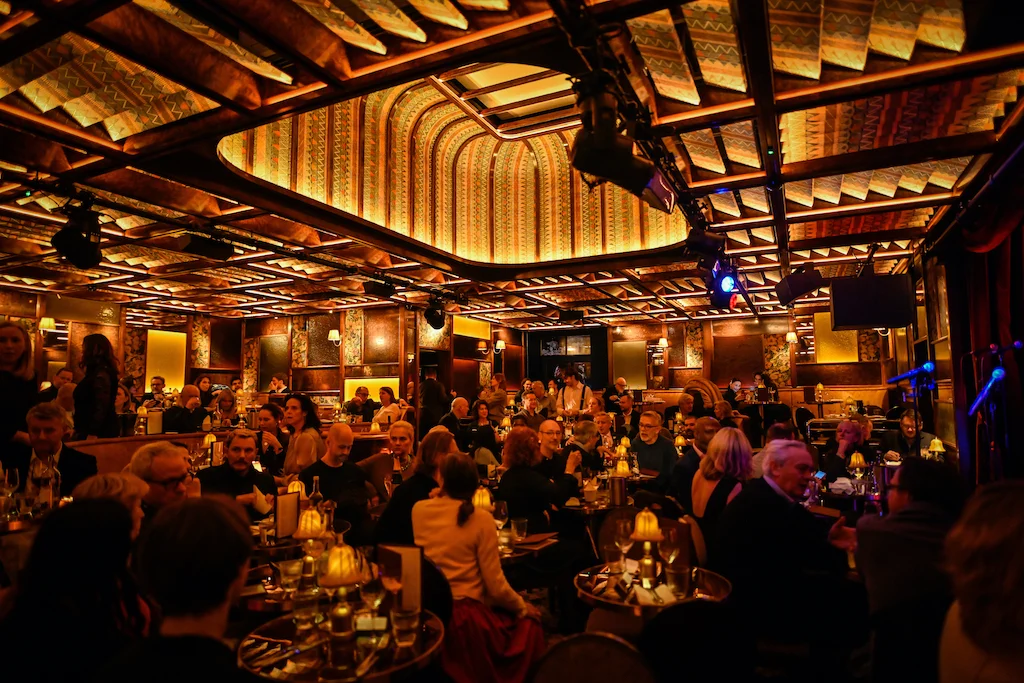
The historic Ronnie Scott’s Jazz Club, an institution that has anchored London’s Soho district since its founding in 1959, has completed a significant technological and structural overhaul of its secondary performance space, Upstairs at Ronnie’s. This renovation, centered on a sophisticated lighting installation featuring the GLP X5 Series, marks a transition for the room from a traditional bar area into a premier, high-specification live music venue. By integrating eight Impression X5 Compact, six X5 Atom, and six X5 Dot Wash fixtures, the club has established a versatile environment capable of hosting a diverse range of performances—from quiet acoustic sets to high-energy soul and funk residencies—without compromising the venue’s signature intimate atmosphere.
The Evolution of a Soho Landmark
Since its inception by saxophonists Ronnie Scott and Pete King, the club has hosted virtually every major figure in jazz history, including Miles Davis, Count Basie, and Sarah Vaughan, while also serving as a launchpad for contemporary icons like Amy Winehouse. While the main basement club remains the primary draw for international headliners, the first-floor space, known as Upstairs at Ronnie’s, has long served as a vital secondary room. Historically, this space functioned primarily as a bar with a low-ceilinged floor where musicians performed at ground level.
The 2026 renovation sought to elevate the Upstairs experience to match the professional standards of the main room. This involved a comprehensive architectural intervention: the ceiling was raised to improve sightlines and air volume, a dedicated stage was installed to house a permanent grand piano, and the room’s acoustics were undergo rigorous optimization. To complement these physical changes, the venue required a lighting system that could provide broadcast-quality illumination within the constraints of a low-profile, architecturally sensitive environment.
Technical Vision and Leadership
The project was led by Charlie Dale, who has served as the Technical Manager at Ronnie Scott’s for 15 years. Dale’s tenure has been defined by a commitment to bridging the gap between world-class musical performances and the technical infrastructure supporting them. Following his successful oversight of the main club’s lighting modernization in 2018—which included the implementation of dedicated lighting technicians for every performance—Dale was tasked with designing a system for the Upstairs space that could handle a grueling schedule of nightly shows.
To execute the vision, the club partnered with Steve Myers Ltd, a firm specializing in performance venue infrastructure. The company was responsible for the end-to-end planning, including the complex wiring and structural mounting required for the new lighting rig. The selection of GLP (German Light Products) as the primary fixture provider was a strategic decision based on the manufacturer’s reputation for color accuracy and silent operation, both of which were non-negotiable requirements for a jazz environment.
Overcoming Architectural and Acoustic Constraints
Designing a lighting rig for Upstairs at Ronnie’s presented unique engineering challenges. The primary obstacle was the limited trim height; even after raising the ceiling, the distance between the fixtures and the performers remained minimal. This proximity required luminaires that were not only compact in physical size but also capable of producing a high-quality beam that would not appear overly aggressive or pixelated at short distances.
Furthermore, the "intimate" nature of the room meant that any mechanical noise from cooling fans would be immediately audible during solo piano or acoustic bass performances. Standard moving heads often generate a decibel level that can interfere with sensitive microphones or the audience’s auditory experience. Consequently, Dale required a solution that offered the flexibility of moving lights with the silence of static fixtures.
GLP addressed these concerns through custom engineering. For the eight Impression X5 Compact units installed at the venue, GLP modified the internal fan management system to ensure that noise levels remained significantly below the standard factory specifications. This customization allowed the club to utilize high-output moving lights in a setting where such technology is traditionally deemed too intrusive.
A Deep Dive into the GLP X5 Series Installation
The core of the new lighting design is the GLP X5 Series, which utilizes a specialized RGBL (Red, Green, Blue, Lime) LED source. This color engine is critical for jazz venues because it allows for a higher Color Rendering Index (CRI) and better reproduction of skin tones compared to traditional RGBW systems.
The Impression X5 Compact
The eight Impression X5 Compact units serve as the workhorses of the rig. Each fixture contains seven 40-watt RGBL LEDs, producing a total output of 3,980 lumens. With a zoom range of 3.6° to 66°, these units provide the versatility needed to transition from a tight, dramatic spotlight on a vocalist to a wide, saturated wash for a full band. The inclusion of the iQ.Gamut color calibration system ensures that all eight units maintain perfectly consistent color temperatures, a feature essential for the venue’s increasingly frequent video recording and live-streaming sessions.
The X5 Atom
Complementing the moving heads are six X5 Atom fixtures. These are utilized as compact, static wash lights positioned directly above the stage. Despite their small footprint, each Atom features a 40-watt RGBL LED and a motorized zoom. By housing the power supply externally, GLP reduced the fixture’s weight and size, allowing it to disappear into the room’s architecture while providing essential fill light for the performers.
The X5 Dot Wash
To round out the system, six X5 Dot Wash units were installed. Comparable in size to a standard MR16 "Birdie" fixture, the Dot Wash is the smallest member of the X5 family. It provides a manual twist-zoom (16° to 68°) and 550 lumens of output. These units are strategically placed to highlight specific architectural features and provide subtle accents that enhance the three-dimensional feel of the stage without adding bulk to the rig.
Chronology of the Reopening
The planning phase for the Upstairs renovation began in earnest in 2025, following several years of incremental upgrades. Throughout the development process, GLP’s Key Account Manager, Paul Fielder, worked closely with Charlie Dale to validate the equipment choices. Demo units were provided and tested during actual live shows in the main club to ensure they could withstand the rigors of the "Ronnie’s schedule"—which often sees the lights running for over 10 hours a day.
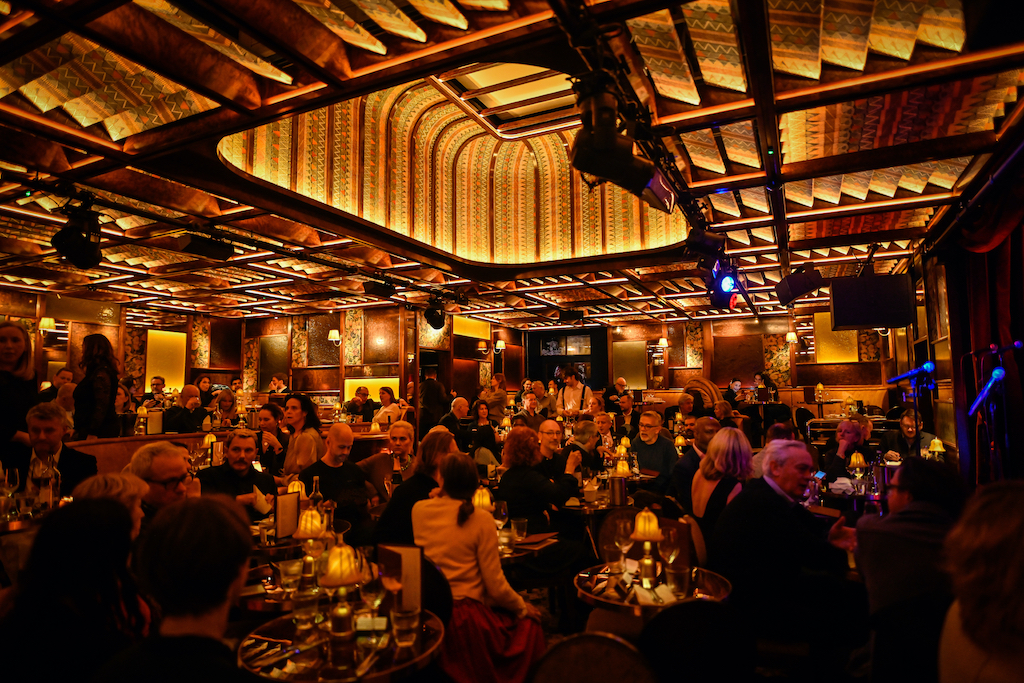
The installation was completed in early 2026, leading to the official grand reopening on February 4, 2026. The inaugural performance featured acclaimed vocalist Vula Malinga and her band, with a surprise guest appearance by the singer-songwriter Nao. The evening served as a successful proof-of-concept for the new system, demonstrating its ability to handle high-energy soul-pop while maintaining the sophisticated visual aesthetic associated with the Ronnie Scott’s brand.
Operational Impact and Broader Implications
Since the reopening, Upstairs at Ronnie’s has moved to a high-density programming model. The venue now hosts two main shows per evening, followed by "Late Late Sets" on Thursdays, Fridays, and Saturdays. Additionally, the space hosts a weekly Vocal Jazz Jam on Wednesdays and matinee concerts on Sunday afternoons.
The reliability and ease of use of the GLP system have allowed the venue to maintain this schedule with high efficiency. One of the key advantages cited by the technical team is the pixel-mapping capability of the X5 Compact. This allows lighting designers to create dynamic movement and "shimmer" effects through the LED pixels themselves, rather than relying on physical pan and tilt movements. This prolongs the mechanical life of the fixtures and provides a more subtle visual texture that suits the jazz genre.
The feedback from the industry has been overwhelmingly positive. Musicians have noted the improvement in stage visibility and the natural quality of the light, while long-time patrons have praised the room’s transformation into a "world-class" listening environment.
Analysis: The Future of Intimate Venues
The investment in the GLP X5 Series at Ronnie Scott’s reflects a broader trend in the live entertainment industry: the "professionalization" of intimate spaces. As audiences increasingly seek high-fidelity experiences in smaller settings, venues are finding that they must invest in top-tier technology to remain competitive.
The success of the Upstairs at Ronnie’s project demonstrates that high-end moving light technology is no longer the exclusive domain of arenas and large theaters. Through custom modifications and intelligent product selection, historic venues can integrate modern LED technology without losing the "soul" of their space. By choosing a unified ecosystem like the GLP X5 Series, Ronnie Scott’s has ensured color consistency across its entire rig, simplified its maintenance cycle, and future-proofed its first-floor stage for years to come.
As Charlie Dale observed following the opening, the priority remains the music. The technology is not there to distract, but to "appropriately reflect and emphasize the talent of the musicians on stage." With this new installation, Ronnie Scott’s continues to uphold its legacy as a sanctuary for jazz, ensuring that every note played in the Soho night is accompanied by light of equal caliber.
