

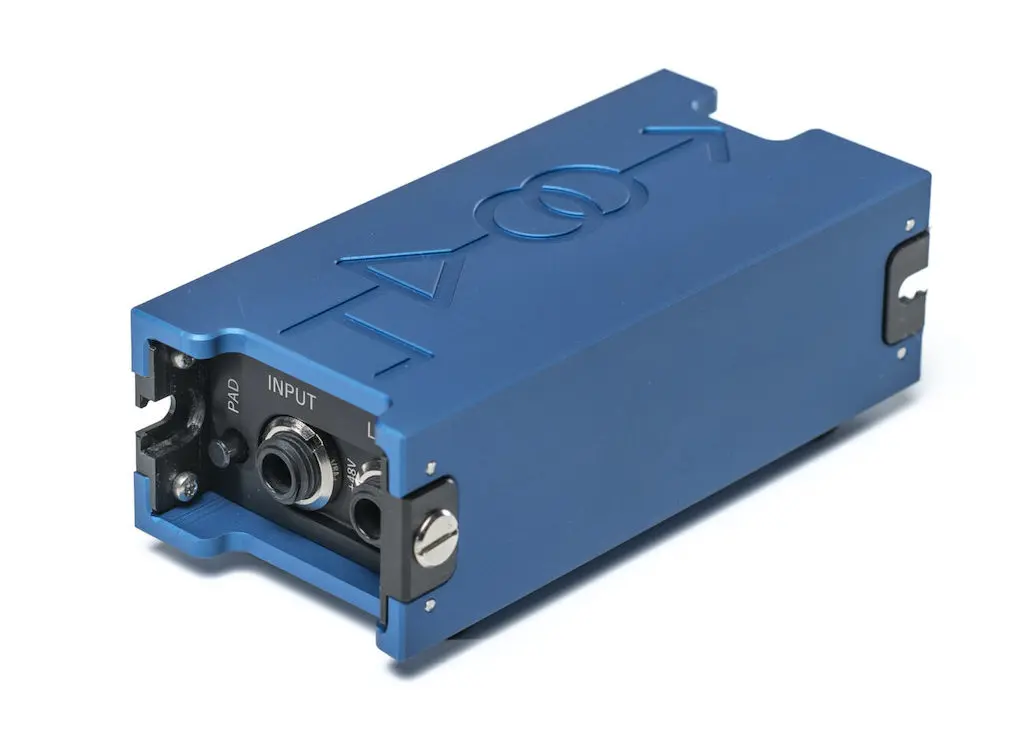
The professional audio landscape is witnessing a significant entry from the German engineering sector as Horst Sitte Audio, a Dresden-based development team, announces the launch of its new line of high-end DI and ISO boxes. Designed specifically for the rigorous demands of professional PA systems, touring, and studio environments, the product range represents a synthesis of boutique audio electronics and heavy-duty mechanical engineering. The company has officially opened its direct-to-consumer sales channel via its dedicated webshop, marking a transition from specialized development to a broader market presence.
Behind the Horst Sitte Audio brand is a partnership that combines decades of niche expertise. The technical foundation of the products is spearheaded by Matthias Schmidt, an audio electronics expert widely recognized in the synthesizer community as the developer behind Curetronic modular systems. His electronic designs are complemented by the mechanical engineering prowess of Dipl.-Ing. David Kajcsos, the owner of Horst Sitte Sondermaschinenbau. Both founders bring over 20 years of practical experience as live sound engineers, a background that has clearly influenced the utilitarian and robust nature of the hardware. This duality of expertise—electronic precision and mechanical durability—forms the core of the brand’s value proposition in a market often divided between delicate high-end studio gear and rugged but lower-fidelity stage equipment.
Technical Foundations and Component Selection
The hallmark of the Horst Sitte Audio range is its uncompromising selection of internal components. In an industry where cost-cutting often leads to the use of generic transformers, the Dresden team has opted for premium Lundahl audio transformers featuring MU-metal cores. MU-metal, a nickel-iron soft ferromagnetic alloy with very high permeability, is essential for providing superior magnetic shielding, ensuring that the signal remains untainted by external electromagnetic interference—a common hazard in complex stage environments and densely packed server racks.
In addition to the Lundahl transformers, the units utilize industry-standard Neutrik connectors, known for their reliability and mechanical longevity. The internal circuitry features high-grade Nichicon capacitors and E-Switch components, ensuring that the signal path maintains its integrity over years of heavy use. This focus on premium components is not merely a matter of prestige but a technical necessity for achieving the high headroom and low noise floor required by modern digital and analog hybrid workflows.
The mechanical construction of the boxes is equally noteworthy. Eschewing the thin sheet metal typical of many commercial DI boxes, Horst Sitte Audio utilizes aluminum square tubing with a 4 mm wall thickness. This design choice provides an exceptional strength-to-weight ratio and ensures that the internal electronics are protected from the physical stresses of touring. Furthermore, the housing features an overhanging edge designed to protect switches and sockets from accidental impacts during setup or transport. One of the more innovative features is the tool-less connection system, which allows multiple boxes to be physically joined together, facilitating organized cable management and stable positioning on stage or in the studio.
The Product Portfolio: Active and Passive Solutions
The initial launch includes four distinct models categorized into active and passive DI boxes, alongside specialized isolation tools. Each model is tailored to specific use cases, ranging from high-impedance instrument inputs to complex line-level signal distribution.
Active DI Boxes
The Active DI series is led by the "Reference" model, which incorporates the Lundahl LL2811 transformer. This unit is characterized by its remarkable level stability, boasting a +28 dBu capacity. Such high headroom is particularly beneficial when interfacing with high-output active instruments or professional line-level sources, preventing the harmonic distortion that often plagues lesser active DI units. The "Reference" is positioned as the flagship tool for high-end touring and studio recording.
Complementing the Reference model is the "Pro" variant. While maintaining the same build quality and mechanical features, the Pro version utilizes a transformer from Oxford Electrical Products (OEP). This provides a professional-grade alternative that balances performance with a different sonic characteristic, offering engineers a choice depending on the specific requirements of the source material.
Passive DI Boxes
For applications where phantom power is unavailable or galvanic isolation is the primary concern, the company offers the "Essential" and "Extended" passive DI boxes. Both models are built around the Lundahl LL1935 transformer. The "Extended" version distinguishes itself by offering a ratio switch, allowing the engineer to toggle between 10:1 and 5:1 transformation ratios. This feature provides greater flexibility in matching the impedance and signal level of various instruments, from vintage passive pickups to modern keyboards, ensuring optimal signal transfer to the microphone preamplifier.
Specialized ISO-Boxen and Signal Management
Beyond standard DI functionality, Horst Sitte Audio has introduced specialized isolation solutions designed to solve the common grounding and interference issues found in complex audio networks.
The "Isolator Line Box" utilizes the Lundahl LL1588 transformer to provide complete galvanic isolation for line-level signals. This is an essential tool for long cable runs, such as those between a mixing console and power amplifiers, or for distributing signals to delay lines and 4-point sound reinforcement systems. The unit is equipped with a versatile array of I/O, including XLR inputs, XLR/jack combo sockets, and both jack and XLR outputs, making it a "Swiss Army knife" for system engineers.
For more complex routing, the "Isolator Box 2ch KL" offers a two-channel solution powered by dual Lundahl LL1532 transformers. This unit is designed for bidirectional operation and can serve multiple roles: a signal splitter, a signal merger, or an impedance matching tool (offering 1:2 or 2:1 ratios). Its ability to handle stereo signals or two independent mono signals with high fidelity makes it a critical component for integrating unbalanced consumer gear into professional balanced environments without introducing hum or noise.
Accessories and Integration
Understanding that individual DI boxes can become cluttered in a professional environment, the company has developed a dedicated 19-inch rack system. This 2U rack can house up to nine individual boxes, providing a clean and secure way to integrate these tools into a standard touring rack or studio furniture. This modularity allows rental houses and engineers to customize their signal chain according to the specific needs of a production. Additionally, a pedalboard adapter is available, catering to musicians who wish to incorporate these high-end DI solutions directly into their instrument setups.
Market Context and Direct Sales Strategy
The decision to move to a direct sales model via horstsitteaudio.com represents a strategic shift in the professional audio market. By bypassing traditional retail distribution, Horst Sitte Audio aims to maintain a competitive price point while using components that are typically found in much more expensive, custom-built hardware. The regular prices for the units range from €180 to €235 (excluding VAT), placing them in the premium segment of the market but still accessible to professional freelancers and mid-sized rental companies.
To celebrate the launch of the webshop, the company has announced a 20 percent discount on all products through December 31, 2026. This aggressive introductory pricing is likely intended to encourage early adoption and generate real-world feedback from the field.

Implications for the Professional Audio Industry
The entry of Horst Sitte Audio into the market comes at a time when the live sound industry is increasingly focused on signal purity and reliability. As digital mixing consoles and high-fidelity PA systems become the standard, the "analog front end"—the point where the instrument meets the system—has become a critical bottleneck. High-quality DI boxes are no longer viewed as mere utility items but as essential components of the signal chain that can significantly impact the final sound.
Industry analysts suggest that the "Made in Germany" pedigree, combined with the founders’ practical experience, will likely resonate with European rental companies and broadcast engineers who prioritize long-term durability and technical transparency. The use of Lundahl transformers, in particular, positions the brand as a serious contender against established high-end manufacturers like Radial Engineering or Rupert Neve Designs.
Furthermore, the focus on mechanical modularity and tool-less connectivity addresses a common frustration among stage technicians regarding the organization of loose DI boxes on stage. By providing a rugged, interconnectable housing, Horst Sitte Audio is addressing a logistical problem as much as a technical one.
Chronology of Development
The path to this launch has been several years in the making. While the official shop launch is dated November 2026, the prototypes of these units have reportedly been in field testing for over two years across various European festivals and club tours. This period of "beta testing" allowed Schmidt and Kajcsos to refine the mechanical design, leading to the decision to use the 4mm aluminum housing after observing the wear and tear on standard units in touring environments.
Following the initial design phase, the team focused on securing a reliable supply chain for the high-end components, specifically the Lundahl transformers from Sweden. The finalization of the 19-inch rack system and the pedalboard adapters marked the completion of the initial product ecosystem, leading to the official commercial rollout this month.
As the professional audio industry continues to evolve, the arrival of Horst Sitte Audio serves as a reminder that there is still significant room for innovation in fundamental analog tools. By combining traditional transformer technology with modern mechanical engineering and a direct-to-market business model, the Dresden-based team is poised to become a staple in professional signal management. For further information or technical inquiries, the company can be reached at [email protected], and the full range of products is now available for international shipping via their online platform.
