

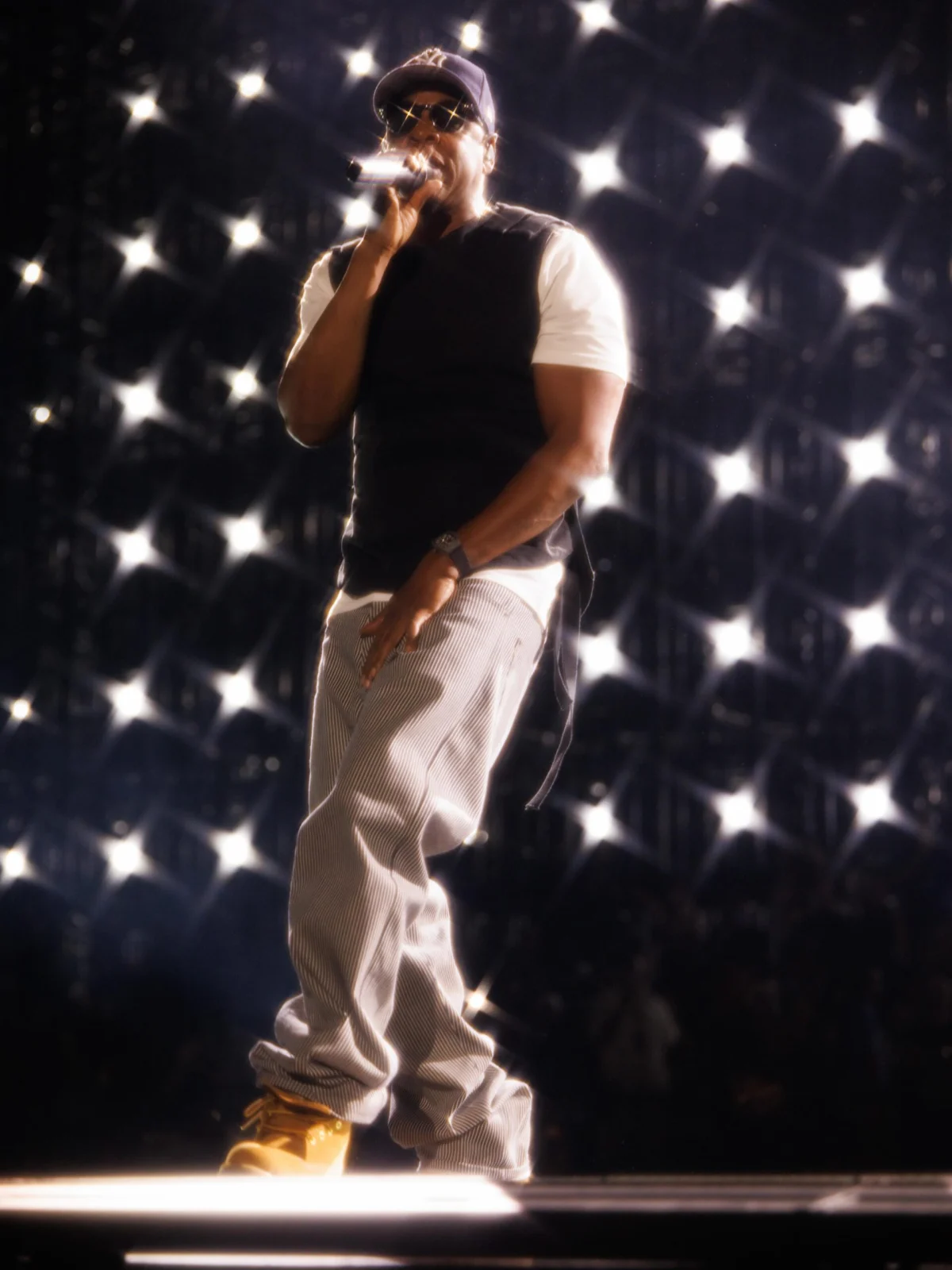
Jay-Z marked the 25th anniversary of his seminal album, The Blueprint, with a series of record-breaking performances at Yankee Stadium, culminating in a spectacular event that blended nostalgic celebration with a profound examination of his multifaceted career and enduring cultural influence. The concert, held on a recent Saturday, served as a powerful testament to the album’s enduring legacy and the artist’s remarkable journey from Brooklyn streets to global mogul status. The palpable excitement among attendees was evident, as many, including one concertgoer who momentarily forgot to record the historic performance of Eminem joining Jay-Z for "Renegade," were swept into a wave of fanboy euphoria, illustrating the album’s deep, personal impact on generations.
The Blueprint: A Quarter-Century of Influence
Released on September 11, 2001, The Blueprint arrived at a pivotal moment in American history, coinciding with the tragic events of 9/11. Despite the somber backdrop, the album quickly established itself as a monumental work, redefining the sound of mainstream hip-hop with its soulful samples, introspective lyrics, and Jay-Z’s refined lyrical prowess. Critics hailed it as an instant classic, and its commercial success was undeniable, debuting at number one on the Billboard 200 and eventually achieving multi-platinum status. Beyond sales, The Blueprint is widely credited for influencing a generation of artists and solidifying Jay-Z’s position as one of hip-hop’s most important voices. Its sound, largely driven by then-emerging producers Kanye West, Just Blaze, and Bink!, ushered in a new era of opulent, sample-heavy production that became a hallmark of early 2000s hip-hop.
For many, The Blueprint was more than just an album; it was a soundtrack to their youth. What was once "music for YNs" (youngsters) has now matured into "music for the Uncs" (uncles) and even grandfathers, reflecting the aging demographic of its original fanbase. However, the recent anniversary concert also demonstrated that the album continues to resonate with new listeners, suggesting its themes and sound transcend generational divides. Its enduring relevance, even as the world that created it has dramatically outgrown its initial context, speaks volumes about its timeless appeal.
The Yankee Stadium Spectacle: A Masterclass in Fan Service and Production
Jay-Z’s return to Yankee Stadium for the second of three record-breaking performances was a grand affair. The production was nothing short of cinematic, featuring a mini helicopter traversing the skyline, which, if equipped with a camera, would have captured a sea of navy blue Yankee fitted caps, a visual symbol of hip-hop culture. Backed by a formidable 10-member live band and an 18-person string section, the concert elevated The Blueprint‘s raw, soulful sound to orchestral heights. The meticulous arrangement, described by attendees as having the "refined maximalism of a Super Bowl halftime performance played out in a cathedral," transformed familiar tracks into grand, immersive experiences.
Moments like the gleaming piano keys twinkling beneath Jay-Z’s vocals on "Song Cry" created an emotional resonance that brought the lyrics to life, while the tropical drum spurts on "All I Need" evoked imagery of a performance mid-safari. This stark contrast to his 25-year-old MTV Unplugged show for the album, where everything was stripped down, underscored the evolution of his artistry and presentation. This time, "everything was plugged in," delivering a maximalist, high-fidelity experience designed to honor the album’s legacy with unparalleled grandeur.
Curated Nostalgia: Guest Appearances and Strategic Adjustments
A hallmark of Jay-Z’s performance was his masterful approach to "fan service," turning potential compromises into artistic opportunities. The most electrifying moment came with the surprise appearance of Eminem, emerging from the shadows of a Yankee Stadium tunnel. Their joint performance of "Renegade" — a track famously featuring Eminem’s potent guest verse — sent shockwaves through the crowd. This was amplified moments later when Eminem launched into his iconic anthem, "Lose Yourself," a rare live treat that transcended his recent album output, making it feel like "2001 again" for many in the audience.
Jay-Z also deftly navigated past rivalries and contemporary controversies. While performing "Takeover," a track infamous for its lyrical jabs at Nas, Jay-Z strategically played only the instrumental, acknowledging the squashed beef of two decades. This was particularly poignant given Nas’s appearance the night before at the Reasonable Doubt 30th-anniversary celebration. Similarly, sensitive to recent public discourse, Jay-Z replaced his verse from "Niggas in Paris" with his "Big Pimpin’" verse, subtly sidestepping any potential fallout from past comments made by Kanye West regarding his twins. The inclusion of hip-hop legend Slick Rick, who performed "La Di Da Di" after Jay-Z’s rendition of "The Ruler’s Back," further solidified the curated nostalgia, celebrating foundational figures of the genre.
Jay-Z’s Enduring Presence and the Age Reversal
At 56, Jay-Z, or HOV as he is affectionately known, demonstrated remarkable vocal stamina, largely matching his phonetic athleticism. While occasionally omitting the final word of a bar, a minor stylistic choice observed even in younger artists like Kendrick Lamar, his stage presence was commanding. Aesthetically, his bulletproof vest and newly revealed low-cut Caesar haircut evoked the aura of Michael Jordan in his prime, specifically ’88 MJ. Striding beneath royal blue stage lights, he appeared to be rapping within a "shapeshifting prism of his own album cover," creating a visual metaphor for his own evolving universe.
The concert fostered a communal atmosphere, bridging generational gaps. What was once music enjoyed separately by different age groups became a shared experience, demonstrating hip-hop’s power to create common ground in an increasingly fragmented world. As Jay-Z allowed the crowd to finish a bar at the end of "Song Cry," the collective roar underscored a universal agreement on a deeply ingrained cultural sentiment: "You don’t ever, under any circumstances, get a nigga back like that."
From Hustler to Mogul: Jay-Z’s Evolving Empire
Jay-Z’s journey from a street hustler to a billionaire business magnate is as much a part of his legend as his music. His lyrics on The Blueprint, such as "raping Def Jam till I’m the hundred million man," reflect an ambition that has been far surpassed. In 2026, he has long since severed ties with Def Jam, and Forbes estimates his net worth at a staggering $2.8 billion, solidifying his status as the richest musician in the world. This immense wealth and influence represent a profound transformation from the world he navigated three decades ago.
His business ventures have often been met with a mix of praise and scrutiny. Fourteen years after advocating for better compensation for underpaid rap artists, Jay-Z co-purchased TIDAL, positioning it as a platform to empower artists with a rightful share of their profits. However, after several prominent artists expressed dissatisfaction with its impact on their earnings, he sold his majority stake for $302 million six years later, highlighting the complexities of his entrepreneurial endeavors.
Navigating Social and Political Landscapes
Beyond his business acumen, Jay-Z has increasingly engaged with social justice issues, often leading to a public perception that oscillates between altruist and corporate collaborator. Months after actively helping Meek Mill gain release from prison and navigate a troubling probation cycle, Jay-Z co-founded REFORM Alliance, an organization dedicated to criminal justice reform. This initiative has achieved tangible results, including helping pass a law in New York that curbs jail sentences for technical parole violations and, through his Team ROC organization, exposing corruption within notorious Mississippi prisons.
However, his actions have also drawn criticism. Eighteen years after rapping about representing the seat where Rosa Parks sat, Jay-Z dismissed Colin Kaepernick’s National Anthem protest, stating that society was "past kneeling." He subsequently partnered with the NFL to lead their Super Bowl Halftime Show programming, a move that coincided with the league’s collective blackballing of Kaepernick, leading to significant backlash from activists and fans. More recently, a controversial Target vinyl deal sparked protests from Black activists and customers over the brand’s rollback of DEI initiatives. Jay-Z’s response, delivered in an early freestyle at the Reasonable Doubt show, where he name-dropped Kaepernick while touting his own extensive charity work, highlighted the ongoing tension between his public image, his corporate affiliations, and his stated commitment to social change. As he rapped on "The Ruler’s Back," "HOV don’t run, HOV stand and fight / HOV a soldier, HOV been fighting all his life," yet the nature of his battles has undeniably shifted.
The Changing Face of New York and Hip-Hop
The transformation of Jay-Z mirrors the evolution of his hometown. The "bodega" he once rapped about standing in front of on "Renegade" might now be a Sweetgreen or a Chipotle, depending on the Brooklyn neighborhood. His involvement in the Barclays Center project, which he famously lent his image to help launch, controversially led to the displacement of hundreds of long-term residents. These shifts underscore the complex relationship between urban development, celebrity influence, and community impact, placing Jay-Z at the center of ongoing debates about gentrification and economic disparity.
He is no longer merely a "crack to riches" story; he wields the power to influence national discourse and policy. His journey reflects the valorization of Black capitalism that defined his emergence. While he once called himself "the voice of the young people," to many, he now embodies the voice of a seasoned, powerful generation – the Uncs, former YNs, and current grandfathers who grew up with The Blueprint. Jay-Z, like the world around him, especially New York, has undergone profound change. Humming along to "Never Change" at the concert, one is reminded that he is not just a product of these changes, but an active architect of them. His legacy is continuously being written, judged by a rubric he is still creating, defining what it means to embody an old era while simultaneously being the most powerful force of a new one.
