

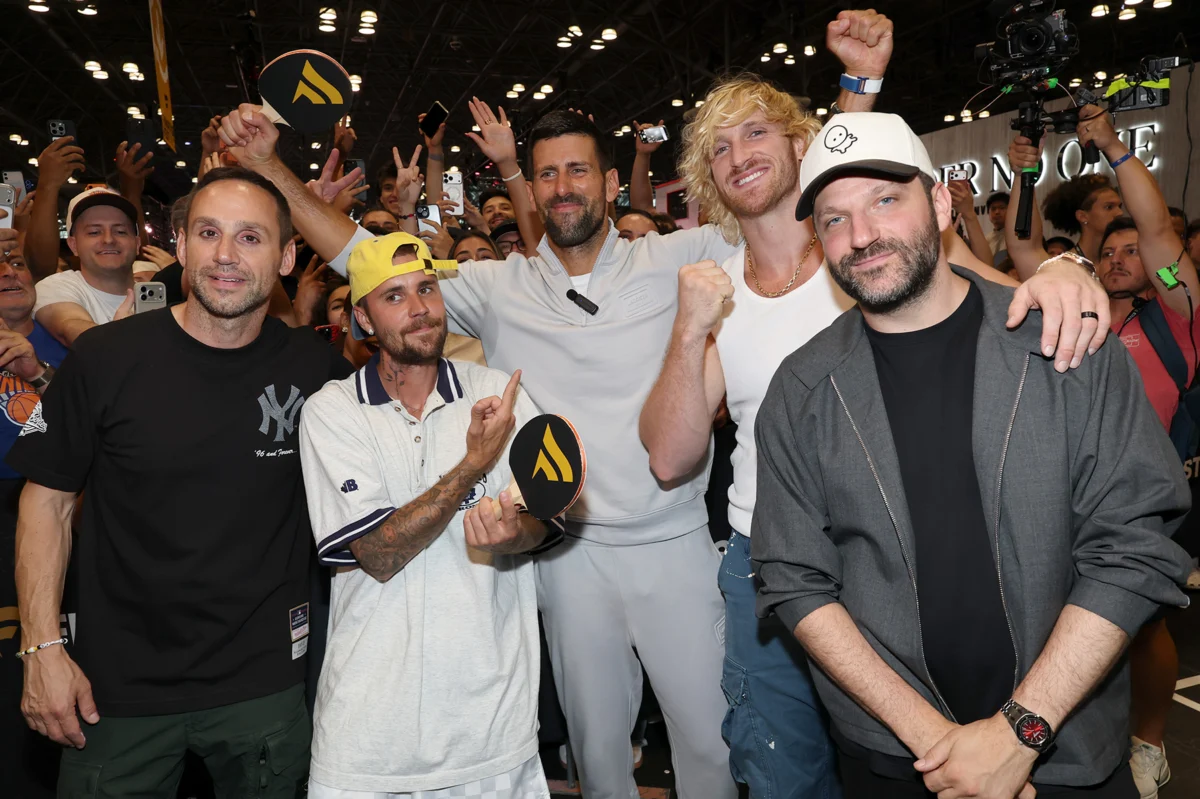
Pop superstar Justin Bieber, more frequently found making headlines for his chart-topping music, showcased an unexpected athletic prowess over the past weekend, emerging victorious at the inaugural Fanatics Games held as part of Fanatics Fest NYC 2026. The "SWAG" singer not only outmaneuvered a formidable roster of professional athletes but also made a significant philanthropic gesture, donating his entire $1 million prize to charity and deserving fans. This remarkable achievement, which saw Bieber conquer legends from the NFL, NBA, and professional tennis, has since been immortalized in the ESPN special, "Fanatics Fest: All Access," offering viewers an unprecedented glimpse into the convergence of sports, entertainment, and celebrity philanthropy.
The Genesis of a Crossover Spectacle: Fanatics Fest NYC 2026
The Fanatics Fest NYC 2026, held at the sprawling Jacob Javits Center on July 18, 2026, was envisioned as a groundbreaking event designed to bridge the worlds of sports fandom, collectibles, and pop culture. Orchestrated by Fanatics, the global digital sports platform led by CEO Michael Rubin, the festival aimed to create an immersive experience for enthusiasts, offering everything from exclusive merchandise drops and athlete meet-and-greets to interactive exhibits and, most notably, the high-stakes Fanatics Games. The event marked a significant evolution in Fanatics’ strategy, expanding beyond e-commerce into experiential marketing and content creation, aiming to solidify its position at the heart of sports culture. The presence of high-profile figures like Rubin, along with entertainment moguls such as Michael Ratner and social media personalities like Logan Paul, underscored the multifaceted appeal and ambitious scope of the festival.
The Fanatics Games, positioned as the centerpiece of the festival, were crafted to be a multi-disciplinary athletic competition, pitting celebrities and athletes against each other in a series of challenges designed to test diverse skill sets. The goal was not merely to crown a winner but to generate viral moments, foster camaraderie between disparate fields, and engage a broad audience, including both die-hard sports fans and followers of pop culture icons. The selection of participants, a blend of athletic legends, rising stars, and cultural figures, reflected this ambition, promising an unpredictable and entertaining spectacle.
Bieber’s Unforeseen Ascent to Athletic Dominance
Before the Fanatics Games, Justin Bieber’s athletic reputation was, to put it mildly, not his primary claim to fame. Known globally for his musical talent, extensive discography, and massive fan base, his foray into competitive sports against world-class athletes was met with a mix of curiosity and skepticism. Yet, against all expectations, the pop sensation demonstrated a surprising level of athleticism and competitive spirit that allowed him to systematically overcome some of the most formidable names in contemporary sports.
The lineup Bieber faced was nothing short of legendary. He went head-to-head with and ultimately surpassed figures such as Tom Brady, the undisputed greatest quarterback in NFL history with seven Super Bowl rings; Victor Wembanyama, the towering and phenomenally talented NBA phenom who, by 2026, had likely solidified his status as one of the league’s brightest stars; and Karl-Anthony Towns, a multi-time NBA All-Star known for his versatile scoring and rebounding. His vanquishing of these giants from their respective fields underscored a competitive drive and perhaps an untapped athletic potential that few had anticipated.
Beyond the major league athletes, Bieber also bested other highly skilled competitors. This included Olympic gymnast Jordan Chiles, celebrated for her agility and precision; former NFL tight end Rob Gronkowski, a four-time Super Bowl champion known for his dominant physical play and larger-than-life personality; and Livvy Dunne, the immensely popular LSU gymnast and social media influencer who commands a massive online following. The diversity of the athletic backgrounds of his competitors further highlighted the breadth of Bieber’s surprising capabilities in the multi-event challenge format of the Fanatics Games. Observers and fellow competitors alike expressed astonishment at Bieber’s consistent performance across various physical and skill-based trials, which ultimately secured him the top spot on the overall Fanatics Games leaderboard.
The Ping-Pong Showdown: A Moment of Gracious Defeat
While Bieber dominated the overall competition, one particular encounter provided a memorable moment of lighthearted defeat: a bonus ping-pong match against tennis titan Novak Djokovic. The Serbian professional tennis player, a 24-time Grand Slam winner and one of the most dominant figures in tennis history, presented a different kind of challenge. Before the impromptu match, Bieber, displaying characteristic confidence, declared, "I am a superior ping-pong player. He knows it." This bold assertion set the stage for a highly anticipated, albeit unofficial, face-off.
However, Djokovic, whose hand-eye coordination and strategic prowess are honed through decades at the pinnacle of professional tennis, ultimately had the last laugh. Despite Bieber’s self-assured declaration, the tennis champion demonstrated his own formidable skills with the paddle. Following his victory, a gracious Djokovic remarked, "I must say, I underestimated Justin’s athletic abilities." Bieber, taking the loss in stride and demonstrating admirable sportsmanship, responded, "He got me today, so I gotta give him his flowers." This exchange, captured for the ESPN special, quickly became a highlight, showcasing the competitive yet respectful atmosphere that permeated the Fanatics Games. It provided a humanizing moment, reminding audiences that even a pop icon has his limits, especially when facing a master of precision and strategy like Djokovic. The brief rivalry underscored the spirit of fun and unexpected challenges that made the event so engaging.
A Champion’s Generosity: The $1 Million Philanthropic Gesture
Perhaps the most impactful aspect of Justin Bieber’s victory was not the win itself, but his immediate decision regarding the $1 million grand prize. Instead of pocketing the substantial winnings, Bieber announced his intention to split the entire sum between charity and the event’s fan competitors. This act of profound generosity resonated deeply with attendees and viewers, transforming a celebrity competition into a powerful statement of giving back.
Bieber allocated $500,000 to the 50 fan competitors who had participated in various aspects of Fanatics Fest, granting each individual a substantial $10,000. These fans were likely chosen through a combination of sweepstakes, interactive challenges, or dedicated engagement with the Fanatics brand leading up to the event. For many, this unexpected windfall would be life-changing, offering financial relief, opportunities for investment, or the chance to pursue personal dreams. The direct distribution of funds to fans underscored Fanatics’ commitment to its community and Bieber’s personal dedication to connecting with his supporters in a tangible way.
The remaining $500,000 was pledged to charity. While specific beneficiaries were not immediately disclosed, such high-profile donations typically support well-established organizations focusing on areas like youth development, education, health, or environmental causes. This dual philanthropic approach—benefiting both direct fan engagement and broader societal good—amplified the positive impact of Bieber’s win, aligning with a growing trend among celebrities to leverage their platforms for social responsibility. As Bieber himself reflected in "Fanatics Fest: All Access," "Only at Fanatics Fest do people come together in this way," highlighting the unique community and charitable spirit fostered by the event.
The All-Star Lineup: A Confluence of Sporting Greatness
The Fanatics Games were not just about Justin Bieber; they were a testament to the drawing power of a diverse collection of sporting and cultural icons. The presence of such a high-caliber roster of athletes speaks volumes about the event’s prestige and the allure of participating in a unique, cross-disciplinary competition.
Tom Brady, the aforementioned NFL legend, brought an undeniable gravitas to the competition. His competitive fire, honed over two decades of professional football, was evident throughout the games, even in a different athletic context. His participation underscored the event’s ability to attract figures who rarely step outside their professional domains for such public displays.
From the NBA, Victor Wembanyama represented the future of basketball. His involvement introduced a youthful dynamism and a generational talent, showcasing his athletic versatility beyond the basketball court. Similarly, Karl-Anthony Towns, an established NBA star, contributed to the high level of competition, demonstrating the all-around athletic capabilities often possessed by elite professional athletes.
The world of gymnastics was proudly represented by Jordan Chiles, an Olympic medalist whose discipline, strength, and grace are globally recognized. Her participation highlighted the precision and agility required in the games’ challenges. Rob Gronkowski, another NFL icon, brought his characteristic blend of power and personality, always a crowd-pleaser and a formidable competitor in any physical contest.
Rounding out the diverse cast was Livvy Dunne, a collegiate gymnast whose meteoric rise to social media superstardom has made her a prominent figure at the intersection of sports, branding, and digital influence. Her inclusion reflected Fanatics’ understanding of contemporary fan engagement, recognizing the power of social media personalities in reaching vast, younger demographics. The collective presence of these individuals ensured that the Fanatics Games were a truly star-studded affair, generating significant buzz and broad appeal across various fan bases.
"Fanatics Fest: All Access" on ESPN: Documenting the Phenomenon
The entire spectacle of Fanatics Fest NYC 2026, including the dramatic Fanatics Games and Bieber’s triumphant journey, was meticulously documented for "Fanatics Fest: All Access," now streaming on the ESPN app. The decision by ESPN to broadcast this special underscores the growing recognition of crossover events that merge traditional sports with entertainment and celebrity culture. For ESPN, known as the "Worldwide Leader in Sports," this production represents an expansion of its content offerings, appealing to a broader audience that might not typically tune into conventional sports programming.
The special provided an intimate look at the behind-the-scenes preparations, the competitive interactions between the stars, and the emotional highs and lows of the games. High-quality production values, compelling storytelling, and exclusive interviews likely contributed to an engaging narrative, allowing viewers to experience the festival’s energy from anywhere. The accessibility of the special via the ESPN app also caters to modern viewing habits, emphasizing on-demand content and digital platforms. This strategic partnership between Fanatics and ESPN serves to elevate the profile of both the festival and the digital sports platform, reinforcing Fanatics’ legitimacy as a major player in the sports ecosystem. The trailer for the special, circulated widely across social media and digital channels, effectively teased the excitement and star power, generating anticipation for its release.
Beyond the Game: Implications and Broader Trends
Justin Bieber’s unexpected victory at the Fanatics Games and his subsequent philanthropic act carry significant implications, both for his personal brand and for the broader landscape of sports and entertainment.
For Bieber, this achievement marks a notable diversification of his public persona. While his musical genius remains his core identity, demonstrating prowess in a competitive athletic environment, especially against such formidable opponents, adds a new dimension to his public image. It showcases versatility, a competitive spirit, and a willingness to step outside his comfort zone. Furthermore, his generous donation of the $1 million prize significantly enhances his reputation as a socially conscious celebrity, aligning him with philanthropic efforts and reinforcing a positive public perception. This strategic move could potentially broaden his appeal, attracting new segments of the audience who appreciate sportsmanship and charitable giving.
For Fanatics, the success of the inaugural Fanatics Fest and Games solidifies its position as an innovator in the sports industry. By successfully executing an event that seamlessly blends sports, music, and celebrity culture, Fanatics has demonstrated its capability to create unique experiential platforms. This not only drives brand engagement and merchandise sales but also generates valuable media content, as evidenced by the ESPN special. The event positions Fanatics not just as a retailer but as a curator of sports culture, capable of creating memorable moments that resonate with diverse fan bases. The presence of Michael Rubin, a visionary in sports commerce, at the forefront of this initiative underscores a calculated move to expand the company’s influence beyond its digital marketplace.
More broadly, the Fanatics Games exemplify a growing trend in contemporary culture: the blurring lines between sports, entertainment, and celebrity. Audiences are increasingly drawn to events that offer cross-disciplinary engagement, where their favorite icons from different fields can interact and compete. This phenomenon, fueled by social media and the desire for authentic, unscripted content, suggests a future where such celebrity-athlete crossover events become more commonplace. The event also highlights the increasing importance of philanthropy in high-profile public events. When celebrities and major brands align their initiatives with charitable giving, it amplifies the impact of their platforms, fostering a sense of shared community and social responsibility.
In conclusion, Justin Bieber’s unexpected triumph at the Fanatics Games during Fanatics Fest NYC 2026 was far more than a celebrity publicity stunt. It was a compelling display of competitive spirit, surprising athleticism, and profound generosity, culminating in a $1 million donation to charity and 50 deserving fans. Documented by ESPN, the event underscored Fanatics’ innovative approach to sports engagement and highlighted the dynamic interplay between sports, music, and celebrity culture. As the dust settles on this groundbreaking festival, the reverberations of Bieber’s win and his impactful philanthropy are likely to shape perceptions and inspire similar initiatives for years to come, further cementing the evolving landscape of sports entertainment.
