

Kanye West’s latest musical offering, "Bully," has entered the Billboard 200 chart at number two, a debut that has been met with a complex mix of commercial performance and ongoing public scrutiny. The album generated 152,000 equivalent units in its first week of release, according to data compiled by Billboard. This figure comprises 96,000 units derived from streaming, translating to approximately 98.43 million on-demand official streams, and 56,000 units from traditional album sales.
The chart performance places "Bully" just behind the K-Pop group BTS, whose tenth album, "ARIRANG," secured the number one position for its second consecutive week, accumulating 187,000 equivalent units. BTS’s initial debut was a significant event, with the album earning a remarkable 641,000 units in its opening week.
This debut marks a notable shift in Kanye West’s chart history. "Bully" ends a 21-year streak of number-one solo albums for the artist. It is only the second time in his solo career that an album has not reached the top of the Billboard 200, with his 2004 debut, "The College Dropout," also peaking at number two.
Disputed Sales Figures Emerge
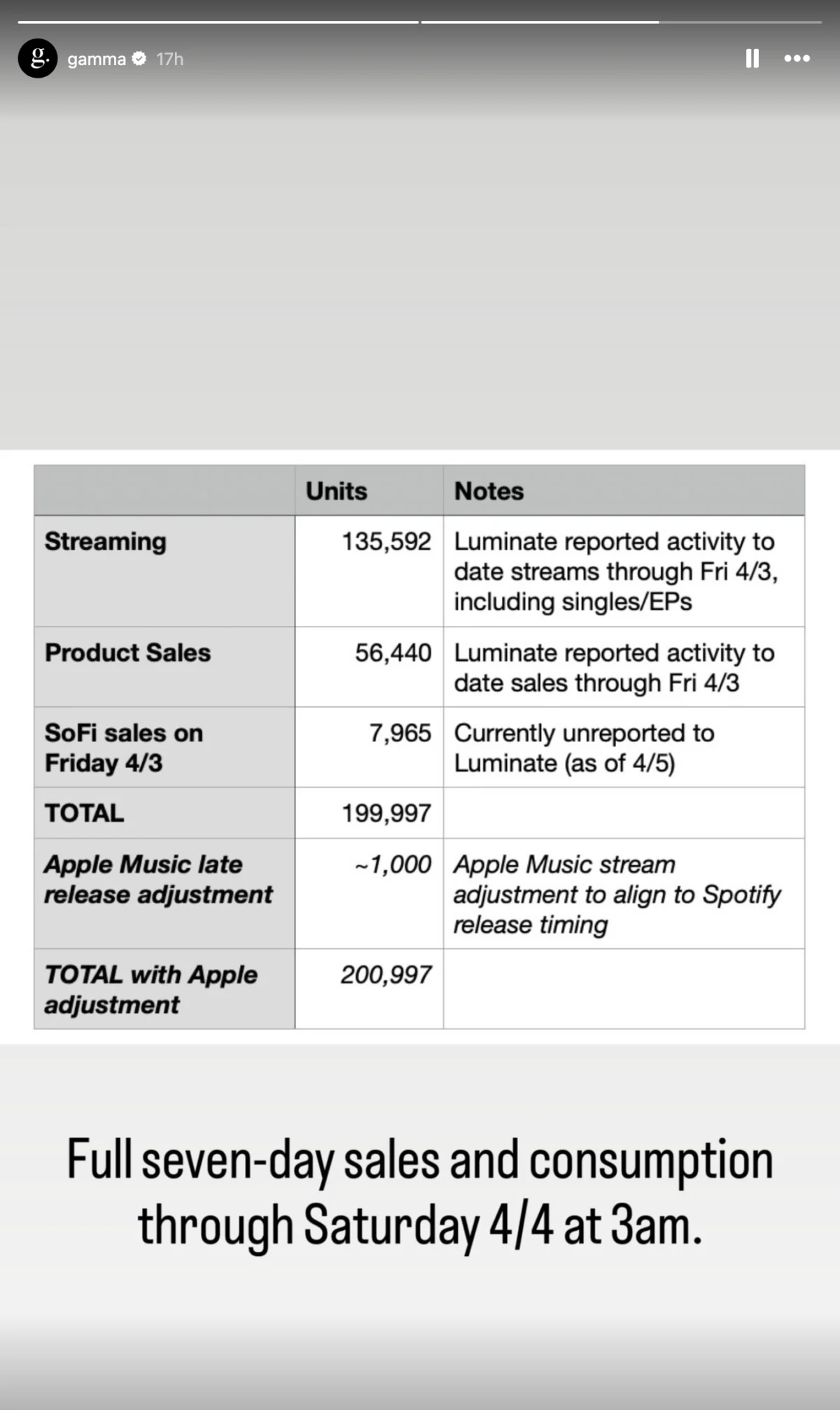
However, the reported sales figures for "Bully" have been contested by Gamma., the distribution company founded by former Apple Music executive Larry Jackson. Gamma. has asserted that "Bully" actually garnered over 200,000 equivalent units in its first week, a number that, if accurate, would have been sufficient to surpass BTS and claim the number one spot on the Billboard 200.
Gamma. shared a detailed breakdown of its own sales and consumption data on its Instagram Stories, claiming a total of 200,997 units for "Bully." This discrepancy raises questions about the data collection and reporting methodologies employed by different entities in the music industry. As of the time of this report, neither Billboard nor Luminate, the official data provider for the Billboard charts, have issued a public response to Gamma.’s claims. The lack of immediate comment from these authoritative bodies leaves the precise sales figures and chart placement in a state of flux for some observers.
Anticipation Builds for Deluxe Edition
Amidst the discussion surrounding the album’s initial performance, there is also anticipation for a potential expanded version of "Bully." The album, which already features an extensive 18 tracks, may be set to receive a deluxe edition. Gamma. hinted at this possibility through an Instagram Story post stating, "Bully deluxe on the way." Specific details regarding a release date, tracklist, or the number of additional songs have not yet been disclosed. The release of a deluxe edition is a common strategy in the music industry to re-engage listeners and potentially boost subsequent chart performance.
Broader Controversies and Festival Backlash
The release of "Bully" and its chart performance occur against a backdrop of significant public controversy surrounding Kanye West. His headlining performances at London’s Wireless Festival in July have drawn considerable criticism due to his history of antisemitic remarks and other offensive statements.
The backlash has led to substantial commercial repercussions for the festival. Several major sponsors have withdrawn their support in recent days. These include prominent brands such as Pepsi, PayPal, and the drinks giant Diageo. This exodus of corporate backing signals a growing unease among businesses regarding association with the artist.
The controversy has extended to the political sphere, with prominent figures voicing their disapproval. Prime Minister Sir Keir Starmer and London Mayor Sadiq Khan have both publicly protested West’s booking. Sir Keir Starmer described the decision as "deeply concerning," particularly in light of the rapper’s past antisemitic statements and his alleged celebration of Nazism. These reactions highlight the sensitive nature of West’s public persona and its impact on large-scale public events.
West is scheduled to headline all three nights of the Wireless Festival. This comes shortly after he performed two sold-out shows at Los Angeles’ SoFi Stadium in support of "Bully," which generated significant attention. The dual focus on his musical output and his controversial public image underscores the complex and often polarizing reception he continues to command.
The Music Industry’s Data Ecosystem
The discrepancy in sales figures between Billboard’s official reporting and Gamma.’s internal claims highlights the intricate nature of music industry data. Billboard’s charts are compiled by Luminate (formerly Nielsen Music), which aggregates data from various sources, including streaming platforms, digital download stores, and physical retailers. These methodologies are designed to provide a comprehensive and standardized measure of album popularity.
Gamma.’s assertion of a higher unit count suggests a potential difference in how certain metrics are calculated or how specific sales channels are accounted for. For instance, the definition of "equivalent units" can sometimes be subject to interpretation, particularly concerning bundled sales, promotional offers, or the specific weighting of streams versus traditional sales. The music industry has evolved significantly with the rise of digital consumption, and companies like Gamma. are increasingly involved in direct-to-consumer distribution and marketing, potentially leading to proprietary data insights that may not always align perfectly with established industry aggregators.
The absence of an immediate response from Billboard and Luminate could indicate that they are reviewing Gamma.’s submission or that they maintain confidence in their existing data. However, for artists and their labels, the transparency and accuracy of chart data are paramount, influencing marketing strategies, tour planning, and overall industry perception.
Analysis of Chart Implications
Kanye West’s consistent presence at the upper echelons of the Billboard charts for over two decades is a testament to his enduring influence and dedicated fanbase. The fact that "Bully" debuted at number two, despite the controversies and a highly competitive chart landscape, demonstrates the significant commercial power he still wields. However, the breaking of his streak of number-one albums is a notable milestone.
The dispute over sales figures, while not unprecedented in the music industry, adds another layer of complexity to the narrative. If Gamma.’s figures are indeed accurate and a discrepancy exists in Billboard’s reporting, it could lead to a review of their data aggregation processes. Conversely, if Billboard’s numbers are confirmed, it reinforces the established benchmarks for success in the mainstream music market.
The potential release of a deluxe edition of "Bully" is a strategic move to capitalize on the initial momentum and potentially climb the charts again. This tactic has become increasingly common, allowing artists to extend the commercial life cycle of an album and satisfy demand from core fans. The success of such re-releases often depends on the quality and appeal of the new material.
Broader Societal and Industry Considerations
The controversy surrounding Kanye West’s booking at Wireless Festival and the subsequent withdrawal of sponsors highlight the growing importance of corporate social responsibility and public perception in the entertainment industry. Brands are increasingly mindful of their association with artists whose public statements and actions may alienate consumers or contradict their own brand values. This trend suggests a shift towards a more values-driven approach in sponsorship and event management.
The ongoing debate about West’s performances and public statements also reflects broader societal conversations about accountability, free speech, and the role of artists in public discourse. The ability of an artist to achieve commercial success while simultaneously facing widespread condemnation for their views presents a complex challenge for the music industry and its audience.
In conclusion, Kanye West’s "Bully" has achieved a strong debut on the Billboard 200, underscoring his continued market relevance. However, the album’s chart position is accompanied by a dispute over its reported sales figures and a broader context of public controversy that continues to shape the narrative around the artist. The impending deluxe edition and the ongoing scrutiny of his public appearances suggest that "Bully" and its associated discourse will remain a significant topic of discussion within the music industry and beyond.
