

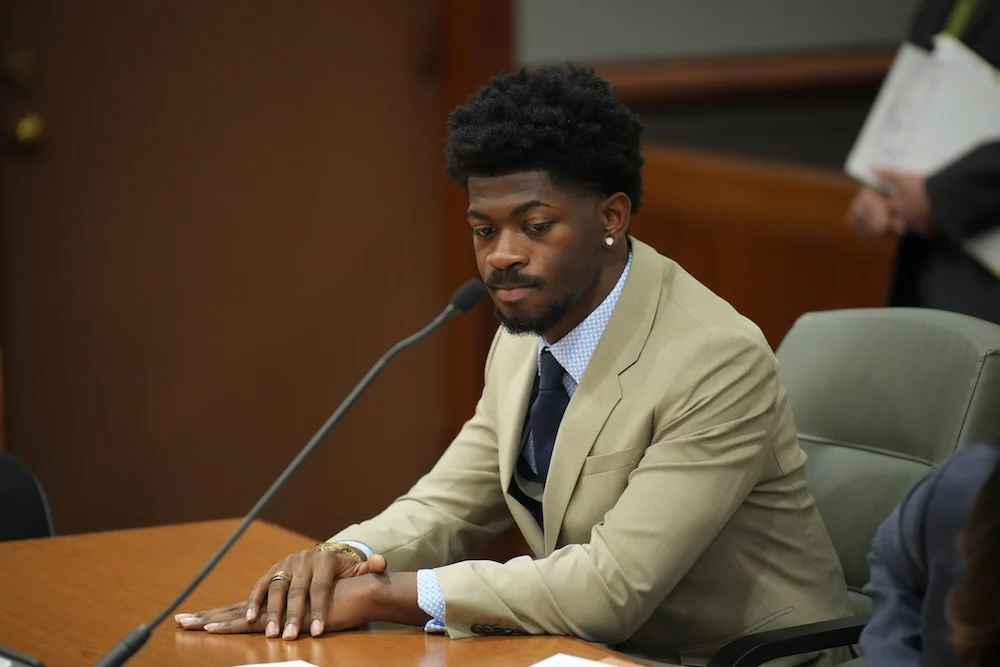
In a significant development concerning the ongoing legal challenges faced by Grammy-winning artist Lil Nas X, whose birth name is Montero Hill, his legal team appeared in a Los Angeles court today, requesting a crucial delay to pursue an unspecified diversion program for his felony police battery case. The artist, known for his genre-bending music and trailblazing public persona, has been embroiled in legal difficulties since an incident in August of last year when he was arrested and subsequently hospitalized after exhibiting erratic behavior in Los Angeles, allegedly injuring police officers who responded to the scene. The motion, filed by his attorney Christy O’Connor, seeks to reroute the case from a traditional criminal prosecution into a program focused on rehabilitation, pending an "expert report" that remains undisclosed.
The Current Legal Maneuver: Seeking Diversion
Today’s court appearance marked a pivotal moment in Lil Nas X’s legal saga. Attorney Christy O’Connor informed the court of her intention to file a motion advocating for the transfer of the high-profile felony police battery case into a diversion program. While the specific nature of the proposed program was not detailed, O’Connor’s reference to an "expert report" strongly suggests a strategy centered on addressing underlying issues that may have contributed to the August incident. Diversion programs in California are designed to offer alternatives to incarceration, particularly for individuals whose offenses may be linked to mental health issues, substance abuse, or other treatable conditions. These programs often involve counseling, therapy, community service, and regular check-ins, with the ultimate goal of rehabilitation and preventing future offenses. Successful completion of such a program can lead to the dismissal of charges, avoiding a criminal record.
The request for a short delay by O’Connor is standard procedure, allowing ample time for the formal filing of the motion and for the court to review the accompanying expert report. The nature of this report is critical; it could detail psychological evaluations, substance abuse assessments, or other professional opinions supporting the argument that a diversion program would be more beneficial than traditional prosecution, both for the individual and for public safety.
A Public Statement Amidst Legal Proceedings
Outside the courthouse, Lil Nas X addressed a throng of reporters, offering a concise and heartfelt message to his dedicated fanbase. "All I wanted to say is to my fans, I really love, and I miss you, and I appreciate your support so much, and I can’t wait to be back hugging you guys," he stated, concluding with a blown kiss and a cheerful "You guys, have a good day." This brief interaction underscored the artist’s awareness of his public platform and his apparent desire to reconnect with his supporters, many of whom have expressed concern following reports of his recent struggles.
In a poignant moment shortly after his statement, Lil Nas X encountered a street musician, or busker, performing Radiohead’s melancholic track "Lucky" on an acoustic guitar. The artist paused, listened, and then spontaneously offered the busker, later identified as Jensen Pawley, a $100 bill. Pawley later recounted the interaction to Rolling Stone, describing it as "a great moment." This gesture, captured and shared across social media, offered a glimpse of the artist’s personal demeanor amidst the pressures of his legal situation, providing a humanizing counterpoint to the more formal and rigid court proceedings.
Chronology of Events: From August Arrest to Diversion Bid
The legal troubles for Lil Nas X began dramatically in August of last year. Reports indicated that he was arrested in Los Angeles after exhibiting what was described as erratic behavior. The situation escalated when he allegedly injured police officers who approached him. Following his arrest, he was hospitalized, with some initial reports suggesting a possible overdose, although the official charges did not specify this. The nature of his erratic behavior and the specifics of the alleged injuries to officers remain central to the ongoing case.
He subsequently spent the weekend in jail, a period that undoubtedly added to the public scrutiny surrounding the incident. Following his time in custody, he was released on bail. A condition of his release included a court order to attend an outpatient drug rehabilitation program, signaling the court’s immediate concern for his well-being and potential underlying issues.
The District Attorney’s office later filed formal charges, indicting Lil Nas X on four felony counts. These charges included three counts of battery of a police officer and one count of resisting an officer. In response to these serious allegations, the artist entered a plea of not guilty to all four felony counts, setting the stage for the protracted legal battle now unfolding.
A subsequent court hearing took place in mid-September. During this session, his legal team, led by attorney Drew Findling, confirmed that Lil Nas X was "in treatment" at an out-of-state facility. Findling’s comments after that hearing provided further insight into the legal team’s strategy and their focus on the artist’s personal welfare. "You heard the ‘treatment’ word. We’re doing what is best for Montero from a personal standpoint and a professional standpoint, but most importantly, for his well-being," Findling stated. He further emphasized the support system surrounding the artist: "He is surrounded by an amazing family, an amazing team of people that care about him and love him. And we’re just addressing those issues. It’s really as simple as that. He’s had a great life, and he’ll continue to have a great life. This is a bump that he’s going to get over." These statements laid the groundwork for the current push towards a diversion program, framing the legal challenge as an opportunity for personal growth and recovery rather than solely punitive action.
Understanding Felony Charges and Diversion Programs in California
The charges of battery of a police officer and resisting an officer are serious, particularly when filed as felonies. In California, Penal Code Section 243(b) addresses battery against a peace officer, and when it results in injury, or when the perpetrator knew or reasonably should have known the victim was a peace officer, it can be charged as a felony. Resisting an officer (Penal Code Section 69 or 148) involves willfully resisting, delaying, or obstructing any public officer in the discharge or attempt to discharge any duty of his or her office. When coupled with allegations of injury or force against officers, these charges carry significant potential penalties, including state prison time, substantial fines, and a permanent felony record. For a public figure like Lil Nas X, a felony conviction could have far-reaching implications, impacting travel, endorsements, and public perception.
Given the gravity of these charges, the legal team’s pursuit of a diversion program is a strategic move to mitigate the potential consequences. California offers various types of diversion, including mental health diversion (Penal Code Section 1001.36) and drug diversion (Penal Code Section 1000). Mental health diversion, in particular, allows defendants suffering from specified mental disorders to have their criminal proceedings suspended while they undergo court-ordered treatment. If the defendant successfully completes the treatment program, the criminal charges are dismissed. This approach recognizes that certain criminal behaviors may stem from underlying mental health crises rather than purely malicious intent. Similarly, drug diversion programs aim to provide treatment for substance abuse issues instead of incarceration. The "expert report" mentioned by O’Connor will likely play a crucial role in establishing eligibility for such a program by diagnosing a qualifying condition and outlining a suitable treatment plan.
The concept of diversion reflects a broader shift in criminal justice philosophy, moving away from purely punitive measures towards restorative justice and rehabilitation, especially for non-violent offenses or those driven by treatable conditions. For a high-profile individual, securing a diversion program can be complex, as courts often scrutinize such requests to ensure fairness and equal application of the law, regardless of celebrity status.
Implications for Lil Nas X’s Career and Public Image
Lil Nas X burst onto the global music scene with "Old Town Road" in 2019, shattering records and defying genre conventions. He quickly became known not just for his music but also for his bold embrace of his identity, his innovative use of social media, and his willingness to challenge norms. His subsequent releases, including the album Montero, continued to solidify his status as a cultural icon.
The current legal troubles, however, represent a significant challenge to his carefully cultivated public image. While public figures are not immune to personal struggles, incidents involving law enforcement and allegations of erratic behavior can profoundly impact fan perception and career trajectory. The ongoing legal process and the public’s awareness of his "treatment" underscore a narrative that extends beyond his artistic endeavors into his personal well-being.
The push for a diversion program, if successful, could allow Lil Nas X to address his personal challenges confidentially while continuing his professional life with minimal long-term legal ramifications. It would signal a commitment to personal growth and recovery, which could resonate positively with fans and the broader public, who are increasingly sympathetic to discussions around mental health and substance abuse among celebrities. However, the process itself, and the public nature of the charges, will undoubtedly continue to generate headlines and discussion, requiring careful management from his public relations and legal teams.
Should the diversion program be granted and successfully completed, it could allow the artist to move past this "bump," as his lawyer Drew Findling termed it, without the burden of a felony conviction. This would preserve his ability to tour internationally, maintain endorsement deals, and continue his artistic output without the severe restrictions that a criminal record might impose. The public’s long-term perception will likely hinge on his continued engagement with treatment, his future conduct, and his ability to channel these experiences into his art or advocacy, potentially transforming a challenging period into a testament to resilience.
The Broader Context of Celebrity Legal Issues and Rehabilitation
Lil Nas X’s case, while unique in its specifics, echoes a recurring theme in the entertainment industry: the intersection of celebrity, personal struggles, and the justice system. High-profile individuals often face intense media scrutiny when involved in legal battles, and their cases frequently spark public discourse about justice, rehabilitation, and the pressures of fame.
The emphasis on "treatment" and "well-being" by Lil Nas X’s lawyers highlights a growing trend in legal strategy for such cases, moving towards addressing root causes rather than simply processing charges. This approach is not unique to celebrity cases but is often more visible when applied to them. It underscores the recognition that addiction, mental health issues, and the immense pressures of public life can contribute to behaviors that lead to legal trouble.
The outcome of the request for a diversion program will be closely watched. If granted, it could serve as a high-profile example of the justice system’s capacity to prioritize rehabilitation for individuals who demonstrate a willingness to address their underlying issues. It would also highlight the importance of expert psychological and medical assessments in guiding legal decisions. Conversely, if the request is denied, the case would proceed through traditional criminal channels, potentially leading to a trial or a plea agreement with more severe consequences.
For the music industry and his millions of fans, the hope remains that Lil Nas X can navigate these legal and personal challenges successfully. His unique voice and artistic contributions have had a significant cultural impact, and a resolution that prioritizes his health and allows him to continue his career would undoubtedly be welcomed by many. The coming weeks will be crucial as his legal team formally presents their case for diversion, marking a critical juncture in the ongoing story of Montero Hill.
