

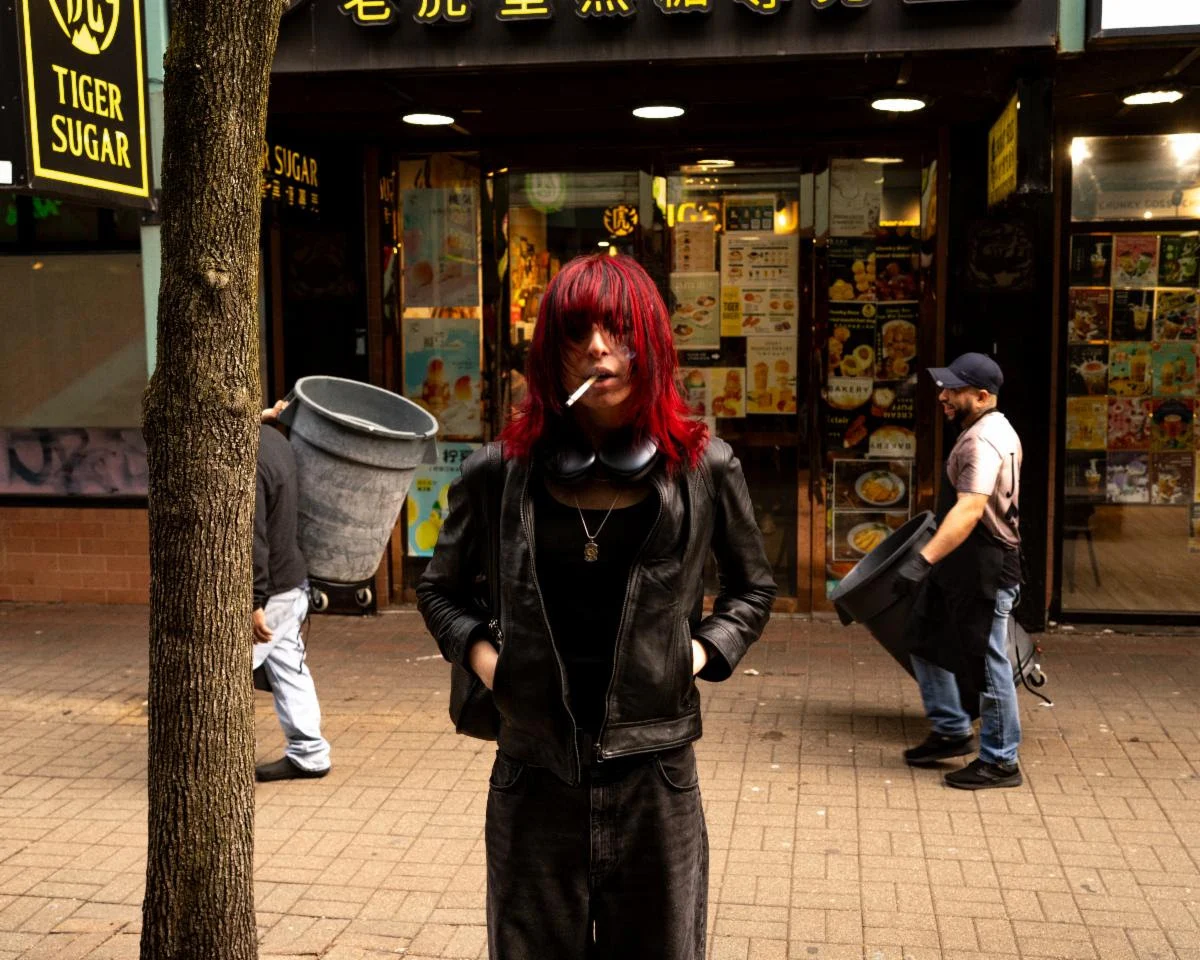
The M3F Fest, a prominent music festival held annually in Phoenix, Arizona, has officially announced an updated lineup for its 2027 event, notably omitting experimental pop artist Jane Remover. This development follows a public ultimatum issued by Jane Remover one month prior, demanding the removal of the Israeli alt-rock trio Temper City from the festival’s roster. The controversy, unfolding against a backdrop of heightened global geopolitical sensitivities, underscores the increasing intersection of artistic expression, political activism, and the complexities faced by cultural institutions.
The Ultimatum and Subsequent Lineup Change
On August 5th, Jane Remover, known for their genre-blurring soundscapes and evocative lyrics, took to Instagram Stories to issue a unequivocal statement regarding their participation in the upcoming M3F Fest. The post, which quickly circulated across social media platforms, read: "yo get that idf band off the lineup or I’m not playing." The "idf band" reference was directed at Temper City, an emerging Israeli trio whose frontman, Eytan Peled, has publicly acknowledged his background in the Israel Defense Forces (IDF). This direct challenge put M3F Fest in a precarious position, forcing a decision between retaining a scheduled headliner and adhering to their existing artist roster, which included a band whose members’ national service became a point of contention.
Exactly one month after Jane Remover’s public declaration, on September 5th, M3F Fest unveiled its revised 2027 lineup. The new promotional material prominently featured Flying Lotus as a replacement act, confirming Jane Remover’s absence. While the festival organizers made no explicit statement addressing the reason for Jane Remover’s removal or the controversy surrounding Temper City, the timing and context strongly suggest a direct correlation with the ultimatum. Neither M3F Fest nor Temper City have offered official comments on the situation, leaving the public to infer the motivations behind the lineup alteration. This silence, while perhaps intended to de-escalate, has instead invited further scrutiny and speculation within the music industry and among fans.
Temper City’s Rapid Ascent and Background
Temper City, comprising Eytan Peled, Chen Kordova, and Aviv Barenholtz (the latter two forming the production duo Sync), has experienced a meteoric rise in the music scene. Their debut single, "Self Aware," released earlier this year, quickly became a viral sensation on TikTok, accumulating millions of views and streams. This digital success translated into mainstream recognition, with the track topping Billboard’s Alternative Airplay chart in July. The song’s success was facilitated by an innovative distribution and promotion partnership between indie label Thirty Knots and TikTok’s proprietary SoundOn platform, showcasing the power of social media in breaking new artists.
Prior to their emergence as Temper City, Peled, Kordova, and Barenholtz had established careers working behind the scenes with a diverse array of artists, including Barns Courtney and Zeds Dead. This background provided them with invaluable industry experience and a polished sound that contributed to their rapid appeal. The band is currently in the process of readying their highly anticipated debut album and is also scheduled to perform at the renowned Austin City Limits festival next month, indicating a robust touring and release schedule unaffected, thus far, by the M3F controversy.
The Context of Mandatory Israeli Military Service
A central element of the controversy revolves around Eytan Peled’s military service in the Israel Defense Forces. For most Israeli citizens, military service is mandatory around the age of 18, a societal norm deeply ingrained in the nation’s fabric. Peled himself has been candid about his experiences, speaking with the Israeli publication Frogi in 2022. In the interview, translated from Hebrew, he credited his time in the military with significantly contributing to his personal development. "My military service really built me up and made me realize that I strongly believe in actively leaving my comfort zone," Peled stated, also noting its role in enhancing his language skills and self-confidence.
This acknowledgment, while seemingly innocuous within an Israeli context, takes on a different dimension in the international arena, particularly amidst ongoing debates and conflicts surrounding the Israeli-Palestinian issue. For some, any association with the IDF, even through mandatory service, is seen as problematic and linked to state policies they oppose. For others, it represents a standard civic duty within a sovereign nation, separate from individual political beliefs or artistic expression. Jane Remover’s "IDF band" characterization directly tapped into this sensitive fault line, framing the band’s association with the Israeli military as an unacceptable endorsement.
A Broader History of Artist Activism and Geopolitical Statements
Jane Remover’s ultimatum is not an isolated incident but rather fits into a longer, increasingly prevalent history of artists using their platforms to take political stances, particularly concerning the Israeli-Palestinian conflict. The Boycott, Divestment, and Sanctions (BDS) movement, which advocates for various boycotts against Israel to pressure its government regarding its policies toward Palestinians, has actively engaged the cultural sphere. Numerous artists, including Roger Waters, Lorde, and Brian Eno, have either publicly supported the movement or made decisions to cancel performances in Israel or with artists perceived to be associated with its government or military.
Conversely, other artists have actively opposed such boycotts, arguing that art should transcend politics or that cultural boycotts are counterproductive and harmful to dialogue. Major festivals and cultural institutions frequently find themselves navigating these complex waters, balancing artistic freedom, diverse political viewpoints, and the potential for public backlash from various activist groups and fan bases. The M3F Fest incident highlights the growing pressure on event organizers to vet artists not only for their musical talent but also for their perceived political affiliations or backgrounds, especially when those affiliations touch upon highly contentious international issues.
The rise of social media has amplified these dynamics exponentially. An artist’s single Instagram Story can now reach millions globally within minutes, sparking immediate debate and generating significant public pressure on both the artist and the entities they interact with. This direct-to-consumer communication bypasses traditional media gatekeepers, allowing for unfiltered and often emotionally charged declarations that can rapidly escalate into major public relations challenges.
Implications for Artists, Festivals, and the Music Industry
The M3F Fest situation carries significant implications for all parties involved and for the broader music industry.
For Jane Remover: By adhering to their principles and withdrawing from the festival, Jane Remover has solidified their image as an artist willing to take a stand on political issues, even at personal career cost. This stance will likely resonate strongly with segments of their fanbase who share similar political views, potentially enhancing their credibility as an activist artist. However, it could also lead to challenges with future festival bookings or sponsorships from organizations that prefer to avoid political entanglements, especially those that might be seen as polarizing. Their ongoing "LIVE EXHIBIT North American headline tour," which resumes in Minneapolis next week, continues independently, allowing them to control their narrative on their own platform.
For Temper City: The controversy, while potentially unwelcome, has undeniably thrust Temper City into a more prominent international spotlight than their music alone might have achieved at this early stage. This increased visibility, though born of conflict, could lead to a paradoxical surge in interest, drawing both detractors and new supporters. The band will likely face increased scrutiny regarding their background and political views in future interviews and public appearances. How they choose to address, or not address, these questions will shape their public image moving forward. Their continued presence on the Austin City Limits lineup suggests that not all festivals will follow M3F’s implied decision, indicating a varied response across the industry.
For M3F Fest: The festival’s decision to remove Jane Remover without explicit comment represents a delicate balancing act. On one hand, it allowed them to maintain their lineup integrity (by keeping Temper City) and avoid further direct confrontation with Jane Remover’s demands. On the other hand, the lack of transparency has opened them to criticism from those who believe artists should be allowed to express political views, or from those who feel the festival capitulated to implicit pressure. Festivals are complex logistical operations, often with numerous contractual obligations and financial considerations. A sudden artist withdrawal, especially one tied to a public ultimatum, can create significant operational hurdles and reputational risks. M3F’s handling of this incident will likely be observed by other festival organizers as they navigate an increasingly politicized cultural landscape. The precedent set here could influence how future artist demands and political statements are managed.
Broader Industry Impact: This incident highlights the growing challenge for the music industry to reconcile artistic freedom, geopolitical sensitivities, and commercial interests. As artists become more vocal about social and political issues, festivals, labels, and sponsors are increasingly being asked to take sides, or at least manage the perception of taking sides. The financial implications of artist cancellations, the public relations fallout, and the potential for alienating segments of the audience are all factors that industry stakeholders must now consider with greater weight. The M3F Fest controversy serves as a stark reminder that the stage is not merely a platform for music, but also a contested space where global politics and cultural values frequently intersect. The expectation of artists to be politically neutral, if it ever truly existed, is rapidly eroding, compelling the entire industry to adapt to a new era of explicit activism and accountability.
