

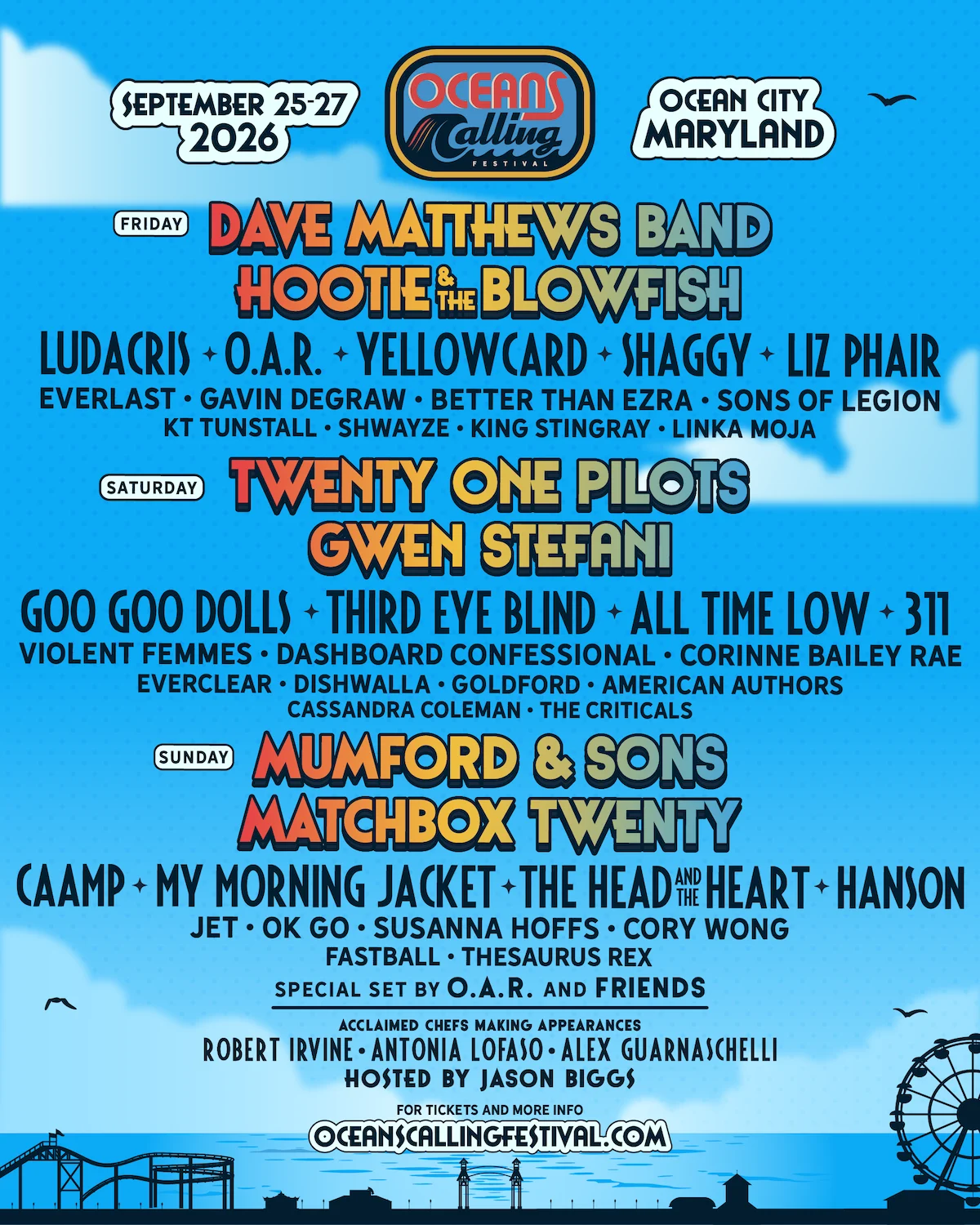
The inaugural day of the highly anticipated Oceans Calling Festival in Ocean City, Maryland, scheduled for Friday, September 25, has been abruptly canceled due to significant beach erosion exacerbated by prolonged adverse weather conditions. This decision, announced by festival organizers, mirrors a recent incident in California, highlighting an emerging vulnerability for large-scale coastal events. The cancellation directly impacts thousands of attendees and a stellar lineup of artists, including headliners Dave Matthews Band and Hootie And The Blowfish, alongside acts like Ludacris, O.A.R, Yellowcard, Shaggy, and Liz Phair. The fate of Saturday and Sunday’s scheduled performances, featuring Twenty One Pilots, Gwen Stefani, Mumford & Sons, and Matchbox Twenty, remains uncertain as organizers race against time and nature to salvage the remainder of the weekend.
Official Cancellation Details and Immediate Impact
The official statement released by the festival articulated the gravity of the situation: "Despite the extraordinary efforts of our production, site, safety teams, and the city staff/officials the impacts of this week’s continued weather, including beach erosion that affected the festival site, have made it impossible to safely complete the build in time for Friday. As a result, Friday will not move forward as planned. The safety of our fans, artists, crew, and community must come first." This declaration underscores the paramount importance of public safety, a standard protocol for event organizers navigating unforeseen challenges. The logistical complexities of constructing and securing a multi-stage festival site on an eroding beach proved insurmountable, compelling organizers to make the difficult decision to cancel the opening day. For those who purchased 1-Day Friday Tickets or 3-Day Tickets (with 33% of the cost attributed to Friday’s programming), automatic refunds are slated to be processed within 30 days to the original method of payment. This immediate financial recourse aims to mitigate some of the inconvenience for affected ticket holders, though it does not address non-refundable travel and accommodation expenses, which represent a significant outlay for many. The organizers further urged attendees to "Please continue to follow our official channels for updates. We are working very hard to get the show up for the remainder of the weekend, and hoping the conditions improve." This ongoing communication highlights the dynamic nature of the situation and the considerable effort being invested to salvage parts of the event.
Oceans Calling: A Pivotal Event for Ocean City
Oceans Calling Festival, orchestrated by industry giants C3 Presents, a subsidiary of Live Nation Entertainment, was envisioned as a marquee event for Ocean City, designed to extend the tourist season beyond the traditional summer months and inject significant economic vitality into the region. C3 Presents, known for producing renowned festivals such as Lollapalooza in Chicago and Austin City Limits in Texas, brought its considerable expertise to the Maryland coast. Following a successful inaugural event in 2022, the festival’s planned return was met with high anticipation, positioning itself as a premier music and culinary experience. Its unique selling proposition was the picturesque boardwalk and beach setting, offering attendees a distinct coastal festival atmosphere that combines world-class music with the charm of a seaside resort.
The festival typically draws tens of thousands of attendees, transforming Ocean City into a vibrant hub of activity. The economic ripple effect of such an event is substantial, encompassing everything from hotel bookings and restaurant patronage to local retail sales and increased demand for transportation services. Ocean City, a community heavily reliant on its tourism sector, particularly benefits from events that can attract visitors during the shoulder seasons of spring and fall. Local businesses, anticipating a surge in revenue during what is typically a slower period after the summer rush, had made significant preparations, including increasing staffing levels, stocking up on inventory, and extending operating hours. The festival’s success was not just measured in ticket sales but in its profound contribution to Ocean City’s reputation as a dynamic event destination and its ability to bolster the local economy outside peak summer months, often providing a critical boost to small and medium-sized enterprises.
The Environmental Challenge: Beach Erosion on the Mid-Atlantic Coast
The primary antagonist in this unfolding drama is beach erosion, a natural phenomenon intensified by specific weather patterns. Ocean City, a barrier island community, is inherently susceptible to coastal changes. Beach erosion along Maryland’s Atlantic coast is a recurring concern, often exacerbated by strong northeasterly winds, heavy rainfall, and high tides associated with coastal storms or nor’easters. These conditions can rapidly strip away sand, undercut dunes, and compromise the structural integrity of beachfront infrastructure. Maryland’s coast, particularly in the fall and winter, is prone to these types of low-pressure systems that can linger for days, generating persistent onshore winds and significant wave action.
In the days leading up to the festival, the Mid-Atlantic region experienced a period of persistent inclement weather, characterized by sustained winds, heavy surf, and tidal anomalies. While not reaching hurricane strength, the cumulative effect of these conditions was sufficient to significantly alter the beach topography at the festival site. The continuous battering by waves and the saturation of the sand made the ground unstable, posing a direct threat to the massive stages, sound towers, and temporary structures required for a festival of this magnitude. The safety implications for both the build-out crew and future attendees were paramount.
This situation echoes the recent cancellation of Santa Monica’s Ocean Way Festival, which was also called off due to beach erosion weeks before its debut. That incident, occurring in a different coastal environment but driven by similar environmental forces, signals a broader trend: large-scale outdoor events located in vulnerable coastal areas are increasingly at risk from the impacts of a changing climate and more frequent extreme weather events. Coastal erosion is not merely a cosmetic issue; it represents a fundamental challenge to infrastructure, safety, and long-term planning for communities and event organizers alike. Ocean City has invested millions over decades in extensive beach replenishment projects, pumping sand onto its shores to maintain its protective barrier and recreational areas. These efforts, costing tens of millions of dollars over the years, are vital for protecting property and maintaining the city’s tourism appeal. However, even these extensive engineering efforts can be overwhelmed by severe and prolonged storm activity, underscoring the dynamic and often unpredictable nature of coastal environments and the limitations of human intervention against powerful natural forces.
A Timeline of Deterioration and Decision
The decision to cancel Friday’s events was not sudden but the culmination of several days of deteriorating conditions and intensive monitoring by festival organizers and city officials.
- Early September: Promotional campaigns for Oceans Calling Festival intensify, and ticket sales indicate strong demand and high anticipation for the event, with many attendees finalizing travel and accommodation plans.
- Mid-September (approx. September 15-18): Weather forecasts for the Mid-Atlantic region begin to indicate a period of unsettled weather, with an increased likelihood of rain, strong winds, and higher surf towards the end of the month, coinciding with the festival dates.
- Weekend Prior to Festival (September 19-21): Production teams commence the extensive build-out on the Ocean City boardwalk and beach. This involves erecting multiple stages, setting up intricate sound and lighting systems, installing numerous vendor booths, and establishing critical safety infrastructure like medical stations, emergency exits, and fencing. This phase is highly dependent on stable ground conditions.
- Monday, September 22: Adverse weather conditions, including strong onshore winds (gusting upwards of 30-40 mph) and elevated tides, begin to significantly impact the Ocean City coastline. Reports of moderate beach erosion emerge, particularly in areas near the festival’s footprint where heavy equipment and temporary structures are being installed.
- Tuesday, September 23: Weather conditions persist and worsen. Festival organizers, in close consultation with Ocean City officials, including representatives from the Department of Public Works, emergency services, and the Mayor’s office, initiate intensified site assessments. Structural engineers and safety experts are brought in to evaluate the stability of the ground and the partially constructed infrastructure. Concerns grow as the beach continues to lose sand, affecting anchor points, access routes, and the foundational integrity of large structures.
- Wednesday, September 24: Despite efforts to mitigate the erosion and secure the site, continued high winds and relentless wave action further compromise the festival grounds. Critical areas become unstable, and the timeline for safely completing the build-out shrinks dramatically. It becomes increasingly clear that the site cannot be rendered safe and operational for Friday’s scheduled opening without risking the well-being of crew and attendees. Contingency plans are exhaustively reviewed.
- Thursday, September 25 (Morning/Early Afternoon): After extensive deliberation involving C3 Presents executives, Live Nation representatives, and Ocean City authorities, the difficult and regrettable decision is made to cancel Friday’s programming. The official statement is prepared and disseminated to the public and media, triggering a wave of disappointment and logistical challenges for attendees already en route or present in Ocean City. The immediate focus shifts to assessing the feasibility of proceeding with Saturday and Sunday’s events, dependent on weather improvement and site stabilization.
Economic Repercussions and Logistical Hurdles
The cancellation of Friday’s events represents a significant financial blow to multiple stakeholders. For festival organizers, the revenue loss from Friday ticket sales, coupled with non-recoupable operational costs (artist deposits, infrastructure setup, staff wages for Friday’s operations, marketing), will be substantial, likely running into the millions of dollars. While event cancellation insurance policies typically cover such losses due to unforeseen circumstances like extreme weather, the specifics of coverage, deductible amounts, and payout timelines can vary significantly, often resulting in complex claims processes.
The impact on Ocean City’s economy is equally pronounced. Hotels, anticipating full occupancy and premium rates for the festival weekend, will face cancellations for Friday night, though many attendees might still arrive for the remainder of the weekend. Restaurants, bars, and retail shops that stocked up on supplies, increased staffing, and planned special promotions for the expected influx of tens of thousands of festival-goers will face reduced patronage for the start of the weekend. Local vendors, many of whom are small businesses relying on event-driven revenue, will miss a crucial day of sales, directly affecting their bottom lines. The Ocean City Department of Tourism had projected that the festival would generate an estimated $20-30 million in direct and indirect economic activity for the region over the entire weekend. Friday’s cancellation alone could shave off a significant portion of that projection, potentially millions of dollars in lost revenue for the local economy.
For attendees, the inconvenience extends beyond a lost day of music. Many had invested in non-refundable travel arrangements – flights, rental cars, and pre-paid accommodations. While ticket refunds are being processed, these ancillary costs are typically borne by the individual, leading to significant financial frustration and a sense of wasted expenditure. The sudden announcement also creates immediate logistical headaches for those already en route or present in Ocean City, forcing them to adjust plans, seek alternative entertainment, or potentially cut their trips short, adding to stress and disruption.
Stakeholder Reactions and Community Sentiment
The news of the cancellation was met with a mix of profound disappointment and pragmatic understanding across various segments of the community and among attendees.
- Ocean City Officials: Mayor Rick Meehan, speaking on behalf of the city, expressed regret over the necessity of the cancellation but fully supported the organizers’ decision, emphasizing public safety as the top priority. "While we are incredibly disappointed for the fans, the artists, and our local businesses, the safety of everyone involved in this massive undertaking must always come first," Mayor Meehan (or a city spokesperson) might have stated. "We commend the festival organizers for their diligent efforts and their commitment to public well-being, and we are working closely with them to assess the viability of the remaining weekend. Ocean City is a resilient community, and we will continue to support events that bring joy and economic benefit, while prioritizing the safety of our visitors and residents." Officials would likely underscore the city’s long-term commitment to hosting major events while acknowledging the environmental realities of a coastal location.
- Local Businesses: Owners of boardwalk eateries, hotels, and souvenir shops voiced their dismay. "We stocked up on everything, hired extra staff, and were ready for a huge weekend," lamented Sarah Jenkins, owner of a local diner (a representative quote for illustrative purposes). "Friday alone usually brings in a quarter of our festival weekend revenue. It’s a tough hit, but we’re hoping Saturday and Sunday still happen to salvage some of it and that the remaining attendees still patronize local establishments." Hotel managers reported a flurry of calls for cancellations and adjustments, though many guests with 3-day passes indicated they would still arrive, albeit with altered plans, highlighting the mixed impact.
- Attendees: Social media platforms buzzed with reactions from frustrated but largely understanding fans. Many expressed profound disappointment, having planned their trips for months. "Flew all the way from Texas for this, primarily for Friday’s lineup," posted one user. "Heartbroken, but I get it. Safety first." Others, especially those with 3-day passes, held onto hope for the weekend, while lamenting the lost day and the cost of non-refundable travel. The sentiment generally gravitated towards understanding the safety rationale, despite the personal inconvenience and significant financial outlay.
- Artists: While specific artist statements were not immediately available, professional musicians and their teams are accustomed to the unpredictable nature of live events. Their primary concern would be the safety of their crews and fans, and they would typically defer to the organizers’ and local authorities’ assessment of site conditions. The cancellation might necessitate adjustments to their touring schedules or travel plans, but the music industry generally prioritizes safety over performance in hazardous conditions, with artists often expressing solidarity with affected fans.
Broader Implications for Coastal Events and Climate Adaptation
The cancellation of Oceans Calling’s opening day, following closely on the heels of Santa Monica’s Ocean Way Festival, underscores a critical and evolving challenge for outdoor event planning, particularly in coastal environments. This incident serves as a stark reminder of the increasing vulnerability of such events to the vagaries of weather and the long-term impacts of climate change, including rising sea levels and intensified coastal storms.
- Heightened Risk Assessment and Insurance Challenges: Event organizers will likely face heightened scrutiny from insurance providers regarding site selection, weather contingency planning, and erosion mitigation strategies. Premiums for coastal events could increase significantly, and policy terms might become more stringent, requiring more robust environmental assessments, geological surveys, and emergency preparedness protocols well in advance of an event. This could lead to higher operational costs, potentially impacting ticket prices or the viability of certain locations.
- **
