

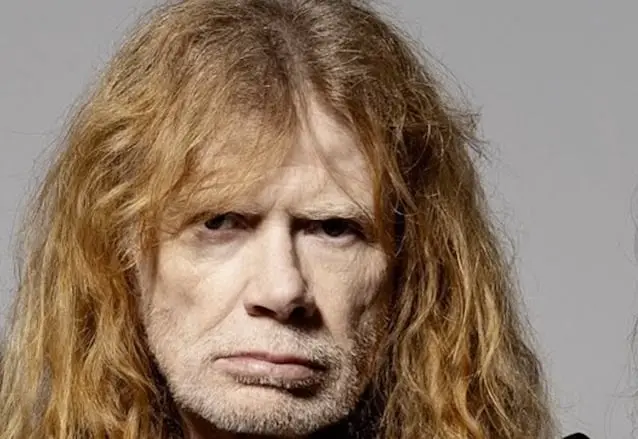
The hallowed halls of the Grammy Museum in Los Angeles recently played host to an intimate gathering with the titans of thrash metal, MEGADETH. Prior to a special performance on September 24th, band members Dave Mustaine, James LoMenzo, Dirk Verbeuren, and Teemu Mäntysaari sat down for an insightful conversation with former MTV VJ Matt Pinfield. This exclusive interview, transcribed by BLABBERMOUTH.NET, offered a deep dive into the band’s recent triumphs, their evolving fanbase, the creative process behind their latest acclaimed album, and reflections on pivotal moments in their storied career.
A Chart-Topping Resurgence and a Multi-Generational Appeal
The discussion naturally gravitated towards the remarkable reception of MEGADETH’s self-titled seventeenth studio album, released in early 2026. This record marked a significant career milestone, achieving the band’s first-ever number one position on the Billboard 200 in the United States, a feat that underscores their enduring relevance in the contemporary music landscape.
Bassist James LoMenzo expressed his astonishment and gratitude for the album’s success. "It’s been an amazing experience ever since we released the record," he stated. "We didn’t know what to expect. We had a really firm idea of what we wanted to put out as the last album. And since we started this year, we’ve noticed a lot of old fans, but a lot of young fans showed up too, and it’s been really amazing to play to all of you. I’ve always been a fan of this band one way or another, but to see you all out there in droves, and just hanging on all the classic songs, but embracing all the new music, it’s really, it’s been moving for us. It’s been great. It’s a great vindication."
This sentiment was echoed by drummer Dirk Verbeuren, who highlighted the band’s dedication to crafting a powerful album. "When you make new stuff, you never really know how it’s going to be embraced, but we set out to make the best MEGADETH album we could. That’s what we wanted to do," Verbeuren explained. He also shed light on the album’s creation, noting that the decision regarding its status as a final release was made during the recording process. "When we started on the album, nobody knew it was going to be the last one – I had well finished my drums, and the recording was well underway when that decision was made. So we just really went in and did the best we could, and it was a real brotherly experience. We spent a lot of time together, just exchanging ideas. Ideas were always flowing, and it was just a lot of fun. I think you can hear that fun on the record. There’s an enthusiasm and an energy there from all of us that’s really genuine."
Guitarist Teemu Mäntysaari emphasized the deliberate sonic direction of the album. "We really did want to make the album kind of this guitar-driven thing, and we wanted to kind of want to keep it organic, so not to make it too sampled, not too polished, so you can really hear the band sound in there, because we feel like we play really tight together live, and we kind of just wanted to put that vibe and that sound on the album." This commitment to a raw, authentic sound has clearly resonated with listeners.
The band’s ability to attract a new generation of fans alongside their long-standing devotees was a recurring theme. LoMenzo expressed his amazement at the influx of younger concertgoers. "I’m amazed at how many younger [fans have attended the band’s recent concerts]," he said. "It’s not because their parents are dragging them. They’re up there singing all over the songs too. There’s something immediate about this kind of music, and it’s undeniable. When you bring people together in a room, we share this energy. I’m not surprised that people bring their kids and share this with them."
Verbeuren offered a historical perspective on the appeal of extreme metal to younger audiences. "For the younger people too, what you’ve got to realize is that when this kind of music came along in the mid-’80s, it was like a new genre, basically. It transcended everything that existed before [and] kind of made everything more intense and faster and more technical. That still to this day [is] a very true thing, even though of course people have pushed boundaries to their extremes. That always is going to happen, but there’s still a vibe to this music and a listenable side to it. I think that’s always going to speak to young people." He then shared a personal anecdote about discovering MEGADETH as a teenager, illustrating the profound impact the band’s music has had across generations. "For me personally, when I was a teenager, everything I felt was in those old MEGADETH records. I was 14 or 15. I don’t remember exactly, but I found ‘Peace Sells’ at a flea market and I bought it because I thought the cover looked incredible and the guys looked fucking bad-ass. Everything about that record is perfect in my opinion."
Mäntysaari’s Integration and the Creative Crucible
Teemu Mäntysaari’s journey with MEGADETH, culminating in his participation on the new album, was also a key topic. For Mäntysaari, joining MEGADETH was the realization of a lifelong dream, having been inspired by the band from an early age. "MEGADETH was definitely one of the first metal bands that got me into playing guitar," he revealed. "It was IRON MAIDEN, DIO and then MEGADETH. So then, of course, what an incredible honor to be able to join and be part of the legacy of the band."
LoMenzo was quick to praise Mäntysaari’s significant contributions. "His contributions to the [new] record, they can’t be underestimated. He came in with a real understanding of what this band is really about."
Mäntysaari elaborated on the seamless integration process, attributing it to the existing camaraderie within the band. "We had already been touring for quite a while, so we had built this chemistry outside of the stage as well. And I think that really helped when we went to the studio. We immediately kind of clicked on songwriting as well. And of course, we had been jamming backstage and kind of tried some bits and pieces, but it was really natural to go to the studio and start working on songs."
A particularly illuminating aspect of their creative process involved an in-depth exploration of MEGADETH’s extensive back catalog. "One incredible thing that we did – we went through the whole MEGADETH back catalog, 200-plus songs, listening to them together, and Dave was telling us these little stories, how he came up with the song ideas," Mäntysaari explained. "That was, first of all, really inspiring, but it also kind of gave us a lot of ideas how to make the best MEGADETH album, knowing what is in the back catalog. It was incredible to hear all of these stories that are not all public, and about how some of the lyrics came out, and also we talked about arrangement things." He further described a meticulous organizational system they employed: "We had this whole Excel sheet where we would put little notes – this idea we like from this song, and maybe this song we could consider playing live, and this song could work great for an acoustic set in the future. Although we never went back to the sheet to look at it, it kind of is in the backbone now. So I think that was really helpful and made it an easier process to go into the songwriting."
LoMenzo concurred, emphasizing the profound impact of this deep dive into the band’s history. "It enthused us in a very special way as far as really absorbing the whole pantheon of what MEGADETH has been. It was really helpful." This thorough examination of their past clearly informed and invigorated their approach to creating new material, ensuring a connection to their legacy while forging ahead.
Reflections on Iconic Eras and Personal Journeys
The conversation also delved into pivotal moments in MEGADETH’s history, offering a glimpse into the challenges and triumphs that have shaped the band. Dave Mustaine’s reflections on the "Rust In Peace" era were particularly poignant. He candidly spoke about the personal struggles that characterized that period. "Rehab… What happened was, we realized we were sitting on a really good record, and it was just getting old. We were homeless, living in a vehicle, and [had] nobody believing [in us]. The time it took to get other people to believe in us like we believed in us, it took a long time. ‘Rust In Peace’ was a very dark period for us, but we made it through it."
Mustaine also highlighted the therapeutic and inspirational value of his music for fans navigating their own difficulties. "And a lot of the songs on that record have been a great help to people. People find relief in some of the stuff that I have gone through, because I don’t always bitch about something. I like to say, ‘Here’s the problem; here’s the solution.’ It’s real simple – if you have a bad moment and you hold onto that bad moment, it becomes a bad day, and a bad week, and so on. It’s just one moment, [but] it’s going to own you."
He detailed the broader context of the music industry’s shift towards sobriety during that time. "During the ‘Rust In Peace’ process, it was a kind of a whole entire music industry purging of alcohol and drugs. The guys in AEROSMITH were going around, like, sobriety police, and if you wanted to play with them, we had to be sober. The music industry had loads of industry 12-step meetings and stuff like that. I’m glad that’s there for people. It really helped me when I needed it. But during that process, it was kind of, put the plug in the jug, put everything I thought I know about myself on a shelf, trying to open a relationship with God and myself and see what I really am, and see what kind of guitar player I really am. That’s what ‘Rust In Peace’ was – that’s who I really am." This period of intense personal reckoning and artistic creation forged an album that continues to resonate deeply with fans for its raw honesty and musical prowess.
A Powerful Touring Partnership
The interview also touched upon MEGADETH’s recent and highly successful touring collaboration with fellow metal legends IRON MAIDEN. Mustaine spoke enthusiastically about the positive rapport between the bands. "They’ve been really great," he stated. "When it started off, it was a little rough. Most tours are like that in the very beginning, but we had the friendship between myself and Steve [Harris] and Bruce [Dickinson] and the management. Rod Smallwood, I actually asked him to manage us for a period, so we’re all really close, and the tour has been very successful. We’re going into the South Pacific, into Australia and New Zealand with them."
Mustaine even shared a humorous anecdote about how he leveraged his friendship with IRON MAIDEN bassist Steve Harris, a known football enthusiast, to secure additional tour dates. "We were talking about soccer yesterday, and I figured, ‘How the fuck am I going to get some more MAIDEN dates down in South America? All right, I know Steve’s a sucker for football.’ So I go, ‘Hey, when’s the next football game?’… We started talking a little bit more about soccer, and by the time I walked away, I’m pretty sure we had the tour, at least in my mind." This lighthearted exchange underscores the strong bonds of mutual respect and camaraderie that have characterized this significant co-headlining tour.
MEGADETH’s Enduring Legacy and Future Trajectory
With a career spanning over four decades, MEGADETH has cemented its place as one of the most influential and enduring bands in heavy music history. The band has achieved sales exceeding 50 million albums worldwide, garnered a Grammy Award alongside 12 additional nominations, and accumulated billions of streams. Their discography boasts numerous classics, including the platinum-certified "Peace Sells… But Who’s Buying?" (ranked No. 8 on Rolling Stone’s "100 Greatest Metal Albums Of All Time"), the platinum "Rust In Peace," and the double-platinum "Countdown To Extinction," which peaked at No. 2 on the Billboard 200.
Following the critical and commercial success of "Dystopia" in 2016, which earned the band their first Grammy Award for "Best Metal Performance," and "The Sick, The Dying… And The Dead!", MEGADETH’s self-titled album in 2026 represented a remarkable resurgence. Its debut at number one on the Billboard 200, coupled with widespread critical acclaim, firmly established it as one of their strongest releases to date. This achievement not only highlighted the band’s continued ability to evolve musically but also reaffirmed their status as a dominant force in heavy music, capable of captivating millions across the globe. The interview at the Grammy Museum served as a powerful reminder of MEGADETH’s unwavering commitment to their craft and their profound connection with a diverse and dedicated global fanbase.
Photo credit: Ross Halfin
