

The pursuit of GRAMMY recognition is a complex and highly competitive endeavor for artists and their teams. As the music industry gears up for the 69th Annual GRAMMY Awards, understanding and executing effective "For Your Consideration" (FYC) advertising campaigns becomes paramount. This strategic marketing approach is designed to capture the attention of eligible Recording Academy voting members, a distinct audience from general music consumers, during critical phases of the nomination and voting processes. The goal is to ensure that an artist’s work is not only heard but also considered by those who hold the power to shape the nominations and ultimately, the winners.
Understanding the GRAMMY Awards Landscape
The GRAMMY Awards, presented annually by the Recording Academy, represent the pinnacle of achievement in the recording industry. Established in 1959, these awards celebrate excellence across a wide spectrum of musical genres and technical achievements. The selection process is rigorous, involving thousands of music professionals, including artists, songwriters, producers, engineers, and other technical experts who are members of the Recording Academy. These members cast votes in a multi-stage process that begins with nomination ballots and concludes with final voting for the winners.
The significance of a GRAMMY Award extends far beyond a mere trophy. It can elevate an artist’s profile, open doors to new opportunities, increase album sales, and solidify their place in music history. Consequently, the competition for nominations and awards is fierce, with countless releases vying for recognition each year. This intense competition underscores the necessity of a well-defined FYC strategy to cut through the considerable noise and make a compelling case for an artist’s work.
The Crucial Timing of FYC Advertising

Effective FYC marketing hinges on precise timing, aligning promotional efforts with the Recording Academy’s official timelines. There are two primary windows during which FYC advertising is strategically deployed:
Phase 1: Pre-Nomination Ballot Period (August 10, 2026 – October 22, 2026)
This initial phase is critical for introducing and reinforcing an artist’s eligibility and artistic merit to voting members before they begin casting their ballots for nominations. The first-round voting period for the 69th Annual GRAMMY Awards is scheduled to take place from October 12, 2026, to October 22, 2026. During this ten-day window, eligible Recording Academy members will deliberate and select the nominees across various categories.
Music companies and artist representatives often initiate FYC campaigns well in advance of this voting period, aiming to establish an artist’s presence and highlight their qualifying releases. This proactive approach ensures that when members are reviewing their options, the artist’s work is already familiar and has been presented in a compelling light. Advertising during this period can take various forms, including targeted digital placements, print advertisements in industry publications, and bespoke outreach initiatives. The objective is to ensure that an artist’s name and their most impactful work are top-of-mind when members are making their initial nomination choices. For instance, a visually striking digital banner on a music industry news website or a well-crafted advertisement in Billboard or Rolling Stone can significantly increase visibility among the target demographic.
Phase 2: Post-Nomination Ballot Announcement (November 16, 2026 – January 7, 2027)
Following the announcement of nominations on November 16, 2026, a second, equally crucial FYC period commences. This phase targets the final round of voting, where members decide on the ultimate winners. This period runs from December 10, 2026, to January 7, 2027.
For artists who have secured a nomination, this is an opportunity to amplify their campaign and make a final persuasive push. The strategy shifts from introducing an artist to reminding voters of their achievements and highlighting why they deserve to win. This might involve showcasing critical acclaim, highlighting specific artistic achievements, or reinforcing the broader impact of the nominated work. The ceremony itself is scheduled for February 7, 2027, marking the culmination of the awards season.
Key Dates for the 69th Annual GRAMMY Season:
- First-Round Voting (Nominations): October 12, 2026 – October 22, 2026
- Nominations Announced: November 16, 2026
- Final-Round Voting (Winners): December 10, 2026 – January 7, 2027
- 69th Annual GRAMMY Awards Ceremony: February 7, 2027
Understanding these dates is fundamental to crafting a timely and impactful FYC campaign. Missing a key deadline or misjudging the strategic importance of each phase can significantly diminish the effectiveness of promotional efforts. Comprehensive details regarding the GRAMMY season calendar can be accessed via the official GRAMMY Awards FAQ page.
Recording Academy Guidelines: Navigating the Do’s and Don’ts
The Recording Academy maintains stringent guidelines to ensure the integrity and fairness of the GRAMMY Awards process. Adherence to these rules is non-negotiable for any FYC campaign. These guidelines dictate what can and cannot be included in promotional materials aimed at voting members.
Permitted FYC Communications:
Recording Academy guidelines permit several forms of communication to inform and persuade voting members. These are designed to be informative and highlight the artistic merits of a submission without being overly promotional or solicitous in a manner that could be perceived as undue influence.
- Information Regarding Eligibility: FYC materials can clearly state that a submission is "For Your Consideration" in specific GRAMMY Award categories. This is the foundational element of any FYC campaign.
- Artist and Release Information: Details about the artist, the specific recording, or the release being submitted for consideration are permissible. This includes the artist’s name, the title of the album or single, and the relevant genre.
- Credits: A comprehensive list of credits for the recording, including producers, engineers, mixers, songwriters, featured artists, and other key contributors, is allowed. This acknowledges the collaborative nature of music creation and the importance of all involved.
- Critical Acclaim: Inclusion of quotes from reputable music critics, publications, or industry awards (other than GRAMMYs) that highlight the quality and impact of the work is permitted. This provides third-party validation of the artistic merit.
- Awards and Recognitions: Mention of other significant awards or honors the artist or release has received (again, excluding GRAMMYs) can be included to underscore the work’s recognized excellence.
- Links to Music and Videos: Providing direct links to listen to the nominated work or view accompanying music videos is a standard practice, allowing voters to easily access the content for evaluation.
- Website and Social Media: Directing voters to official artist websites or social media profiles where they can find more information is acceptable.
Prohibited FYC Communications:

Conversely, the Recording Academy strictly prohibits certain types of communication that could be construed as manipulative or unfair. Violations of these rules can lead to disqualification.
- Direct Solicitation of Votes: It is expressly forbidden to directly ask Recording Academy members to vote for a specific artist or recording. The language must remain focused on "consideration" rather than "casting a vote."
- Comparative Statements: FYC materials cannot make direct comparisons between the submitted work and that of other artists or recordings, whether they are GRAMMY nominees or not. This includes statements like "the best album of the year" if it implies a direct comparison to other submissions.
- Promises or Incentives: Offering any form of incentive, gift, or promise in exchange for votes is strictly prohibited. This upholds the principle of merit-based selection.
- Use of GRAMMY Name or Logo (Except for FYC Purpose): While the phrase "For Your Consideration" is permitted in the context of FYC advertising, unauthorized or improper use of the official GRAMMY Awards name or logo is forbidden. This ensures brand integrity.
- Misleading Information: Any information presented in FYC materials must be accurate and truthful. False or misleading claims about achievements, sales figures, or critical reception can lead to severe penalties.
- Endorsements from Non-Members: Obtaining and using endorsements from individuals who are not Recording Academy members in FYC materials is generally not permitted, as the focus should be on peer evaluation.
- Campaigning During Voting Periods (Other than FYC Ads): Artists and their teams are generally restricted from engaging in direct, unauthorized campaigning with voting members outside of the approved FYC advertising channels and timelines.
For a comprehensive understanding, the Recording Academy provides detailed voting and solicitation guidelines on its official website, which should be consulted thoroughly by all parties involved in FYC campaigns.
Illustrative Examples of Effective FYC Advertising
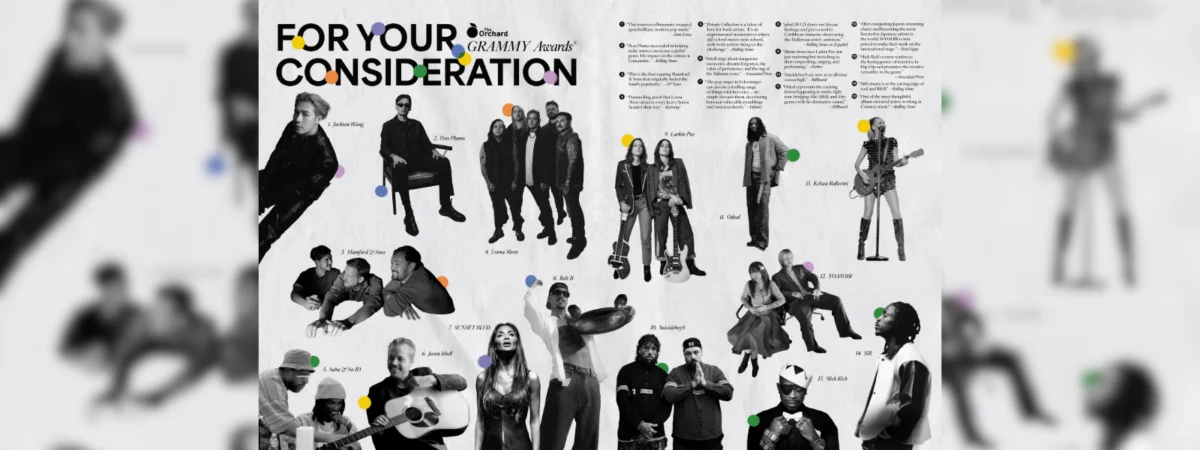
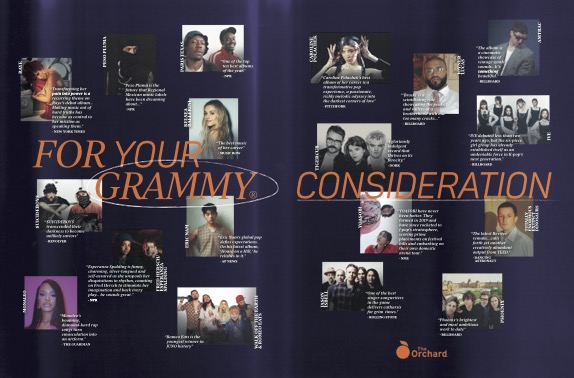
The Orchard, a prominent music distribution and artist services company, often shares examples of successful FYC campaigns from previous years, providing valuable insights into best practices. These examples, often presented visually, demonstrate how to effectively communicate an artist’s merits within the established guidelines.
(Note: As the provided text included image placeholders without actual images, this section will describe the nature of typical effective FYC advertisements based on industry standards and the implied content of the original article’s visual examples.)
Typical effective FYC advertisements often feature:

- Striking Visuals: High-quality album art, professional artist photography, or compelling imagery that captures the essence of the music. These visuals are designed to be eye-catching and memorable.
- Clear Categorization: Prominently displaying the specific GRAMMY categories for which the artist is being considered. For example, "For Your Consideration: Album of the Year," "Best Rock Album," or "Song of the Year."
- Concise Messaging: A brief, impactful tagline or a few key phrases that highlight the artistic significance of the work. This might focus on innovation, emotional depth, or cultural relevance.
- Key Credits: Listing essential collaborators such as producers, songwriters, and featured artists, acknowledging their contribution to the nominated work.
- Accolades and Testimonials: Including short, powerful quotes from respected music critics or publications that praise the album or song. These are carefully selected to be persuasive without being overly hyperbolic.
- Call to Action (Implicit): While direct calls to vote are forbidden, the overall presentation implicitly encourages voters to listen to and consider the work. This is achieved through compelling presentation and clear access to the music.
These examples underscore the importance of sophisticated design, precise language, and strategic placement. The goal is to create an impression of artistic excellence and significance that resonates with knowledgeable music professionals.
Analysis and Broader Impact
The "For Your Consideration" advertising strategy is a vital component of the GRAMMY Awards ecosystem. It serves as a crucial bridge between artistic creation and industry recognition. For artists, a successful FYC campaign can be transformative, leading to increased visibility, expanded career opportunities, and the prestige associated with GRAMMY recognition. For the Recording Academy, these campaigns, when conducted within the established guidelines, contribute to a more informed and engaged voting body, ultimately leading to awards that reflect a broad consensus of industry excellence.
The data surrounding the impact of GRAMMY nominations and wins is substantial. Historically, nominated artists have experienced significant increases in album sales, streaming numbers, and concert attendance. A study by Nielsen Music indicated that nominated albums often see a sales surge of over 100% in the week following nominations, and winners can experience even greater boosts. This economic impact highlights why the FYC process is taken so seriously by labels, artists, and management teams.
The evolving landscape of music consumption and promotion means that FYC strategies must also adapt. While traditional print and digital advertising remain relevant, innovative approaches such as exclusive listening events for Academy members, curated playlists, and personalized digital outreach are becoming increasingly important. The ability to effectively communicate an artist’s narrative and artistic value in a crowded marketplace is more critical than ever.
In conclusion, navigating the GRAMMY Awards requires a nuanced understanding of the nomination and voting processes, coupled with a strategic and compliant approach to "For Your Consideration" advertising. By adhering to the Recording Academy’s guidelines, timing campaigns effectively, and presenting artistic achievements compellingly, artists and their teams can significantly enhance their chances of receiving the industry’s highest honor. The pursuit of a GRAMMY is a marathon, not a sprint, and a well-executed FYC strategy is an indispensable part of the race.
