

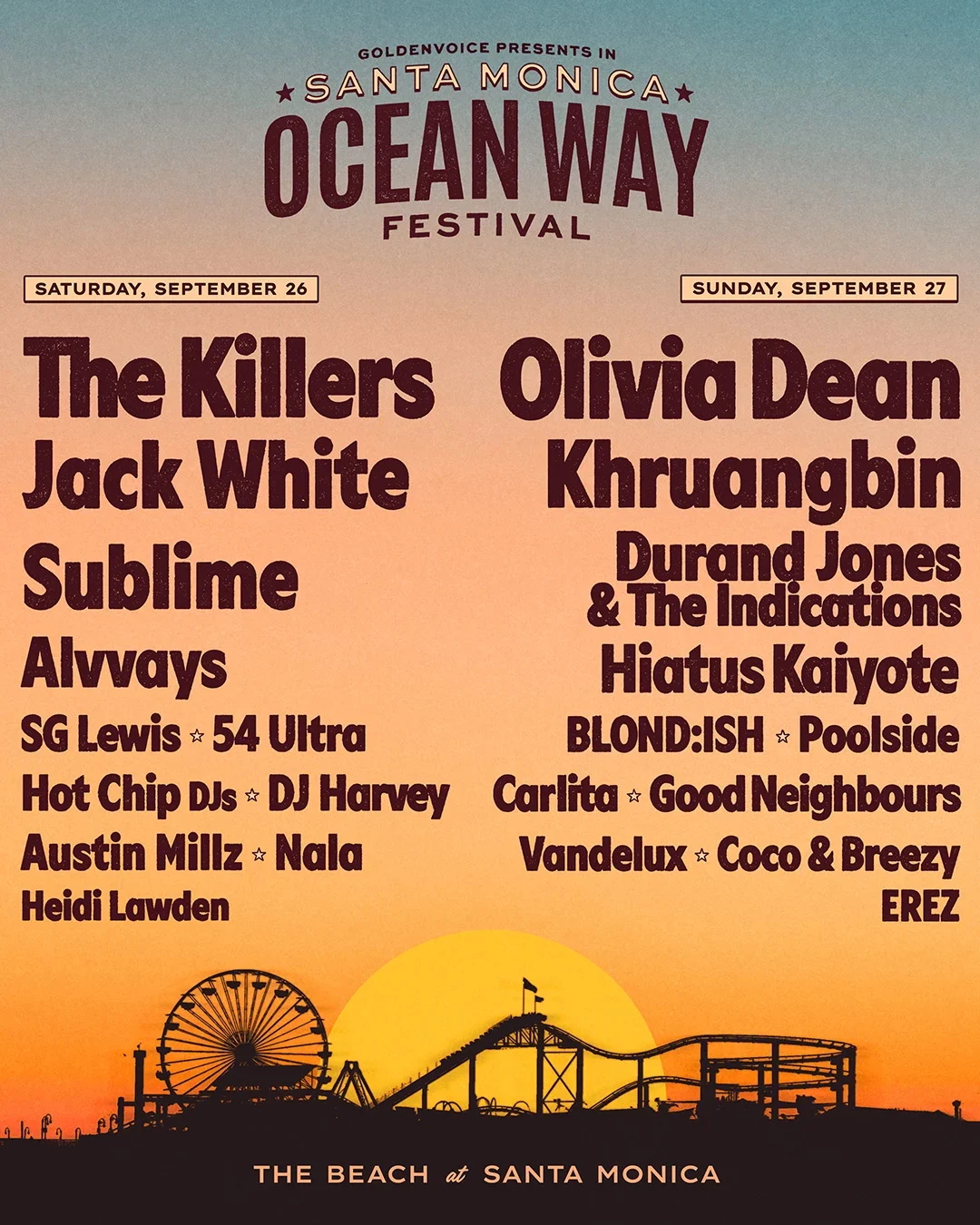
The festival, envisioned as a landmark cultural event for the iconic Southern California city, had generated considerable excitement since its initial announcement. Slated to transform a significant stretch of Santa Monica Beach into a vibrant music and arts hub, the lineup boasted an impressive array of talent beyond the headliners, including indie darlings Alvvays, rock legend Jack White, psychedelic soul group Khruangbin, California reggae-rock pioneers Sublime, and the soulful Durand Jones & The Indications, alongside emerging artists like Vandelux. The broad appeal of the artist roster reflected an ambition to attract a diverse audience, positioning Santa Monica as a premier destination for large-scale outdoor music experiences.
The Vision Behind Ocean Way Festival
The Ocean Way Festival was more than just a concert; it was conceived as a strategic initiative to invigorate Santa Monica’s cultural landscape and boost its local economy. For years, city officials and local business leaders had explored opportunities to host a major, multi-day event that would capitalize on Santa Monica’s stunning beachfront and its reputation as a creative hub. The festival aimed to provide a significant economic injection, drawing tourists from across the nation and internationally, filling hotels, boosting local retail, and supporting the city’s myriad restaurants and entertainment venues. Estimates suggested the festival could have generated millions in direct and indirect economic activity, along with substantial tax revenues for the city.
Organized through a partnership involving the City of Santa Monica and a consortium of experienced event promoters, the festival represented a substantial investment in planning, infrastructure, and talent acquisition. The choice of Santa Monica Beach as the primary venue was central to its unique appeal, promising attendees a quintessential California experience with music against the backdrop of the Pacific Ocean. This decision, while offering unparalleled aesthetics, also inherently introduced logistical and environmental challenges, which ultimately proved to be its undoing in its inaugural year.
A Chronology of Anticipation and Abrupt Cancellation
The journey of the Ocean Way Festival began months prior to its scheduled dates, building momentum through a carefully orchestrated promotional campaign:
- Early Spring [Year]: Initial whispers and preliminary permit applications for a major beach festival begin circulating within city hall and local media outlets, sparking local speculation.
- Late Spring [Year]: The City of Santa Monica, in conjunction with event organizers, officially announces the Ocean Way Festival, detailing its vision to establish a signature cultural event. Initial dates for late September are revealed.
- Early Summer [Year]: The first wave of artist announcements creates a buzz, with headliners The Killers and Olivia Dean confirmed. Early bird tickets go on sale, selling out rapidly, indicating strong public interest.
- Mid-Summer [Year]: The full lineup is unveiled, cementing the festival’s status as a major contender in the competitive Southern California music festival circuit. General admission and VIP tickets become available, continuing brisk sales. Marketing efforts intensify, targeting regional and national audiences.
- Early September [Year]: Hurricane Marie, a powerful Category 5 hurricane in the Eastern Pacific, generates significant swells that travel across the ocean. While the hurricane itself remains far offshore, its distant effects manifest as exceptionally large waves along the California coastline.
- Mid-September [Year]: Coastal monitoring agencies and the City of Santa Monica begin to observe and report severe beach erosion along the Santa Monica coastline. The initial assessment indicates significant loss of sand, particularly in areas designated for festival infrastructure. Public safety concerns are raised internally.
- [Date of Cancellation – implied to be a few days before the article’s publication]: Following intensive consultations with coastal engineers, public safety officials, and festival organizers, the City of Santa Monica makes the difficult decision to cancel the inaugural Ocean Way Festival. The official statement attributes the cancellation directly to "the impacts of Hurricane Marie," specifically "storm surf and runoff" that caused "significant beach erosion," rendering the planned festival site unsafe.
- [Same Date]: The official statement is released via the festival’s Instagram and other media channels, informing ticket holders of the cancellation and the automatic refund process. It also includes the announcement of plans for the festival to return in 2027.
- Subsequent Days: Refunds begin processing, with organizers assuring attendees that no further action is required on their part, with funds expected to appear within a few business days.
The Unseen Threat: Beach Erosion and Hurricane Marie’s Legacy
The cancellation due to beach erosion highlights a growing environmental challenge for coastal communities worldwide. While Hurricane Marie itself did not make landfall in California, its immense power as a distant storm generated massive south swells that traveled thousands of miles across the Pacific Ocean. When these swells reached the Southern California coastline, they combined with high tides and existing currents to create unusually powerful waves, leading to rapid and extensive sand loss.
Santa Monica, like many coastal cities, faces a constant battle against natural processes that reshape its shoreline. According to the California Coastal Commission, beach erosion is a pervasive issue, with many areas losing an average of 1 to 2 feet of sand annually, a rate exacerbated by severe storm events. Hurricane Marie’s impact was particularly acute, with reports from local environmental agencies indicating that certain sections of Santa Monica Beach lost up to 10-15 feet of vertical sand depth in a matter of days. This level of erosion not only diminishes the usable beach area but also exposes underlying infrastructure, creates unstable ground conditions, and can compromise the integrity of temporary structures required for a large festival, such as stages, vendor booths, and safety barriers. The safety perimeter required for an event of this magnitude, accommodating tens of thousands of attendees, simply could not be guaranteed on the severely eroded beach.
Furthermore, the "runoff" mentioned in the city’s statement points to another consequence of extreme weather. Heavy rainfall, often associated with or following such weather patterns, can contribute to significant stormwater runoff, carrying sediment and pollutants into the ocean and further impacting beach conditions and water quality. Ensuring public health and safety in such compromised environmental conditions becomes an insurmountable task for event organizers.
Official Responses and Inferred Reactions
The official statement from the City of Santa Monica was direct and apologetic: "Due to the impacts of Hurricane Marie, the City of Santa Monica has canceled the inaugural Ocean Way Festival… Storm surf and runoff has caused significant beach erosion and the festival can no longer be safely held as planned." The message conveyed disappointment but emphasized public safety as the paramount concern. The proactive announcement of plans for 2027 sought to mitigate the disappointment and signal the city’s continued commitment to the festival concept.
While specific statements from all involved parties were not immediately available, inferred reactions can be anticipated:
- Festival Organizers: Would likely echo the city’s sentiment of profound disappointment, having invested considerable resources and effort into planning. They would express regret to ticket holders and artists while emphasizing that safety dictated the decision. Their focus would immediately shift to navigating the logistical complexities of a large-scale cancellation and initiating the planning for the 2027 event.
- Local Businesses: Many Santa Monica businesses, particularly hotels, restaurants, and retail outlets, would face an unexpected loss of revenue. For some, the festival represented a critical late-season boost. While understanding the safety rationale, local business associations would likely express concern over the economic impact and hope for a successful rescheduled event. "We had fully staffed up and stocked our inventories in anticipation of a bustling weekend," one hypothetical local restaurateur might lament. "It’s a significant hit, but we support the city’s decision to prioritize safety."
- Ticket Holders: Reactions would be mixed. While undoubtedly disappointed, many would appreciate the transparency regarding the cause and the swift, automatic refund process. Social media channels would likely see a flurry of posts expressing sadness over missing favorite artists but also understanding for the unavoidable circumstances. The 2027 announcement offers a glimmer of hope for those eager to experience the festival.
- Artists: Performers scheduled for the festival would express their regret to fans via their own social media channels, often reiterating the importance of safety. While a cancellation means lost performance opportunities, major artists are accustomed to such occurrences and would likely express understanding while looking forward to potential future engagements.
- Environmental Experts and Coastal Engineers: Would likely use the incident as a case study, underscoring the increasing challenges of coastal management in an era of climate change. Dr. Eleanor Vance, a hypothetical coastal geographer, might state, "This event serves as a stark reminder of the dynamic nature of our coastlines. Building large-scale temporary infrastructure on beaches requires meticulous planning and a robust understanding of both short-term weather patterns and long-term erosion trends. Climate change is amplifying the intensity of these storms, making such decisions more common."
Broader Impact and Implications
The cancellation of the Ocean Way Festival carries several significant implications, both immediate and long-term:
Economic Impact: The most immediate consequence is the estimated multi-million dollar economic loss for Santa Monica. This includes direct revenue from ticket sales (though refunded), vendor fees, and sponsorship, as well as the indirect revenue from tourism, hotel bookings, transportation, and local spending. Hotels that were fully booked will now face a sudden wave of cancellations, impacting occupancy rates and local tax revenues. Local businesses that had stocked up on supplies and increased staffing will incur losses. This unforeseen economic hit will require adjustments in local financial planning.
Future Event Planning and Risk Assessment: The incident will undoubtedly prompt a reassessment of how large-scale events are planned and executed in coastal zones. City planners and event organizers will likely adopt more stringent environmental assessments, incorporate greater buffer zones, and possibly require more robust insurance policies that specifically cover acts of nature and their impact on coastal infrastructure. The cost of such events may increase due to enhanced risk mitigation measures. This could set a precedent for future beach festivals across California and beyond, forcing organizers to consider deeper contingency plans for environmental factors.
Coastal Management Strategies: The severity of the erosion caused by Hurricane Marie could spur renewed focus and investment in Santa Monica’s coastal management strategies. This might include increased funding for beach nourishment projects (importing sand to replenish eroded areas), studies on wave attenuation technologies, and a reevaluation of existing coastal infrastructure’s resilience. The event serves as a tangible example for policymakers arguing for greater investment in climate adaptation and coastal protection.
Reputational Impact: While the city’s prompt and safety-focused response helps mitigate negative perceptions, any cancellation of a major event can momentarily affect a city’s reputation as a reliable host. However, the transparent communication and the commitment to a 2027 return demonstrate resilience and a proactive approach, which can ultimately reinforce Santa Monica’s image as a responsible and forward-thinking city capable of learning from challenges.
Logistical Challenges of Postponement: Rescheduling a festival of this magnitude for 2027 presents a fresh set of logistical hurdles. Organizers will need to re-engage artists, many of whom have touring schedules booked years in advance, secure new permits, re-negotiate vendor contracts, and manage public expectations over a much longer lead time. The success of the 2027 iteration will heavily depend on their ability to overcome these complexities and maintain public enthusiasm.
The cancellation of the Ocean Way Festival stands as a poignant reminder of nature’s power and the intricate dance between human ambition and environmental realities. While a significant disappointment for many, it also offers a critical lesson in adaptability and underscores the growing imperative for sustainable and resilient urban planning in the face of a changing climate. Santa Monica’s commitment to bringing the festival back in 2027 signals a determination to overcome this setback, promising a future event that will undoubtedly incorporate the valuable, albeit difficult, lessons learned from this inaugural attempt.
