

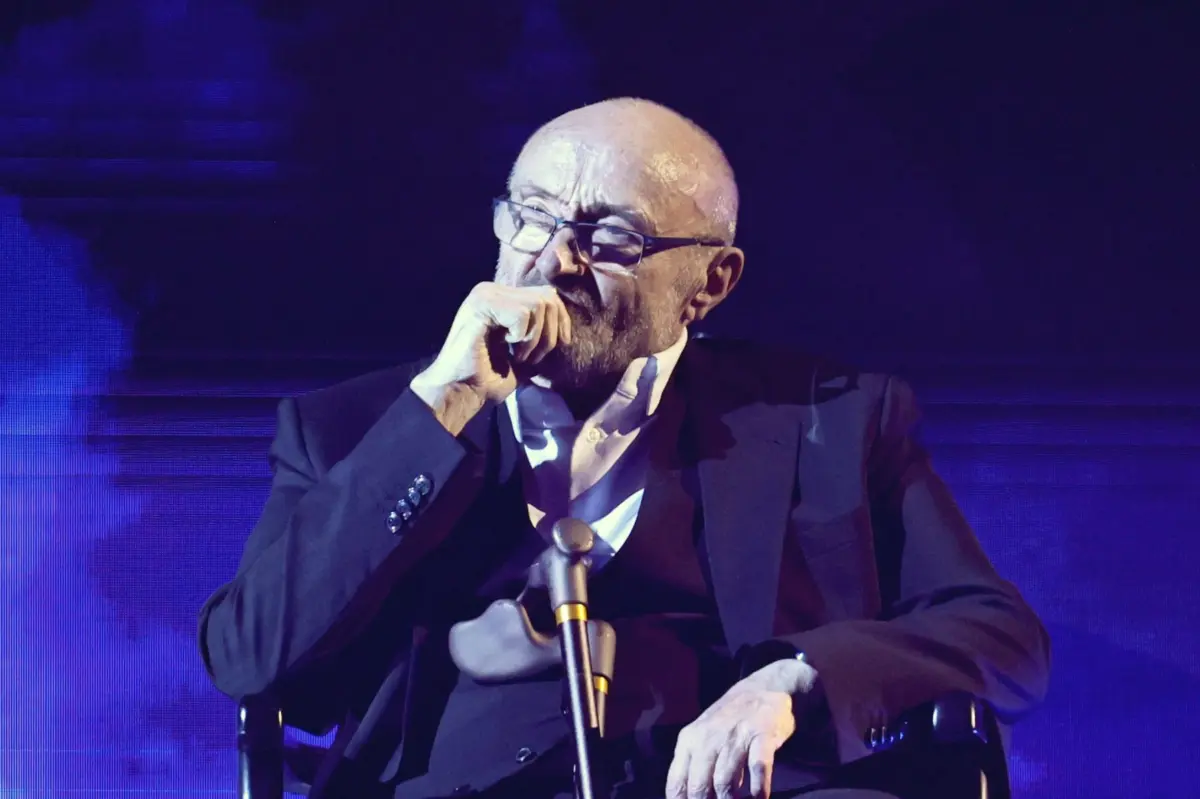
In a candid SiriusXM interview coinciding with his recent induction into the Rock & Roll Hall of Fame as a solo artist, legendary musician Phil Collins revisited one of the most remarkable and serendipitous moments of his illustrious career: his dual performance at Live Aid in 1985, an audacious transatlantic dash, and the unforeseen participation of pop icon Cher in the star-studded "We Are the World" finale, a spot he had vacated due to sheer exhaustion. This revelation offers a fascinating glimpse into the chaotic yet historically significant day that united the music world for a humanitarian cause, highlighting Collins’ unique position at the nexus of several pivotal moments in music history.
A Monumental Day: Live Aid 1985 and Collins’ Transatlantic Feat
The year 1985 was defined, in part, by Live Aid, the monumental dual-venue concert organized by Bob Geldof and Midge Ure to raise funds for famine relief in Ethiopia. Held on July 13, 1985, the event simultaneously captivated audiences at London’s Wembley Stadium and Philadelphia’s John F. Kennedy Stadium, broadcasting globally to an estimated 1.9 billion viewers across 110 countries. This unprecedented logistical undertaking featured an unparalleled lineup of music’s biggest stars, each contributing their talent to a cause that transcended national borders and musical genres.
Amidst this global spectacle, Phil Collins embarked on an audacious plan, one that would etch his name into the annals of rock history not just for his musical prowess, but for his sheer determination. Having recently collaborated with both Eric Clapton and Robert Plant, Collins expressed a desire to drum for them, only to discover they were scheduled to perform on the American leg of the concert. The prospect of participating in both shows seemed impossible until British concert promoter Harvey Goldsmith, a key figure in the organization of Live Aid, proposed a solution: the supersonic Concorde.
Collins, recalling his initial reaction, admitted a degree of self-consciousness about the extravagance of such a journey. "I said, ‘Oh, okay. Well, I’ll do that then,’" he recounted, adding, "because I thought that was a bit show-offy." While other acts, notably The Power Station, were initially slated for a similar transatlantic crossing, they ultimately withdrew, leaving Collins as the sole artist to perform on both continents in a single day. This decision underscored the extraordinary commitment required by Live Aid participants and set the stage for an unforgettable series of events.
The Chronology of a Legendary Day
Collins’ Live Aid journey commenced at Wembley Stadium, where he delivered a solo set that included hits like "Against All Odds (Take a Look at Me Now)" and "In the Air Tonight." His performance was met with fervent enthusiasm from the British crowd, solidifying his status as a formidable solo artist following his success with Genesis.
Immediately after his set, Collins made his way to London Heathrow Airport to board the supersonic Concorde. This iconic aircraft, a marvel of Anglo-French engineering, symbolized luxury, speed, and cutting-edge technology. Traveling at speeds up to Mach 2 (over twice the speed of sound), the Concorde could cross the Atlantic in approximately three and a half hours, a fraction of the time required by conventional passenger jets. This rapid transit was the only way Collins could realistically participate in both concerts. The journey itself was not just a means of transport; it became part of the Live Aid narrative, a testament to the extraordinary efforts made for the cause.
It was during this unparalleled flight that fate intervened in the form of Cher. The "Goddess of Pop" was also a passenger on the Concorde. Collins recounted their mid-air interaction: "Cher came up to me in the middle of the flight and said, ‘What’s going on? What’s happening? Obviously something is happening.’" Collins informed her about Live Aid and its humanitarian mission. Cher, intrigued, asked if he could secure her entry into the event. Collins, ever the pragmatist, responded, "Well, you’re Cher. You know, you don’t need me here to get you on. Just turn up." This casual exchange foreshadowed her unexpected role in the day’s climactic moments.
Upon landing in Philadelphia, Collins immediately transitioned into his American performance schedule. His first appearance was with the legendary Led Zeppelin, a reunion that had been highly anticipated but was ultimately marred by a lack of rehearsal and technical difficulties. Collins, a last-minute addition to the lineup, was largely unfamiliar with the material, and the performance itself was later widely criticized, even by the band members. Robert Plant famously described it as "horrendous." Despite the challenges, Collins’ participation was a testament to his drumming versatility and his willingness to step into high-pressure situations.
Following the Led Zeppelin set, Collins joined Eric Clapton, performing with him as a drummer. This collaboration was more cohesive, reflecting their established working relationship and friendship. Having now performed two full sets and drummed for two different iconic acts on two continents within a single day, Collins reached the limits of his endurance.
The "We Are the World" Finale and Cher’s Unexpected Role
The grand finale of the American Live Aid concert was a collective performance of "We Are the World," the charity anthem recorded earlier that year by USA for Africa. Written by Michael Jackson and Lionel Richie and produced by Quincy Jones, the song featured an unprecedented ensemble of musical superstars, and its live performance was meant to be a powerful symbol of unity and hope.
Collins was scheduled to be part of this iconic closer, standing alongside dozens of other music luminaries to sing the ensemble vocal parts. However, the physical and mental toll of his transatlantic odyssey had become insurmountable. "I was so knackered," Collins confessed, "I can’t do this. I’m not going to make it till the end of the show." Making a pragmatic decision, he informed the organizers that he could not participate and needed to return to New York. "So I said, ‘Get someone else. I’m going back to New York.’"
Later, back in his hotel room in New York, Collins switched on the television to witness the Live Aid finale unfolding. To his astonishment, as the camera panned across the stage during "We Are the World," he saw a familiar face occupying a prominent position. "And guess who was singing my line?" he mused. "Cher." The pop icon, having taken Collins’ earlier advice to "just turn up," had indeed made her way onto the stage, filling the void left by his departure and becoming an indelible part of the historic finale. While it wasn’t a specific solo line in the song, Cher effectively stepped into the ensemble position that Collins would have occupied, adding another layer of spontaneity and celebrity to an already star-studded moment.
This unexpected turn of events not only became a memorable anecdote in Collins’ career but also underscored the improvisational spirit of Live Aid. The concert, while meticulously planned in many aspects, also embraced the organic, sometimes chaotic, nature of live performance and celebrity participation, ultimately contributing to its legendary status.
A Legacy of Collaboration: The Enduring Friendship with Eric Clapton
Beyond the Live Aid saga, Collins also delved into his deep and enduring friendship with guitar legend Eric Clapton during the SiriusXM interview. Their bond, which extends beyond professional collaborations to a close personal relationship, began through Scottish singer-songwriter John Martyn. Collins recalled driving with Martyn to see Clapton in Guildford, initiating a connection that would flourish over decades.
The two musicians eventually became neighbors in Surrey, England, fostering a closeness that saw Clapton serve as best man at Collins’ second wedding. This personal rapport laid the groundwork for significant musical partnerships. Collins went on to produce Clapton’s 1985 album, Behind the Sun, a pivotal record that marked a commercial resurgence for Clapton in the mid-1980s. Collins believes the suggestion came from Clapton’s long-time engineer, Tom Dowd.
Collins’ role as producer was crucial in reinvigorating Clapton’s creative output. "I encouraged him to write, because his album before the one I did, Money and Cigarettes, was a little laid-back and didn’t jump out the speakers," Collins explained. He candidly added, "He was getting lazy, in other words." Collins’ influence helped push Clapton towards a more contemporary and energetic sound, characterized by stronger songwriting and production values. The album spawned hits like "Forever Man" and "She’s Waiting," re-establishing Clapton as a major force in rock.
The successful collaboration continued with Clapton’s follow-up album, August (1986), which Collins co-produced with Tom Dowd. This period also saw Collins join Clapton on tour with what they affectionately called "The Heaven Band," an exceptionally talented ensemble that included esteemed musicians like Nathan East on bass and Greg Phillinganes on keyboards. Collins described this experience in glowing terms: "That was just the best band I’ve ever been in." The tour cemented their musical chemistry and delivered unforgettable live performances. Collins confirmed their continued contact, reiterating his profound respect for Clapton’s musicianship: "He’s the best guitarist I’ve ever played with."
Double Induction: Phil Collins’ Rock & Roll Hall of Fame Legacy
The SiriusXM interview also served as a celebratory prelude to Phil Collins’ second induction into the Rock & Roll Hall of Fame, this time as a solo artist. His first induction came in 2010 as a member of the progressive rock band Genesis, solidifying his place in rock royalty. The solo honor, however, caught him completely by surprise.
"I’d given up hope. It was totally surprised, because it seemed to come out of the blue," Collins admitted. He revealed his deliberate choice to abstain from any form of campaigning for the recognition, drawing a parallel to his approach with his three Oscar nominations. "I would never know if I just won by one vote, you know? In which case I’d have done something that didn’t feel right," he stated, emphasizing his desire for genuine, uninfluenced recognition. This philosophy speaks to Collins’ integrity and his focus on artistic merit over industry politicking.
Collins’ solo career, which exploded in the 1980s, yielded an extraordinary string of hits, including "In the Air Tonight," "Sussudio," "One More Night," and "Another Day in Paradise." His distinctive voice, innovative drumming, and pop sensibilities made him one of the most commercially successful artists of his era. The solo induction acknowledges his monumental impact as a multi-instrumentalist, vocalist, songwriter, and producer, distinguishing his individual achievements from his foundational work with Genesis.
The 2026 Rock & Roll Hall of Fame Induction Ceremony, where Collins was formally honored, took place on November 14 at the Peacock Theater in Los Angeles. He was inducted by acclaimed drummer Travis Barker, a fitting choice given Collins’ own iconic status as a percussionist. The ceremony, a celebration of musical excellence and enduring influence, was broadcast on December 8 on ABC and made available for streaming on Disney+ the following day. Collins’ double induction places him in an elite group of musicians recognized for their contributions both as part of a band and as solo artists, a testament to his unparalleled versatility and lasting cultural footprint.
Broader Impact and Implications
Phil Collins’ narrative, as revealed in this interview, offers more than just personal anecdotes; it provides a micro-history of significant musical and cultural events. His involvement in Live Aid underscored the power of celebrity to effect change, while his transatlantic dash epitomized the extraordinary efforts undertaken for the cause. The spontaneous nature of Cher’s involvement, born from a chance encounter and Collins’ exhaustion, highlights the organic, often unscripted moments that become legendary.
Collins’ dual career as a revered band member and a wildly successful solo artist is a rare feat, reflecting his adaptability and relentless creativity. His work as a producer, particularly with Eric Clapton, demonstrates his keen musical ear and ability to elevate other artists’ work. The professional journalistic tone of his recollections, devoid of self-aggrandizement, further solidifies his reputation as a grounded and authentic figure in an industry often characterized by ego.
His Rock & Roll Hall of Fame double induction serves as a definitive acknowledgment of a career that has spanned decades, influenced countless musicians, and delivered a timeless catalog of hits. It celebrates not just the individual songs or albums, but the entirety of a multifaceted contribution to popular music. Phil Collins’ story continues to resonate, reminding us of the unexpected turns, enduring friendships, and profound impacts that shape the lives of musical legends and, by extension, the soundtrack of our lives.
