

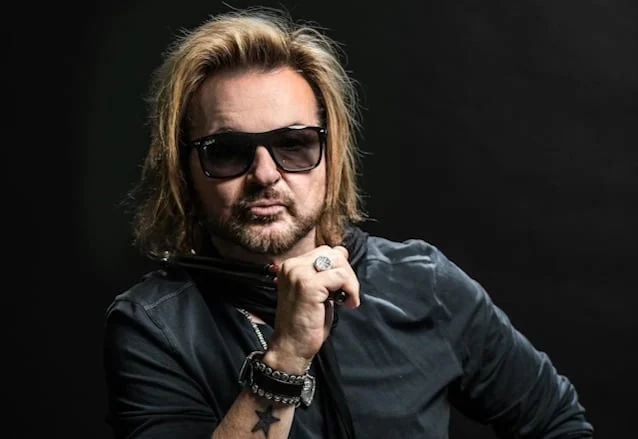
More than eleven years after receiving a life-altering oral cancer diagnosis, POISON drummer Rikki Rockett has provided a candid update on his health journey, shedding light on the harrowing conventional treatments that proved ineffective and the revolutionary immunotherapy that ultimately saved his life. Speaking in a recent interview with the "Get On The Bus" podcast, the 65-year-old musician, whose birth name is Richard Allan Ream, detailed the aggressive nature of his HPV-related oral cancer and the pivotal role of experimental treatment in achieving remission. His story serves as a testament to the evolving landscape of cancer therapy and the critical importance of early detection and persistent pursuit of effective solutions.
The Initial Diagnosis and Unsuccessful Conventional Treatments
Rockett’s battle with cancer began in June 2015 when he presented to his primary care physician with a persistent sore throat. What initially seemed like a minor ailment was soon revealed to be a significant health crisis: a small tumor at the base of his tongue. Subsequent tests confirmed the diagnosis of human papillomavirus (HPV)-related oral cancer, a rapidly growing subtype that has seen an alarming rise in prevalence in recent decades.
The initial treatment plan followed the standard of care for such aggressive cancers. Rockett underwent a grueling regimen that included 37 rounds of radiation therapy, administered five days a week. This process involved the creation of a custom-fit mask to immobilize his head, a procedure he described as "very scary stuff," followed by targeted radiation. Concurrently, he received chemotherapy, including a drug he referred to as the "Martha Stewart drug," which he believed at the time to be a more advanced or effective option.
Despite the intensity of these treatments, the cancer proved stubbornly resistant. "It didn’t work. It didn’t work," Rockett stated plainly, recounting the devastating news he received. After a three-month treatment period, followed by two months of observation for imaging, scans revealed that the cancer had not only persisted but had spread to the other side of his tongue and had also metastasized to his lymph nodes.
His oncologist delivered a stark prognosis, warning Rockett that the next three months would essentially become his full-time occupation, implying the extensive and demanding nature of further treatment. The conventional path, which offered a high success rate for many HPV-related oral cancers, had failed him, significantly narrowing his treatment options.
The Dawn of Hope: Immunotherapy and a Clinical Trial
Facing a grim outlook, Rockett and his medical team explored alternative treatment avenues. It was then that immunotherapy emerged as a potential lifeline. He learned of a doctor in San Diego who was leading clinical trials for this novel form of cancer treatment. Driven by a sense of urgency and a determined will to survive, Rockett took it upon himself to connect with the physician.
"I said, ‘I’m gonna meet this guy,’" Rockett recalled. He traveled to meet the doctor, who was instrumental in his eventual enrollment in a clinical trial for pembrolizumab, a type of immunotherapy drug also known by its brand name, Keytruda.
The decision to pursue immunotherapy was not without its risks. Rockett was informed by his surgeon that delaying further surgical intervention in favor of a potentially unsuccessful immunotherapy trial could render surgery ineffective if the cancer progressed too rapidly. However, the doctor leading the clinical trial offered a reassuring perspective. He expressed confidence that if the immunotherapy did not show immediate positive results, he could quickly pivot to treatments designed to shrink the tumor, thereby buying more time for alternative strategies. "We’re gonna figure this out. Somehow we’re gonna figure this out," the doctor reportedly assured him.
This commitment to a collaborative and adaptive approach proved to be a turning point. Within an astonishing nine weeks of starting the immunotherapy trial, Rockett’s tumor had regressed by an estimated 90%. Within a few additional weeks, the cancer was completely eradicated. This remarkable response marked the beginning of his long-term remission, a milestone he has now celebrated for over a decade.
A Timeline of Survival and the Role of HPV
Rockett was officially declared cancer-free in July 2016, approximately one year after his initial diagnosis. His journey underscores the critical role of HPV in the prevalence of certain head and neck cancers. In 2015, he was among the first to publicly reveal that his oral cancer was linked to the human papillomavirus, a sexually transmitted infection that is now recognized as the primary driver of a significant proportion of oral cancers.
Historically, oral cancers were often associated with lifestyle factors such as tobacco use and heavy alcohol consumption. However, Rockett noted a shift in the demographic of those affected, observing an increasing number of individuals without these traditional risk factors, including athletes and those with otherwise healthy lifestyles, being diagnosed with HPV-related oral cancer. He cited a friend who is a therapist, noting that the percentage of patients treated for HPV-related cancers had surged from five percent to nearly ninety percent over a five-year period.
Rockett explained that while HPV is commonly known as a sexually transmitted infection, its transmission routes are more varied than often assumed. He highlighted that it can spread through deep kissing and even hand-to-mouth contact. He also pointed out the challenge of identifying the source of infection, as the virus can remain dormant for years and be contracted through various means. He recounted a situation where a couple married for 15 years, with no infidelity, experienced suspicion and conflict after one of them was diagnosed, only to be informed by their doctor that HPV can be acquired through numerous pathways, often years prior to diagnosis.
He emphasized the importance of HPV vaccination, particularly for younger generations. "If you have a kid, get ’em inoculated," he urged, underscoring the preventative power of vaccination against this prevalent virus.
The Broader Implications and Rockett’s Advocacy
Rockett’s experience has positioned him as an advocate for awareness and early detection of HPV-related cancers. He has shared his story with other musicians who have faced similar diagnoses, including notable figures like Bruce Dickinson of IRON MAIDEN and Dave Mustaine of MEGADETH, who have also battled HPV-related head and neck cancers.
The statistics surrounding HPV-related oral cancers are sobering. According to the Centers for Disease Control and Prevention (CDC), HPV is responsible for approximately 70% of oropharyngeal cancers in the United States. The CDC also notes that HPV vaccination is highly effective in preventing infections that cause cancer and other diseases.
Rockett’s candidness about his treatment, particularly the failure of conventional methods and the success of immunotherapy, provides valuable insights for patients and medical professionals alike. His initial diagnosis came with a grim prognosis, with his doctor recently revealing that he had only a "10 percent chance" of survival if he had stuck to the conventional treatment path. The dramatic turnaround achieved through immunotherapy highlights the transformative potential of this class of drugs, which harness the body’s own immune system to fight cancer cells.
The effectiveness of immunotherapy in Rockett’s case, leading to remission in approximately 10 weeks, serves as a powerful illustration of its capabilities. This form of treatment has revolutionized oncology, offering hope to patients with previously intractable cancers. However, access to and understanding of these advanced therapies remain crucial areas for continued development and patient education.
A Look Ahead: Memoir and Continued Health
Beyond his health journey, Rikki Rockett is also preparing to release his long-awaited memoir, "Ghost Notes: My Life In Poison." Co-written with Leif Eriksson and Martin Svensson, the book is slated for publication in September 2026 by Rare Bird Books. This memoir is expected to offer further reflections on his career with POISON, his personal experiences, and likely touch upon his health battles and the lessons learned.
Rockett’s ongoing public sharing of his health journey is not only informative but also deeply inspiring. His survival and continued advocacy underscore the progress in cancer research and treatment, while also serving as a vital reminder of the persistent challenges and the critical need for continued vigilance, research, and patient empowerment in the fight against cancer. His story is a powerful narrative of resilience, the advancement of medical science, and the enduring hope that even in the face of overwhelming odds, a path to recovery can be found.
