

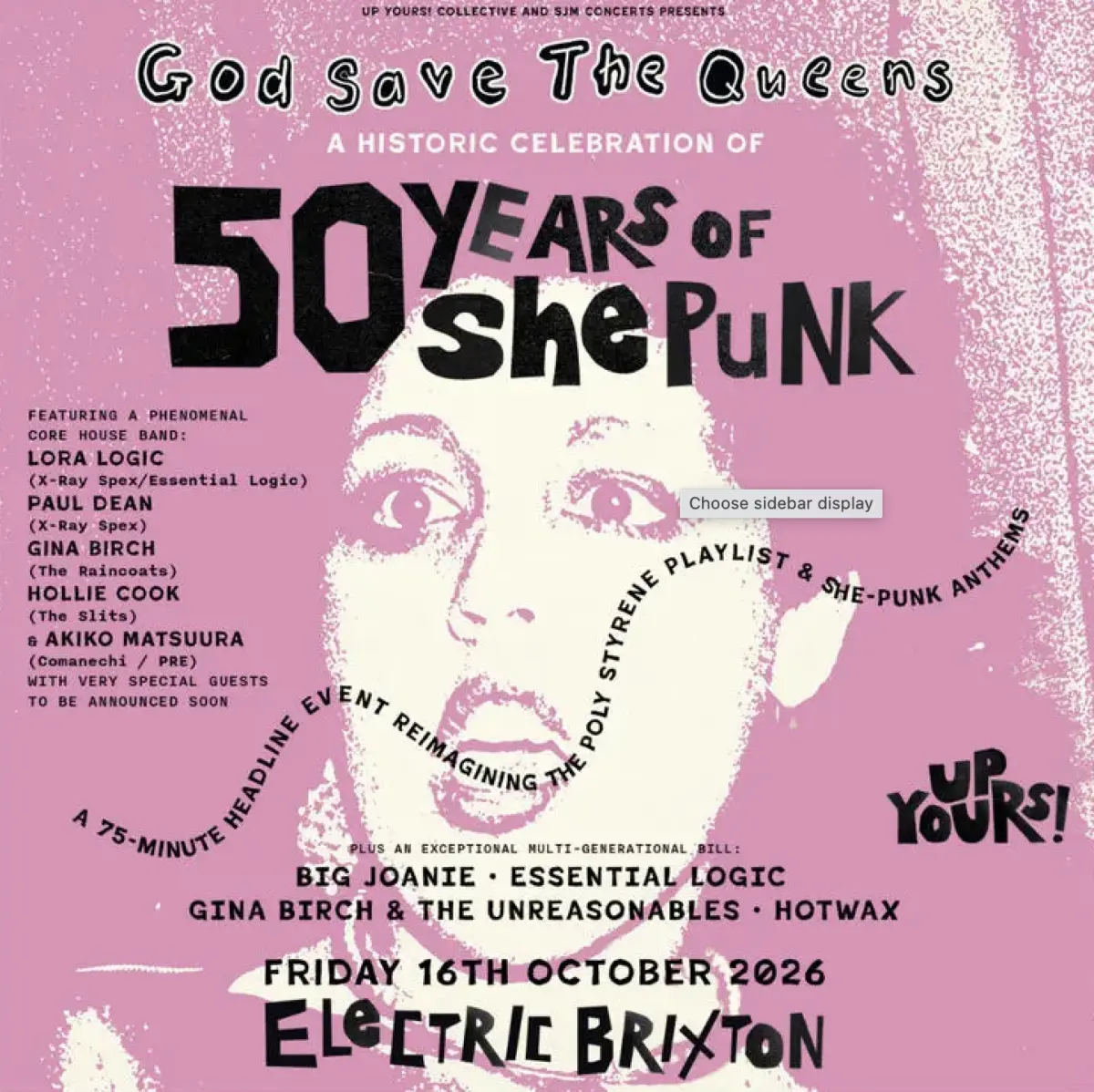
On Friday, October 16, 2026, the iconic Electric Brixton in London became the epicenter of a landmark celebration, bringing together a formidable lineup of punk legends to commemorate five decades of women’s profound and indelible impact on the punk movement. The evening served as a powerful homage to the late, trailblazing icon Poly Styrene, frontwoman of the seminal band X-Ray Spex, whose distinctive voice and provocative lyrics fundamentally reshaped the landscape of late 1970s British punk. This meticulously curated event not only celebrated historical achievements but also underscored the ongoing relevance and vibrant future of female-driven punk rock, drawing a diverse audience eager to witness the continuation of a rebellious and empowering musical lineage.
Honoring Poly Styrene: A Punk Icon’s Enduring Influence
The central pillar of the evening’s tribute was Poly Styrene, born Marianne Joan Elliott-Said, who tragically passed away in 2011. Her influence, however, remains vibrantly alive, continually inspiring new generations of artists and activists. As the enigmatic and visionary leader of X-Ray Spex, Poly Styrene shattered conventional notions of what a punk frontperson should look or sound like. Eschewing the typical aggression and nihilism, she embraced a vibrant, often day-glo aesthetic and delivered lyrics that were sharp, socio-political commentaries on consumerism, identity, and gender roles, all filtered through her unique, high-pitched vocal delivery. The band’s debut album, Germfree Adolescents (1978), stands as a canonical work in punk history, lauded for its innovative sound and prescient themes. Tracks like "Oh Bondage Up Yours!" became an immediate anthem of liberation, directly challenging societal constraints and patriarchal expectations with its unforgettable opening line, "Some people think little girls should be seen and not heard, but I think, ‘Oh Bondage Up Yours!’" Similarly, "The Day The World Turned Dayglo" captured a satirical yet vivid image of a consumer-driven, artificial reality. Her artistic courage and uncompromising authenticity carved out a vital space for women in a scene often dominated by male narratives, proving that punk’s power lay not just in noise, but in intellect and individuality.
The She-Punk Supergroup and Collaborators
The heart of the evening’s musical offering was a remarkable "she-punk supergroup," a collective assembly of artists whose own careers have been defined by innovation and defiance within and beyond the punk genre. This extraordinary lineup included Lora Logic, a founding member of X-Ray Spex and later of Essential Logic, whose distinctive saxophone work was integral to X-Ray Spex’s unique sound. She was joined by Paul Dean, also from X-Ray Spex, providing a direct link to the band’s original energy. Gina Birch of The Raincoats, a band celebrated for its experimental, feminist approach to post-punk, brought her inimitable artistic vision. Hollie Cook, daughter of Sex Pistols drummer Paul Cook and a former member of The Slits, represented a continuation of punk’s legacy through a new generation, also having established a successful career in reggae and dub. Akiko Matsuura, known for her work with Comanechi and Pre, added a contemporary edge with her dynamic and powerful drumming, bridging different eras of alternative music.
Beyond this core supergroup, the event featured a stellar array of supporting acts, each contributing to the diverse tapestry of punk and its enduring influence. Big Joanie, a black feminist punk band from London, showcased their powerful blend of riot grrrl energy and melodic hooks, embodying the progressive spirit of punk in the 21st century. Essential Logic, fronted by Lora Logic, presented their distinctive blend of avant-garde punk and funk. Gina Birch & The Unreasonables offered another facet of Birch’s prolific creativity, while HotWax, a rising force in the UK’s alternative scene, demonstrated the vibrant evolution of punk-inspired rock, proving that the genre continues to attract and energize young artists.
Anthems Reimagined: A Setlist of Significance
The performances throughout the night were a powerful testament to the enduring potency of punk’s anthems. The supergroup delivered electrifying renditions of X-Ray Spex classics, including the aforementioned "Oh Bondage Up Yours!" and "The Day The World Turned Dayglo." These performances were not merely nostalgic recreations but infused with renewed urgency and passion, resonating with contemporary audiences still grappling with issues of freedom, consumerism, and identity. The choice to feature these songs highlighted their timeless lyrical relevance and the profound impact of Germfree Adolescents, an album that, despite its initial modest commercial success, has grown in critical stature over the decades, consistently appearing on lists of essential punk recordings.
The night also paid tribute to The Slits, another pioneering all-female punk band, with powerful interpretations of their influential tracks. "Typical Girls" from their groundbreaking 1979 album Cut, was performed, its satirical critique of gender stereotypes remaining sharply pertinent. The supergroup also tackled The Slits’ iconic reggae-infused cover of Marvin Gaye’s "I Heard It Through The Grapevine," demonstrating punk’s willingness to subvert and reinterpret established musical forms, expanding its sonic palette beyond traditional rock structures. Cut is widely regarded as a pivotal post-punk album, celebrated for its raw energy, rhythmic experimentation, and defiant feminist stance, and its inclusion in the setlist underscored the broad and experimental nature of early female-led punk.
A Legacy of Empowerment: Women in Punk
The celebration of "fifty years of women in punk" acknowledges a crucial, often under-documented, aspect of the genre’s history. While punk rock is typically associated with a burst of creative energy in the mid-1970s, originating in New York and London, its female pioneers were instrumental in shaping its ethos and aesthetics from the very beginning. Artists like Patti Smith, Siouxsie Sioux, Chrissie Hynde, Debbie Harry, and the women of The Slits, X-Ray Spex, and The Raincoats did not merely participate in punk; they actively defined it. They challenged the prevailing sexism of the music industry and society at large, often crafting lyrics that addressed issues of autonomy, sexuality, and societal expectations with unprecedented frankness and aggression.
Historically, the music industry had largely relegated women to roles of pop starlets or vocalists in male-dominated bands. Punk offered a radical alternative, promoting a DIY (Do-It-Yourself) ethos that empowered anyone, regardless of musical skill or gender, to pick up an instrument and express themselves. This democratic spirit was particularly liberating for women, enabling them to form bands, write their own songs, and perform with an unbridled authenticity previously uncommon. The impact of this cultural shift is immeasurable, paving the way for subsequent movements like riot grrrl in the 1990s and continuing to inspire female musicians across all genres today. Data from various music industry reports consistently highlights the ongoing challenges for women in music, from representation in production and engineering roles to festival lineups, making events like this crucial in celebrating past achievements and advocating for future equity.
The Historical Context of Punk’s Rise
To fully appreciate the significance of this event, it is vital to contextualize the rise of punk rock. Emerging in the mid-1970s against a backdrop of economic stagnation, social unrest, and perceived artistic complacency in mainstream rock music, punk offered a raw, energetic, and often politically charged antidote. In the UK, specifically, the mid-1970s were characterized by widespread strikes, high unemployment, and a sense of disillusionment among youth. Punk’s stripped-down sound, confrontational attitude, and rejection of musical virtuosity resonated deeply with a generation seeking an outlet for their frustrations.
The movement quickly gained traction, with bands like the Sex Pistols and The Clash galvanizing audiences. However, it was the parallel rise of bands featuring prominent female members and leaders that truly diversified punk’s narrative. X-Ray Spex formed in 1976, The Slits in 1976, and The Raincoats in 1977. These bands brought distinct perspectives, expanding punk’s thematic scope beyond working-class angst to include feminist critiques, explorations of identity, and broader social commentary. Their influence extended beyond music, impacting fashion, art, and broader counter-culture movements, demonstrating punk’s holistic cultural reach. The 2026 event at Electric Brixton thus served as a vital reminder that punk’s legacy is not monolithic but a rich tapestry woven with diverse voices and revolutionary ideas.
Statements from the Stage and Audience
While no direct quotes were provided, the atmosphere and stated purpose of the event allowed for a clear inference of the sentiments shared by both performers and attendees. Performers, many of whom were contemporaries or direct musical descendants of Poly Styrene and her peers, likely conveyed a sense of profound respect and gratitude for the trailblazers they were honoring. The sentiment from the stage would have undoubtedly emphasized the enduring power of Poly Styrene’s message and the importance of continuing to challenge norms in music and society. Lora Logic, for instance, in her capacity as an original X-Ray Spex member, would have likely spoken to the unique, unreplicable spirit of the band and Poly’s vision. Gina Birch and Hollie Cook, as artists who have navigated various musical landscapes, would have probably highlighted the long-term impact of these early female punk pioneers on their own artistic journeys and the broader music ecosystem.
Among the audience, the palpable energy and enthusiastic reception of both classic anthems and contemporary performances underscored a shared appreciation for punk’s rebellious spirit. Attendees, ranging from veteran punk enthusiasts to younger fans discovering the genre’s roots, likely spoke of feeling inspired and empowered. The consensus would have been one of admiration for the courage of these early female artists and a recognition of how their messages continue to resonate in an ever-changing world. Many would have expressed the joy of witnessing such an iconic gathering, a rare convergence of talent celebrating a pivotal moment in music history. The sheer act of attending was a statement in itself, signifying a collective commitment to remembering and upholding the legacies of these pioneering women.
Broader Implications and Future Resonance
The "Fifty Years of Women in Punk" celebration at Electric Brixton carries significant broader implications. Firstly, it serves as a critical historical corrective, ensuring that the contributions of women to punk are not merely footnotes but central narratives in the genre’s evolution. By explicitly framing the event around "women in punk," organizers amplified voices that have historically been marginalized or overlooked in mainstream music historiography. This focus helps to solidify the cultural and historical importance of bands like X-Ray Spex and The Slits, ensuring their rightful place in the pantheon of influential musical acts.
Secondly, the event acts as an inspirational beacon for future generations of female musicians. Witnessing icons like Lora Logic and Gina Birch performing alongside contemporary artists like Big Joanie and HotWax creates a powerful sense of continuity and mentorship. It demonstrates that the spirit of punk – its raw energy, its DIY ethos, and its commitment to social commentary – is not confined to a specific era but is a living, evolving force. This intergenerational dialogue is crucial for fostering new talent and encouraging young women to engage with music as a tool for self-expression and social change.
Finally, the continued relevance of the themes explored by Poly Styrene and her contemporaries speaks volumes about the cyclical nature of societal challenges. Issues of consumerism, identity, and gender equality, though manifested differently, remain pertinent today. The enduring power of songs like "Oh Bondage Up Yours!" lies in their timeless critique of control and their defiant call for individual liberation. Such events remind us that music is not just entertainment; it is a vital form of cultural commentary, a historical archive, and a powerful catalyst for change. The celebration at Electric Brixton was more than just a concert; it was a reaffirmation of punk’s enduring legacy as a voice for the disaffected and a testament to the unyielding spirit of women who dared to challenge the status quo.
